
Hiring a photographer can look wonderfully straightforward from the outside. You find somebody whose pictures make everyone in the meeting say “nice”, check that they own a camera more complicated than your phone and ask whether they are free on Thursday. Then Thursday actually arrives.
The location is darker than it appeared during the recce. The product reflects every light, face and anxious marketing executive in the room. One of the people being photographed has decided they hate being photographed. The hero image needs to work on a billboard, a website banner, an Instagram Story and a crop so narrow it could be posted through a letterbox. Somebody has also just mentioned that the campaign might be used in North America, which is apparently news to everybody except the person mentioning it.
This is when you discover whether you hired somebody who can take a beautiful photograph or somebody who can deliver a successful photography commission.
The distinction matters. Cameras have never been more capable and technically polished imagery has never been easier to produce. A competent photographer should understand exposure, lenses, lighting, composition and post-production. Those are fundamentals, not the entire proposition.
The value of a great photographer lies in the decisions around the frame. They understand what the picture is trying to communicate, how a real person will behave in front of the lens, what the location will do at 4pm, which detail will become a problem in post and when a perfectly sensible brief is quietly asking for three incompatible things.
They can give an image a point of view without losing sight of the commercial job. They can direct people without flattening their personality, organise complexity without draining the day of spontaneity and challenge an idea before the production budget is converted into a beautifully lit mistake.
That is why hiring on taste alone is risky. Taste tells you whether you like the work. It does not tell you how the work was made, what the photographer personally controlled or whether they could make something equally strong for your audience, channel, subject, schedule and budget.
Whether you are commissioning a freelancer for one shoot, appointing a photographer to a campaign or recruiting somebody into an in-house creative team, these are the ten things worth looking for.
1. A Portfolio That Is Relevant to the Actual Brief

Julia Archire
Start with the least glamorous question and the most useful one: has this photographer solved a comparable problem before?
Photography is not a single discipline. Portrait, product, food, fashion, automotive, architectural, interiors, documentary, lifestyle, events, sport and corporate photography may share equipment and basic principles, but they demand very different instincts.
A brilliant food photographer understands texture, freshness, styling and the very short period during which a dish looks as though it wants to be eaten. An architectural photographer reads space, geometry, available light and the movement of people through a building. An experienced portrait photographer can create trust quickly, recognise the moment a subject stops performing and make a nervous chief executive look like a person rather than a hostage beside a ficus.
That does not mean the photographer must have shot your exact product, sector or demographic before. Overly literal shortlisting can eliminate original thinkers and repeatedly lead brands towards the same familiar visual language. It does mean that the portfolio should contain evidence relevant to the underlying challenge.
If your campaign depends on natural performances from non-professional talent, look for believable people rather than simply impressive casting. If you need 400 consistent e-commerce images, examine repeatability and workflow, not only the most art-directed still life. If the work will be created in functioning workplaces, look for somebody who can observe without paralysing the environment around them.
Creativepool’s guide to creative job titles and who to hire makes the point that the specialism changes the hire. It also recommends reviewing complete photographic projects for consistency, control of light and people, channel relevance and evidence that the photographer can deliver under comparable conditions.
Look at the context supplied with each project. What was the brief? Who was the audience? Where did the images appear? Did the photographer originate the visual approach or execute an art director’s treatment? Were they responsible for production, casting and post, or were those handled by a larger team?
None of those arrangements is automatically better. You simply need to understand what the portfolio proves.
A photographer who created a remarkable campaign with a top-tier producer, stylist, set builder, retoucher and generous schedule may still be exactly right for your job. However, if your budget assumes they will reproduce it alone in half a day beside the office microwave, you are not comparing equivalent conditions.
The strongest portfolio is not necessarily the one with the greatest number of famous logos. It is the one that gives you credible reasons to believe this photographer can solve your particular visual problem.
Do not begin by asking, “Whose pictures do we like most?”
Begin with, “What do these pictures demonstrate?”
2. A Distinctive Eye, Not Merely a Recognisable Treatment
Michael Winokur
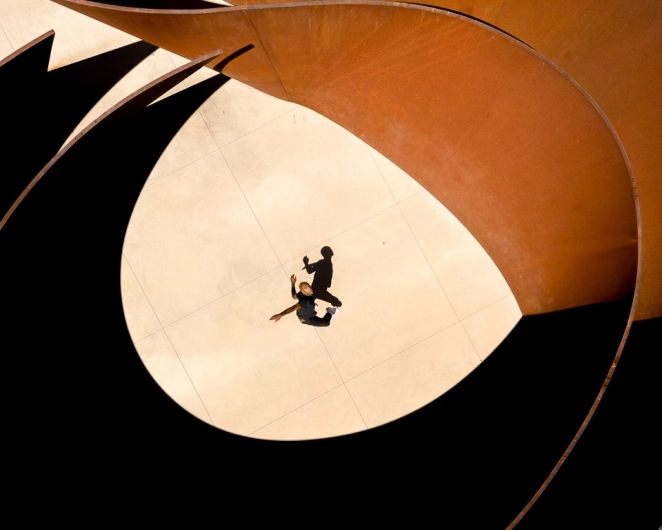
Technical competence can make an image correct. A photographer’s eye makes it worth noticing.
Look for choices. Where does the photographer stand? What do they include and leave out? How do they use colour, light, scale, texture, negative space, movement and timing? What happens to ordinary subjects when they enter this person’s frame?
A strong portfolio should reveal a way of seeing, but that does not mean every image must be covered in the same fashionable treatment. Consistency of judgement is more valuable than repetition of surface style.
Some photographers possess an immediately recognisable visual signature. That can be an enormous asset when the brief calls for precisely that world. Others are more adaptable, shifting their aesthetic according to the brand, subject and audience while retaining a consistent standard of thought and craft.
The right balance depends on the commission.
If you are hiring somebody because their personal style will define the campaign, be honest about that. Do not commission a photographer known for raw, observational work and then spend the shoot asking for glossy symmetry. If you need a permanent in-house photographer serving several brands and formats, range and adaptability may matter more than one unmistakable signature.
Be careful with mood boards. They are helpful tools for discussing light, tone, energy, casting, framing and production value. They become less helpful when the brief is effectively a request to reproduce another photographer’s work at a different fee.
Ask candidates how they would interpret the references rather than copy them. Which qualities matter? What belongs to the brand? What could be pushed somewhere new? A thoughtful answer reveals whether the photographer can separate the underlying creative intention from the visible styling.
Personal work can be particularly revealing here. Commercial portfolios contain compromise, shared authorship and established brand codes. Self-initiated projects often show what a photographer notices when nobody else has written the shot list.
Creativepool’s advice on what makes a digital portfolio stand out emphasises context, curation and visible thinking. Apply that standard to photography. A portfolio should do more than collect attractive outcomes. It should help you understand the decisions and curiosity behind them.
The question is not whether the photographer can make your campaign look like their Instagram grid. It is whether their way of seeing can make the campaign feel more distinctive, useful and true.
3. An Understanding of Human Nature

Samantha Mortimer
Photography involving people is partly a visual discipline and partly a very compressed study of human behaviour.
The photographer may have minutes to build trust with a stranger, calm a nervous employee, energise a tired cast, give useful direction to somebody who has never posed professionally or persuade a celebrity that one more setup really will be the last one.
This is not a secondary “soft skill”. It is visible in the result.
Look closely at people in the portfolio. Do they appear present, or merely positioned? Are expressions believable? Does the photographer find differences between subjects, or place everybody inside the same pose? Can they create warmth without forcing cheerfulness and authority without asking every senior leader to cross their arms beside a glass wall?
Ask how they direct. Some subjects respond to precise physical instructions. Others need conversation, movement, a scenario or enough silence to stop anticipating the shutter. Strong people photographers read that difference quickly.
They also understand the power relationship on a set. A campaign cannot claim to celebrate real people while the process makes those people feel like interchangeable props. The photographer’s tone, clarity and respect affect performance, consent and the reputation of the organisation commissioning the work.
Simon Manchipp, Founder at SomeOne, captures the wider hiring principle perfectly:
“Technical proficiency is available everywhere. The real hunt is for the animator with an instinct for pacing, the copywriter with rhythm in their bones, the designer who truly grasps the commercial business problem, and the photographer who understands human nature. Above all, seek out the person brave enough to politely argue with you over a bad idea. True collaboration requires friction.”
That phrase “understands human nature” goes well beyond portrait technique. It includes understanding the audience looking at the picture. A photographer should recognise when an image feels staged, patronising, implausible or emotionally false. They should know which details allow viewers to recognise themselves and which turn a supposedly authentic scene into advertising’s latest visit to the uncanny valley.
It also includes the courage to challenge the brief.
A photographer who notices that the proposed casting contradicts the campaign’s message should say so. If a concept requires a vulnerable subject to perform an experience they have not agreed to share, that deserves a conversation. If the visual reference looks impressive but makes the product impossible to understand, the concern should be raised before the crew is standing around it at day rate.
Polite disagreement is not evidence that the photographer is difficult. Done well, it is evidence that they are protecting the idea, the audience and the investment.
You do not need somebody who argues for the pleasure of creating atmosphere. You need somebody who can explain why a choice weakens the work, listen to the commercial context and help find a stronger answer.
The person behind the camera shapes the behaviour in front of it. Hire accordingly.
4. Consistency Across a Complete Set of Images

Edd Fury
One exceptional photograph can be a moment of inspiration, luck or very generous post-production. A successful commission usually requires an entire body of work.
Ask to see full stories, galleries, contact sheets, campaign suites or complete deliveries where confidentiality permits. You are looking for consistency without monotony.
Can the photographer sustain quality across wide shots, details, portraits, landscapes and awkward transitional images? Can they create a coherent visual language across changing locations, weather, subjects and times of day? If 30 assets are required, does the standard survive beyond the four pictures placed at the front of the portfolio?
This matters particularly for events, documentary projects, content libraries, annual reports and e-commerce. The hero image may win internal applause, but the quieter assets often do most of the practical work.
Consistency also means coverage.
A photographer can make a brilliant picture and still fail the brief if the campaign needs landscape, portrait and square crops, clean space for copy, identifiable product detail, several expressions and enough alternatives for different markets. The commission succeeds when the creative idea and the asset system both survive.
Ask how they plan a shot list. Good photographers use one without becoming imprisoned by it. They protect essential coverage while remaining alert to the unplanned moment that gives the work life.
Look at sequencing too. A set of photographs should often function together. Repetition of angle, scale or expression can make a content library feel strangely small even when hundreds of files were delivered. A thoughtful photographer varies the visual rhythm while keeping the world coherent.
For high-volume work, request evidence of workflow. How do they tether, label, select, back up and quality-control images? How do they keep colour and lighting consistent? What happens when the product list changes halfway through the day?
The portfolio is always curated, as it should be. Your task is to look beneath that curation and establish whether the photographer can reproduce the level across the amount of work you are actually buying.
You are not hiring the best image they have ever made.
You are hiring their ability to make a successful set for you.
5. The Ability to Understand and Improve the Brief

Rich Brown
A good photographer answers the brief. A better one helps discover what the brief needs to become.
Pay attention to their questions.
Do they ask who the audience is, where the images will appear and what the viewer should think, feel or do? Do they want to understand the brand rather than merely its colour palette? Do they ask what already exists, what has failed before and which single outcome matters most?
These questions are not administrative delay. They are part of the creative work.
“We need some lifestyle photography” is not yet a useful brief. Lifestyle for whom? Showing what behaviour? Real customers or professional talent? Observational or art-directed? Documentary warmth or polished aspiration? Used for a short social campaign or a five-year international image library?
The answers shape the concept, casting, location, crew, schedule, budget and rights.
A commercially intelligent photographer can connect creative decisions to those consequences. They recognise that placing a subject in a real public environment may affect permissions, control and continuity. They know that a very specific seasonal treatment can shorten an image’s useful life. They understand that a dramatic low-light approach may be perfect for the campaign film and less useful for a retailer demanding accurate product colour.
Ask shortlisted photographers to talk through one previous brief. What was unclear at the start? Which assumptions did they test? What changed after the recce, treatment or pre-production meeting? Where did they push back, and why?
You can also give each candidate the same concise project outline and ask for the questions they would need answered before proposing an approach. Do not request a complete unpaid creative treatment. You are assessing how they frame the problem, not harvesting speculative ideas from several people.
A photographer should be able to explain choices in accessible language. You do not need a technical lecture on focal lengths unless it affects the decision. You need to know, for example, that one approach will feel more intimate, another will allow greater production consistency and a third will require much more control over the location.
The photographer is not there simply to press the shutter after everybody else has completed the thinking. Their perspective should enter the project early enough to improve it.
If you already know every frame you want, hire somebody who can execute that direction brilliantly. If the visual answer is still open, hire somebody whose ideas, judgement and questions justify a larger creative role.
Do not demand art direction while paying only for attendance.
6. Technical Control and a Credible Production Plan

Edd Fury
Technical skill matters enormously. It simply needs to be assessed through outcomes and decisions rather than equipment worship.
You should see control of exposure, focus, movement, colour, composition and light. That control should remain visible when conditions become difficult: mixed lighting, reflective surfaces, fast action, unpredictable weather, confined spaces, very dark skin beside very pale products, or the recurring corporate challenge of photographing 14 people in a room designed for six chairs.
Ask how the photographer would approach the actual conditions of your shoot. What needs to be tested? Is a recce required? What power, access, space and time will be needed? Which parts of the visual treatment depend on natural light, and what happens if nature rejects the schedule?
Equipment should follow the brief. A photographer may need specialist lenses, high-speed capture, medium format, underwater housings, drones, scanning, complex lighting or a simple lightweight setup that allows them to disappear into the environment. The largest kit list is not automatically the most professional one.
What matters is whether they know why each tool is there and what contingency exists if it fails.
Professional photographers should have backup plans for essential equipment and file storage. For a critical shoot, ask about backup camera bodies, data handling, power, tethering and the process for creating redundant copies. A production should not depend on one memory card experiencing a personally successful day.
Then examine the wider plan.
Who is producing the shoot? Who books the studio, location, crew, talent, travel, catering and permits? Do you need assistants, a digital operator, stylist, hair and make-up, set design, prop sourcing, animal handling, child-performance arrangements or specialist safety support? Who owns the schedule and call sheet?
Some photographers manage small productions directly. Others work with producers or agents. Larger campaigns may require a dedicated production company. Again, no single model is superior. The responsibilities simply need to be visible and costed.
If aerial imagery is involved, check that the plan meets current UK Civil Aviation Authority requirements for drone operation. If the location, subject or technique introduces specific safety, access or regulatory issues, confirm who is qualified and insured to manage them.
Insurance should match the work. Public liability, professional indemnity, equipment cover and employer responsibilities may all become relevant depending on the project and crew. Venues and clients often set their own minimum requirements.
Technical confidence is not the ability to promise that nothing will go wrong. It is the ability to identify what might go wrong, reduce the risk and keep making useful decisions when reality ignores the treatment deck.
7. Collaboration, Leadership and Behaviour Under Pressure
Mark Harrison
A photography set is a temporary organisation formed around a deadline. Even a small one contains dependencies, personalities and somebody asking when lunch is.
The photographer often sits at the centre of that system. They may need to collaborate with an art director, creative director, producer, stylist, designer, account team, retoucher, client, talent and assistants while protecting enough focus to make the pictures.
Look for calm authority rather than performance of authority.
Can the photographer explain what they need clearly? Do they treat assistants and junior crew with respect? Can they keep the client informed without turning every technical choice into a committee vote? Do they know when to ask for a decision and when to create space for a genuine moment?
References are especially valuable here. Ask previous commissioners what the photographer was like before, during and after the shoot. Did they prepare thoroughly? How did they respond when the schedule moved? Were problems raised early? Did the final files arrive as agreed? Would the team hire them again?
The answer to that last question often contains more useful information than a general request for praise.
Discuss feedback before commissioning. Who will approve the treatment? Who can give direction on set? Who consolidates notes during the edit and retouch? Contradictory feedback is expensive in every creative discipline, but photography has a special ability to make it irreversible once the location has been cleared and the cast has gone home.
The photographer should be confident enough to defend the work and flexible enough to recognise when a concern is valid. Collaboration is not silent obedience. Nor is it the photographer announcing that every preference is an attack on their artistic integrity.
Return to Manchipp’s idea of constructive friction. The strongest collaborators disagree in service of the work. They connect the disagreement to the brief, explain the trade-off and help the team make a decision.
For permanent hires, consider how the person will operate beyond the shoot itself. Can they collaborate with designers and content teams, manage an asset library, maintain brand consistency and contribute ideas early? Can they work with non-creative colleagues without making them feel foolish for not knowing the difference between a softbox and a beauty dish?
For freelancers, check availability, communication rhythm and whether the named photographer will actually shoot the job. With busy studios or represented talent, it is reasonable to confirm who will attend, who manages production and who carries responsibility for post-production.
The best set does not need to feel solemn. It should feel purposeful, respectful and safe enough for good work to happen.
8. Post-Production Judgement and Delivery Discipline
Jonathan Knowles
Photography does not end when the shutter does.
Selection, colour, retouching, compositing, cropping, file preparation and delivery can dramatically change both the quality of the work and the size of the budget. Establish what the photographer personally handles, what is delegated and what your team is expected to provide.
Look at retouching judgement rather than simply the amount of visible polish. Product work may demand exact colour, clean surfaces and careful compositing. Beauty photography may involve sophisticated skin work. Documentary imagery might require a much lighter touch to preserve credibility. The right post-production approach depends on the truth the image is expected to carry.
Ask to see before-and-after examples where appropriate. Who made the decisions? Does the photographer work with a regular retoucher? Is that cost included? How are comments supplied and approved?
Creativepool’s guide to hiring a specialist retoucher is a useful reminder that photography and retouching are related but distinct crafts. A photographer who can retouch is not automatically the best person for complex post-production, just as a brilliant retoucher is not an emergency button for every unresolved production decision.
Define the edit process. Will the client receive a broad proof gallery, a photographer’s shortlist or only the contracted final selects? Who chooses the images? How many are included? What happens if additional selects are requested later?
Then define the files.
Specify dimensions, resolution, colour space, file type, compression, naming, metadata and delivery method. Confirm whether you need layered files, cut-outs, transparent backgrounds, different crops or pre-sized channel variants. If the work will be printed, involve the designer or production partner early enough to confirm requirements.
Raw files should never be treated as an assumed free extra. They are unfinished working material and may expose technical processes, third-party assets or images that were deliberately excluded. If you genuinely need them, discuss the reason, rights, handover standard and price before the shoot.
Delivery discipline also includes storage. How long will the photographer retain the files? What is backed up, and for how long? Can the client return for additional licences or exports in the future? Neither side should assume indefinite free archiving.
AI-assisted editing and generative alteration require an explicit conversation. Is generative fill permitted? Can confidential products, unreleased designs or identifiable people be uploaded to external systems? Must altered images be labelled or documented? Are there brand, agency or client policies that prohibit particular tools?
The important question is not whether the photographer uses technology. Photographers have always used technology. It is whether the method protects consent, confidentiality, provenance, rights and the intended credibility of the image.
A great final photograph can still become a bad delivery if nobody can find the right crop, identify the licence or open the file without summoning the person who left the company last February.
9. Commercial Clarity, Realistic Costs and Reliability

Harniman Photographer
Photography estimates can be confusing because the cost of a shoot is not always one fee for one day with one person.
The total may include the photographer’s creative or shoot fee, pre-production, producer, assistants, digital operator, equipment, studio, location, travel, accommodation, casting, talent, styling, props, hair and make-up, catering, insurance, post-production, storage and usage.
Ask for an estimate that makes the assumptions visible.
What is included? How many shoot days and preparation days are allowed? What crew and equipment are required? How many final images and retouching rounds will be delivered? Are travel and expenses fixed, estimated or charged at cost? What happens if the schedule extends, weather stops play or the client changes the scope?
The cheapest estimate may represent the strongest value. It may also represent a different understanding of the job.
Compare like with like. One photographer may have included production and post while another has quoted only their own attendance. One may have allowed for the equipment needed to achieve the reference. Another may be hoping the office has a white wall and an extension lead.
Reliability appears in the estimate too. Is it detailed without being deliberately obscure? Are exclusions clear? Does the timeline include approvals and delivery? Are cancellation, postponement, overtime and payment terms addressed?
Ask whether the budget is genuinely capable of producing the proposed treatment. A trustworthy photographer should explain where money is doing creative work and where compromises are possible. Perhaps one location can replace three. Perhaps a simpler lighting approach creates more time with talent. Perhaps the campaign needs fewer better images rather than 60 versions nobody will use.
Do not ask photographers to conceal an impossible budget beneath optimism. The invoice will eventually discover the truth, usually after the production has committed to it.
For permanent photographers, reliability means something slightly different. Examine workload management, maintenance, asset handling, collaboration and the ability to deliver repeatable quality across routine as well as high-profile work. A person may be a wonderful campaign photographer but miserable inside a role dominated by daily product updates.
Rates should reflect skill, responsibility, production complexity and commercial value. Experience is not only what makes the visible image better. It is often what prevents expensive mistakes, shortens the route to a decision and protects the shoot when conditions change.
You are buying the photographs, certainly. You are also buying the probability that the day produces them.
10. Clear Rights, Releases and Contract Terms

Alex Lambert
Photography rights become urgent at exactly the moment nobody has time to discuss them, which is why they should be agreed before the shoot.
In the UK, commissioning a photograph does not automatically transfer its copyright. The Intellectual Property Office explains that the creator is generally the first owner of copyright and that, for commissioned work, ownership remains with the creator unless the parties agree otherwise in writing. An employee creating work in the course of employment is treated differently, with the employer generally becoming the first owner unless another agreement applies.
For freelance commissions, the photographer will commonly grant a licence defining how the client may use the images. The IPO’s guidance on copyright in digital images and photographs explains the difference between licensing permission to use a work and assigning, or transferring, the copyright itself.
Agree the intended media, territory, duration, audience and degree of exclusivity. A six-week UK social campaign is not the same commercial use as a global, permanent, all-media licence. If future uses are uncertain, establish how extensions will be approved and priced.
Clarify whether the client, its agencies, distributors, partners or retailers may use the images. Can they be cropped, retouched, composited, animated or adapted? May the photographer display the work in their portfolio after launch? Is a credit required where practical? Who controls embargoes and announcements?
Then address the permissions inside the image.
Models, contributors, private locations, properties, artworks, products and third-party branding may introduce consent or rights considerations. Model releases are separate from copyright and the legal position depends on the circumstances, territory and use. The Editorial Photographers UK guidance notes that releases have little or no relevance to copyright itself, while commercial commissioners may still need clear permission governing how a person’s likeness and performance can be used.
Do not assume that “the photographer will sort it” covers every situation. Agree who supplies the release, who explains it, who retains it and whether the language matches the campaign’s actual uses. Take particular care with children, vulnerable people, employees, paid talent and sensitive subjects. Obtain legal advice where the risk or use justifies it.
The contract should also cover scope, schedule, deliverables, fees, expenses, payment, cancellations, postponements, overtime, weather, reshoots, liability, insurance, confidentiality, data handling, storage, portfolio use and dispute procedures.
If artificial intelligence forms part of production, add specific terms. Can the commissioned images, outtakes or identifiable talent be used to train or fine-tune a model? May generative systems alter a person, product or location? Who approves synthetic elements? What evidence of provenance must be retained? Silence is a very poor AI policy.
None of this paperwork diminishes the creative relationship. It protects it by ensuring both sides understand what is being made, what is being bought and what may happen to the work afterwards.
The conversation should not begin after somebody places the hero portrait on packaging in a territory that never appeared in the estimate.
How to Compare Photographers Fairly
The Artist as Photographer
Photography is subjective, but the hiring process does not need to become a vote for whichever portfolio created the strongest immediate mood.
Begin by translating the brief into a small set of weighted criteria. These might include relevant subject experience, visual approach, people direction, consistency, production capability, collaboration, post-production, schedule, budget and licensing.
Weight them according to the risk of the project. For a one-day executive portrait shoot, human direction, efficiency and reliability may matter more than a huge production portfolio. For an international automotive campaign, complex lighting, crew leadership, location production and usage experience may carry far more weight.
Review the same evidence from each candidate. Give shortlisted photographers the same core information, including objective, audience, outputs, usage, schedule and budget range. Ask the same essential questions so differences in the answers become meaningful.
Creativepool’s guide to assessing creative candidates recommends defining criteria before portfolios begin influencing the room, recording evidence and separating observable capability from personal similarity. That helps prevent “I just had a feeling” from becoming the entire recruitment methodology.
Do not flatten the creative differences out of the decision. A scorecard should support judgement, not replace it. Record what each photographer might uniquely bring, which risks they remove and where their proposed approach could take the work somewhere more interesting.
Be cautious with speculative tests. Photography treatments can require substantial thought, reference research and production planning. If you need a bespoke creative response from several people, be clear about the process, protect their ideas and pay for significant speculative work where appropriate.
Speak to the photographer, not only the agent or producer, before making the final decision. Representation can make the process easier and protect both sides commercially, but the creative relationship still matters.
Finally, check references and resolve the contract before announcing the preferred choice internally as though administration is a decorative epilogue.
The best photographer on paper is the one whose evidence, approach and terms fit the brief. The best photographer in practice is the one who can still deliver when the paper meets the weather, the people and the clock.
Questions to Ask Before Hiring a Photographer

Francisco Javier
A good conversation should reveal how the photographer thinks, not simply invite them to repeat their biography.
Ask which work in their portfolio is most relevant and why. Ask what they personally controlled on that project. Ask what they would need to know before recommending an approach to yours.
Discuss the process from brief to delivery. Who develops the treatment? Is a recce required? Who produces the shoot? Which collaborators would they bring in? What decisions must be approved before the shoot day?
Ask about the most important risk. This often produces a more honest answer than “Can you deliver on time?” A photographer might identify weather, casting, reflective materials, limited access, an overloaded shot list or usage that has not yet been defined.
Ask how they direct people and handle a subject who becomes uncomfortable. Ask how they respond to conflicting creative feedback. Ask for an example of a time they challenged a brief and what happened next.
Clarify the practical details. What is included in the estimate? What is not? How many images, selects and retouching rounds are included? What happens if the day overruns, the date moves or a reshoot becomes necessary? What backup equipment and data process will be used?
Then discuss rights in plain language. Where, for how long and by whom may the images be used? Who owns the copyright? Who manages model and property permissions? Are raw files included? Can the photographer show the work? How will any AI-assisted production be disclosed and governed?
The photographer’s questions should be just as revealing as their answers. Curiosity about the audience, use, production and people is usually a very good sign.
Using Creativepool to Find and Hire Photographers
Peter Jackson
Creativepool gives commissioners a way to begin with the work rather than relying entirely on a title, recommendation or search result.
The Creativepool talent directory allows agencies and brands to search a global creative community, review profiles and portfolios, and filter for factors including role, experience, skills, sector experience, location, clients, awards and availability. Its own guidance recommends shortlisting on portfolio relevance before job title and comparing candidates against the same structured brief.
Use that search deliberately. “Photographer” is only the first filter. Look for the specialism, production scale, audience and visual challenge your project requires. Search portrait, lifestyle, product, food, fashion, events, architecture, documentary or another relevant combination rather than asking a general category to do all the work.
Open full projects, not only profile thumbnails. Read the context, identify the photographer’s contribution and look at the consistency of the series. Recommendations, recent activity and complete project information can add confidence, but the brief remains the standard.
Creativepool’s existing guide to hiring a photographer outlines the platform’s search, job and StudioGig routes. A direct search works well when you want to build a handpicked shortlist. Advertising a role or project can be more useful when availability, location or a specific production requirement needs to be tested across the wider community.
If you post a brief, make it possible for the right photographer to recognise themselves. Include the subject, objective, intended outputs, location, dates, broad production expectations and usage. State whether you need creative development, production, shooting, post-production or the whole process.
Do not ask applicants to provide a full free campaign treatment before they know the budget. Request relevant evidence and a concise explanation of fit first. A more detailed creative and commercial conversation can follow with a manageable shortlist.
Creativepool can make discovery and comparison easier. It cannot rescue an unclear brief or decide which risk matters most to your project. That part remains gloriously human.
Hire the Photographer Who Makes the Work Better
Paul Gowers
The right photographer is not simply the person with the most expensive-looking portfolio, the largest following or the camera body that sounds most like a small family car.
They are the person whose evidence matches the problem.
They understand the subject, the audience and the circumstances in which the images must be made. They bring a distinctive eye without forcing every brief through the same treatment. They can direct people, sustain quality across a full set, contribute intelligently to the idea and organise the production required to realise it.
They know what happens before the shutter and after it. They communicate clearly, price honestly, protect the files and make rights understandable before those rights become a problem.
Most importantly, they exercise judgement.
Technical proficiency matters, but, as Simon Manchipp argues, it is widely available. The scarcer quality is the ability to understand human nature, grasp the commercial problem and create enough constructive friction to stop a bad idea travelling all the way to a very expensive shoot.
So look at the pictures, obviously. Let yourself respond to them. Photography should move, intrigue, inform, persuade or reveal something that ordinary looking does not.
Then look beyond them.
Ask how they were made. Ask what the photographer noticed. Ask what they would question, protect and improve in your brief. Ask whether the process, production and permissions are as strong as the frame.
Hire the photographer whose presence makes the project more intelligent before the camera is lifted.
The photographs will usually be better for it.