
Creating a brand for children’s theatre means designing for more than one audience. It needs to capture the curiosity, playfulness and imagination that draw children into a story, while giving parents confidence in the quality and cultural value of the experience. For Bangkok Theatre Project, 781studio was tasked with creating a visual identity that could bring these two worlds together.
In this interview, Art Director Frank Hernandez takes us behind the creative process, from the early insight that play is the beginning of storytelling to the development of a flexible brand identity designed to evolve with every new production. The result is a living visual system built around imagination, discovery and the belief that the best stories are not simply watched—they are lived.
What was the brief?

 The brief was to create the visual identity for Bangkok Theatre Project, a company founded to bring world-class theatrical productions to audiences in Thailand, with a particular focus on children's and family theatre.
From the outset, we understood that this wasn't simply about designing a logo. The challenge was to build a brand capable of capturing the wonder, imagination and emotional impact of live performance, while communicating the professionalism and quality behind every production. It needed to resonate with children by sparking curiosity and excitement, but equally with parents, who ultimately decide to invest in these cultural experiences.
One of the most meaningful aspects of the project was redefining how children's theatre is perceived. Rather than positioning it as simple entertainment, we wanted the identity to reflect its power to inspire creativity, nurture imagination and create lasting memories. That belief became the foundation of the entire branding process.
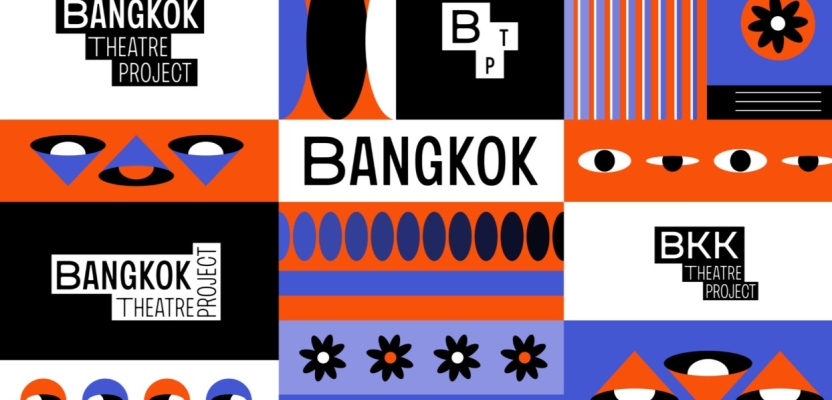
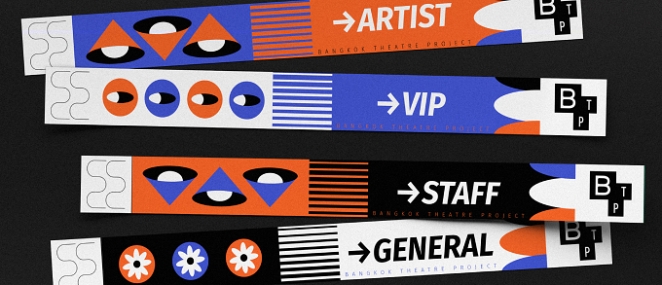
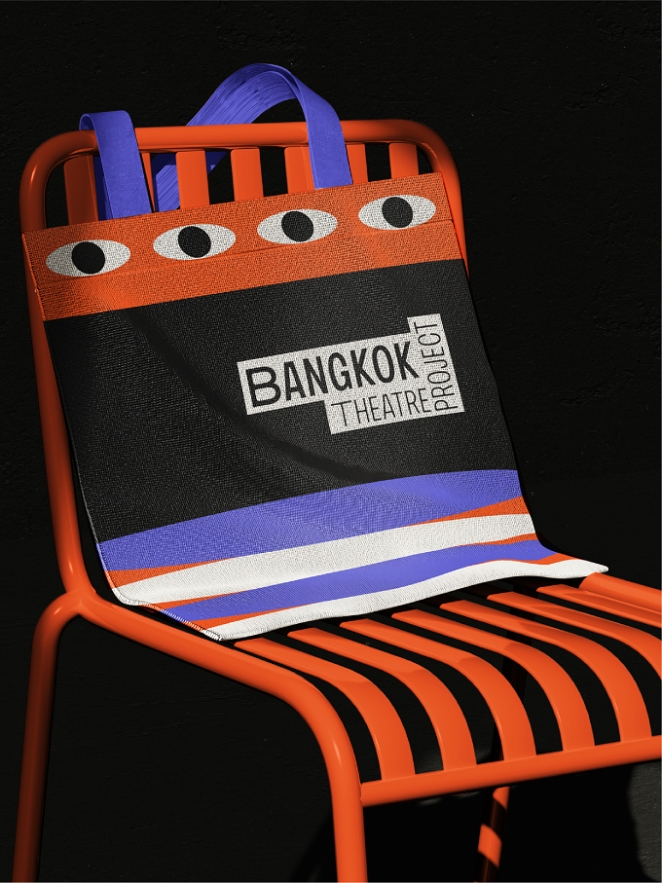
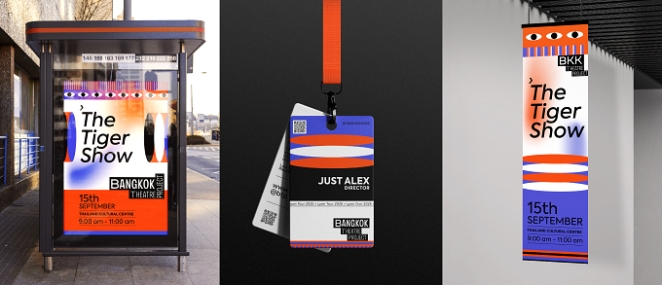
The resulting identity was conceived as a flexible visual system that could support a wide range of productions while remaining instantly recognisable across digital platforms, printed materials, merchandising and environmental graphics. More importantly, it was designed to grow alongside Bangkok Theatre Project as it continues to make theatre more accessible, engaging and culturally relevant for new generations of audiences.
How did the initial pitch/brainstorming phase go?
Our earliest conversations weren't about theatre—they were about childhood.
We kept coming back to a simple idea: for children, play is the first form of storytelling. A cardboard box becomes a castle, a blanket becomes a cape, and imagination effortlessly transforms the ordinary into something extraordinary. We realised that theatre is, in many ways, an extension of that same instinct. It invites children to explore, imagine and believe without limits.
That insight became the starting point for the entire creative process. Rather than looking at references from other theatre companies, we focused on understanding the emotional experience behind children's theatre—the excitement of discovering new worlds, meeting unforgettable characters and sharing those moments with family.
At the same time, we recognised that the brand needed to speak to two very different audiences. For children, it had to feel playful, inspiring and full of possibility. For parents, it needed to communicate trust, quality and the confidence that every production would be a meaningful cultural experience.
From that point on, we stopped thinking about designing an identity for a theatre company. Instead, we set out to create a brand that celebrates play as the beginning of creativity and imagination as the force that brings every story to life.
What was the process behind ideating the concept?
Once we established that play and imagination would become the heart of the brand, the next challenge was translating those ideas into a visual language that could grow with the company rather than belong to a single production.
From the beginning, we deliberately avoided the familiar visual clichés of theatre—curtains, masks and stages. Instead, we wanted to capture something far more universal: the feeling a child experiences just before a story begins. That moment of anticipation, curiosity and endless possibility became the emotional foundation of the identity.
This led us to develop an open and flexible visual system, one that could adapt to a wide variety of productions while maintaining a consistent personality. Rather than creating a fixed identity, we designed a framework that could evolve with every new performance, allowing each story to have its own voice while remaining unmistakably part of Bangkok Theatre Project.
Throughout the process, one belief guided every creative decision: children's imagination has no limits, and we felt the identity shouldn't have them either. That principle encouraged us to create a brand that feels dynamic, expressive and constantly evolving—much like the stories it was created to tell.
Looking back, we realised we weren't simply designing a visual identity for a theatre company. We were creating a stage for stories that had yet to be told.
What was the production process like?
 Once the concept was established, every creative decision followed a simple principle: does this encourage a child's imagination?
Rather than creating a rigid identity, we designed a living visual system that could evolve with every new production while remaining true to its essence. The challenge was balancing playfulness and creative freedom with the consistency, quality and trust expected by families.
Instead of following visual trends, we focused on building a flexible identity driven by clear principles—one that could continue growing alongside Bangkok Theatre Project without ever losing its character.
What was the biggest challenge during production? How did you overcome it?
The biggest challenge was finding the balance between two worlds that, at first glance, seem completely different.
The identity needed to spark children's imagination—capturing a sense of play, curiosity and wonder—while also communicating trust, professionalism and quality to parents. If the visual language leaned too far towards childhood, it risked losing credibility. If it became too institutional, it would lose the magic that makes theatre such a memorable experience.
Rather than trying to find a compromise between those audiences, we realised they shared something far more meaningful: a love for great stories. That shift in perspective changed everything. Instead of designing for different age groups, we started designing for the emotions that live theatre creates, regardless of who is sitting in the audience.
That approach allowed us to create an identity that doesn't speak like a child or an adult. It speaks the language of storytelling—building anticipation, inviting discovery and leaving space for every person to complete the experience with their own imagination.
Looking back, we realised the real challenge was never designing a brand for children. It was creating a brand that reminds adults why imagination is something we should never outgrow.
What kit/tools/software were used to create the project?
Digital tools played an important role, but they were never our starting point. The process began with research, conversations and sketching to understand the emotions the brand should evoke.
Because the concept was rooted in play and imagination, we experimented with geometric shapes, coloured paper and modular building blocks to explore the logo's structure. In many ways, before designing for children, we tried to design like them—staying curious, embracing experimentation and letting ideas emerge naturally.
Once the concept was established, Adobe Illustrator became our primary tool for developing the identity system, while Adobe Photoshop helped us visualise the brand across different applications.
Ultimately, we believe the most important design tool isn't software. Ideas don't come from software—software simply gives them form.
What is one funny or notable thing that happened during production?
One of the most memorable moments came on the day we presented the concept.
Like most designers, we arrived ready to explain every creative decision, walk through the strategy and answer questions. But something unexpected happened instead.
As soon as we began revealing the identity, our clients started smiling. Before we had even finished the presentation, they were already imagining new characters, future productions and all the possibilities the brand could grow into. The conversation quickly shifted away from the logo itself and became a discussion about the universe the identity could create.
That was the moment we realised the project had achieved exactly what we had hoped for. The identity wasn't simply representing a theatre company—it was inspiring imagination. It was encouraging people to tell stories before the first performance had even taken place.
For us, that was the greatest compliment we could have received. They weren't just responding to the design; they were already envisioning the future of the brand.
The first people who started playing with the brand weren't children. They were our clients.
What’s the main message of this project and why does it matter?
 We believe imagination isn't just part of childhood—it's something we carry with us throughout our lives. Theatre has the power to nurture it, spark curiosity and remind us that there are always new ways to see the world. That was the message we wanted Bangkok Theatre Project to embody: a brand that doesn't simply promote performances, but invites families to share experiences that inspire creativity, strengthen connections and remind us that the best stories aren't simply watched—they're lived.
How long did it take from inception to delivery?
The project took approximately two months, from the initial brief to the final delivery. That timeline included research, uncovering key insights, concept development, exploring multiple creative directions, several collaborative sessions with the client, and the creation of the final identity system. Rather than following a linear process, it evolved through continuous dialogue and refinement, allowing both the strategy and the design to mature naturally before reaching the final solution.
How did you ensure that the concept aligned with the brand's values, goals, and target audience?
Rather than starting with a list of brand values, we focused on understanding Bangkok Theatre Project's purpose: introducing a new generation of children to the magic of theatre while creating meaningful experiences that families could share together.
That purpose became the filter for every creative decision we made. We continually asked ourselves whether the identity sparked curiosity, encouraged play and left room for imagination to do the rest. At the same time, it needed to communicate the quality and trust that parents look for in a cultural experience.
The moment we realised the brand could connect emotionally with both children and adults—without compromising its essence—we knew the concept was truly aligned with the project's purpose.
Were there any alternative concepts or ideas considered during the ideation phase? If so, what led to the selection of the final concept?
Yes. During the ideation phase, we developed three distinct creative directions. Although each one told a different story and proposed its own visual language, they all shared the same objective: introducing children to the magic of theatre through imagination and shared experiences.
What ultimately set the final concept apart was its ability to extend far beyond a visual identity. It didn't just answer the immediate needs of the brand—it opened up an entire universe of possibilities. It created space for new characters, future productions and evolving narratives, while maintaining a strong and coherent identity. In many ways, it had the potential to become a living system rather than a fixed design.
That long-term potential became the deciding factor. Rather than choosing the most visually compelling concept, we chose the one with the greatest capacity to keep telling stories for years to come.
Can you discuss any collaborative or interdisciplinary aspects of the ideation process, such as working with other departments or external partners?
 While we didn't collaborate with other creative departments, the project was deeply interdisciplinary. We immersed ourselves in the world of children's theatre, exploring how live performances engage young audiences and what makes those experiences meaningful beyond entertainment.
At the same time, we researched early childhood learning principles, particularly the way children interact with shapes, colours, textures and visual patterns during their first years of development. Rather than treating these as purely theoretical references, we allowed them to influence the creative process itself, shaping a visual identity that encourages play, exploration and imagination.
We believe this combination of cultural research and insights into early childhood development helped us create a brand that feels authentic—one that resonates not only with children, but with the families who experience theatre alongside them.
What role did consumer research or market analysis play in shaping the concept and its execution?
Research played a fundamental role throughout the project. It provided the conceptual, cultural and strategic insights we needed to understand the context in which Bangkok Theatre Project wanted to grow.
We studied children's theatre companies from around the world to understand how they built their brands, engaged with their audiences and communicated their purpose. That process helped us identify an opportunity to create something distinctive—an identity that went beyond industry conventions and instead focused on play, imagination and shared experiences as its defining qualities.
Can you discuss any unique or unconventional production techniques or approaches used to bring the idea to life?
There wasn't a particularly unconventional production technique behind this project. What made the process unique was our commitment to keeping the concept at the centre of every decision. From research to execution, every creative choice was guided by the same goal: building a living identity that could grow with Bangkok Theatre Project while continuing to inspire play and imagination.
How did you ensure that the concept remained innovative and stood out in a crowded marketplace?
Rather than chasing innovation for its own sake, we focused on finding an authentic idea. Our research helped us understand how children's theatre companies communicated and revealed an opportunity to develop a distinctive visual language. Instead of relying on familiar industry conventions, we created an identity built around play as a creative system—one that could evolve with every new story while remaining true to its essence.
Ultimately, we realised that true innovation isn't about being different for the sake of it—it's about building an idea strong enough to remain relevant over time.
What do you hope it achieves for the brand?
 We hope Bangkok Theatre Project becomes much more than a children's theatre company. We hope it grows into a brand that inspires new generations of children to discover theatre as a place to imagine, learn and create lasting memories with their families.
If, years from now, the identity continues to grow with every new story while inspiring the same sense of curiosity and wonder that shaped its creation, we'll feel the project has truly fulfilled its purpose.
Credit list for the work?
Juliana Castaño / Frak Hernandez / 781studio