
From the early days of high-resolution drum scanning and pre-Photoshop workflows to running a global post-production studio across London and Tokyo, Love Retouch has spent decades refining the art of visual craft. Founded in 2008 by three former colleagues, the studio has built its reputation on premium retouching, colour grading and a deeply personal understanding of each photographer’s creative vision.
In this interview, Director Andy Greig shares how staying deliberately boutique has helped Love Retouch maintain uncompromising standards, why analogue heritage still matters in a digital-first industry, and how the studio is approaching AI, ethical retouching and international growth without losing sight of the human artistry at the heart of its work.
How was your company born and where are you based?
 Our roots actually go back to the 90s, when we entered the industry during the early days of high-res drum scanning and then the infancy of digital photography. We started out on the Barco system pre-Photoshop, where there was no such thing as layers or Apple Z. So if you made a mistake, you basically had to start over.
This taught us to hone our craft from the outset. Having witnessed the massive shift as digital overtook analogue capture, three of us, all former colleagues, decided to combine our expertise. In 2008, we founded Love Retouch in London with a unified vision for premium visual post-production. Today, that vision has gone global; we operate out of our original London base, as well as our studio in Tokyo, then we have a network of freelancers we can call on if needed, from South Africa to Texas.
What was the biggest challenge to the growth of your company?
Our greatest challenge has actually been a counterintuitive one: intentionally choosing to remain a focused, boutique studio. We’ve consciously managed our growth to protect our signature, uncompromising attention to quality.
Staying boutique allows us to truly get to know each photographer’s personal aesthetic, understanding everything from their preferred retouching style to how they need a colour grade to feel. In post-production, some things defy verbal explanation, especially the final colour grade of a series. It’s not something you can boil down to a formula; you have to feel it. How else do you make a silver foil floor ‘more crunchy, like a chocolate wrapper’?
That level of deeply intuitive, craft-driven connection is something a client simply won't get when dealing with a massive enterprise or an account manager.
Which was the first huge success that you can remember?
Rather than pointing to a single, flashy milestone, we’ve always measured our success by a different metric: longevity. In this industry, trust is hard-earned and easily lost. For us, the ultimate validation is that so many of the photographers we started with years ago are still our core clients today. I see being trusted to deliver major global campaigns time and again, while growing alongside our artists, as a far greater success to us than any single 'big break' could ever be.
What’s the biggest opportunity for you and your company in the next year?
 For me the year ahead is all about intentional, curated growth in Tokyo. Our focus is beautifully balanced: we are nurturing the deep-rooted partnerships, with the likes of long-term client Masami Naruo, that have defined our studio for years, while proactively introducing our boutique philosophy to new creatives, like Shotaro Shinmei. Operating across both London and Tokyo gives us a unique vantage point to connect with fresh talent and bring our signature, uncompromising post-production to a wider network of global artists.
Can you explain your team’s creative process? What makes it unique?
Our process is unique because it bridges two worlds: global efficiency and deep analogue heritage. Operating dual hubs in London and Tokyo creates a seamless, near-24-hour creative work cycle. This allows us to deliver immaculate quality even under exceptionally tight deadlines.
But what truly sets us apart is our roots. Unlike newer studios that only know a digital workflow, we understand the chemistry and soul of traditional film. True colour grading is so much more than the 30-second sliders and colour wheels you see on social media snippets.
A perfect example of this was a project we delivered in January 2026. The series was shot entirely on film and hand-printed by the photographer to establish their own unique grade. Our role wasn't to overwrite that, but to meticulously clean the scenes and elevate their artistic vision. I believe an experienced retoucher isn't there to force a style, but to protect, assist, and, when necessary, subtly guide the original intent towards a more commercially appropriate outcome.
How does your team remain inspired and motivated?
We stay driven by seeking out diverse, high-caliber briefs. Because every project demands a unique creative solution, our day-to-day workflow remains fresh and inspiring.
How has COVID-19 affected your company?
 The initial pandemic period was incredibly challenging due to sudden industry-wide pauses in production. However, adapting to a fully remote model ultimately catalyzed our growth, inspiring us to establish our permanent base in Tokyo, which remains core to our operations today.
Which agencies do you gain inspiration from? Do you have any heroes in the industry?
We are consistently inspired by the vision of the major creative agencies we collaborate with. Ultimately, our motivation stems from a collective passion for crafting pristine imagery that leaves a lasting visual impact.
What is one tip that you would give to other agencies looking to grow?
Prioritise your core identity over rapid scaling. Staying boutique has allowed us to retain the deeply personal, high-touch client experience that larger setups often lose. Grow with your clients and only take on new clients if they really do fit with you.
How do you go about finding new clients/business? (Pitching, work with retainers, etc.)
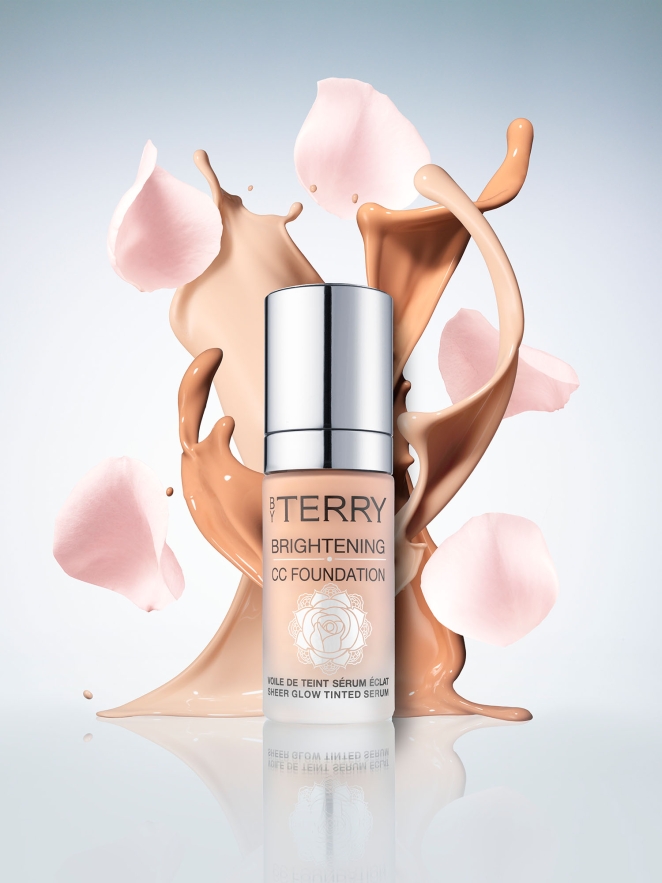 Our pipeline relies primarily on word-of-mouth recommendations from established industry peers, which we complement by reaching out directly to brands and creators whose work resonates with us.
There are the usual social channels which allow less established or networked creatives to discover us, and our Creative Pool profile to share our portfolio of work with a world-wide audience that may not find us otherwise.
What’s your one big hope for the future of the industry?
My hope is that as AI continues to rapidly reshape post-production, the industry fiercely protects and values the pure, foundational craft of photography. Commercial pressures will always exist, but genuine artistry has a soul that cannot be touched by a machine.
For us, AI isn’t a threat, it’s just another tool. But it’s a tool to be used with intention, not a one-size-fits-all replacement for genuine artistic intuition. Can AI on its own truly create something entirely new and exciting? I’m skeptical. The magic only happens when a human artist is driving the wheel art directing.
A perfect example of this is our collaboration with the studio Lots of Cream Lots of Sugar (LCLS). They use AI to push creative boundaries, and we step in to refine and ground the vision, bridging the gap between what AI can generate and the realistic, hyper-detailed execution required for their often wonderfully outlandish concepts.
Can you share a defining moment in your company's journey that shaped its identity or direction?
A defining constant has been our ongoing partnership with elite photographers and world-class agencies. Every successful project solidifies our identity as a team that prides itself on delivering stunning visual assets.
How do you foster a culture of innovation and experimentation within your team?
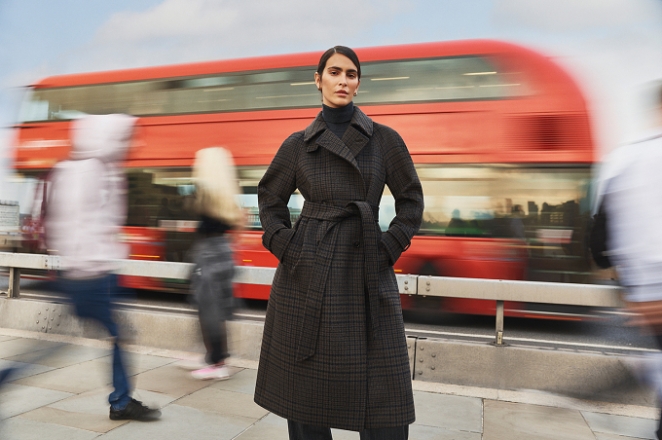 We actively encourage our artists to track emerging software, master cutting-edge retouching techniques, and pitch alternative workflows to keep our creative approach sharp.
What measures do you take to ensure diversity and inclusion are prioritised within your company?
We maintain an inherently open and collaborative environment where diverse perspectives naturally shape our studio culture and daily work.
Can you describe a project that challenged your team creatively and how you overcame any obstacles?
Creative pressure usually stems from aggressive timelines or complex client demands. We navigate this through complete transparency from day one. Initiating clear, upfront conversations helps clients fully grasp the technical scope required to execute their vision.
How do you balance maintaining your company's unique creative voice while meeting the diverse needs of clients?
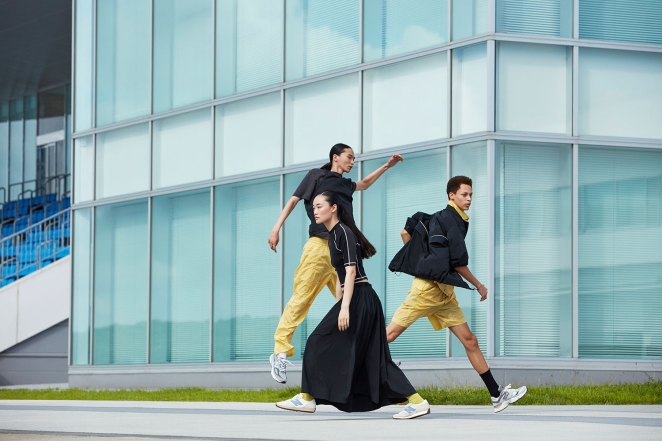 By staying fiercely authentic to our signature standard. Clients hire Love Retouch for our distinct expertise, so maintaining our creative integrity is exactly how we deliver the best results for them.
What strategies do you employ to adapt to changes and trends in the industry while staying true to your company's values?
We practice structural flexibility. It is essential to remain agile enough to adopt new technological trends without ever compromising our foundational creative beliefs.
Can you share a memorable client success story that exemplifies your company's approach and impact?
We view our role as the final, critical polish—the 'cherry on top' of major campaigns. Operating behind the scenes, our success is defined by seamlessly elevating our clients' raw creative ideas to an impeccable global benchmark.
In what ways do you invest in the professional development and growth of your team members?
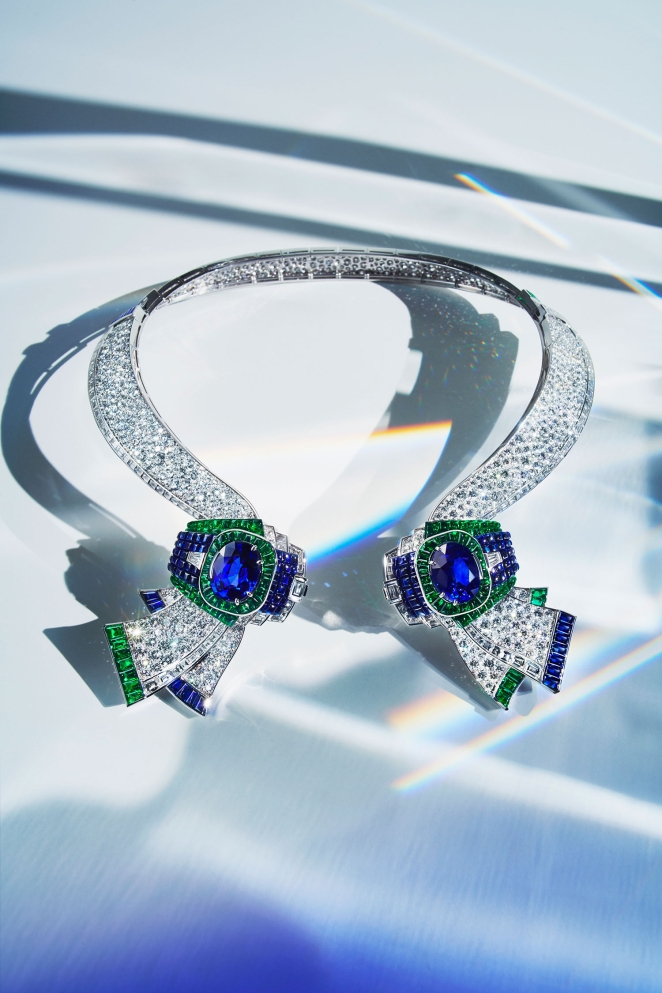 We continuously support our team’s growth by sponsoring advanced software training courses and dedicating studio time to skill-sharing and innovative workflow testing.
How do you approach sustainability and ethical practices within your company's operations and projects?
For us, sustainability and ethics are active, daily choices. On an operational level, we focus on practical impact: minimizing our physical footprint by supporting remote-first workflows, enforcing strict recycling (if we use paper at all), and ensuring the certified, responsible disposal of outdated tech hardware.
However, our most profound ethical impact is on the screen. Retouching carries massive social responsibility; it directly shapes how people view themselves and the imagery they encounter daily.
We take this stewardship seriously. For example, in 2025, we worked with a client in Norway, where regulations around body alteration are very strict. During the project, we received a request to modify an element of a model’s make-up, but after reviewing it with our team and the client, we realized the request pushed past those legal and ethical boundaries. Having the industry experience to say 'stop' and guide a big-name client away from harmful alterations is central to our ethos. Advertising will always require post-production, but by partnering with a studio like ours, brands can achieve beautiful results with a gentle, respectful hand.
Can you discuss a time when your company had to pivot or innovate in response to unforeseen challenges, and what lessons did you learn from that experience?
The key lesson we've learned is that operational agility is mandatory. To thrive in a rapidly changing media landscape, you must be willing to continuously refine how you work.
Do you have any websites, books or resources that you would recommend?
 We do a lot of fantastic work with Beyond Noise—their platform is exceptionally innovative and informative.
For literature, a few essential titles include Singular Beauty by Jai Odel, Girls Blue by Hiromax, In The American West by Richard Avedon, Still Life by Irving Penn, Farewell Photography by Daido Moriyama, Yosemite and the Range of Light by Ansel Adams, and The Last Resort by Martin Parr to name but a few.