
From its beginnings as a Google partner agency helping to expand Street View in 360 degrees, Circus has grown into an immersive technology studio creating digital experiences and tools for brands, businesses and public organisations. Formally based in London, the studio combines creativity and technical expertise to develop everything from immersive tours and virtual experiences to practical digital solutions designed to solve real-world challenges.
In this interview, Circus shares the story behind its growth, the opportunities shaping its future and the creative process that drives its work. From creating an immersive tour of the Palace of Westminster to developing an award-winning NHS navigation tool that helps oncology patients find their way around a busy London hospital, the team explains how immersive technology, innovation and experimentation continue to shape its approach.
How was your company born and where are you based?
 Circus started as a Google partner agency in 2011, when StreetView was attempting to map more of the world in 360 degrees. We rapidly became their top performing agency, and grew with immersive tech from that base. We’re formally based in London, but the wider team comes from all over the country.
What was the biggest challenge to the growth of your company?
Educating brands as to how immersive media can be a valuable portion of their marketing mix. The emotional impact has always been obvious to anyone who’s tried it, but the channels and use-cases weren’t as well established as they are today.
Which was the first huge success that you can remember?
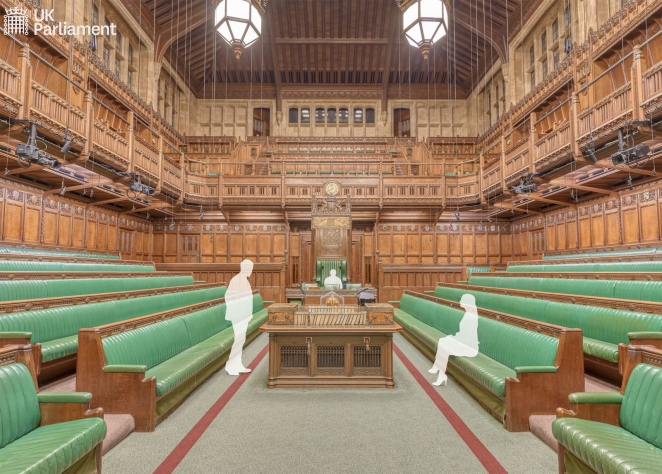
We got commissioned by the Houses of Parliament to create an immersive tour of the Palace of Westminster. It was the biggest and most public job we’d done and suddenly there were press events, public figures and international reach to consider as part of the launch.
What’s the biggest opportunity for you and your company in the next year?
 Moving from creating single-use content and experiences for marketers, to building platforms and tools that solve operational challenges for big businesses.
Can you explain your team’s creative process? What makes it unique?
We call our process ‘Carousel’ and it comes in a variety of flavours depending on the project. The simplest version takes a traditional route through pre-production, production and post-production. But the full-fat version takes into account the wider context of the content/tool we’re creating. All the way from researching international best practice and the competitive landscape, through to a full digital transformation plan, which considers how the output will be integrated by the client’s people, processes and systems.
How does your team remain inspired and motivated?
Variety. We don’t have off-the-shelf products. We are a creative studio with a technical specialism. So every project starts with a blank page and we design it from scratch. One day we’re learning about faith-based meditation techniques for a consumer VR app. The next we’re mapping a hospital to figure out how to help patients find their way around. The next we’re filming robots at a huge distribution centre. It’s a privilege to do something different every day.
How has COVID-19 affected your company?
 COVID created a spike in demand for remote visiting solutions - such as for factories, venues and universities - which accelerated the adoption of those tools by businesses that wouldn’t otherwise have thought of it. The other way it’s affected us is in our ways-of-working. We were always mostly remote, but went fully remote for COVID and never looked back. It’s meant the team can come from anywhere in the country, and we’ve established a cadence of communication and meetings that keeps us all connected, as well as flexible.
How do you go about finding new clients/business? (Pitching, work with retainers, etc.)
Organic search is still the top route - with LLMs contributing an increasing share of new enquiries. Proactively, it’s all about partnerships - long-term relationships with other organisations, like agencies, for whom we act as a specialist technical partner. A large proportion of our work comes from previous clients - so clearly they enjoy working with us. Which is nice to know!
How do you foster a culture of innovation and experimentation within your team?
We’re always trying new things. We actually have a shared document where team members add ideas for new tools or techniques that would improve what we deliver for clients. Even if no-one has asked for them, we’ll usually make time to test them and create demos. Sometimes you just have to be able to show something for clients to buy into it. Then, instead of shelving them, we’ve created a special place on our website - known as ‘backstage’ - where they can live, and hopefully inspire future briefs.
How do you balance maintaining your company's unique creative voice while meeting the diverse needs of clients?
 We assemble a dedicated team for each project. If we’ve done that correctly, then the team’s ‘voice’ ought to be aligned with the client’s vision, and those two things are working in harmony, not in tension.
What strategies do you employ to adapt to changes and trends in the industry while staying true to your company's values?
Our model has always been to have a core team plus a halo team of specialists. Most of the core team have been with Circus for five to ten years, so that engine is well-oiled. The halo team can then act as a pool of talent which can adapt over time to incorporate new technologies and respond to demand. That’s helped us maintain a high level of experience and quality, while being nimble in this fast-moving tech space.
Can you share a memorable client success story that exemplifies your company's approach and impact?
Our recent project with the NHS won an award for diversity and inclusion. It was an online tool to help oncology patients - specifically those with challenges such as accessibility, anxiety or language - to find their way to appointments at a busy London hospital. Patients are able to input the destination from their appointment letter, and be shown a complete flythrough from entrance to that destination. All accompanied by a virtual guide, in their chosen language, and available on their phone to follow along on the day. It’s had such positive feedback from patients and staff, that we’re now going to expand to map the entire hospital.