
What does it take to build a successful career in art direction and design? For Daniel Forni, Senior Integrated Art Director and Designer at Daniel Forni Ltd, the answer lies in original thinking, curiosity and a willingness to challenge the brief. With 15 years of industry experience, Forni has worked across global brands, local businesses, campaigns and experiential projects, developing a concept-led approach that puts strong ideas and human insight at the centre of creative work.
In this Creativepool interview, Forni shares how his early interests in storytelling, books and film helped shape his creative career, why interrogating a brief is essential to the design process, and what aspiring creatives can do to build stronger portfolios and attract new clients. He also discusses the growing influence of AI on the creative industries, the enduring value of human judgement and originality, and why curiosity, humility and kindness remain essential qualities for exceptional creatives.
How did you first get into the industry?
 I didn't set out to become a graphic designer or art director. That path only really became clear towards the end of my Foundation degree, when I realised my work had naturally been heading in that direction all along. My first design internships came during my final year at university, eventually leading to my first permanent role as a Junior Designer.
Where are you based now and who do you work for?
I’m based just outside of London and currently work independently, partnering with agencies and brands on campaigns, experiences and integrated creative projects.
What is your personal background and what role did it play in your career?
I grew up in Kent in a single-parent household, but I spent a huge amount of time with my Spanish family, particularly my mum and grandmother, both of whom worked as nurses. Home was a mix of English and Spanish, and childhood was split between Kent and regular trips to Spain, so I grew up around different cultures, perspectives and ways of communicating.
I was also quite a quiet kid. I was happiest with a sketchbook, a pile of books or a film, usually all three at once. Looking back, I think that's where my love of storytelling and making things began. I've never been particularly competitive with other people, only with myself, and that's probably stayed true throughout my career.
If you weren’t in your current industry, what would you be doing?
 Probably psychology, architecture or teaching. But I get to employ a little of all of them within my work so it’s the best of four careers.
Can you explain your creative process? What makes it unique?
Absolute interrogation. Of the brief. The ask. The tools needed. Pick it apart ruthlessly. If you build your work on unstable foundations it’s never going to reach the place it needs to.
And then start building without fear about ditching ideas, or picking them back up if they stay with you.
How would you describe your style?
Concept-led, human and crafted.
Which individuals do you gain inspiration from? Do you have any heroes in the industry?
 Many of my colleagues, and consequently friends, have been and continue to be my heroes. I can hear the eye rolling through the page but it’s true. From friends who have had no alternative to straight back to work after maternity leave when their heart is telling them to be at home, from those who have been made redundant after years of service, then making the bold choice to create their own agency. These are the brave people that are making life-changing decisions.
What tips would you give to aspiring creatives looking for work?
Create the portfolio that showcases who you are, not what your commercial work allowed you to be.
Create that partnership campaign you know would break the mould. Design that identity relaunch that makes people reconsider the brand again.
Never underestimate how important it is to show your thinking. Software can be learnt. Original thinking is much harder to teach.
What tips would you give to other professionals to get more clients?
Relationships aren’t just for Christmas.
Some of the best opportunities come from staying in touch with people, sharing your thinking and being genuinely interested in what others are creating. Creative industries are surprisingly small, and people remember those who are generous with ideas and easy to collaborate with.
Can you share a memorable experience from your career journey that shaped your approach to creativity?
 One project that always sticks with me was an exhibition stand that changed direction almost overnight. We'd done the work upfront, challenged the brief, landed on a concept everyone believed in and got it signed off. But as the project evolved, more conversations happened, more stakeholders became involved and the story shifted completely. We realised the stand wasn't really about communication anymore, it was about security.
That meant redesigning a £100k stand in little more than a day after the 3D designer had already rolled off the project. It was one of those moments where panic would have been the easiest option. Instead, I made a cup of tea, accepted it was going to be a very long night and got on with it.
It taught me two things. Firstly, panic is the enemy of productivity. Secondly, you're capable of far more than you think you are when you're surrounded by good people and everyone pulls in the same direction. Looking back, I think those moments, when your back's against the wall and the only option is to keep moving, are often where you grow the most as a creative.
What kind of tools, kit or software could you not do without?
My desert island design studio starts with the Adobe Creative Cloud suite. For me I’m never sitting too long in one programme or another, my workflow is definitely cemented in hybridity.
Beyond that, anywhere I can scribble.
What’s your secret to staying inspired and motivated?
For me it’s looking outside where I’ve been, to creative places and journeys that are going to challenge me conceptually, creatively and in terms of execution.
And the second thing would be ensuring a creative outlet that has no boundaries, no clients, and no one to answer to but yourself and your idea. We can often get bogged down by “Can we please make the logo 20% bigger”, so ensuring you have a place that is just yours, where you can flourish, will keep you joyful and your work fresh.
What’s the work achievement you’re most proud of?
 It’s less about a single project and more about consistency and growth.
After 15 years, I’m proud that I’ve been trusted to work across global brands, local businesses and everything in between, keeping a solid idea at the centre of my process.
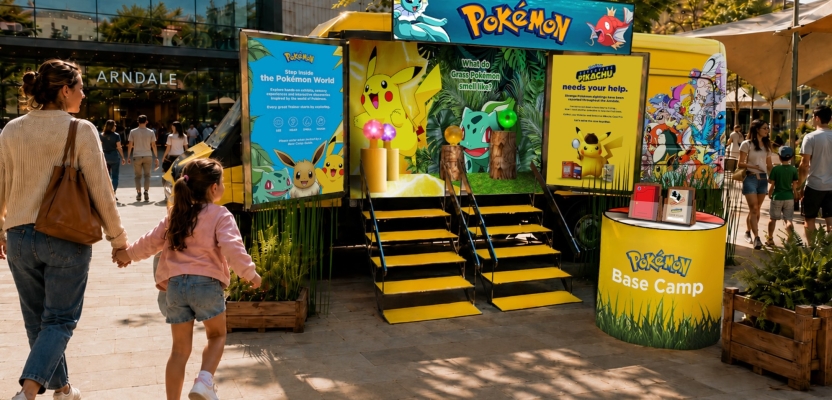
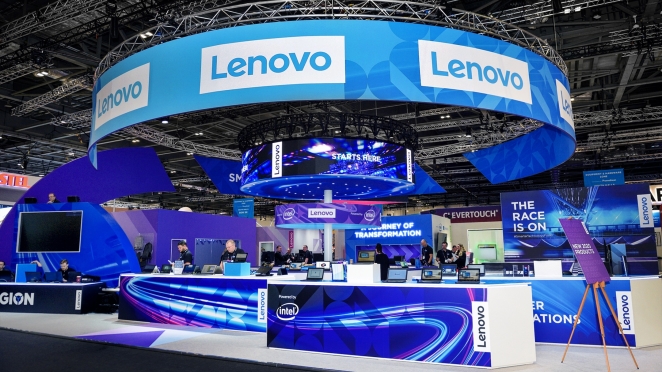
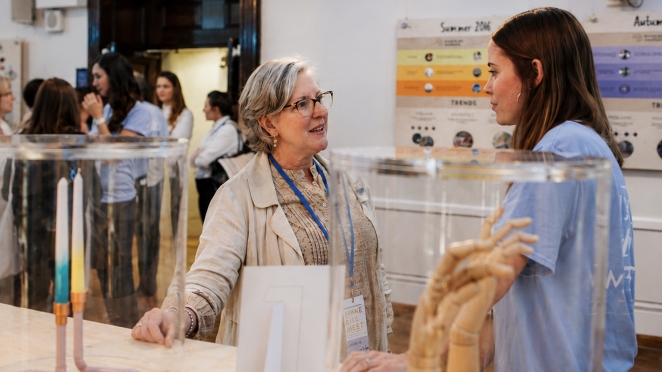
That said, there’s nothing quite like literally walking through your work, so my exhibition and experiential work is incredibly special to me.
As someone with experience in the industry, what trends do you foresee shaping the future of creativity?
I think we’ll see an even bigger divide between execution and thinking.
With the growth of AI and the subsequent ability for processes and executions to be faster and more accessible I think we’re going to see a value shift towards human curiosity, judgement, strategy and genuinely original ideas. AI is a tool, it’s not taste.
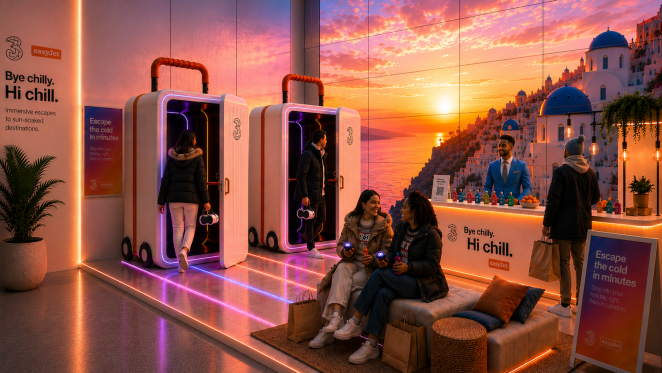
I do also think that live experiences will l continue to grow because people increasingly value things they can participate in rather than simply consume.
What do you think sets apart truly exceptional creatives from the rest of the pack?
Without a doubt curiosity and humility.
The best creatives I’ve worked with aren’t the loudest people in the room. They’re the ones who keep asking better questions, are happy to challenge their own assumptions, are more than happy to say they didn’t get it quite right, and never ever want to stop learning.
Talent gets you noticed. Curiosity keeps you relevant. And kindness gets you invited back.
How do you think technology has influenced the creative industries and how have you adapted to these changes?
 Technology has lowered the barriers to making things, which is exciting.
I’m massively enthusiastic about AI, and have employed it myself for a while, but I see it as a creative assistant rather than a creative director. I use it to explore, refine and accelerate ideas, not to replace them.
The future isn’t AI-generated creativity. It’s creatively directed AI.
What is the one thing that you would change about the industry?
I'd love to see us be a little braver. It feels like we're surrounded by more content than ever before, but not necessarily more original thinking. Trends move quickly, algorithms reward familiarity and it's easy to end up making work that's technically brilliant but instantly forgettable. I'd love to see us back ourselves a little more, protect bold ideas and remember that the work people still talk about years later usually started with one simple, courageous thought.
Any websites, books or resources you would recommend?
I probably consume more creativity than I do read about creativity. Pinterest has been close to my heart since the beginning of my career and I hope it always will be. It is one of my favourite places to explore because it sends you down rabbit holes you never expected to go down. One image leads to a photographer, who leads to an architect, who leads to an exhibition or an artist you've never heard of. My boards are always brimming with ideas that have piqued my interest and will no doubt prove useful somewhere down the line.
Away from the screen, I love making plans with friends that involve something creative. Whether it's meeting for a coffee before wandering around a gallery, exploring a creative market or even ending the week at a sip-and-paint, I think inspiration is best when it's experienced, not just consumed.