
Generative AI is rapidly changing the way brands approach visual content, but for Naomi Bilder, Founder and AI Creative Director of Bilder Studio, the technology is only one part of the creative process. Based in Manchester, Bilder Studio uses AI alongside art direction, visual storytelling and post-production to create fashion, beauty and lifestyle campaigns that feel considered, cohesive and commercially relevant.
Rather than treating AI as a shortcut to image generation, Bilder approaches it as a new creative production medium – one that can open up visual worlds that might otherwise be difficult, expensive or impossible to produce. In this interview, Naomi discusses the evolution of Bilder Studio, the challenges of building an AI-led creative business, her approach to campaign development and world-building, and why creative judgement, taste and authorship will remain essential as AI becomes increasingly embedded in the industry.
How was your company born and where are you based?
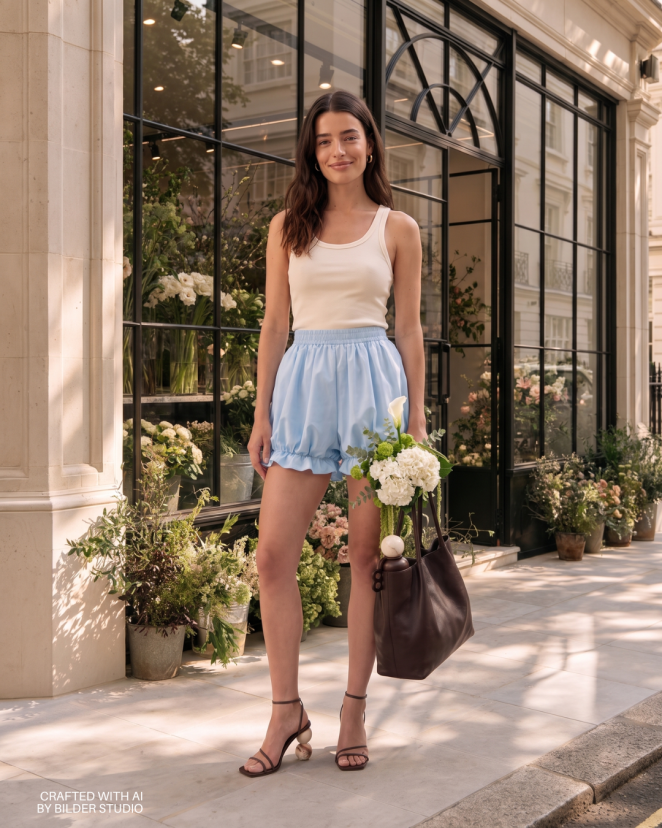 Bilder Studio grew quite naturally out of the way my own creative practice was evolving. My background is in art, branding and building visual identities, so I have always been interested in the point where concept, image-making and commercial storytelling meet.
When I started working seriously with generative AI, I was much less interested in the novelty of being able to generate an image and much more interested in what could happen if you treated it as a proper creative production medium.
I began building complete visual worlds rather than individual images: developing characters, products, environments, styling, lighting and campaign narratives that could all belong to the same universe. That gradually became Bilder Studio.
Today I work primarily across fashion, beauty and lifestyle, creating everything from product imagery and beauty editorials to complete campaign concepts.
I run the studio independently, so I am involved in every stage of a project, from the original idea and visual research through to generation, selection, consistency, retouching and final delivery. I think that hands-on approach has become a big part of the studio's identity.
Bilder Studio is based in Manchester, UK, but the nature of the work is very international. I collaborate with brands and creative teams across different markets, so the studio feels quite borderless in practice.
What was the biggest challenge to the growth of your company?
Probably separating what I do from the wider perception of AI image generation.
There is still an assumption that AI imagery means typing a sentence, pressing a button and receiving a finished campaign. In reality, generating an image is usually the quickest part of my process.
The difficult part is everything around it: developing the concept, choosing the right frame out of dozens of possibilities, maintaining the same product or person across an entire series, fixing details, controlling materials and lighting, and making sure the final images actually communicate something about the brand.
So part of growing Bilder Studio has been showing clients that they are not really buying access to an AI tool. They are buying art direction, judgement and a finished visual system.
The technology is becoming accessible to everyone, which actually makes that distinction more important.
What’s the biggest opportunity for you and your company in the next year?
I think the biggest opportunity is the move from brands experimenting with one or two AI images to using AI as part of real campaign production.
We are already at the point where the conversation is becoming less about whether an image was made with AI and more about whether the work is good, whether it feels like the brand and whether it performs the job it was created to do.
For Bilder Studio, that creates an opportunity to work on larger, more complete visual systems: campaigns that include product imagery, models, environments, detail shots and multiple formats rather than a single hero image.
I am particularly interested in projects where AI makes something possible that would otherwise be difficult, expensive or logistically complicated to produce, while still keeping a strong photographic and editorial sensibility.
Can you explain your team’s creative process? What makes it unique?
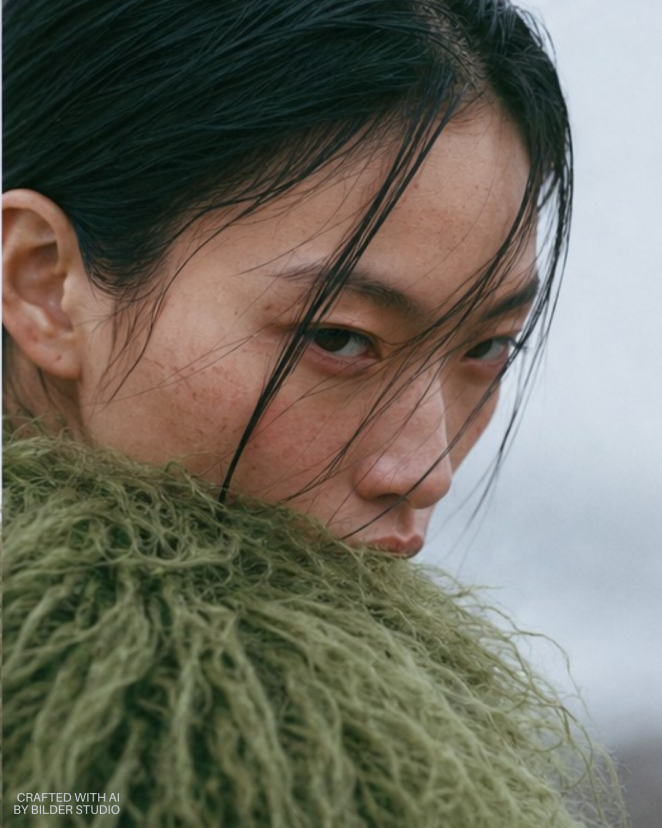 Everything starts with the idea rather than the tool.
I normally begin by understanding the brand, the product and the feeling the campaign needs to create. From there I build a visual direction around references, casting, styling, materials, colour, lighting and environment.
Then comes the generation process, but I rarely think of that as the final stage. I might create a large number of frames to find one expression, pose or composition that feels right. Once the direction is established, a lot of the work becomes about consistency: keeping the same person recognisable, making sure a product retains its shape and materials, and ensuring every image feels as if it was photographed as part of the same campaign.
Selection is a huge part of the process too. AI can give you endless possibilities, which means knowing what to reject becomes just as important as knowing what to create.
The final stage is retouching and post-production. I look closely at skin, hands, fabrics, reflections, typography, product details and all of the small things that can instantly make an image feel synthetic.
The goal is never to make something impressive because it was created with AI. The goal is to make an image that works.
How does your team remain inspired and motivated?
My inspiration comes from far beyond the technology itself.
A lot of my references come from fashion photography, cinema, old advertising, magazines, packaging, interiors, materials and things I notice in everyday life.
Sometimes the starting point for a project is extremely small: a colour combination, the texture of a fabric, a scene in a film, an unusual lighting setup or even the way two objects happen to sit next to each other.
I also think working across different categories helps. A beauty campaign can teach you something about light that later becomes useful for jewellery, while something from an interiors reference might end up influencing a fashion image.
AI changes very quickly, so there is always something technically new to explore, but I try not to let the technology itself become the source of the idea.
How do you go about finding new clients/business? (Pitching, work with retainers, etc.)
A lot of Bilder Studio is built around showing rather than explaining.
Because AI campaign production is still relatively new, it can be difficult for someone to understand what is possible from a description alone. Creating self-initiated campaigns has therefore been a very important part of building the studio.
They allow me to demonstrate how I would approach a fashion, beauty or product brief before a brand has even worked with me.
I share that work through my website, social platforms, portfolio channels and editorial features, alongside more direct conversations with brands and creative teams.
I think speculative work is particularly powerful in this space because it gives potential clients something tangible to react to. Instead of saying, "I could create a complete AI campaign for your brand", I can show what that level of art direction, consistency and world-building actually looks like.
For me, the strongest new-business conversations tend to begin when somebody has already seen the work and understands the point of view behind it.
What’s your one big hope for the future of the industry?
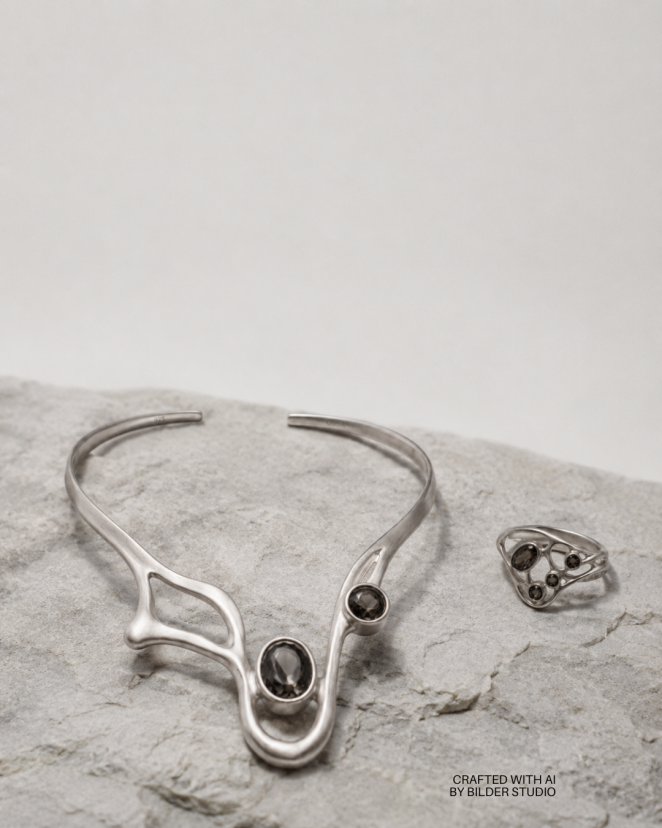 I would like the conversation around AI to become much more focused on creative authorship.
Right now, people often talk about the tool first. Which model was used? Was it generated? How quickly was it made?
I think those questions will become less interesting as the technology becomes normal.
Photography is not judged primarily by which camera was used, and eventually I think AI will move in the same direction. The more interesting questions are who made the creative decisions, what the idea was, why that image exists and whether it makes you feel something.
The tools will keep becoming easier. Taste, judgement and point of view will not.
Can you share a defining moment in your company's journey that shaped its identity or direction?
One of the defining moments was realising that what I was building could go beyond personal experimentation and become a genuine production model for brands.
From the beginning, I approached AI through art direction rather than as a way to create standalone images. I was thinking about the whole campaign: the casting, styling, environment, product, lighting and the relationship between every frame.
What changed was seeing that this way of working could solve real commercial problems. A brand could build an entire visual world without being limited by the usual constraints of locations, sets, production logistics or even what is physically possible to photograph.
That helped define what Bilder Studio should be. Not an AI image-generation service, but a creative studio using AI as part of a much broader art direction and production process.
The technology is important, of course, but the studio's identity has always been built around the idea that the tool should serve the creative direction, not become the creative direction itself.
How do you balance maintaining your company's unique creative voice while meeting the diverse needs of clients?
I do not think a studio should make every client look like the studio.
There is obviously a visual sensibility that runs through my work, particularly around composition, texture, atmosphere and editorial photography, but the starting point always has to be the brand.
My job is to understand what is distinctive about that brand and then push it somewhere interesting rather than imposing the same aesthetic on everyone.
The balance comes from having a consistent way of thinking rather than a fixed visual formula.
I can work on a very minimal Scandinavian fashion project and then something glossy, colourful and highly commercial for beauty, and they can look completely different while still being approached with the same attention to art direction and detail.
What strategies do you employ to adapt to changes and trends in the industry while staying true to your company's values?
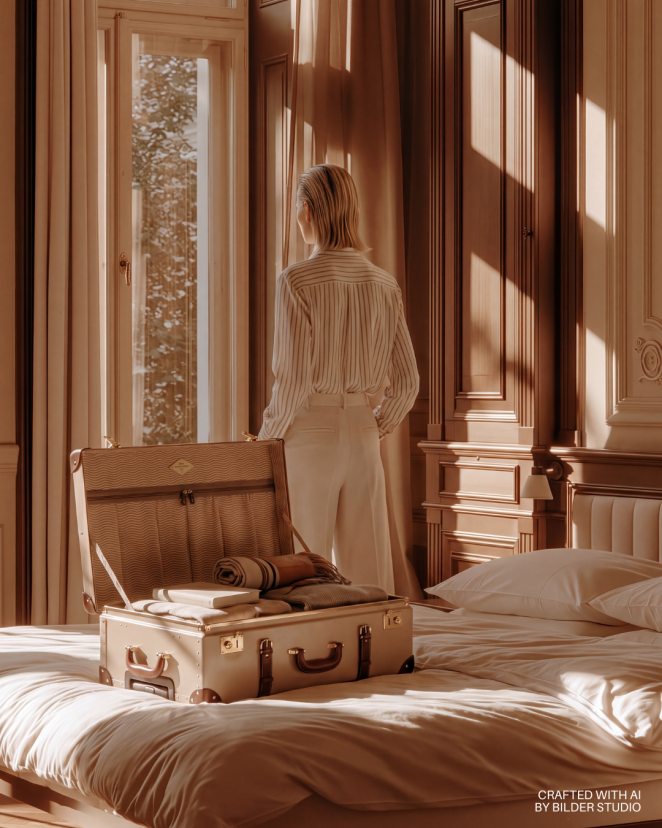 Working with AI means accepting that the technical landscape can change almost weekly.
New models appear, capabilities improve and workflows that were essential six months ago can suddenly become unnecessary.
I test new tools constantly because I need to understand what they can actually do, but I try not to confuse technical progress with creative progress.
If a new tool gives me better control over a product, a character or a particular type of lighting, that is useful. If it simply produces a fashionable visual effect that everyone else is already using, I am much less interested.
My approach is to stay very flexible about the tools and much more stubborn about the principles behind the work: strong ideas, believable details, intentional art direction and images that have a reason to exist.
In what ways do you invest in the professional development and growth of your team members?
As a one-woman studio, professional development is something I invest in very directly. I regularly attend industry events, take courses and workshops, and stay close to new developments in both creative production and AI.
I also take part in creative partner programmes, which gives me the opportunity to test new tools early, exchange ideas with other creatives and understand how the technology is evolving in practice. For me, continuous learning is essential because the tools change quickly, but the goal is always to use that knowledge to strengthen the creative work rather than chase every new feature.
How do you approach sustainability and ethical practices within your company's operations and projects?
Generative AI has its own environmental cost, but at the same time it can reduce other forms of resource use within creative production. Depending on the project, that might mean less international travel, fewer physical sets and location shoots, less transportation of crews and equipment, or fewer samples and temporary builds.
For me, sustainability is not about claiming that digital automatically means greener. It is about being conscious of both sides and using the technology intentionally rather than generating endlessly simply because we can.
The technology creates new possibilities, but it also creates new responsibilities. I think creative studios working with AI need to be willing to acknowledge both.
Do you have any websites, books or resources that you would recommend?
I spend a lot of time looking backwards as well as forwards. The Vogue Archive is one of my favourite resources for studying how fashion imagery, styling and art direction have evolved, while Scanned Fashion World is brilliant for discovering older campaigns and editorials that are harder to find elsewhere. Historical fashion references give me a much broader visual vocabulary and often lead to ideas that feel less predictable.