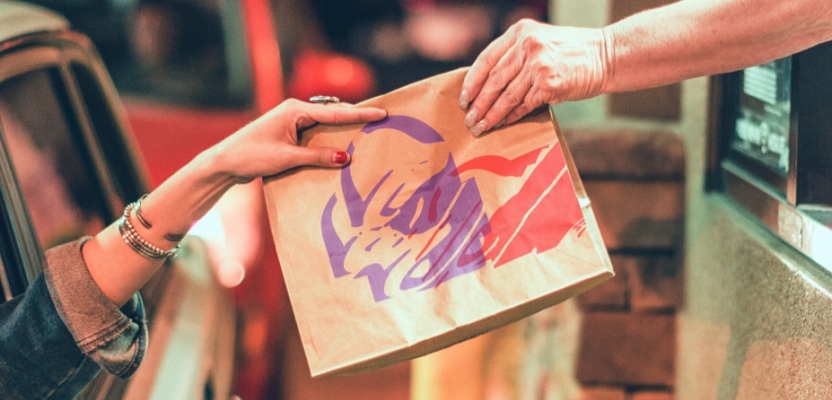

Apparently, today is Global Taco Day. Not National Taco Day, you understand. That clearly wasn’t quite ambitious enough. Taco Bell has teamed up with Duolingo to take the annual celebration worldwide, on the not entirely unreasonable basis that “taco” is one of the few words that barely needs translating. Spanish? Taco. French? Taco. German? Taco. Japanese and Hindi make a little more effort, but broadly speaking we appear to have discovered the universal language humanity has spent millennia searching for, and it’s something you can cover in hot sauce.
To mark this significant moment in the history of international relations, Taco Bell has launched a limited-edition Duo Habanero Sauce, dressed Duolingo’s psychologically manipulative green owl for the occasion and planned promotions around the world, including free tacos here in the UK. The official campaign stretches across markets including Britain, the US, Canada, Australia, China, India and Spain, with the brands describing the whole thing as a celebration of the way food and language bring people together. Which is all perfectly good fun, obviously, but it also raises a question I find myself asking more and more often as another suspiciously convenient “international day” wanders across my inbox: when exactly did everything start needing its own global celebration?
Because Global Taco Day is hardly operating in isolation. We now live in an age in which seemingly every foodstuff, profession, hobby, domestic animal and vaguely relatable human behaviour has been assigned a sacred spot in the calendar. Coffee has a day. Pizza has a day. Dogs have days. Doughnuts have days. There are days dedicated to sleeping, hugging, smiling and, presumably, several different kinds of cheese. Somewhere, at this very moment, a social media manager is opening an email with the subject line “National Stapler Appreciation Day: Brand Opportunity?” and wondering how their life came to this.
There are, of course, international and national days that genuinely matter. World AIDS Day matters. International Women’s Day matters. World Mental Health Day can create useful opportunities to discuss something people still often struggle to talk about openly. These dates exist, at their best, to focus attention, raise money, educate people or give a particular cause greater visibility. But inevitably the marketing industry looked at that same calendar, spotted a few empty Tuesdays and thought there was probably room for mayonnaise.
And that’s where things get a little strange.
When everything is a moment nothing is a moment
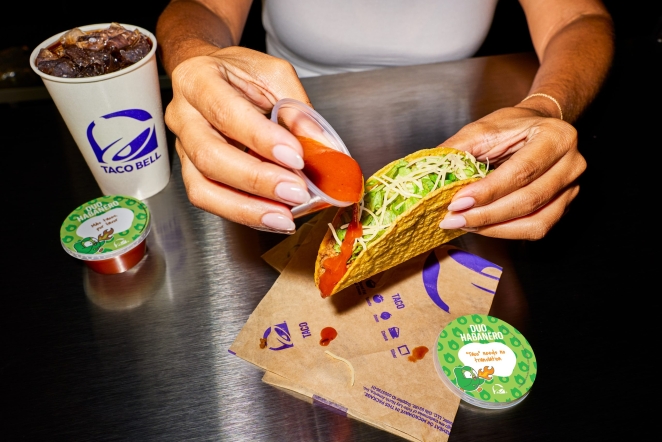
The corporate language surrounding these manufactured celebrations is particularly revealing because almost nothing is ever allowed simply to be a promotion anymore. We’re not giving away tacos; we’re “uniting fans around the world”. We’re not printing some amusing messages on sauce packets; we’re exploring “the powerful ways we connect with culture and with each other”. A limited-edition condiment can no longer just be a limited-edition condiment. It must apparently represent our shared humanity.
Taken literally, the grandiosity is ridiculous. Taco Bell and Duolingo aren’t really uniting the peoples of the world around a common linguistic heritage. Somebody in Birmingham is getting a free Crunchy Taco if they arrive early enough. Somebody else is going to photograph a packet of habanero sauce and put it on Instagram. A social media manager will reply with three fire emojis and an owl. By Wednesday, most of us will have moved on.
But there’s something revealing in the need to frame all of this as a “moment”, because brands have become obsessed with participating in culture while simultaneously discovering that culture is incredibly inconvenient. Genuine cultural moments don’t tend to arrive neatly in a campaign planner six months in advance. They emerge unpredictably from music, politics, sport, films, fashion, communities, memes and all the other chaotic things people do when marketing departments aren’t looking. You can’t schedule one for 10.30 on Thursday and invite procurement.
So brands increasingly manufacture their own. Declare a day, invent a hashtag, create some limited-edition packaging, find another brand whose audience overlaps with yours and put the two logos next to each other. You haven’t merely launched a promotion anymore. You’ve created a cultural event.
That doesn’t necessarily make the promotion bad. In fact, the Taco Bell and Duolingo idea is smarter than most. The central observation that “taco” travels unusually well between languages is neat, instantly understandable and gives the partnership an actual reason to exist. Duolingo doesn’t feel as though it’s been stapled onto the campaign simply because somebody’s nephew follows the account on TikTok. There’s a genuine conceptual link between language and the product, however silly that link ultimately is. Taco Bell has also spent several years deliberately turning National Taco Day into a bigger marketing property, even working with National Day Calendar to shift the US date to the first Tuesday in October before taking it global this year.
The question is whether that makes Global Taco Day a real celebration or simply a sufficiently well-executed advertisement that we’ve agreed to play along with.
Can brands actually invent traditions?
Traditionally, celebrations work because people decide that something is worth celebrating. Increasingly, branded days reverse that relationship. A company announces that a celebration exists, produces the merchandise and then waits to see whether the public will supply the tradition afterwards. In that sense, Global Taco Day is almost a perfect experiment in reverse-engineered culture. Nobody grew up observing it. There are no cherished family rituals. Children aren’t waking their parents at dawn to ask whether Duo has been. There’s no ancient ceremonial first taco handed from one generation to the next.
There is, fundamentally, a promotion.
And yet this is also where the easy cynicism starts to fall apart, because people probably will enjoy it. They’ll claim the free taco, try the sauce, take a photograph, make jokes about the owl and generally participate in exactly the casual way Taco Bell wants them to. Does that make it culture? On some small level, perhaps it does, because culture has always been full of invented traditions, commercialised rituals and things that started for fairly arbitrary reasons before acquiring meaning because people decided they liked them.
We also shouldn’t underestimate humanity’s fondness for an excuse. Pancake Day continues to enjoy remarkably strong cultural penetration largely because pancakes are delicious and we should probably east them more often. Halloween has become an enormous commercial event because people enjoy dressing up, getting drunk and eating lots of sugar without feeling guilty about it. Nobody interrogates the philosophical legitimacy of Friday drinks before ordering a pint. If somebody wants to tell you that Tuesday is the day you should eat a taco, the threshold for participation isn't exactly demanding.
The content calendar ate the calendar
Tamar Reavenall
The broader reason these days have multiplied, though, has less to do with our collective desire to celebrate things and more to do with the enormous content machine brands have built for themselves. Once businesses became publishers, they inherited the publisher’s most exhausting problem: you have to keep publishing. A company that once produced three advertising campaigns a year now needs something to say on Instagram on a random Tuesday in February. It needs posts for LinkedIn, TikTok, Facebook, X, newsletters and whatever platform its marketing director has just discovered because their teenager mentioned it over dinner.
That produces an extraordinary appetite for pre-packaged relevance, and awareness days are perfect because they arrive complete with a theme. Nobody has to ask what the brand should talk about that morning. International Coffee Day is coming up, so make something about coffee. National Dog Day? Put the office dog on LinkedIn. World Emoji Day? God help us, but at least the content calendar has another square filled.
The problem is that once every date becomes a “moment”, the very concept of a moment starts losing its meaning. Your feed ends up flattening genuinely important awareness campaigns, historic commemorations, religious festivals and National Grilled Cheese Day into roughly the same visual format. Everything arrives with a graphic, a hashtag and a sentence beginning “Today, we celebrate...”. Everything demands acknowledgement. Everything is significant for approximately 24 hours.
It becomes difficult not to suspect that many brands aren’t really celebrating anything at all. They’re borrowing significance because significance performs better than “we needed something to post today”.
Perhaps that’s also why so many of these campaigns feel vaguely irritating. It’s not necessarily the manufactured day itself that bothers us, but the insistence that every piece of marketing must represent something bigger. A burger can’t simply be tasty. It has to “bring communities together”. A coffee company isn’t selling caffeine, it’s “creating moments of connection”. A new flavour of crisps somehow becomes an expression of cultural identity. At a certain point you want to grab the entire advertising industry gently by the shoulders and tell it that sometimes people just want crisps.
Why Taco Day kind of gets away with it
Ironically, Taco Bell and Duolingo mostly escape that trap because the campaign is knowingly ridiculous. There’s a giant green owl. There’s a hot sauce named after him. There are multilingual messages on the packaging. There are giveaways and plush toys and enough silliness around the edges that nobody appears to be asking us to regard Global Taco Day as an important contribution to international diplomacy.
Most importantly, there’s something in it for the person being marketed to. That sounds embarrassingly obvious, but plenty of invented brand celebrations essentially amount to a corporation announcing its own birthday and asking everybody else to bring presents. Here, at least, tacos are changing hands. In the UK, the first 150 guests at participating restaurants are being offered a free Crunchy Taco and the new Duo Habanero Sauce, no purchase required, while stocks last. The transaction is refreshingly uncomplicated: Taco Bell gets attention and some people get lunch.
There might actually be a useful lesson there for brands tempted to attach themselves to every semi-relevant date on the calendar. Nobody particularly minds a ridiculous excuse for a bit of fun if you’re offering them something genuinely entertaining, useful or, preferably, edible in return. What people notice is when the “celebration” exists solely so the brand can talk about itself while pretending it’s participating in something culturally important.
So, does Global Taco Day actually mean anything? Not really, at least not in the way the word “global” rather grandly suggests. It doesn’t commemorate anything. It hasn’t emerged organically from some shared international tradition. It exists because Taco Bell wants to sell tacos, Duolingo wants people thinking about languages and somebody noticed a neat connection between the two.
But perhaps that’s enough. Marketing doesn’t always need to pretend it’s changing the world. Sometimes a good campaign can simply spot an amusing idea, execute it properly and give people a reason to smile. The Taco Bell and Duolingo collaboration becomes considerably more appealing once you stop asking it to carry the weight of global cultural significance and accept it for what it is: a clever little brand collaboration involving an aggressive cartoon owl and free Mexican-inspired food.
The danger comes when marketers start believing their own language and assuming that every promotion is a movement, every hashtag a community and every limited-edition sauce a cultural milestone. Brands don’t always need to “own the conversation”. They don’t need to “unite the world”. They certainly don’t need to announce another global celebration simply because there’s a blank space in October.
Sometimes you just need a good idea.
And, admittedly, a taco probably doesn’t hurt.
Although if anyone wants to establish International Stop Inventing International Days Day, I’m available to discuss sponsorship opportunities.