
One of the questions I’ve heard in various forms throughout my time in the creative industries is deceptively simple: how much should creative work cost?
The honest answer is irritatingly predictable… It depends.
A logo can cost £500 or £50,000. A film can be made for £5,000 or £5,000,000. Two agencies can receive what appears to be the same brief and return estimates separated by an extra zero or two. Even graphic design cost becomes difficult to discuss sensibly when “graphic design” might mean tidying up an existing presentation, creating a new packaging system for 200 products or developing the visual language for a company entering 20 markets.
There is, however, a more useful way to think about it. Instead of asking what creative should cost in the abstract, ask what different levels of investment actually allow a creative team to do.
And that, really, is what I want to get into here. Not whether £10,000 is “expensive” for design or whether £1 million is somehow obscene for advertising, but what happens to a creative project as budget buys more time, more expertise, more research, more craft, more production and, eventually, more scale.
Because there is a huge difference between paying for an output and paying to solve a problem.
What Determines the Cost of a Creative Project?
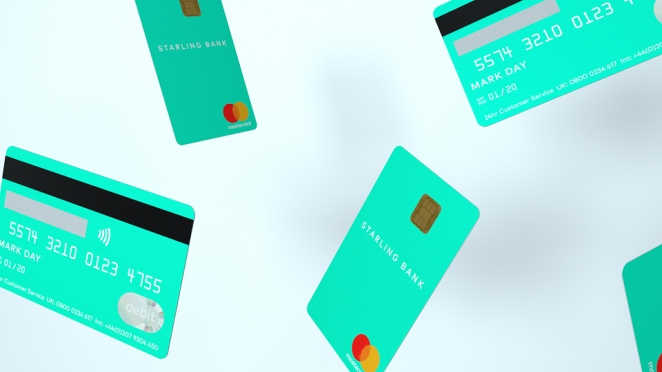
Starling Bank
The first thing to understand is that you are rarely paying for the physical deliverables alone. A brand identity might end with a logo, typography, colour system and guidelines, but those files tell you almost nothing about the amount of work required to reach them.
A serious branding process will include stakeholder interviews, customer research, competitive analysis, positioning, naming, architecture, verbal identity, multiple creative routes, testing, design development, motion principles, guidelines and rollout across dozens of touchpoints. Creativepool’s own guide to building a brand identity breaks the process into discovery, strategic definition, creative exploration, system development, implementation and governance. It is immediately obvious why branding cost rises as more of those stages become necessary.
The same applies to advertising. What looks like “one advert” may have required planners, researchers, creatives, designers, account teams, producers, directors, photographers, editors, animators, sound designers, talent negotiations and business affairs before it ever reached a screen.
This is why design services pricing can be so confusing to businesses buying creative work for the first time. You are comparing different mixtures of thinking, labour, risk and responsibility.
And it is why the cheapest quote can occasionally be brilliant value and occasionally be a warning that three quarters of the job have quietly disappeared.
What Can £1,000 Buy in Creative Work?
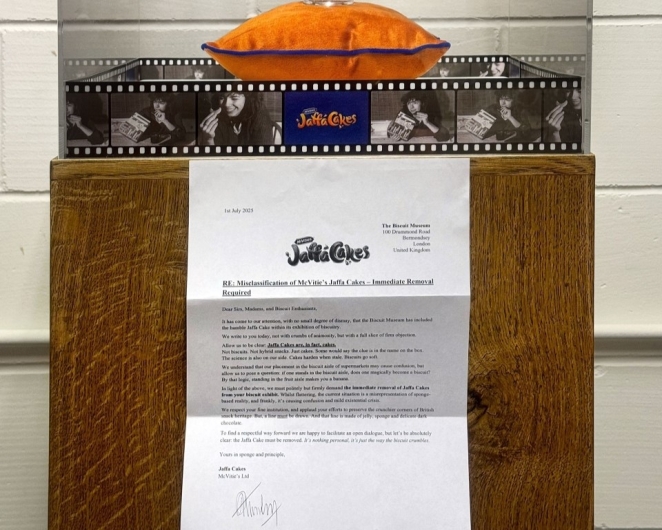
The Romans
Of course a thousand pounds can buy decent creative work.
What it cannot realistically buy is everything.
Right now, £1,000 represents roughly two to three days from an experienced graphic or branding designer before you account for other specialists, marketing expenses or tax. That’s perfectly useful when the problem itself is tightly defined.
You could commission a strong freelancer to refresh an existing presentation, create a small suite of campaign assets, improve a logo that already has a clear strategic foundation, art direct a handful of social templates, design a simple brochure or establish a basic visual direction for an early-stage business. You might also use the money to buy a day or two of experienced strategic thinking before you spend significantly more on execution.
What you can't reasonably expect is a complete ground-up brand strategy, naming exercise, bespoke identity, website, photography, animation and 97-page brand manual.
That sounds absurd written down, but versions of that expectation arrive in the creative industry all the time.
The trick at getting value at this level is concentration. Spend the £1,000 on the thing most capable of improving the business rather than slicing it into twenty tiny deliverables.
There is also an important distinction between small budget and small idea. Creativepool introduced a dedicated Low Budget category to the Annual 2026 to recognise work where ingenuity and effectiveness relative to financial constraint are fundamental to success. The winners are useful because they demonstrate that limited money can absolutely produce exceptional creative results.
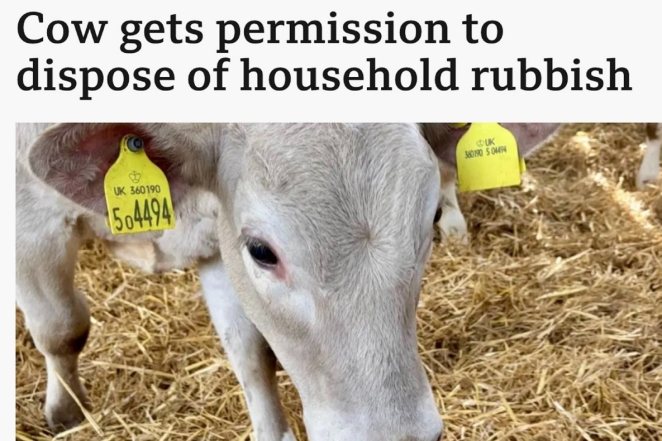
The most extreme example is Woodrow Communications’ Beau Vine: the cow that changed the law. The team exposed weaknesses in the UK waste-carrier licensing system by successfully obtaining a licence for a cow. The entire campaign cost £184, covering an application fee that was later refunded, yet it generated national attention and contributed to scrutiny of the licensing process. It won Gold in the Annual’s Low Budget category.
But there is an important caveat here. Beau Vine proves that £184 can create enormous impact. It does not prove that every £184 marketing budget will.
Great low-budget work is memorable precisely because the thinking overperforms the resources.
What Becomes Possible With a £10,000 Creative Budget?
YeahNice
At £10,000, the conversation begins to change.
You now have enough budget to buy a meaningful block of experienced creative time rather than a short burst of execution. That sum can fund several weeks across design, creative and strategy disciplines rather than two or three individual days.
For a growing company, £10,000 could produce a genuinely useful small identity system: focused discovery, some positioning work, a visual identity, core templates and practical guidelines. It could fund a compact campaign concept with design and copywriting, a well-planned social launch or a modest film built around a simple production idea. It could also buy a senior specialist rather than a large junior team, which is sometimes a much better investment.
This is also roughly where the choice between freelancer, boutique studio and agency becomes more important.
A good freelancer offers direct access to the person doing the work and can be extraordinarily efficient when the brief sits comfortably within their expertise. A small specialist studio may bring complementary disciplines together without introducing the infrastructure of a larger agency. An agency becomes more attractive when the problem requires research, strategy, creative development, production management and rollout to work as one system.
None of those models is automatically better. They are built for different problems.
Creativepool’s current freelance marketplace allows companies to post a studiogig and receive proposals from professional freelancers without commission, while studiobriefs are designed for companies seeking agency partners. The wider platform also lets businesses compare current creative agencies, design agencies and individual graphic designers by portfolio and specialism.
At £10,000, choosing the right model probably matters more than squeezing another five per cent out of the day rate.
What Can a £100,000 Creative Investment Deliver?

Design Bridge and Partners
£100,000 is where a creative project can stop being a collection of deliverables and become a substantial business intervention.
For branding, this could fund serious research and positioning, senior strategic involvement, naming or architecture where required, a comprehensive visual and verbal system, motion, photography or illustration, digital design, detailed guidelines and the beginnings of implementation.
For advertising, it can support proper planning, several creative routes, testing, campaign development and meaningful production. It could fund an ambitious film, an integrated launch across multiple channels or a substantial experiential or digital execution.
But £100,000 is also where it becomes vital to establish what the budget actually includes.
Is the £100,000 paying the agency fee and production? Does it include media? Photography usage? Actors? Music? Locations? Printing? Development? Research? Travel? Versioning?
This is where discussions of advertising campaign cost become especially slippery. A £100,000 “campaign” with £80,000 available for media is completely different from a £100,000 production with no media budget whatsoever.
It is also why more budget should often buy certainty, not merely spectacle.
You can research the problem properly. Test propositions before committing to expensive production. Bring specialist people in where they genuinely add value. Explore several creative directions rather than falling in love with the first idea because there is no money left to reconsider it.
What Does a £1 Million Creative Budget Make Possible?

Sherlock Communications
The temptation here is to imagine helicopters and skyscrapers.
And yes, with £1 million you can certainly make something visually spectacular if the idea demands it. You can shoot internationally, commission top directors, build sets, use well-known talent, develop sophisticated digital experiences and engage some of the best specialists in the business.
But scale is only one thing a seven-figure budget buys.
The bigger difference is depth and orchestration.
A million-pound brand programme might involve global research, extensive stakeholder engagement, strategy, naming, architecture, visual and verbal identity, sonic and motion systems, product or packaging design, digital experience, internal communications, launch assets, training and governance across multiple markets.
A million-pound advertising creative and production budget might involve several hero executions, photography, social content, creator partnerships, localisation, testing, rights, adaptation and enough specialist production infrastructure to carry one coherent idea across many formats.
In other words, the money doesn’t necessarily buy a logo that is 100 times better than the £10,000 logo.
It buys a much bigger system around it.
It also buys the ability to make fewer compromises. You can afford the right director rather than whichever director is available for the remaining money. You can reshoot something that does not work. You can clear the track the creative genuinely needs. You can test work properly and still have budget left to improve it.
But there is a trap in this tier too: abundance.
Because a million pounds can buy you a lot of creative but it can also buy you an astonishing quantity of wallpaper.
Why Can Similar Creative Projects Have Completely Different Prices?
IKEA Communications AB
This is the part I think procurement conversations occasionally miss.
Two projects with identical deliverable lists can still represent completely different propositions.
“Logo, colour palette, typography and guidelines” might describe ten days of execution against an already agreed strategy. It might also describe the visible outputs of six months spent researching a multinational business, resolving conflicting stakeholder views, redesigning brand architecture and building a system required to survive hundreds of applications.
You are not simply buying the files.
You are buying the people making decisions about them.
That is why seniority matters. Why research matters. Why project management matters. Why talent matters. Why creative ideas matter. Why agencies charge for people who never physically touch the design file. Strategy, account leadership and production expertise can prevent a business spending considerably more money implementing the wrong thing.
Pricing models themselves are changing too. The IPA’s 2025 The Price Isn’t Right research, based on interviews with agencies, clients and intermediaries, found that the sector still relies heavily on time-and-resource pricing even as agencies argue for commercial models more closely connected to the value they create.
This creates the fundamental tension in creative pricing.
Clients ask, “How many days will this take?”
But a better question might be, “What is solving this worth?”
If a new packaging design lifts sales across a £100 million product portfolio by 5%, deciding whether the designer spent nine days or ninety suddenly feels like quite a small argument.
Does a Bigger Creative Budget Guarantee Better Results?

2045 Agency
Short answer - No.
We all know of campaigns that spent a load of cash on to crash and burn. And we also all know of much smaller budgetted campaigns that over-performed massively.
But. A bigger budget gives you more options.
More money can buy better research, better talent, more experienced judgement, stronger craft, testing, resilience, production value, adaptation, media and reach. Those are real advantages.
But budget cannot rescue a weak proposition.
A million pounds behind an idea nobody cares about is still a million pounds behind an idea nobody cares about.
Conversely, the creative industry has no shortage of brilliant low-budget work, including an entire Creativepool Annual category demonstrating exactly that. The mistake is turning those exceptions into the comforting mythology that money is irrelevant. Creative ingenuity can increase the productivity of a budget; it does not magically eliminate the need for resources, production or distribution.
The practical question for any business is therefore not “What is the correct branding cost?” or “What should an advertising campaign cost?” It is: what problem are we trying to solve, and what level of investment gives the people solving it a realistic chance of succeeding?
Before setting the number, I’d ask five things:
- How commercially important is the problem? A temporary event graphic and a company-wide rebrand should not have the same purchasing logic.
- How much uncertainty needs resolving? The less you know about the audience, positioning or proposition, the more money should probably go into thinking before execution.
- How many skills genuinely need to be involved? Do you need one excellent designer, a designer and strategist, a specialist studio or a multidisciplinary agency?
- How widely will the work travel? More channels, markets, languages, products and internal users create implementation and governance costs that are easy to underestimate.
- How will we know whether it worked? ROI should connect to the business objective, whether that means sales, enquiries, awareness, conversion, recruitment, pricing power or another measurable outcome rather than simply counting how many assets were delivered.
After years around agencies, brands, freelancers and creative businesses, I’m increasingly convinced that the biggest mistake is not spending too little or too much. It is spending without being clear what you are buying.
£1,000 can buy an excellent answer to a £1,000 problem. £10,000 can create a genuinely strong piece of brand or campaign work when the scope is disciplined. £100,000 can fund serious strategy, craft and production. £1 million can build an entire creative ecosystem and give it the scale required to reach millions of people.
None of those numbers tells you whether the work will be good.
The number tells you how many options you can afford.
The brief tells you whether those options are useful.
And the people you put around the problem determine what happens next.
That, ultimately, is why creative project pricing will never fit comfortably into a simple menu. Creativity is not a commodity sold by the kilo. A designer’s time matters, but so does their judgement and experience. An agency’s headcount matters, but the makeup of the headcount being able to solve and elevate your brief matters more.
So, by all means ask what your £1,000, £10,000, £100,000 or £1 million is buying.
Just make sure the answer is bigger than a list of deliverables.