
Long before “agile” became a buzzword and AI started pretending it understood brand strategy, Yolk was already doing things differently. Founded in the shadow of bloated agency sprawl and powered by a core team of strategic thinkers and top-tier collaborators, this Southwark-based studio has built its name on one unshakable belief: the idea is king.
Whether it’s launching challenger brands into the mainstream or wrestling rugby briefs into standout campaigns with limited assets and tighter timelines, Yolk’s creative process has always been refreshingly simple; start with the strongest idea, then build with precision.
In this Company Spotlight, co-founder Paul Maskell walks us through the challenges, pivots, and pint-fuelled philosophies that have shaped Yolk into one of the most quietly resilient studios in the game.
How was your company born and where are you based?
Our company was born out of frustration with how slow and heavy big agencies had become (pre-2012), and that we believed that a small core team, supported by best-in-class specialists, could deliver more agile, higher-quality strategic and creative work. Our studio is in Southwark; a stone’s throw away from the back of the Tate Modern – and conveniently close to a great pint of Guinness, at Mc and Sons, just round the corner!
What was the biggest challenge to the growth of your company?
Maintaining a consistent new-business pipeline has always been our biggest challenge. And as businesses embrace more automation, those pipelines are becoming substantially less human and less predictable.
Then throw in COVID, ongoing economic uncertainty, rising studio costs and the pressure to retain top talent amplifies the challenge to grow, too. More recently, understanding how AI should meaningfully integrate into our industry, and our business, has become the next major challenge and opportunity.
Which was the first huge success that you can remember?
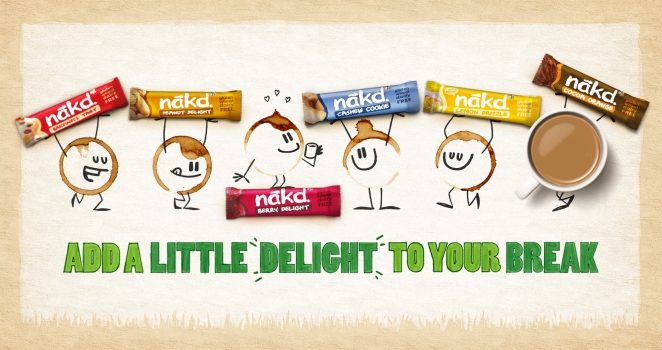
One of our earliest, and most formative successes, was working with Natural Balance Foods on their two products, Nakd and Trek. They were heavily focused on increasing their distribution which led to their comms being very ‘trade focused’ and not overly consumer friendly.
Over 5 years as lead creative agency, and working collaboratively with Wavemaker, Strom PR, Total Media, we helped evolve their consumer communications, delivered some standout campaigns and supported the strategy that ultimately took both brands to TV with 3 years.
What’s the biggest opportunity for you and your company in the next year?
Our biggest opportunity is to grow deeper with existing clients by adding greater strategic value and generating “new-from-old” briefs.
In particular, with one of our clients, we’re focused on driving short-term impact through digital and radio, while developing longer-term strategies that move brands towards TV, Connected and OTT over the next three years.
Can you explain your team’s creative process? What makes it unique?
Our process is built around three clear tranches: brand creation, brand expression and brand and advertising campaigns. Regardless of where a project sits, our belief is simple: the ‘idea will always be king’. Without a strong idea we could just be producing ‘stuff’.
From workshops and briefing through to initial concept presentation, our process ensures we agree the idea before moving into execution. That avoids rushing into visuals, protects client budgets and leads to stronger, more focused creative. While this approach shouldn’t be unusual, it’s becoming increasingly rare – especially as increased Ai slop hits our ears and eyes.
How has COVID-19 affected your company?
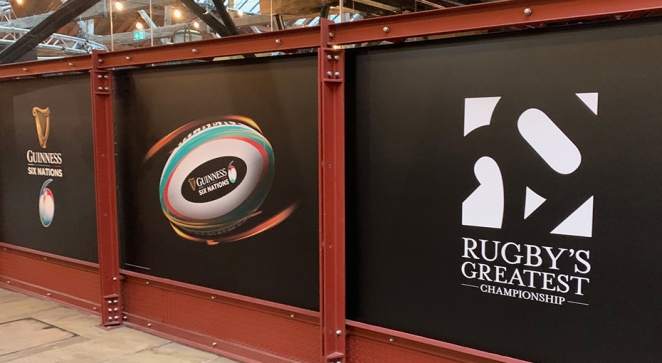
COVID arrived at a particularly frustrating moment. We had just won a competitive pitch for the branding for the Guinness Six Nations 20th Anniversary, but postponed matches in 2020 meant much of the work never had its intended moment.
A similar situation followed with Symprove, where after three years of strategic and digital work, we were commissioned to develop their first TVC. Filming was halted mid-production, and the work had to be repurposed for digital, meaning the TVC never aired.
Although 2020 and 2021 were financially strong for us, the longer-term COVID lag from 2022 onwards undoubtedly impacted momentum!
Which agencies do you gain inspiration from? Do you have any heroes in the industry?
We’re inspired by brave independent agencies that continue to push standards – Fold7, Mother, DixonBaxi, Hats + Rabbits.
We also admire the work of Elvis, Iris and We Are Social, alongside long-standing leaders such as Pentagram, Landor, BBH and Brand Union.
What is one tip that you would give to other agencies looking to grow?
Be relentlessly visible. Growth requires continuous presence, not occasional bursts.
Whether through social, PR, awards or intermediaries, agencies need to consistently put themselves in front of the right audiences. Eyeballs matter – and being front of mind is a full-time job. And network, network, network. (sorry, that’s two ;))
How do you go about finding new clients/business? (Pitching, work with retainers, etc.)
We are associated with a couple of intermediaries that provide us with opportunities to pitch, and to date have had a good success rate with them. On occasions our broad network and Yolk collaborators provide us with introductions, as well as utilising LI to ‘meet and greet’. At the end of ‘24 we invested in a lead gen wave of activity focusing purely on B2B brands and businesses.
What’s your one big hope for the future of the industry?
That the industry rediscovers the value of long-term thinking over short-term outputs and are rewarded / remunerated for impact not activity. (Wow! What would that look like?)
Can you share a defining moment in your company's journey that shaped its identity or direction?
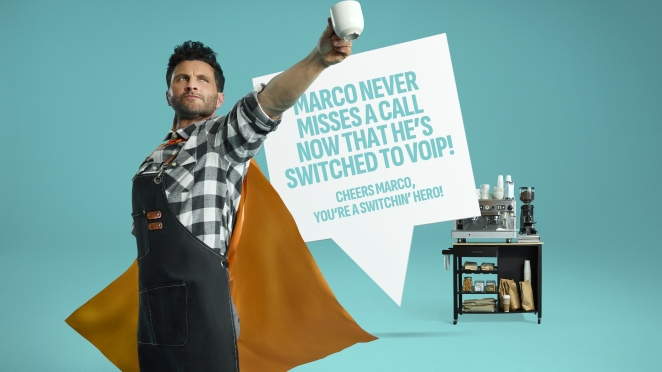
As odd as it may sound, that moment could be happening now. 13+ years ago our central-hub-and-collaborators model was a difficult sell, with clients favouring large, all-under-one-roof agencies.
However, Covid somewhat blew that apart and changed that mindset, proving that distributed teams could be highly effective.
Then throw in the ever evolving and increasing wave of Ai within the creative industry and agility has now become even more essential – validating our model more than ever.
What measures do you take to ensure diversity and inclusion are prioritised within your company?
Our model allows us to work with whoever we want and wherever they should be. Flexibility in how people work has been one of the biggest drivers of inclusion for us.
Can you describe a project that challenged your team creatively and how you overcame any obstacles?

Our rugby projects are often the most creatively challenging. Briefs tend to be very similar project-by-project; budgets are tight, usable assets are limited and imagery is heavily rights-managed, with multiple stakeholders involved. All of this creates pressure to deliver high volumes of work across print and digital on extremely compressed timelines, while still achieving cut-through.
The core creative challenge is avoiding sameness. With our background in film marketing and advertising, we focus on establishing a strong central idea that drives ticket sales, then translate that into bold, highly considered key art that works consistently across every channel.
By prioritising the idea first and using composition as a unifying device, we’re able to navigate rights restrictions, stakeholder input and tight deadlines without diluting the work.
How do you balance maintaining your company's unique creative voice while meeting the diverse needs of clients?
Of course, each one of our clients possesses a different tone / voice. And as expected we have our own tone / voice, but our voice is in how we think, not how things look for our clients. We are here to define and amplify their voice, not replace it or confuse it with ours.
That’s why we work with specialist collaborators, including copywriters with sector-specific experience, ensuring FMCG, cyber security and B2B brands all sound authentically themselves.
Can you share a memorable client success story that exemplifies your company's approach and impact?
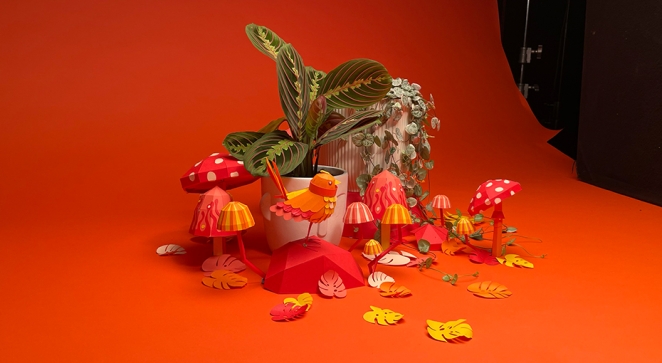
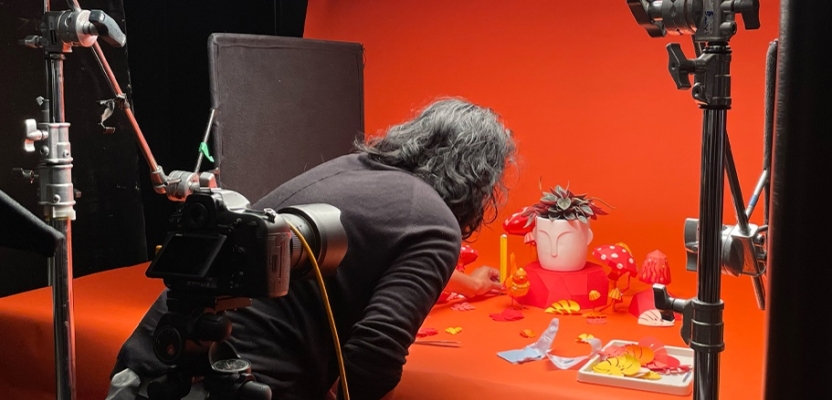
We delivered highly distinctive digital advertising on a very modest budget, for a house plant company called House of Kojo, that had true stand out against their ‘farrow and ball’ competitors (see Beards and Daisies / Patch).
Through workshops and brand interrogation, we uncovered a powerful insight: they were the UK’s largest stockist of rare and unusual plants. This insight became the backbone of the creative, delivering standout paid and organic work across social channels and driving clear performance uplift.
In what ways do you invest in the professional development and growth of your team members?
We have always actively invested in our team’s development through funded external training and industry-recognised programmes. This ranges from upskilling specialists in the latest creative tools, to enrolling our client team on accredited courses such as IPA and IPM.
Our focus is on keeping skills current, commercially sharp and directly applicable to client work.
How do you approach sustainability and ethical practices within your company's operations and projects?
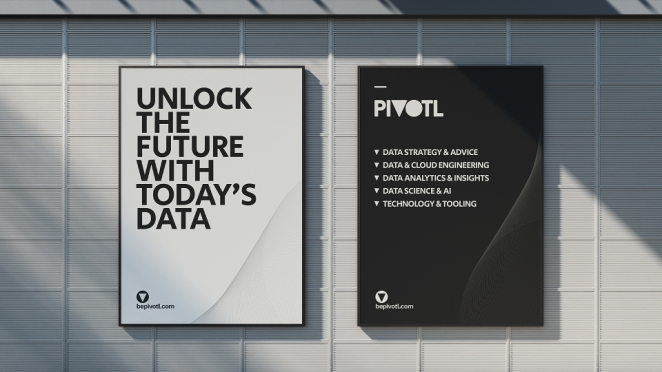
Our flexible, collaborator-led model reduces unnecessary overheads, travel and physical production, while allowing us to scale teams precisely to the brief. Therefore, for us, sustainability is about making smarter, more responsible decisions rather than grand statements.
On projects, we encourage sustainable production choices where appropriate and advise clients on solutions that balance impact, effectiveness and responsibility. Ethically, we prioritise transparent working relationships, fair remuneration and long-term partnerships over short-term gains.
Can you discuss a time when your company had to pivot or innovate in response to unforeseen challenges, and what lessons did you learn from that experience?
At the end of 2023, we recognised that our brand positioning no longer accurately reflected where our strengths, or commercial opportunities lay. While we had always worked across both B2C and B2B, our focus leaned more towards B2C, which meant we were underselling our B2B experience and missing prospect opportunities in that space.
Post-COVID, demand for high-quality B2B branding and marketing had increased significantly. Therefore, we made a strategic pivot at the start of 2024: sharpening our proposition, rebranding the agency and developing a B2B-focused opinion piece to clearly articulate our thinking and capabilities.
The market proved slower to convert than expected during 2024, potentially highlighting that B2B brand investment often requires longer-term education and confidence-building. However, moving into 2025 we saw a shift with more B2B businesses recognising the role brand plays in driving ROI / ROAS and long-term growth.
Do you have any websites, books or resources that you would recommend?
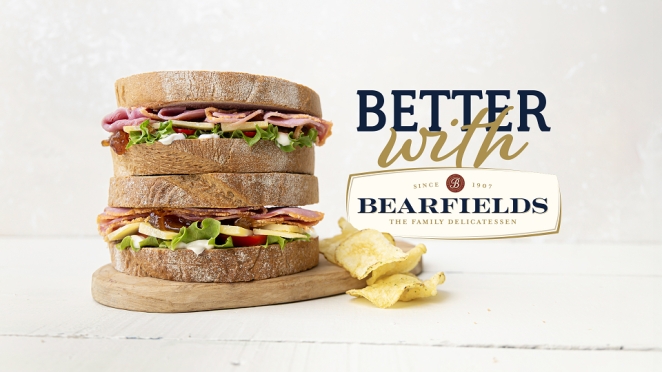
We’re strong advocates of the research and thinking produced by System1 and regularly draw on their white papers.
Other influential ‘oldies but goodie’ reads:
- Lemon. How the advertising brain turned sour = Orlando Wood
- Unlocking profitable growth = System 1
- Branding that means business = Matt Johnson
- The law of brand attraction = Sammy Blindell
- Cool Brands / Super Brands Volumes = But sadly no longer, but still great to look back at for inspiration
Websites:
- Design Inspiration - designspiration.com
- Behance – behance.net
- DandAd - www.dandad.org
- Cool Brands / Super Brands – no longer exists!!!
- Pinterest – sounds obvious, but is a huge resource