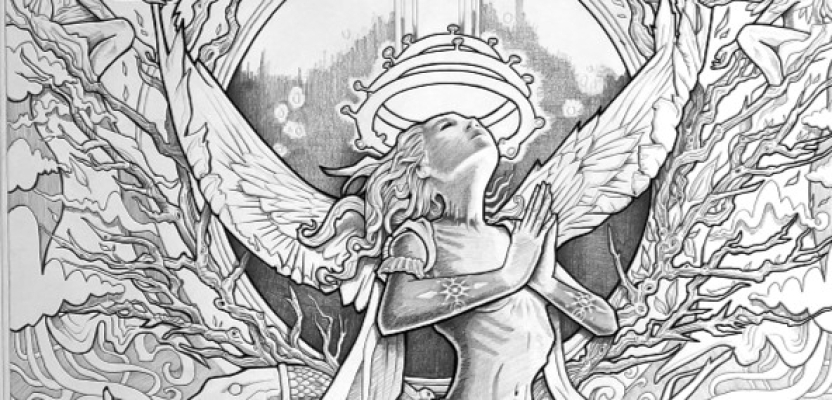

Tim Lord, freelance artist and illustrator at Tim Lord Art, takes us behind the creation of his deeply symbolic artwork exploring psychological growth, inner struggle, and personal transformation. Inspired by Carl Jung’s famous reflection on the connection between roots and darkness, the piece uses detailed hand-drawn illustration and powerful symbolism to reveal how unseen challenges shape human resilience and self-awareness.
Combining digital concept development in Procreate on iPad with traditional fine liner and graphite techniques, Tim carefully crafted a visually rich artwork that balances philosophical depth with emotional accessibility. In this interview, he discusses his creative process, the challenges of translating complex psychological themes into visual storytelling, and how art can encourage reflection, vulnerability, and growth.
What was the brief?
There was no formal brief for this project, as it was a personal piece created independently. The artwork developed from a desire to explore psychological growth, inner struggle, and self-awareness through symbolism and detailed visual storytelling.
How did the initial pitch/brainstorming phase go?
The brainstorming process began digitally, where I experimented with compositions, symbolism, and mood through rough visual concepts. I researched psychological themes surrounding identity, trauma, and transformation, which eventually led me to Carl Jung’s quote about roots and darkness. That quote became the emotional foundation for the piece and shaped the direction of the final artwork.
What was the process behind ideating the concept?
The concept evolved through combining philosophical research with visual experimentation. I initially developed the structure and symbolism digitally using Procreate on iPad to test different compositions and emotional tones before translating the idea into a hand-drawn final piece. The symbolism of the tree and roots became central because it represented both visible growth and hidden emotional depth.
What was the production process like?
The production process combined both digital and traditional methods. I first developed the initial concept digitally using Procreate on iPad, which allowed me to experiment with composition, symbolism, and visual balance before committing to the final artwork. Once the concept was refined, I recreated the piece by hand using detailed line work and layered textures. The combination of digital planning and traditional execution helped maintain both precision and emotional depth.
What was the biggest challenge during production? How did you overcome it?

The biggest challenge was balancing the conceptual depth of the piece with visual clarity. Because the work dealt with psychological themes, there was a risk of making the symbolism either too abstract or too literal. Developing the concept digitally first helped refine the composition before committing to the final hand-drawn version, which allowed the visual storytelling to feel more balanced and intentional.
What kit/tools/software were used to create the project?
The initial concept development and composition planning were created digitally using Procreate on iPad. The final artwork was then produced traditionally by hand using fine liner pens and graphite on paper. Combining digital ideation with traditional drawing techniques allowed for flexibility during the design stage while preserving the raw and tactile quality of hand-drawn work.
What is one funny or notable thing that happened during production?
One notable part of the process was realising how much the production itself reflected the meaning behind the artwork. The long hours of repetitive detailing and refinement mirrored the themes of struggle, patience, and growth explored within the piece itself.
What’s the main message of this project and why does it matter?
The main message is that growth and self-realisation are inseparable from struggle. Inspired by Carl Jung’s quote, the artwork explores the idea that confronting difficult emotions and hidden aspects of ourselves is necessary for personal transformation. This matters because many people fear vulnerability or darkness, yet those experiences often become the foundation for resilience and self-understanding.
How long did it take from inception to delivery?
The project developed over several stages, including digital concept development, sketching, experimentation, and the final hand-drawn production process. Overall, it took several months from initial idea to completion.
Can you describe the creative spark or inspiration behind the initial concept? Was there a specific moment or insight that ignited the idea?
The defining inspiration came from Carl Jung’s quote: “No tree, it is said, can grow to heaven unless its roots reach down to hell.” The quote immediately created a strong visual image in my mind. It sparked the idea of representing psychological growth through the metaphor of roots, showing how unseen struggles support visible strength and transformation.
How did you ensure that the concept aligned with the brand's values, goals, and target audience?
As this was a personal project rather than a brand commission, the focus was on creating something emotionally honest and universally relatable. Themes such as resilience, vulnerability, and growth connect with a wide audience because they reflect shared human experiences. The balance between digital planning and handmade execution also helped create a modern yet deeply personal visual identity.
Were there any alternative concepts or ideas considered during the ideation phase? If so, what led to the selection of the final concept?
During the ideation phase, I explored more direct representations of psychological struggle digitally, but they lacked subtlety and emotional depth. The final concept was chosen because the symbolism of roots and trees felt more timeless and open to interpretation, allowing viewers to connect with the piece personally.
Can you discuss any collaborative or interdisciplinary aspects of the ideation process, such as working with other departments or external partners?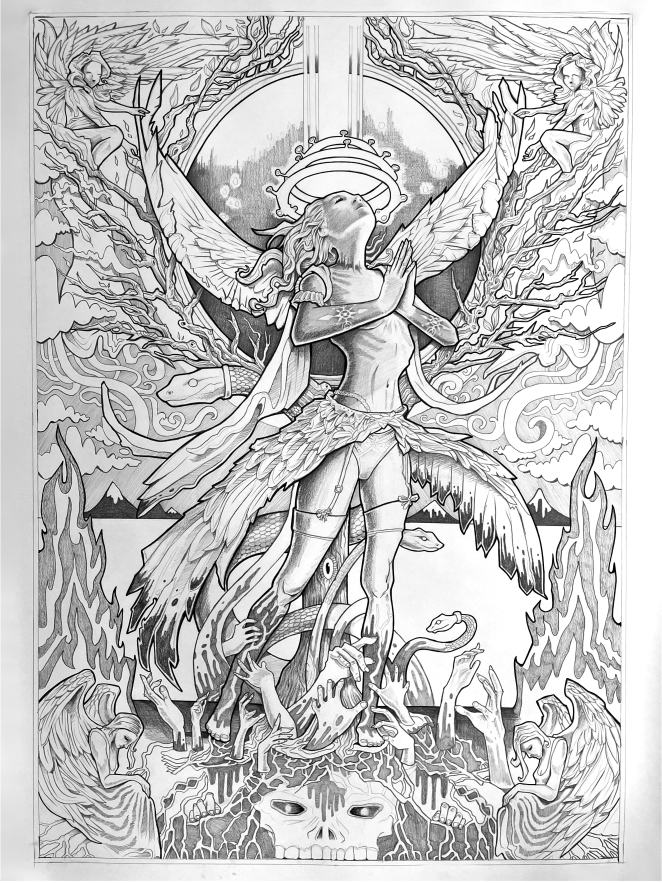
Although the artwork was independently created, the ideation process drew heavily from interdisciplinary influences including psychology, philosophy, and literature. Carl Jung’s theories surrounding the shadow self and personal transformation played a major role in shaping the conceptual framework of the piece.
What role did consumer research or market analysis play in shaping the concept and its execution?
As this was a personal artwork, the process was driven more by emotional and conceptual exploration than formal market research. However, contemporary conversations surrounding mental health, identity, and emotional resilience influenced the relevance of the themes explored within the piece.
Can you discuss any unique or unconventional production techniques or approaches used to bring the idea to life?
One of the key production approaches was combining digital concept development with traditional hand-drawn execution. Using Procreate on iPad during the ideation phase allowed me to quickly experiment with structure, lighting, and symbolism, while the final hand-drawn process introduced texture, imperfection, and emotional authenticity that strengthened the overall impact of the piece.
How did you ensure that the concept remained innovative and stood out in a crowded marketplace?
The project stands out through its combination of psychological symbolism, intricate hand-drawn detail, and mixed creative process. Instead of relying on obvious imagery, the artwork encourages slower engagement and reflection, allowing viewers to uncover meaning gradually over time.
What do you hope it achieves for the brand?
As this was a personal project rather than a brand campaign, my hope is that the artwork encourages emotional reflection and meaningful conversation around themes of self-awareness, growth, and resilience. I also hope it demonstrates how visual art can communicate complex psychological ideas in a visually compelling and accessible way.
Credit list for the work?
Concept development (digital), artwork, and final hand drawn production: Tim Lord
Digital concept creation: Procreate on iPad
Inspired by the writings and psychological theories of Carl Jung.