
Artificial intelligence is reshaping how people discover brands online, forcing businesses to rethink traditional search and content marketing strategies. As platforms like ChatGPT, AI Overviews and Perplexity become increasingly influential, agencies are moving beyond SEO to help brands improve their visibility within AI-generated answers. Greenpark has been at the forefront of this shift, combining data, technology and creative expertise to build strategies that help global brands stay discoverable in an AI-first world.
In this interview, Chris Pearce, Group Managing Director for EMEA, US and APAC at Greenpark, discusses how the agency evolved into a global leader in AI visibility, creator intelligence and performance-driven content. He shares lessons from scaling internationally, fostering innovation through AI, building long-term client partnerships, and why agencies that embrace intelligent search today will have a significant competitive advantage tomorrow.
How was your company born and where are you based?
 Greenpark was founded in 2014 by our CEO Sven Lung. He had a vision to become a leading global performance-driven content agency that delivers amazing results for brands. Technology first and data driven, an innovative and entrepreneurial spirit drove this once small agency into the world-class business it is today. Sven is an avid entrepreneur and his other notable ventures incude online fashion retailer Brandalley.com, a business which sold 70,000+ products per day and grew to $200m in revenue.
Greenpark now has a HQ in London and global hubs across EMEA, US, LATAM and APAC. We employ over 250 digital experts in data, GEO, insights, creative content, editorial and social. Today we specialise in getting brands discovered through AI visibility and creator intelligence. There are three core pillars to our operation: Brand visibility, Creator intelligence and in-housing of Gen AI talents.
Which was the first huge success that you can remember?
Sven secured a significant contract with Unilever shortly after launching Greenpark. After two years of refining the business model, Unilever recognised our potential and awarded us a multi-million-pound project across 13 markets.
This partnership not only validated our approach but also set the foundation for our growth in the FMCG sector, where we continue to thrive. A decade later, we are a strategic partner for global clients as diverse as The Magnum Ice Cream Company (TMICC), Astra Zeneca, Opella, Nestle, Unilever and AIA – driving growth through our unique approach to brand visibility and creator intelligence, omnichannel search and social, delivered by in-house Gen AI talents.
What’s the biggest opportunity for you and your company in the next year?
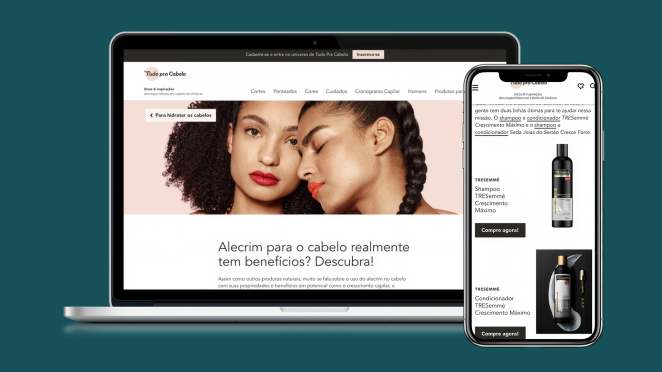 We believe every brand is (or should be) concerned about how they are talked about in AI search. As more people turn to tools like ChatGPT, Perplexity, and AI Overviews for recommendations, that concern will only grow. That's why our biggest opportunity this year is helping brands own that narrative, which comes down to three things: staying relevant in AI search by making sure the content shaping those answers reflects them accurately and favourably; creator intelligence, since creators are increasingly the raw material AI pulls from to talk about brands, and knowing which ones actually move the needle is still an unsolved problem for most; and in-housing, as brands want the frameworks and tools to run this strategy themselves, with us supporting where it matters most. The brands that get ahead of this will have a real structural advantage — and helping our clients get there first is what we're focused on.
Can you explain your team’s creative process? What makes it unique?
Our creative process runs on the same four-pillar model as everything else we do. We Gather first — proprietary scoring tools and channel audits tell us what's already being said about a brand, and where the gaps are, before any brief gets written. We Pioneer next, shaping ideas directly from that intelligence rather than a blank page, with a clear creative direction channel by channel.
Then we Optimise, turning strategy into actual work — as an extension of the brand's team or building that capability in-house. Finally, we Score: we measure how the work performs, tie it to commercial outcomes, and feed those learnings back into the next Gather stage, so every cycle compounds on what's already proven to work. That loop — creative that's intelligence-led going in and proof-led coming out — is what makes it unique. Most agencies treat creative and measurement as separate stages; for us, they're the same continuous cycle.
How does your team remain inspired and motivated?
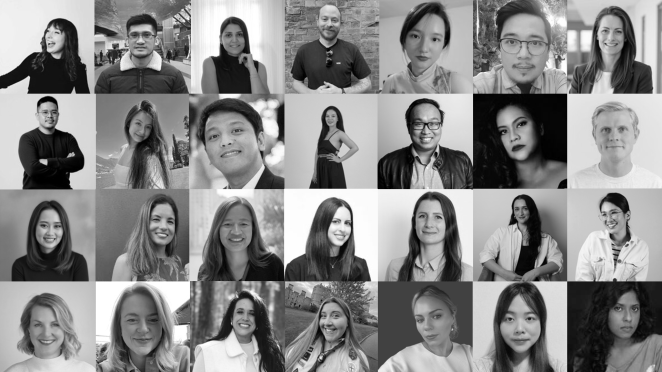 Inspiration's built into how we work, not something we have to chase down. For example, we run an Internal Art Club where the team gets together to look at new work from across the industry and talk about what's actually good. We use the Cannes scoring criteria to instigate discussion at all levels- essentially keeping us aligned with the most prestigious metric possible. Our strategy team also puts out Radar, a monthly read on what's bubbling up in creator content and culture before it turns into an actual trend — part data, part gut check from strategists on what's really worth paying attention to.
And we get out of the building as much as we can, hitting industry events like Cannes and MAD//Fest to see what everyone else is doing and bring the good stuff back.
Put it all together and motivation isn't really something we manufacture — it's just how the team operates day to day.
Which agencies do you gain inspiration from? Do you have any heroes in the industry?
Honestly, our biggest source of inspiration is our clients. Sitting inside their data, watching how their audiences actually behave, and seeing what really moves the needle for their business is what’s most useful to us. It keeps us grounded in outcomes rather than chasing what's fashionable in the industry.
If I had to name a hero though, it'd be the Jellyfish story. What Rob Pierre built is inspiring — he backed a genuinely different model, data and creativity together from the start, and had the conviction to take it global. That's the kind of ambition we look up to.
How do you go about finding new clients/business? (Pitching, work with retainers, etc.)
Our approach to new business starts with a simple idea: solve problems first, sell second. Instead of casting a wide net, we run targeted, laser-focused outreach — identifying the specific categories and brands where we can see a real gap or opportunity, and starting the conversation there rather than with a generic pitch.
We back that up with a content marketing strategy built the same way — sharing the thinking, data, and point of view that shows how we actually solve problems, so by the time we're in a room with a prospective client, we're not introducing ourselves cold. They've already seen how we think.
It means fewer, better conversations rather than a high-volume pitch machine — and it tends to lead to relationships that start from trust rather than a sales pitch, which sets the tone for how we work together.
What’s your one big hope for the future of the industry?
My one big hope is that AI ends up being a liberator, not a replacement — freeing up head space, not headcount. Done right, AI should take the repetitive, time-consuming work off people's plates so strategists and creatives get more room to actually think, rather than being squeezed out of the industry altogether.
If the industry gets this right, the winners won't be the ones who cut the most people — they'll be the ones who use AI to give their best talent more space to do what only humans can do: creative judgment, cultural instinct and strategic thinking.
Can you share a defining moment in your company's journey that shaped its identity or direction?
 As mentioned earlier, landing a global contract with Unilever early on was a defining moment for us as a startup. It was the kind of validation that doesn't just win you a client — it shapes how you see yourself. Suddenly we weren't just a young agency trying to prove itself; we were operating at a global scale, held to the standards that come with a partner of that size.
That relationship pushed us to build the rigor and infrastructure to match the ambition — and we've remained a strategic partner of Unilever ever since. It set the tone for the kind of company we wanted to be: one that could go toe-to-toe with the biggest brands in the world.
How do you foster a culture of innovation and experimentation within your team?
Innovation isn't a side initiative for us — it's built into the framework of how we operate. We actively embrace AI across the business, investing in new workflows and new agents rather than waiting to see how the industry settles, because we'd rather be shaping how AI gets used in this work than reacting to it later.
But the tech is only half of it. The real driver is empowering people to actually use it — giving the team the tools, the freedom, and the trust to experiment with new ways of working, rather than dictating a fixed process from the top down. We'd rather have people finding better ways to do things and bringing them back to the team than sticking rigidly to how things have always been done.
Put together, that's the culture: a framework that gives people structure, but enough room inside it to keep pushing on what's possible.
What measures do you take to ensure diversity and inclusion are prioritised within your company?
We're a global business with hubs across South Africa, Europe, The Phillipines, Singapore and beyond, which means our team is naturally made up of different backgrounds, cultures, and ways of thinking.
When it comes to hiring, we take diversity and inclusion seriously and integrate it into multiple stages of our hiring and workplace practices. We aim to reduce bias by focusing on skills, experience, and potential rather than background factors, and we encourage diverse candidate pools for every role. We also work with hiring managers to ensure job descriptions use inclusive language and don’t unintentionally exclude certain groups.
Beyond hiring, we promote an inclusive culture where different perspectives are valued and people feel comfortable contributing. This includes encouraging open communication, respectful collaboration, and awareness around unconscious bias.
We also regularly review our processes to identify areas for improvement and ensure we are creating equal opportunities for growth and development for everyone in the company. Overall, our goal is to build a workplace where people from all backgrounds feel respected, supported, and able to succeed.
How do you balance maintaining your company's unique creative voice while meeting the diverse needs of clients?
What matters more than us having a signature style is getting the right content, to the right audience, in the right voice for that specific brand.
Every brand has its own purpose and tone of voice, and our job is to find that and bring it to life — not necessarily layer our own creative fingerprint on top of it. What we're really chasing is content that's genuinely compelling enough to move people to actually do something, whatever that action looks like for that brand. That only lands if the work feels authentically theirs.
What strategies do you employ to adapt to changes and trends in the industry while staying true to your company's values?
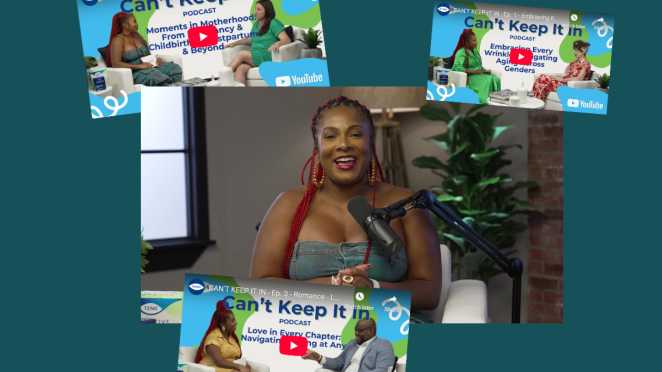 We try to stay ahead of where the industry's heading rather than reacting once everyone else has caught on — we were early to pioneer social search and more recently LLM visibility. That's the pattern we try to repeat: get there early, understand it properly, then build it into how we work.
Of course the tech underneath us changes constantly, and it always will. What doesn't change are our values — the reason we stay ahead of trends isn't to chase novelty for its own sake, it's because we're genuinely trying to solve real problems for clients better than we did yesterday. The tools evolve; the reason we pick them up doesn't.
Can you share a memorable client success story that exemplifies your company's approach and impact?
I keep coming back to our work with Unilever, because it really does sum up how we operate. We built them a global playbook for search and brand visibility — not a one-off campaign, but a framework that could flex across markets while keeping the strategy consistent underneath.
What makes it a genuine success story for us isn't just that it worked — it's that it's ongoing. It's become the kind of relationship where we're not just executing a brief, we're a strategic partner shaping how they think about visibility long-term. That's the impact we're actually trying to have with every client: not a single great campaign, but a partnership that keeps delivering.
In what ways do you invest in the professional development and growth of your team members?
The success of Greenpark is down to our people, so investing in them isn't optional — it's central to how we operate. Practically, that means things like access to LinkedIn Learning so people can build skills at their own pace, memberships with the likes of the DMA to stay connected to industry standards, and time to attend events like MAD//Fest to keep learning from outside our own walls. We also put people forward for industry award judging panels, which is honestly one of the best ways to grow — seeing what ‘great’ looks like across the industry sharpens how you think about your own work.
All of that sits under three core pillars we build our perks around: balance, well-being, and growth. We’re delighted to be included in Campaign's Best Places to Work 2026, which feels like real proof that the investment in our people is truly landing.
How do you approach sustainability and ethical practices within your company's operations and projects?
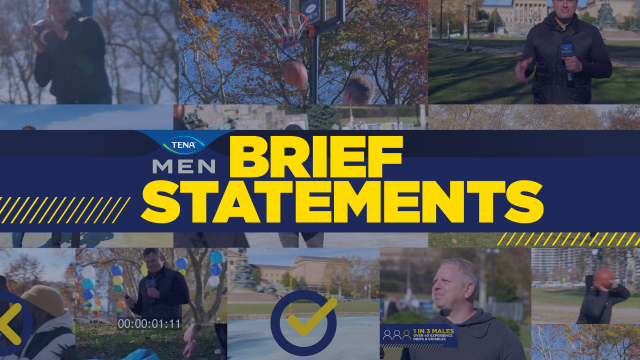 We approach this with the upmost care and attention. Because we’re a global operation, our model encourages remote and hybrid working, which means we're pouring less money and energy into large office footprints. Less office space also means less daily commuting and travel overall, which adds up to a real reduction in our carbon footprint.
Beyond that, it's the smaller, practical stuff done consistently: we recycle wherever we can, source ethically, and make sure computer equipment gets recycled rather than replaced and binned. None of it is flashy, but it reflects the level of care we try to bring to everything we do — sustainability isn't a separate initiative for us, it's just part of how we run the business properly.
Can you discuss a time when your company had to pivot or innovate in response to unforeseen challenges, and what lessons did you learn from that experience?
For us this isn't really one big ‘we had to pivot’ moment — it's more that we're always innovating. The rise of LLMs is a good example: almost overnight, the way people search and find information started changing, and it would've been easy to just carry on as normal.
Instead we moved early, trying to figure out what brand visibility even means when the answer isn't ten blue links but one AI-generated response. The lesson's always the same one: it's better to move too soon than too late. So for us, innovation isn't a reaction to some crisis — it's just the assumption that things will keep shifting, and staying ready for it.
Do you have any websites, books or resources that you would recommend?
A couple of things our own people have actually done: Mark Ritson's Mini MBA in Marketing is brilliant for getting back to proper marketing fundamentals — it cuts through a lot of industry noise and gets you focused on what actually matters. And for anyone wanting to get ahead of where search is heading, Profound's university courses are a great resource on AI search and visibility specifically — still a pretty underserved topic given how fast it's moving.