
Illustration is more than creating beautiful images — it’s about telling stories, sparking emotions, and building connections. For illustrator and surface pattern designer Lenka Tryb, creativity has been shaped by a unique blend of architecture, fashion design, and a lifelong passion for visual storytelling. From award-winning artwork to publishing her own picture book, her journey highlights the value of experimentation, persistence, and finding inspiration in everyday life.
In this interview, Lenka shares how she transitioned into the creative industry, the influences behind her distinctive style, and why traditional techniques still have an important place in an increasingly digital world. She also discusses her creative process, the tools she relies on, and the advice she would give aspiring illustrators looking to build successful careers.
How did you first get into the industry?
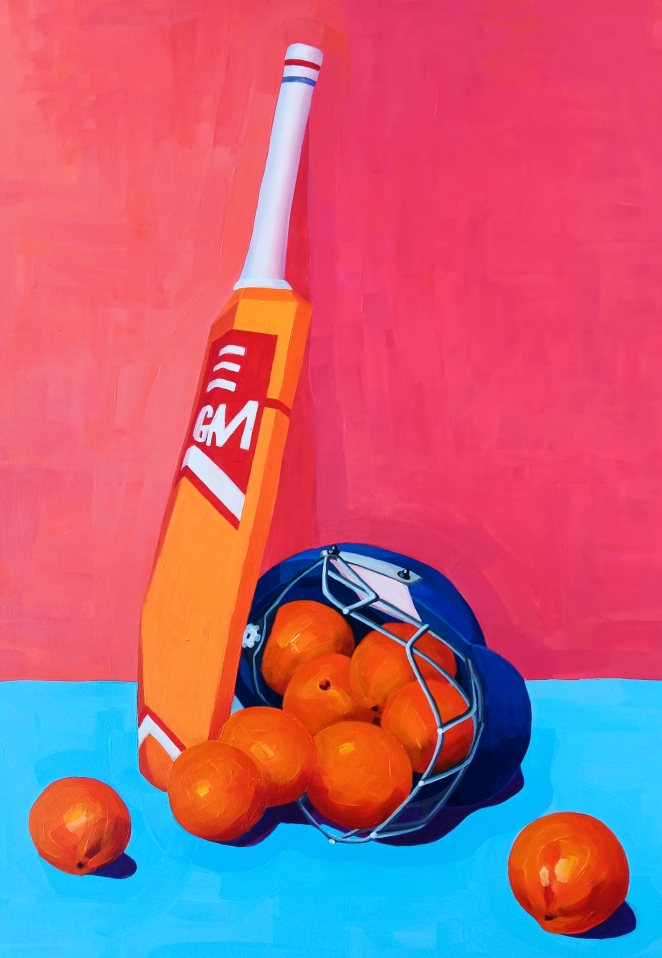
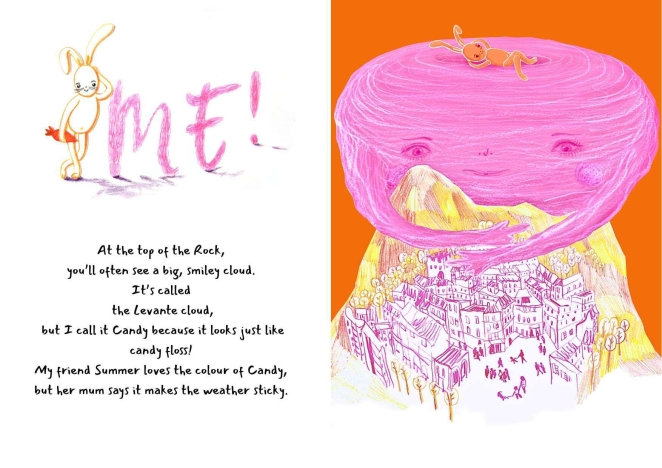 Gibraltar is an amazing melting pot of artists, with many art competitions taking place every year. Shortly after we relocated here, I entered my first competition with my painting Bowled Over. To my surprise, it won first prize, and with that confidence boost I began taking part in as many competitions as I could — not only with my paintings, but also with my sculptures and illustrations.
At first, I felt hesitant about entering my coloured-pencil illustrations. Large-format paintings often seemed to have more of a “wow” factor and tended to dominate the top prizes. But later, when my illustrations received an award, along with some very encouraging comments from the adjudicator, I felt it was the right moment to pursue illustration more seriously and explore its power for storytelling.
That experience led me to join The Rock Retreat, a creative workshop for authors and illustrators, and eventually to the launch of my first picture book.
What is your personal background and what role did it play in your career?
I have degrees in architecture and fashion design, and somehow those two worlds have shaped my creative approach in completely opposite, yet complementary, ways.
Architecture often felt a little rigid creatively, but it taught me how to think conceptually and see the bigger picture. Fashion design, on the other hand, felt far more instinctive and playful. Of course, a collection still needed a strong concept, along with silhouettes, fabrics, colours, textures, and an overall theme, but the design process itself felt much freer and more intuitive. Pattern cutting and garment construction could become quite technical, but I was always drawn to draping. There was something magical about working directly with fabric; it gave me a sense of freedom and a real burst of creative energy.
Architecture gave me structure, concept, and the ability to see the bigger picture, while fashion design introduced me to an appreciation for touch and sensory experience. Being able to create something with my own hands made me realise that the process itself is just as important to me as the final outcome.
I think fashion design was also where I first realised that I need a more kinetic, hands-on approach to creativity. That is why I often lean towards paper collage techniques.
If you weren’t in your current industry, what would you be doing?
Illustration has always played a significant role in my life. As an introverted child, I spent countless hours sketching, and later my drawing skills became a fundamental part of my design process in both architecture and fashion design.
However, it wasn’t until I had my children and then working with children at schools that I realised how emotionally connected I was to storytelling. Children’s books, with their nostalgic scent and sense of wonder, transported me back to my own childhood — to the very core of my inspiration. They reminded me of the excitement of opening a book and diving into a brand-new adventure.
I feel incredibly grateful that I now get to create stories and adventures of my own. In a way, if it weren’t for my three wonderful children and their endless requests for bedtime stories, I might still be a fashion designer… or an architect…?
Can you explain your creative process? What makes it unique?
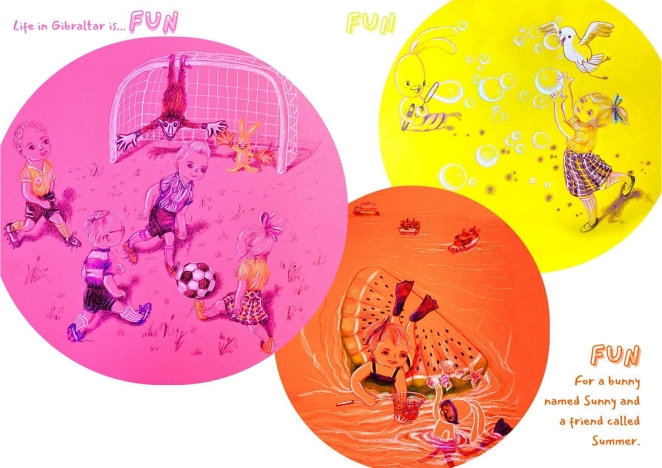 My creative process often begins with a concept built around an idea — a small spark. The idea for my picture book The Great Rumble started during a conversation with one of my students. It made me realise how, for some children, home can become a fragile sanctuary, and how hopeless it can feel when you are unable to put things right. I began thinking about how easily we can take the safety and comfort of our homes for granted, and that realisation became the spark for the story.
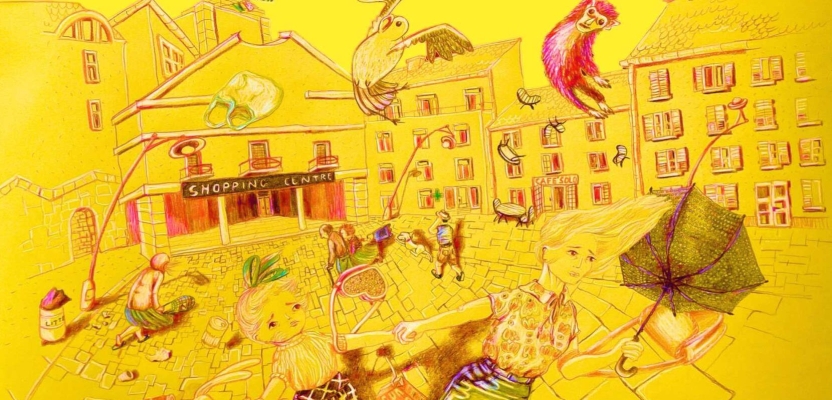
Once I have the concept and the flow of the narrative, the process can become wonderfully messy, especially because I often work with paper collage techniques… By cutting out individual characters and elements and arranging them back together, I can create a more three-dimensional sense of interaction, movement, and emotion. It allows the story to slowly come to life in a very physical and organic way.
How would you describe your style?
I enjoy playing with the interaction between traditional and modern. In my surface pattern design, I like to start with traditional hand-drawn illustrations and then bring them into Photoshop, where I mix them with more contemporary elements like geometric shapes, checks, and stripes. It’s a bit like having a conversation between two worlds that don’t always expect to get along — but somehow do.
In my book illustrations, I often pair hand-drawn characters with vibrant, lively backgrounds. I aim for my work to feel emotionally expressive, dynamic, and uplifting, prefferably with a little hint of humour tucked in.
I also find myself drawn to capturing the essence of fabrics and the textures of different materials, that must be coming from my fashion design background.
Which individuals do you gain inspiration from? Do you have any heroes in the industry?
There are a few artists and illustrators I absolutely have to mention. One of them is Anthony Browne — I simply cannot resist his books and their wonderfully surreal undertones. I find his storytelling artfully witty but also deeply emotional, and every time I revisit one of his picture books, I discover something new hidden within the pages.
I also completely fell in love with the stories of Rebecca Cobb the first time I read her book The Something. Her warm, hand-drawn illustrations and gentle storytelling instantly transported me back to the cosiness and wonder of childhood.
I definitely have to mention David Hockney. His bold, exaggerated colour palettes and striking contrasts give me so much joy! To me, each of his large-scale portraits feels like a silent story speaking loudly.
And another one is David Lynch. After I first watched his movies, I couldn't stop rewatching them. His visual surreal storytelling intertwined with his movies’ soundtracks blew me completely away… And his quote, “Keep your eye on the doughnut, and not on the hole,” is my all-time favourite — even though I don’t usually like quotes! ????
What tips would you give to aspiring creatives looking for work?
 I would say that, although it can sometimes feel as though progress isn’t always obvious, it’s important to keep creating. I imagine it like a charm bracelet: you might add a few striking individual charms along the way, but it’s the chain that holds everything together, and the final clasp is what allows you to wear it as a complete piece.
Keep going, experiment, stay flexible, and put yourself out there — network.
What kind of tools/kit/software could you not do without?
My go-to tools are good old coloured pencils and Photoshop. I have worked with Photoshop for many years, and I really enjoy exploring everything it allows me to do in terms of composition, colourways, and manipulation. It brings endless possibilities and new dimensions to my hand-drawn illustrations, often leading to unexpected compositions and creative twists.
What’s your secret to staying inspired and motivated?
Observing and staying open to new experiences has always been a huge source of inspiration for me. I find watching the world around me incredibly fascinating. Even as a child, I was very observant, and almost anything could spark an idea. Sometimes, the simplest conversation or a small human encounter can become the beginning of a story — at least for me. A beautifully crafted detail on a garment, or a shadow falling through a stairwell that creates an unexpectedly stunning play of light, these can easily set me off to my imaginative world…
What’s the work achievement you’re most proud of?
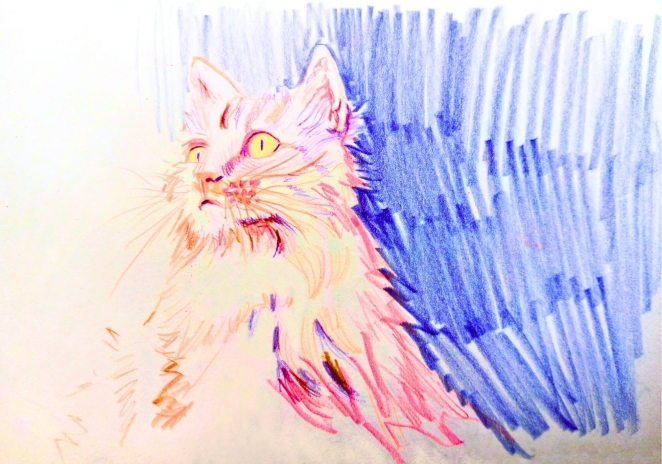 When a story genuinely connects with people, it must be the moment I’m most proud of. Whether it’s through my book illustrations or a surface pattern collection, I always hope my work tells a story, sparks a feeling, or simply brings a smile to someone’s face.
When I visited local schools to share my book with young readers, I was amazed by how engaged they became — how quickly their curiosity grew and how contagious their laughter became. In those moments, I felt the most rewarded and proud.
As someone with experience in the industry, what trends do you foresee shaping the future of creativity?
Trends usually cycle back, so I hope that traditional techniques are unlikely to disappear. Instead, they will make a return, finding new relevance within a more contemporary, tech-driven creative environment.
What do you think sets apart truly exceptional creatives from the rest of the pack?
I think the truly exceptional creatives have genuine belief in what they are creating, which is often the hardest thing to maintain. Their creative work comes from a place that feels honest and personal and becomes an extension of who they are. As a result, they simply don’t stop creating and they keep going. Also, their ability to evoke emotion, spark imagination, curiosity and create connection is what makes them truly exceptional.
How do you think technology has influenced the creative industries and how have you adapted to these changes?
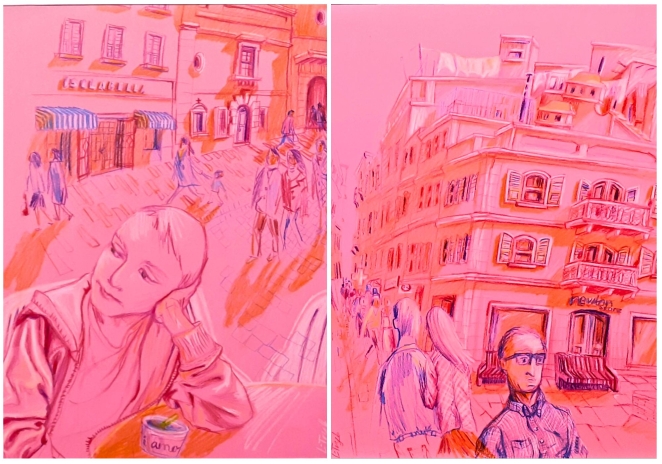 I appreciate technology as a tool. The extensive possibilities it offers for experimenting and visualising are very useful and would, in traditional methods, be extremely time-consuming. It has opened up the creative market, making it more accessible but also more saturated and faster.