
When Ken Moore, Group Creative Director at We Are Social partnered with Somersby; the challenge wasn’t awareness it was apathy. The brand’s distinctive, playful voice had been diluted by a stream of forgettable packshots and generic “drinking occasion” content that audiences instinctively scroll past. To cut through, the team needed to move beyond traditional advertising and reimagine how Somersby could show up in-feed not as a brand interrupting culture, but as one actively participating in it.
The result was #TimeOutFromTheBullshit, a social-first entertainment ecosystem designed around the realities of how Gen Z consumes content. Built as a flexible “social playground” rather than a fixed campaign, the approach transforms everyday frustrations into humour-led, highly shareable formats that feel native to platforms like TikTok and Instagram. By positioning Somersby as a lighthearted antidote to modern-life absurdities, We Are Social helped the brand shift from passive visibility to active cultural relevance earning attention in a space where it’s increasingly hard to hold.
What was the brief?
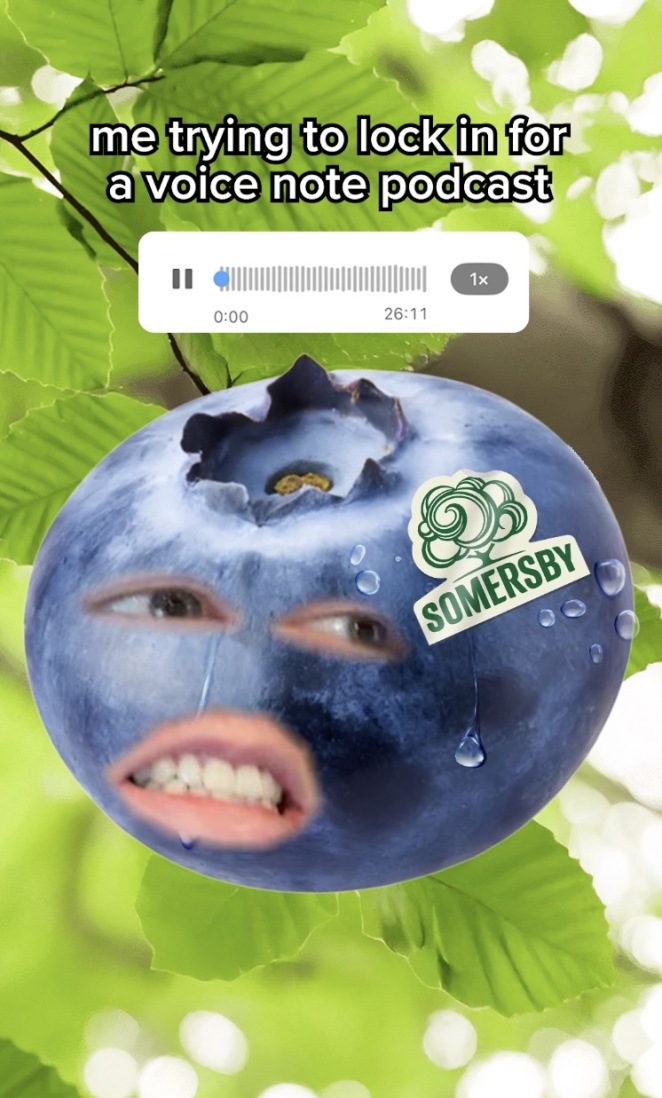 The original entertaining voice of Somersby was hiding behind boring packshots and those "drinking occasion" visuals that everyone just scrolls past. Our brief was to stop being product wallpaper and start being social-first entertainment that builds long-term brand equity.
How did the initial pitch / brainstorming phase go?
We spent time with the senior client team and cross-market stakeholders at Carlsberg Group HQ in Copenhagen. Running workshops, sharing inspiration and painting a picture of the world of social / interest media in 2026. This process helped break traditional marketing habits and allowed us to authentically land the brand purpose of “Somersby exists to counter modern-life bullshit with carefree joy" through a social lens.
We ditched the traditional campaign playbook for a "social playground". Flexible high-frequency formats that could live, breathe, and scale across markets without feeling forced and retained potential for novel creativity executed in novel creative ways, not just ‘always-on, single-post slop’.
What was the process behind ideating the concept?
We went deep into the daily annoyances that make Gen Zs want to throw their phones across the room. The "situationships," the influencer fatigue, the weird Zoom etiquette, the 40-step coffee orders. We turned those "absurdities" into three distinct franchises designed to ride the algorithm: Squirrels (scripted micro dramas or ‘that’s so me’ relatable memes), Treeside Confessions (unscripted realness), Fruit Gang (quick turnaround reactive wit) and a range of even lower lift product play formats.
What was the production process like?
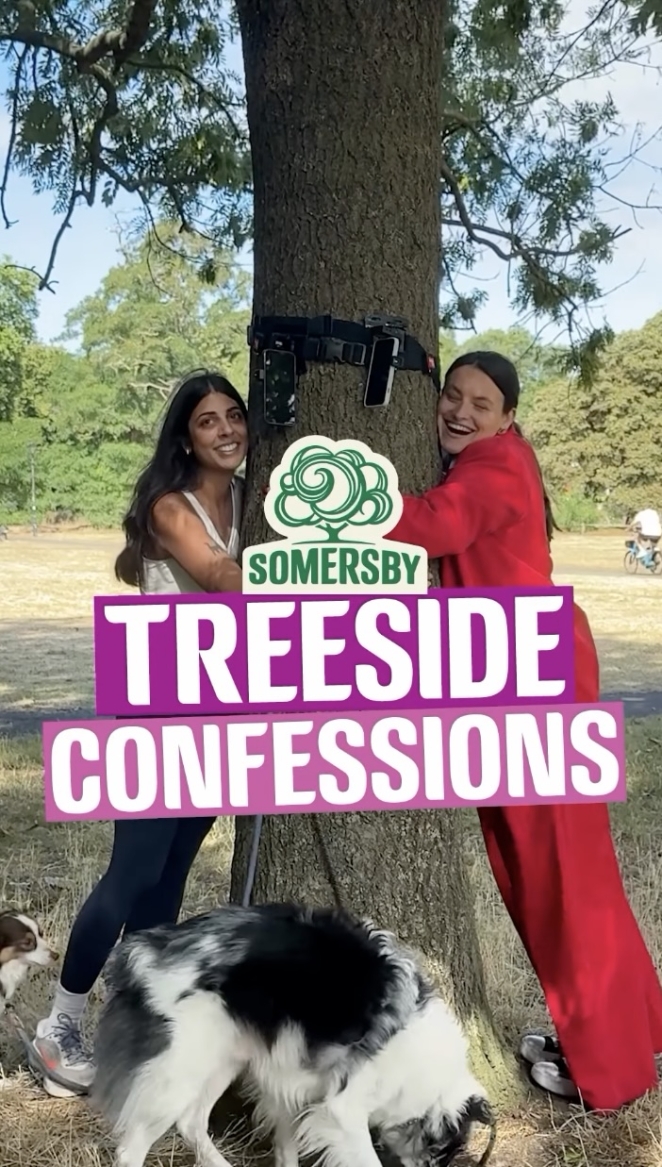
Agile, messy in a good way and multi-layered. We were scripting reality-TV style social micro-drama episodes for "The Squirrels," running low-fi influencer shoots for "Treeside Confessions", and using the "Fruit Gang" eyes and mouth filter to pounce on whatever was “bullshitting that week”.
What was the biggest challenge during production? How did you overcome it?
High-frequency social content usually wears out fast. We solved that by building a "Bank of Bullshit", a rolling list of modern-life annoyances. It gave us a constant supply of relatable bullshit so the work could "wear in" and get better over time instead of just disappearing.
What kit/tools/software were used to create the project?
Social Listening: To find out what "bullshit" was actually annoying our audience this week.
AI video combined with After Effects: Generating quick turn around Squirrel stock video style clips to play within edits.
Mobile Shoot Rigs: For that raw, "shot-on-phone" look for the Treeside Confessions that feels right at home on a FYP.
Native features and filters: Quick and agile use of native features, not slow design processes.
What is one funny or notable thing that happened during production?
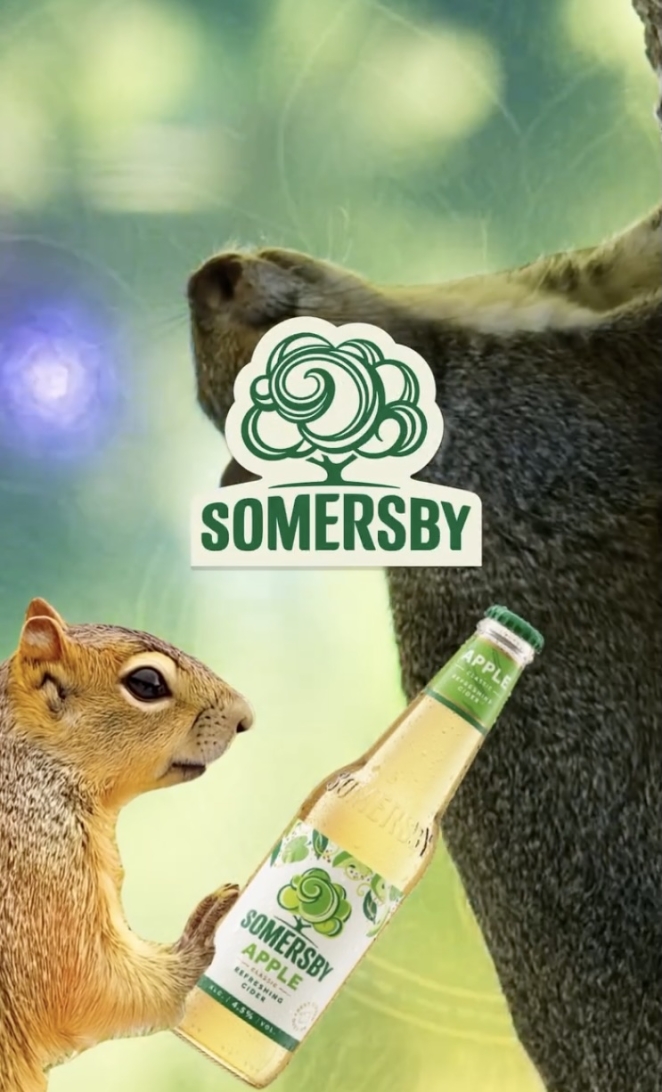 We did originally consider shooting our own library of squirrels in the wild, but as soon as we saw that AI video could generate authentic squirrel clips, we went for that route and probably dodged a wet and miserable squirrel-shaped nature documentary bullet.
What’s the main message of this project and why does it matter?
Stop "advertising" and start "entertaining." Simple as that. In the attention economy, you don't win by being loud; you win by being the refreshing antidote to the noise. Somersby is the carefree "time out" our audience actually wants.
How long did it take from inception to delivery?
This wasn't a one-and-done drop. It’s an ongoing social entertainment ecosystem. Since we flipped to this creative strategy, we’ve hit 17.5 million engagements, so it’s less about a delivery date and more about a sustained takeover.
Can you describe the creative spark or inspiration behind the initial concept?
The realisation that social media is basically a giant coping mechanism for Gen Z. Modern life is full of "ironic bullshit," and people go to TikTok/IG to find the humour in it. We realised Somersby didn't need to join the bullshit, it needed to be the thing that helped you laugh at it.
How did you ensure that the concept aligned with the brand's values, goals, and target audience?
We didn't just slap a logo on a meme. We peppered in Somersby-distinctive brand assets throughout - the tree, the fruit, the product- into the actual entertainment. By making "Time Out from the Bullshit" the core of every joke, the brand became the hero of the story, not just a sponsor or a trend hopper.
Were there any alternative concepts or ideas considered during the ideation phase?
We discussed bringing back the original Lord Somersby character previously used in TV spots in the early 2010s as a witty character/social mascot, but there were mixed feelings across markets about his tone.
Then there’s always the "safe" route: high-gloss ads of people clinking glasses in the sun. We probably thought about it for a second before realising it was exactly why the brand was becoming invisible. We had to kill the catalogue vibe to survive.
If so, what led to the selection of the final concept?
It was scalable, unpolished and built to grab attention in a crowded feed. It felt like something a human would actually share, not advertising something a brand would deploy. At the end of the day, if your content isn't DM-worthy on social media. What's the point?
Can you discuss any collaborative or interdisciplinary aspects?
Total team effort. We had the Insights team finding the "bullshit," the Strategy team defining the "Time Out" role, and the Creatives actually making the stuff. Plus, we collaborated with influencer hosts to make sure the "Treeside Confessions" felt like real conversations, not scripted interviews. Throughout all of this, our clients at Somersby have been awesome too; putting their trust in us, fully embracing our creative strategy and giving us the creative license to become the true social entertainer.
What role did consumer research or market analysis play?
 It was the engine. Our "Bank of Bullshit" was fueled by real-world social listening. If people weren't actually complaining about it online, it didn't make the cut. That’s how we kept the humour hyper-relevant to Gen Z’s actual life.
Can you discuss any unique or unconventional production techniques?
Using generative AI video instead of stock gave us freedom and flexibility to get more creative with the micro-drama stories we wanted to tell, as well as turning around more unpolished Squirrel memes.
How did you ensure that the concept remained innovative?
By staying reactive. Most brands plan six months out; we built a team mentality built around “what’s bullshitting this week” that lets us riff on what’s happening now. We became a cultural participant instead of just another advertiser.
What do you hope it achieves for the brand?
Take Somersby from "that cider I forgot about" to the brand that actually "gets" the ironic and funny absurdity of modern life. We want long-term love, massive engagement, and to be the first thing people think of when they need a break from the bullshit of modern life on social IRL with an ice-cold Somersby in hand with friends embracing what’s real, joyful and refreshing.
Credit list for the work?
GCD: Ken Moore
ACD: Josh Crossley
Creative: Lauren Ashton
Design Lead: Robbie Hancock
Strategy Director: Nick McWilliams
SAD: Ben Clark
SAM: Beki Howarth
Insights Director: Alex Grout
Somersby Global Marketing Manager: Maria Henriques
Student Assistant, Global Brand Marketing Somersby: Sofia Frandsen
Global Director Somersby: Milan Ashok Shah
Global Strategy Partner iProspect: Casper van der Waal
Director of Strategy at This Time Tomorrow: Brett Donahay