
Cindy Cheung’s journey into the world of design is a story of persistence, creativity, and an unshakable belief in the power of ideas. From her early days in Sheffield, where she landed her very first role as a Junior Designer with nothing but determination and a cleverly designed CV disguised as an instant noodle pack, Cindy has always found ways to stand out. What started as a bold attempt to get noticed became the foundation of a career defined by resilience and inventive thinking.
Today, as the Co-Founder and Creative Partner at ANONYM Collective, Cindy leads projects that merge branding, interiors, and graphics into powerful design solutions. Her work is driven not just by aesthetics, but by a deep understanding of how design can tell stories, solve problems, and create meaningful change for businesses. In this interview, Cindy opens up about her creative process, inspirations, and the lessons she’s learned while carving out her place in the industry. She also shares candid advice for aspiring designers, her thoughts on the role of technology like AI in creativity, and what it really takes to stay motivated in a fast-paced industry.
How did you first get into the industry?
I started out as a Junior Designer for a local design agency back home in Sheffield. It was tough getting my first foot on the design ladder, but I remember being keen to be seen and noticed as a new designer fresh out of Uni’ and designed my CV as a piece of 3D packaging, as an ‘instant noodle’ pack, a bit gimmicky looking back now, but back then, I’d try anything to stand out from the competition! And, it worked. My first job in design taught me a lot about the working pace of this industry and honing my technical design skills.
Honestly, as a beginner, the best thing you can do for your technical skill is to learn by doing; I was tasked with live briefs and worked alongside senior designers, providing me with the invaluable windows to ‘watch and learn’.
Where are you based now and who do you work for?
I’m the Creative Designer and Co-Founder of ANONYM Collective, a creative agency focused on graphics, interiors and branding design. We create engaging commercial interior concepts, graphics and campaigns that tell stories to develop brands and move their business forward. We’re based in Birmingham, West Midlands – but work with clients ranging from being just down the road, nationally and globally!
What is your personal background and what role did it play in your career?
My background is actually quite a mix of graphic design and consulting. I’ve worked across branding, print design and illustration, starting right at the bottom, and I’ve had the chance to collaborate with some brilliant brands and agencies. I studied graphic design and have always been drawn to how creativity can solve real-world business problems. My parents ran their own food business, so watching them grafting from a young age, has always given me that mindset of working hard and providing value.
I’ve found that having experience in the practical side of things, preparing artwork, cutting boards, going “on location” and handing out flyers, has given me a grounded perspective on design that helps us seek and achieve real world results. Concepts are just concepts until you can prove them to work.
If you weren’t in your current industry, what would you be doing?
I’d be running a coffee shop and selling greeting cards on the side.
Can you explain your creative process? What makes it unique?
Some people find this a bit surprising, but my process is actually very structured. We always start with the usual client briefing; breaking down projects into stages, understanding who does what and setting goals with deliverables.
The process allows us to constantly move forward without going off-piste. This is key to the primary focus of any project: delivery.
But where is the creative part? My answer is that it’s all the way through the project. From setting the brief, understanding the wider scope, how far the client is on their journey, what deliverables will solve their issues – this is all about creating elegant solutions to solve problems.
Having a strong project structure is what allows you to be creative without losing focus.
How would you describe your style?
I would describe my style as illustrative. Although every project is different and calls for different things, I generally find myself creating a solution with an illustrative flourish, even if the project was initially just about pick a font!
What’s life without a bit of fun?
Which individuals do you gain inspiration from?
Do you have any heroes in the industry?
I’m a big fan of the classics: Neville Brody and David Carson. I’ve been a fan of their work since university. I also love the work of Jessica Hische, Aaron Draplin and Jessica Walsh who all have stunning, detailed and beautiful typographic work.
Plus, being an illustrator on my own children’s books – I’m drawn to classic book writers and illustrators such as Allan and Janet Ahlberg, Axel Scheffler and Quentin Blake – whimsical and charming illustrations. I could go on but we’d be here all day!
What tips would you give to aspiring creatives looking for work?
Everyone says a similar thing but you’ve got to have the right portfolio for what you’re applying for. However, what people tend to ignore / sugar-coat is that the portfolio is just a quick way for your potential employer to assess whether you have the skills that they can make use of.
So to start, you should focus of technical skills in my opinion. This would be artworking, being able to set up artwork for print, understanding how to spec for print, being technically strong in industry standard software: Illustrator, Indesign, Photoshop. I think all designers can attest to the fact that industry isn’t like university – technical skills can get you employed even without a huge level of creativity.
Build a portfolio using online tutorials. Find briefs at Briefbox or Good Brief and learn to create specifically to a client's wants. These platforms offer great exercises for practicing client communication and delivering mock projects – practice interpreting client needs, creating deliverables and meeting deadlines. Working on these briefs can help strengthen your technical skills as well as give you portfolio pieces to show off in an interview.
What tips would you give to other professionals to get more clients?
Don’t be picky until you’re in a position to be picky. Just do all the work that’s available….. and then just keep doing it. Nothing markets your services better than actually doing the work. You can be picky about projects and pricing once you’ve got enough work to turn projects down.
Can you share a memorable experience from your career journey that shaped your approach to creativity?
A project that really shaped how I approach a design project was when I worked on a rebrand for a small charity that supported new parents. We had a tiny (really tiny) budget and a tight deadline and at first, I felt pretty stuck. After a bit of brainstorming, I came up with a plan on how to use the limitations as a driver for a more creative solution.
The charity was focused on helping teenage parents who were struggling to cope with parenthood, so they were very hands-on on and a flashy, conceptual campaign wasn’t really appropriate or necessary when push comes to shove. The importance was the delivery of the message – clear, direct and concise: we’re here to help. For a message like this, a simple honest, low-tech hand-drawn approach was chosen. And it worked.
That experience taught me that when you hit a wall, it’s not about having endless resources, it’s about understanding the real issue what delivering results.
What’s your secret to staying inspired and motivated?
I find inspiration EVERYWHERE; but what keeps me really motivated is a mix of staying curious and habit. I make it a point to spend a little time each day scrolling through design feeds on Pinterest, Instagram or websites such as Abduzeedo and BP&O (Branding, Packaging & Opinion); just to see what’s out there. It sparks new ideas and keeps me connected to what’s going on.
I tend to go empty if I have to be at my desk at all times so taking time to actually get some air and get away from my monitor helps a lot. Other times, just talking to my business partner helps a lot too – never underestimate the art of great conversations with other designers and your peers! I’ve found that these little practices have helped me stay motivated and ready to tackle creative jobs.
What’s the work achievement you’re most proud of?
Diving into the world of running our own business and building it from scratch alongside my brilliant business partner, Baz Chan. Five years in, and we’re still going strong, that alone feels like a massive win! I’m especially proud of the recognition we’ve earned for creating meaningful design work, our design thinking, and the real value we bring to our clients.
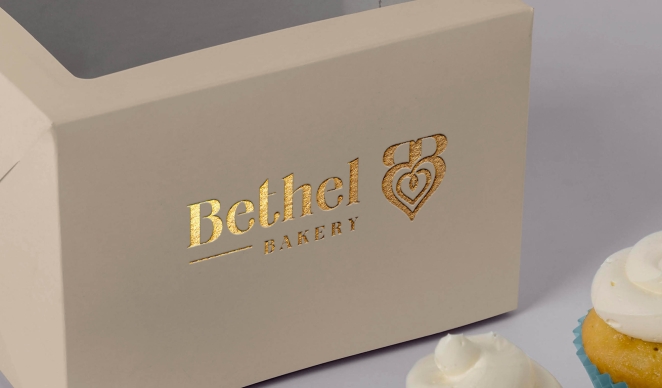
The biggest buzz? Helping business owners bring their visions to life. One standout moment: a client used her new brand identity (which I created!) as the springboard to open her first commercial bakery in Birmingham this year. Seeing our work fuel someone’s growth like that is just incredibly rewarding.
As someone with experience in the industry, what trends do you foresee shaping the future of creativity?
Like everyone else, I’m keeping my eyes open about how technology is becoming more integrated into the creative process. AI and Machine Learning are all the rage and I’m sure they’ll become more and more significant going forward.
However, whereas many people see AI as a solution, I think it’ll just become another useful tool rather than a “solution for all” as it’s being touted at the moment. We don’t live in a black and white world and AI isn’t going to be able to solve your issues when you don’t know what your issues are.
You’ll always need a human with actual knowledge and experience to be able to pick apart some of the briefs that I’ve been given!
What do you think sets apart truly exceptional creatives from the rest of the pack?
I think exceptional creatives really understand what they’re designing for. It’s not just about making something that looks good, it’s about designing for purpose, designing for the end-user and being able to make them feel a certain way.
And then being able to do this consistently at a high level which is the hardest part.
What is the one thing that you would change about the industry?
If I could change one thing, it would be the pressure for constant, fast-turnaround design. While efficiency is important, I think it sometimes leads to sacrificing quality and adopting the attitude “It’ll do” to projects. I’d really love to see more focus on thoughtful, well-researched and meaningful design that prioritises long-term value and aesthetics over speed.
But we don’t live in that world. Yet!