

Why do we want things but never get them? Why does life seem unfair, and change feel too difficult?
Many people feel the same way: no progress, no joy, and no clear reason why. It seems like we all have equal opportunities, yet everyone struggles.
In this text, I will break everything down. I'll explain how we got here and what to do about it.
Part 1: The Illusion of Choice
The education system is designed to make us obedient. Maybe it’s not a conspiracy, but it certainly benefits the state.
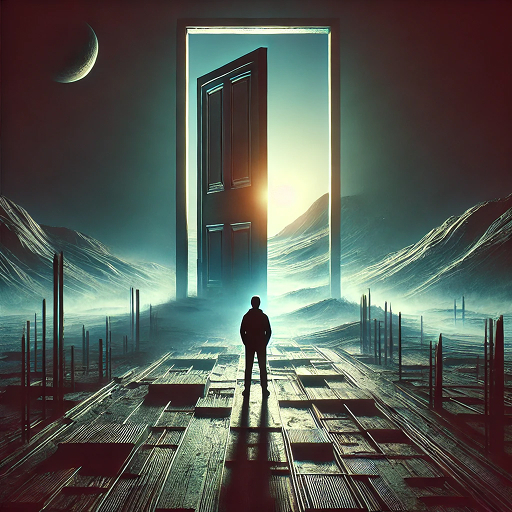
Here’s the issue. We go to school, then to university. These are state-controlled institutions. Even if we pay for our education, the government decides what we learn and what professions we prepare for. If you feel like something is missing in life, it’s not a coincidence. It seems like there are different paths, but everyone around you is walking the same one.
How did this happen?
Three hundred years ago, there was no centralized education. People learned from masters, choosing what interested them. This is how great thinkers emerged. They studied the world not for jobs but for knowledge. Then came Prussia.
In the 18th century, Prussia became a military power and invented a new education system. Its goal was discipline and obedience. Later, other countries adopted this model. In the industrial era, it was perfect: factories needed workers, not thinkers.
The system provided stability but turned people into mental slaves. The state funded education, so it dictated what should be studied. Vocational schools are a prime example: they don’t educate; they prepare workers for specific jobs.

But the world has changed. We now have more resources and opportunities. In the past, people didn’t know about alternatives. Now they exist. Yet, we’re still taught the old system: “Go to school, work, don’t ask questions.” We’re told this is stability.
Then why do so many people feel unhappy? Why does something feel off? Because the system keeps us in its framework, creating an illusion of choice.
So why don’t we change anything? Let’s figure it out.
Part 2: Are You the Main Character or Just an NPC?
From birth, we copy others. That’s how we learn. But more often than not, this turns us into NPCs.
NPC (Non-Player Character) refers to a character in a game who follows a scripted path. Think of GTA: the main character completes missions, while NPCs walk predetermined routes and react in scripted ways.
In real life, NPCs are people who live by default. They don’t question their beliefs, analyze their actions, or think critically. Their path is predictable: school, work, retirement. And most importantly, they judge those who choose a different route.
Most people are NPCs. This is a result of a system that taught us to be workers, not thinkers. Rockefeller openly stated that he didn’t want a nation of thinkers—he wanted a nation of laborers. Education became a tool of control.
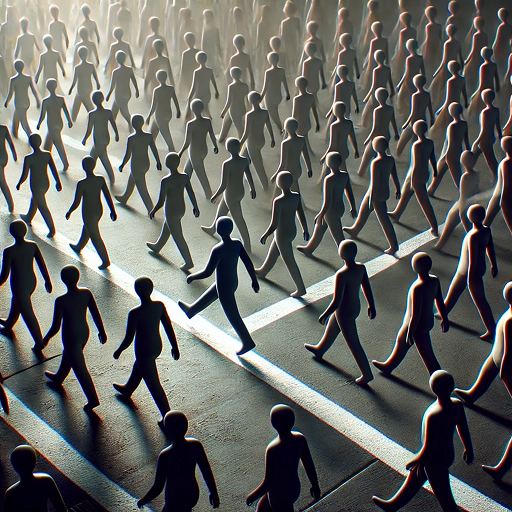
But if you’ve realized that you’ve been living as an NPC—don’t panic. It’s not your fault. But now you have the power to change it.
NPCs live within the boundaries of their reality. They don’t seek new perspectives or explore different approaches. Their world is limited to their experiences and beliefs. But mindset shapes the future.
How do you break free?
Start questioning things. Read books, watch podcasts, explore different perspectives. Imagine your worldview as a camera lens. The more lenses you add, the wider and clearer your vision becomes.
I realized my problems stemmed from a limited perspective. So I started learning—seeking new knowledge, analyzing other people's experiences, and expanding my thinking.
Why does this matter? Let’s dive deeper.
Part 3: The Dream
Now, the main question: What is your dream? Your real dream—not the one imposed by society.
The system teaches us to be specialists but not to ask what we truly want. Our parents worked because they had no choice. In the USSR, survival depended on work. We inherited this mindset—we don’t know how to dream and fear going against the norm.
But the world has changed. Now, you can monetize what you love. We have access to information that was once unavailable. We can see how others live, learn from them, and change our mindset.
I get it—dreaming is hard, especially in difficult times. But there’s an alternative: anti-vision.
Anti-vision isn’t about what you want; it’s about what you don’t want. Imagine your life three years from now if you change nothing. Working for someone else’s goals. No hobbies. No growth, no fitness, no health, no relationships. Do you want that?
If you struggle to define your dream, start with anti-vision. Our brains identify problems more easily than solutions. Use this. Identify what dissatisfies you in life—and work on it.
Then, we’ll figure out what to do next.

Part 4: The Biggest Mistake Is Avoiding Mistakes
School taught us to avoid mistakes. No one said it outright, but the grading and punishment system created a fear of failure. We were afraid of looking stupid, getting a bad grade. This fear carried into adulthood.
But success is built on mistakes. The most successful people aren’t afraid to take risks. They make mistakes, receive feedback, adjust, and move forward. This cycle is unavoidable.
The school mindset of "avoid mistakes" doesn’t work in real life. If you never step into the unknown, you stay stuck. Time passes, but nothing changes. The biggest risk is not taking risks.
Solution? You need your own project.
A project is a space for experiments, growth, and development. It can be anything—a blog, a business, a salary increase. The key is seeing a direct link between your actions and results.
If you only work a job, your growth eventually stops. No matter how hard you try, your salary remains the same. You have a choice: continue following the script or initiate change.
Mistakes create new opportunities. They help you break through self-imposed limitations. Choose action over stagnation. For some, that action might mean pursuing new qualifications through platforms like the Distance Learning Centre, which offer flexible pathways to personal and professional growth.

In the next part, we’ll explore how to create your project.
Part 5: Focus
How do you start moving toward the life you want?
Many people dwell on past mistakes or fear the future. That’s natural. But our goal is to reduce anxiety and focus on the present.
Focus means saying “no” to everything that distracts from your goal.
People try to fight distractions by blocking their phones, but that’s a temporary fix. If you lack a clear dream, you’ll just drift along. But if you have a dream, focus turns on automatically. The key is clarity: knowing what you want and what you definitely don’t.
Look around. Some people live within a limited script, while others constantly evolve, learn, and accumulate experience and opportunities. Either you’re the main character, or you’re an NPC. When you have a clear goal, you don’t need extra motivation. You simply wake up thinking: “What can I do today to get closer to my dream?”

You need your own project.
It could be a blog, a course, a startup, or fitness. The key is passion. When you’re truly engaged, cheap dopamine from TikTok becomes unappealing.
How to strengthen focus?
- Practice Deep Work. Work without distractions for 15–30 minutes, then increase to 40–60 minutes. Even 2–3 hours a day is more effective than an unfocused day.
- Apply deep focus in life.
- Want better relationships? Spend time without gadgets.
- Want to develop your thinking? Read books for 1–2 hours without breaks.
- Study essentialism. Read Essentialism—it teaches how to cut out the unnecessary and focus on what matters.
Ready to set goals?
Ask yourself: “Where do I want to be in 1 /2 /5 years?”
- Identify what you don’t want.
- Find real problems in your life and create projects to solve them.
- Build strong momentum for action.
Focus on important tasks, eliminate distractions, adjust your course—and one day, you’ll realize you’ve achieved what once seemed like a distant dream.





Iren February 23rd, 2025, in the morning
Interesting perspective on the issue!If you don’t mind, I’d love to share what works for me:
- System – I don’t wake up every morning wondering what to do—I just do it. I plan once a week for the whole week ahead, and I also set plans monthly, quarterly, and yearly.
- Focus on the positive – In my view, anti-vision doesn’t work. All our emotions are tied to our hormonal system, and if we set goals based on what we don’t want, we train our body to produce a negative hormonal response to our actions. Working with positivity is a bit trickier because negative hormones are released almost instantly, whereas praising yourself and thinking positively requires at least 15 seconds to take effect.
Brilliant article! I agree with you on many points!