
From mastering logistics systems to predicting UX trends that later shaped global tech platforms, Roman Korneev’s journey into the creative industry is anything but conventional. Based in Saint Petersburg and working across global collaborations from Germany to the U.S., Roman brings a rare blend of engineering precision, artistic instinct, and business insight to the world of UX/UI. His design approach, intuitive, soulful, and impact-driven, doesn’t just follow trends; it anticipates them.
In this candid interview, Roman opens up about his unconventional entry into design, his personal philosophy (“cook with soul”), and why true talent comes not from memorisation, but from logical mastery and creative freedom. From designing under pressure to envisioning a more intuitive, globalised industry, Roman’s vision is both deeply personal and sharply futuristic.
How did you first get into the industry?
Hello, dear Creativepool and greetings to our readers. It’s Roman Korneev, I’m a designer, and let me tell you about my design path. So, I finished the 1st English school and SUAI Master's in Intellectual Systems in logistics, which is an engineering-economical speciality, mostly transport-oriented. I thought I’ll be a manager in logistics at first, but then on an around 3rd course gradually realised I should move more towards IT and probably become an IT manager, so I shifted studies towards information logistics, which was the case and studied more of IT database and systems and its management, as well as some of coding. Also, I took an additional education in management in China as part of an exchange program.
While finishing education I was already searching for a job and attending practices, passing recruitment processes in large companies up to final stage but it didn’t work out, even considering not only high grades and achievements such as scientific conferences attendance and so on, but also won several IT management events, but still large companies seemed to hire someone else, even when I heard from my group interview rivals saying “well we’re great, but he’s top, if you don’t hire him, we don’t know whom you should hire”. So, I worked for a while in a smaller logistics company as a manager, but it wasn’t at my level. I realised I should try something else and decided to try design.
 I started making freelance projects, and then I was noticed by some teams, who started to hire me for long-term projects, which is a different topic. Later, when I had already studied design tools myself and worked for some years, I took an additional digital design course, but there was already close to nothing they could teach me, because I was already teaching others, but I needed it to officially confirm my expertise.
How do I start it and succeed? It turned out that my path had a lot of artistic side, paintings I drew in school were sent on international exhibitions, I performed with a folk dance collective on an international level, also tried a little clothes design, when friends called me to participate as a model in SPbFW, but I decided to take its educational program and finished it and visited as a guest and then tried a little of my own clothes design, which I’m planning to continue doing soon and finally, when I gathered some feedback from my acquittances, who worked as a designer or who knew such people and decided to try designing, I was already mentally ready for it.
Gradually, getting to know tools and techniques, I found out that all my education and experience combined perfectly match my new responsibilities. Business, Engineering and Artistic sides of my life coincided, I knew how to speak with managers, analytics, engineers and testers and could possibly do all their tasks, but had the freedom to concentrate on design, the most interesting, but possibly most challenging part of the development life cycle. Then I started creating such a design, which sometimes predicted global trends in both UX and UI, that such companies as Apple used afterwards on their website and even came up with new techniques, such as new UX analysis techniques and classification. Currently, I’m still eager to find a better project, actually, so I feel like in a better project all my skills will bring significant benefit and, at least, I’m comfortable working with J
Where are you based now and who do you work for?
I’m searching for opportunities worldwide, but currently I’m in Saint-Petersburg and working with Polytech University and with some side projects, such as one side unpublished yet project and part-time helping with an educational design program for Beam Institute of Technology or consulting for Atheneum. Yeah, I’m pushed to work a lot, hope the next project will be with a single company with better benefits.
What is your personal background and what role did it play in your career?
So, language school, MSc, MBA, also writing my PhD currently, actually. Well, artistic collective and even a little of an actor semi-professional practice, all of it was parallel with the studies, so all of it broadened my mind and inspired me so that the next art of any kind becomes easier to comprehend. I already touched my past in the first question, (sorry, maybe I wrote too much there, so maybe we should edit it) so I also can mention that I held in mind that I have to certainly be able to help my family, so I tried so hard to optimise my studies and career route, but in the end, it turned out becoming a designer, which is maybe even better, than I imagine, but I have more goals to achieve.
If you weren’t in your current industry, what would you be doing?
Besides being a manager, as I thought, at first, that I already wrote about. Actually, I plan on making videos on youtube and soon I will try to do so, and I thought maybe, after building audience, I should try present some business such as some courses or production or creativity, such as clothes, music standup even, well now I think hopefully I’ll be able to try at least some of that, so if I have had an opportunity to choose, I would’ve started a channel earlier, for sure.
Can you explain your creative process? What makes it unique?
My creative process isn’t something new, intake, analysis, design, transfer to the development and so on, through scrum with Kanban and so on and so forth, it’s all you may have read on the net already, but the way you do it depends.
So, what makes it unique is how much of your attention, soul is in the design. If you “cook” with a soul, with love, then customers will love it as well, and their souls will be touched as well. Classical recipes work, such as design guidelines and principles, but use some ingredients here and there differently with different spices and so on, and your identity will be transparent. As a result of that attentive approach, I did all these global design trends precognitions and new techniques inventions and built strong processes and achieved satisfying results.
By the way, why am I so confident saying I invented or predicted something, I’m actually not, I’m a balanced person and quite humble as well, but I know, for sure, when some achievement is accountable, because, I saw how these design guidelines and concepts, theories were occurring, how leading companies, such as Google were all the time minimalistic, but with bold accent on logo, which changes states, during seasons and holidays, and now minimalism, bold accents, system states reflection, all of it became design laws. The same in techniques, I studies and used some lean management techniques, marketing research and I saw how they evolved into scrum and UX research so on, so yeah, I see when it’s real or not and when I reflected on some of my cases, I noticed yeah I made some difference and I plan on making couple articles with that, hopefully in near future.
Another thing that makes it unique, of course, is your client, what kind of product you work with, and the product owner's personality and conditions they provide for product design realisation make a huge impact on the process of development. So, my approach here is to satisfy the owner as much as possible by respecting their opinion and defending your design decisions professionally, with all the proof from analysis, testing and so on, because business is a compromise. Usually, owners feel my competence and listen sooner or later. Everyone does that, but I feel like I worked with such difficult projects, from different perspectives, and succeeded in making a candy out of garbage each time, which makes my experience really unique. I’m speaking more literary style, less technical, to make it easier to read, but I can give more details.
How would you describe your style?
Recently, I had to answer a similar question about design philosophy, so here’s the answer. My design philosophy is intuitiveness, pleasantness and result. It's really hard to achieve, when you have a lot of data or hard to process data, but you have to make it simple, as they say, in writing – brevity is the sister of wit, here, the interpretation is friendly design, in other words, intuitive and as simple as possible, when speaking about UX. Speaking about UI, there's a lot to process as well; there are lots of styles and so on, but in the end, it should be pleasant and comfortable. Together, these two aspects bring the result for both client and company.
So, let’s name my style Champloo? J Because it’s a mixture or let’s call it something bright like a light, Licht, Swaitas, Svet, maybe some light god name, like Samas, Utu or sun god Kolovrat, Dazhbog, Hors, strong names, I guess, which of them people would like more and can they be used somewhere really. I should bring light with design, like making information clear, like design concepts say design should be intuitive and so on. Okay, let’s call it Karna, as son of the sun god, hero of the Hindu epic Mahabharata, a name that recalls my surname Korneev, which in old documentation is Karnaev, so maybe there is a connection, and it has the light concept. Oh, I just thought maybe the word reincarnation is somehow connected to Karna, sounds like it. There is more to it; maybe I’ll talk about it on my channel someday.
Which individuals do you gain inspiration from? Do you have any heroes in the industry?
I study all the leading companies and their design. After I became a designer, all apps, websites and other products, even tangible ones, like clothes or architecture, even games or ads with nice visuals, everything became a subject to analyse. How its logic makes it intuitive, how its visuals attract. Nothing special here, but my advice is to have more erudition, it’ll bring some new ideas from one design sphere to another, or so.
What tips would you give to aspiring creatives looking for work?
Another tip is to optimise your portfolio, choose or make several best examples, and this will help to find a job faster. If you’ll have an opportunity to work on your portfolio a bit more at the start, it’ll bring more long-term benefits, so if you need to, discuss this needed step with your family, because sometimes our loved ones rush us to get to work too much and here it can significantly harm.
What tips would you give to other professionals to get more clients?
There are lots of paths, and promoting should be taken as well as development. List promotion tools, make a backlog of them with price and time and other parameters. Look through it and value what you can do first and plan it and plan others afterwards. Recommendations, personal website, advertising, more networking, hiring marketers even and so on, try everything in order.
Can you share a memorable experience from your career journey that shaped your approach to creativity?
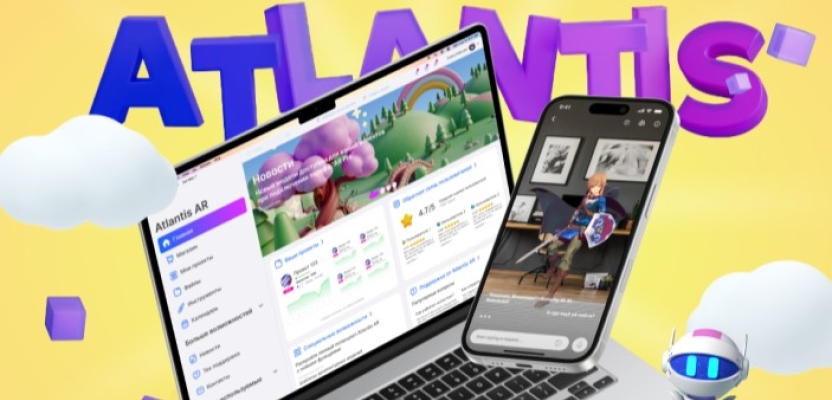
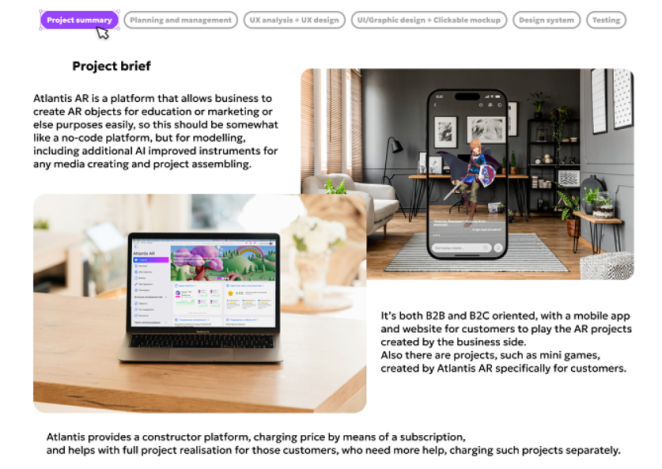
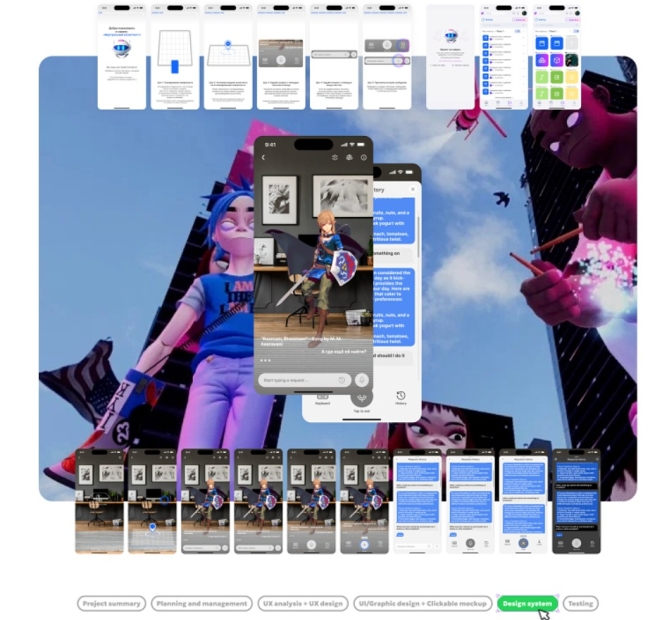
I did the Atlantis case in a huge rush. I was told to make it as fast as possible. I knew the process would go through the scrum lifecycle, and there would be a couple of hypotheses and only afterwards, there would be a final solution. Product owners didn’t want to hear it, but they were professionals and admitted my rightness. After I gave them one design, they wanted to try another and another and then chose one and voila, the scrum cycle really happened, but if they believed me from the start, they wouldn’t have pushed me that much. So, I decided, when possible, I’ll insist on my solutions more next time, speaking of both the design and the process.
What kind of tools/kit/software could you not do without?
Of course, Figma is essential, but a good professional can make anything anywhere. Also, there are a lot of component libraries or AI tools that simplify the process, but, in real work, usually you do everything yourself, and those just give the references, which is also fine. It’s only when the company's own design system exists already, it helps, but I usually do the design system as well.
What’s your secret to staying inspired and motivated?
You have to take care of yourself. Keep in shape, do exercises, have a good nutrition plan, stretch and hydrate J Well, also if you have some goals in life overall, it’ll motivate you in work and in design as well.
What’s the work achievement you’re most proud of?
Large projects, such as Atlantis, of course, but as well international products I worked with make me proud. Findi, an American startup I helped, Your Next Agency Dutch company, Atheneum, Beam Institute of Technology, German companies and so on, I hope I’ll be hired for a good international project soon.
As someone with experience in the industry, what trends do you foresee shaping the future of creativity?
Usually, something new is something long forgotten, they say. So, by analysing design history and interpreting some of its previous achievements into a new ecosystem will make a new trend. This recent Apple attempt to make the digital world more natural with water-like fluid transparent objects is a good example, but it needs to be studied further.
What do you think sets apart truly exceptional creatives from the rest of the pack?
Well, business likes to optimise and it’s great, but, for real, if you want to find an exceptional creator, seek a talent that’s it. For example, Telegram hires exceptional mathematicians and makes them coders, and it works exceptionally. They know these mathematicians aren’t coders, but they know such talents will grasp it easily.
Designing also takes talent, but freedom of imagination as well, so here a great designer will grow from a person that had a couple or multiple fortes.
Also, among great smarts, there are those that mechanically study and those that logically understand; the second ones are truly exceptional amongst exceptional. A talented person is talented in everything is said about these people, because, when they not just memorise, but exercise their logic, they will, after honing one, more easily understand next topic and the next one and the next one, which is also written in details, but under another angle in The Book of Five Rings by Miyamoto Musashi, for example. Even if a business needs a person to do one thing, this is an illusion; those who understand it all will do that one better.
How do you think technology has influenced the creative industries and how have you adapted to these changes?
Well, technologies gave us more to create for, but then, with artificial intelligence, it becomes frightening, but still, AI is just a tool and it gives some images with references to work with or simply makes searching on the web faster, but it has its flaws, so we should use it attentively and diligently.
What is the one thing that you would change about the industry?
I would advise how to hire talents better J Also, let’s say I would’ve somehow tried to help with the localisation. So different countries want to have their own products, but also want to keep the global picture. I guess multiple products with a united company group, but some competition inside, will solve this, and this may be multiplied and scaled to any business sphere. The way influence will be shared and so on will be decided somehow fairly and progress or fair terms will remain, but this needs to be studied more thoroughly.
Any websites, books or resources you would recommend?
I would recommend studying at school, ahah, read all the books there, at first, at least most of them. Then, well, “Steal Like an Artist” is a popular design book. Usually, you study only what you need for work, but if you want to read something outside, but related, it’s a good choice. Also, of course, ask AI what the most useful resources are, here you go, AI good usage. I would recommend the approach, so choose your design branch and then study and practice it solely, to make a great portfolio and start working sooner, don’t get overwhelmed by all of the design at the same time. More specifically, study a brief design history and its branches introduction, then choose your branch and go for it. Good luck!