
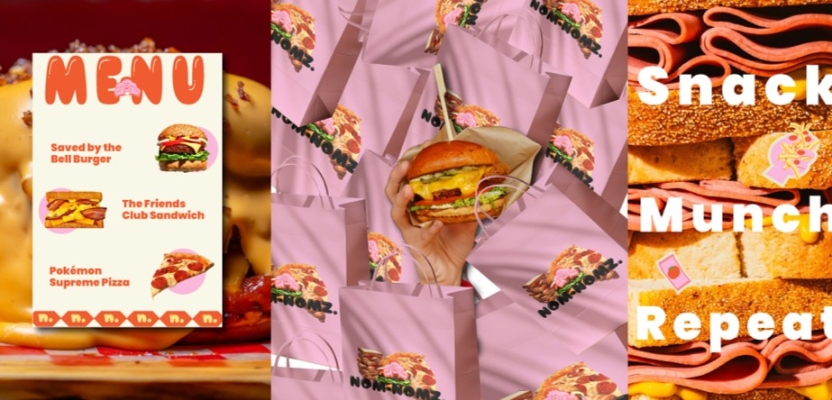

From understanding consumer behaviour to creating packaging that stands out on the shelf, Deepti Khatri, Packaging & Brand Designer and founder of Nuvio Studio, approaches design with curiosity, strategy and purpose. Her journey has taken her from graphic design and illustration to retail and Interactive Media Management in Canada, eventually leading her to specialise in packaging and brand identity. Today, she works independently with product-led brands across India and internationally, combining visual storytelling with a deeper understanding of how people interact with products.
In this Creativepool Member Spotlight, Deepti shares insights into her creative process, the importance of consumer research and what it takes to build a successful independent design practice. From developing a distinctive portfolio and finding new clients to exploring the influence of AI and the rise of illustration-led packaging, she reflects on the ideas shaping the future of the creative industry. She also discusses the designers who inspire her, the tools she relies on and why exceptional creativity begins with curiosity rather than simply following trends.
How did you first get into the industry?
 It wasn't a very straight path. I started out in graphic design and illustration, and then spent some time working in retail, which gave me a completely different perspective on how people interact with products.
Even while I was already working in design, I decided to move to Canada to study Interactive Media Management. I wanted to understand more than just the visual side of design how digital experiences, technology, strategy and people all connect. I also worked and lived there for a while, which gave me the chance to experience a different creative and professional environment.
When I came back to India, I continued working in design, but it took me a little longer to figure out where I wanted to specialise. Over time, I kept finding myself drawn back to physical products and the way brands communicate through them. That's eventually led me to packaging, which is where I feel I've really found my niche.
Where are you based now and who do you work for?
I'm currently based in India and work independently through Nuvio Studio, my design practice focused on packaging and brand design.
I work with product-led brands across India and internationally, including clients and projects connected to Canada, the UK and the US. A lot of my work sits at the intersection of brand strategy, visual identity and packaging, particularly for consumer-facing products where design has to work both on screen and in the real world.
What is your personal background and what role did it play in your career?
My background has always been a little mixed, illustration, design, retail and now running my own studio. I think that mix has made me more interested in the why behind a design decision rather than only the visual outcome.
Retail was particularly important. You get to see people interact with products without them knowing they're being observed. You notice how they navigate shelves, what they compare, what they ignore and what makes them reach for something. That experience still influences how I think about packaging today.
If you weren’t in your current industry, what would you be doing?
 Probably something that still involves understanding people. I've always been interested in behaviour, psychology and culture, so I could see myself doing something around research, writing or behavioural psychology.
I think I'd struggle to stay away from understanding why people do the things they do.
Can you explain your creative process? What makes it unique?
I usually start with research rather than visuals. I want to understand the audience, category, competition, positioning and the behaviour we're designing around before deciding what something should look like.
From there, I move between strategy, information architecture, user or consumer behaviour, visual exploration and prototyping. With packaging, I'm also thinking about how the design will behave physically, hierarchy, shelf presence, materials, colour reproduction and how the system works across SKUs.
The process isn't always linear, but the decisions are intentional. I don't want the final design to just look right; I want there to be a reason why it works.
How would you describe your style?
That's a difficult one because I don't think my work looks exactly the same from project to project.
I like design with personality, but I also like knowing why something is there. Sometimes that means something very minimal and considered, and sometimes it means something much louder.
If there's a common thread, it's probably that I like ideas to have a reason behind them. I'm less interested in making something look “designed” for the sake of it.
Which individuals do you gain inspiration from? Do you have any heroes in the industry?
 Jessica Walsh and Stefan Sagmeister were two of the first designers who really introduced me to the wider design world, and I still find myself coming back to their work. I remember being fascinated by how much personality they brought into design and how willing they were to experiment.
Banksy is another person I find interesting, although not specifically for his design work. I like how he can take a fairly simple idea, put it somewhere unexpected and suddenly get a whole lot of people talking about it.
I don't think I have one design hero. I tend to collect little bits of inspiration from different people, industries and places, and eventually they find their way into my work.
What tips would you give to aspiring creatives looking for work?
One thing I've learnt is that your portfolio doesn't have to prove that you can do everything. It has to make it easy for someone to understand why they should come to you.
When I was still figuring out my own direction, I had work across different areas too. Over time, I started paying attention to the projects I genuinely enjoyed and the kind of problems I wanted to keep solving. That helped me become much more intentional about what I put in my portfolio.
I'd also say don't wait until you have the “perfect” portfolio to start putting yourself out there. A self-initiated project can tell someone a lot about how you think, sometimes more than a project where you were only given a brief and asked to execute it.
What tips would you give to other professionals to get more clients?
I've found that getting clients is as much about being findable as it is about actively looking for them.
I've had to get comfortable putting my work out there, reaching out to brands myself and accepting that most of those conversations won't immediately turn into a project. What has helped me is treating outreach as research too. I'll look at a brand, understand what they're doing and only reach out when I can see a genuine reason why my work might be useful to them.
I also wouldn't underestimate smaller opportunities. A self-initiated project, a conversation that goes nowhere initially, or someone sharing your work can sometimes lead somewhere completely unexpected later. Not everything has to convert immediately to be useful.
Can you share a memorable experience from your career journey that shaped your approach to creativity?
 Working in retail probably shaped me more than I realised at the time.
It taught me a lot about people, but also about the art of selling, how you communicate an idea, read someone's reaction, adapt your approach and understand what might make someone say yes. It made me realise that design can do something similar: it can influence behaviour without necessarily telling someone what to do.
Retail also put me in situations where I had to deal with people, problems and pressure in real time. There were plenty of uncomfortable moments, but you don't really have the option of stepping away from them. You have to figure it out, stay calm and keep going.
I think that experience made me much more comfortable with uncertainty and with getting outside my comfort zone. It still influences how I approach creative problems today , I'm interested not just in how something looks, but in what it makes someone feel, notice or do.
What kind of tools/kit/software could you not do without?
Illustrator is probably the obvious one, especially for the kind of design work I do. Photoshop and InDesign are pretty constant too, and I use Figma when I'm working on digital experiences or broader brand systems. I’ve also been using Affinity more recently, especially for exploring different ways of working outside the Adobe ecosystem.
AI has also become part of my workflow, but quite selectively. I use tools like ChatGPT, Gemini and Adobe’s generative features for things like research, visual exploration, mock-ups and getting through some of the more repetitive parts of execution. They can save a surprising amount of time when you know what you want them to help with.
I still think the most important tool is the one between the chair and the screen, though. And, honestly, my browser, I usually have about 20 tabs open at any given time.
What’s your secret to staying inspired and motivated?
I don't really try to stay inspired.
I find that if I spend all day looking at design, eventually everything starts looking like design. I like getting out of that bubble, going into shops, noticing packaging, reading, looking at photography, films, architecture, advertising, people and things that have nothing to do with my work.
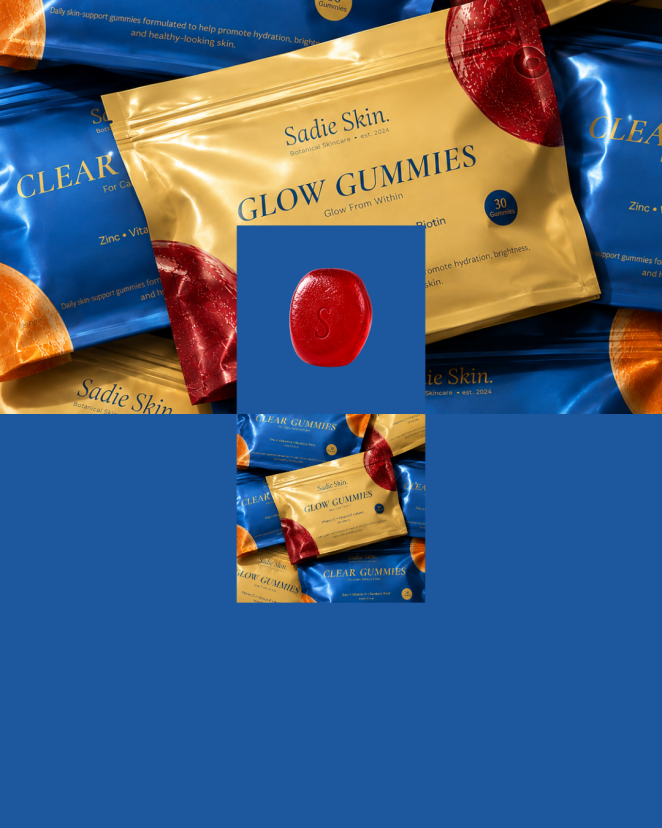
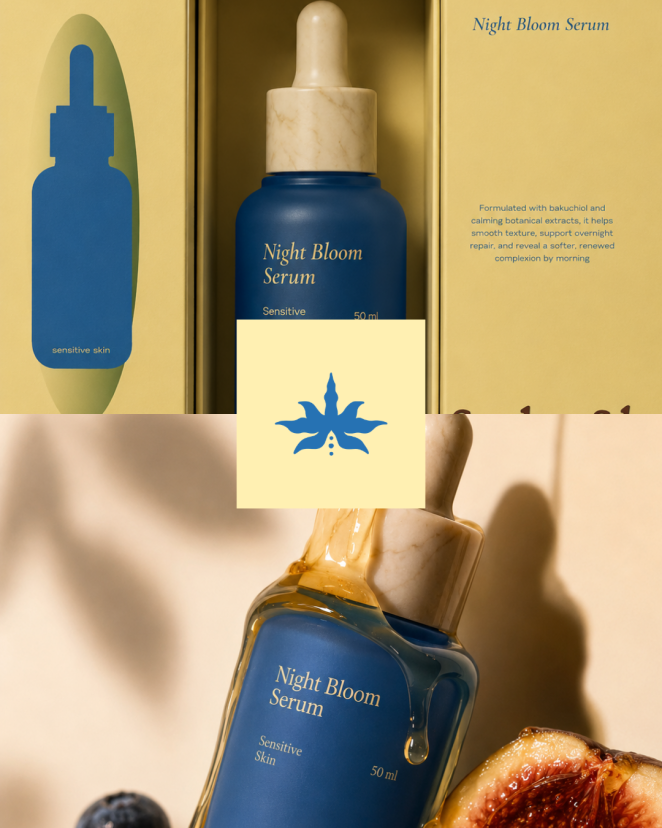
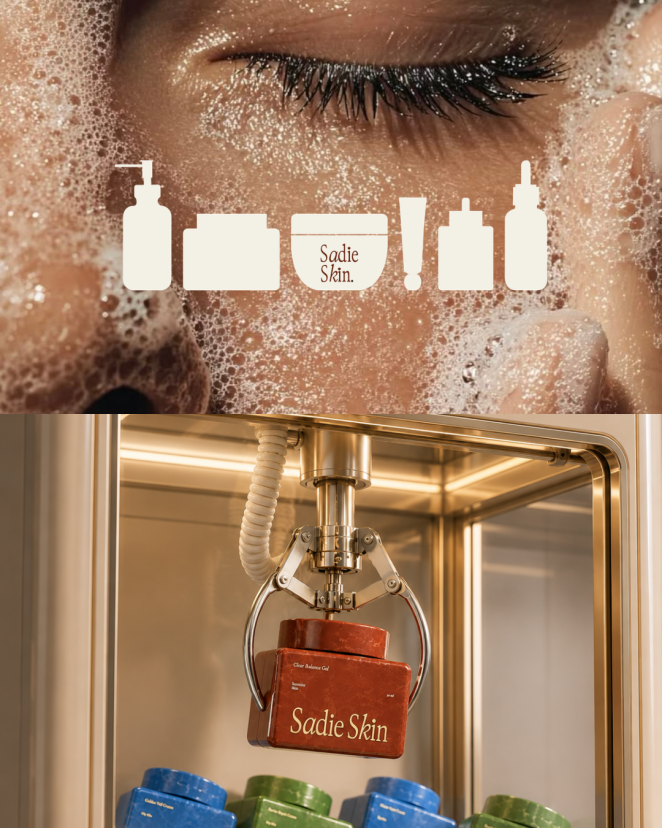
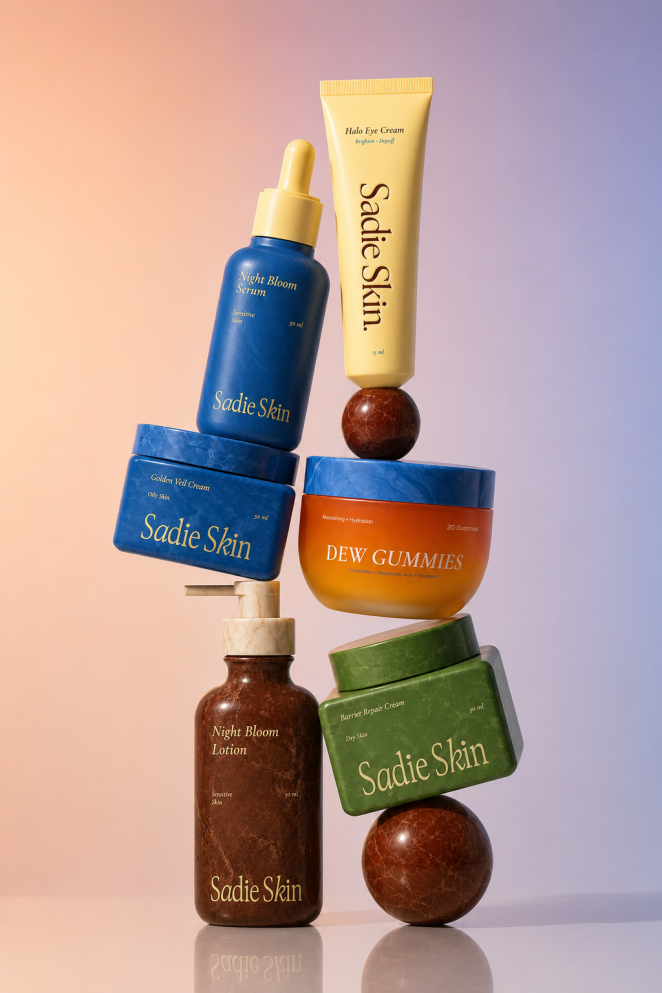
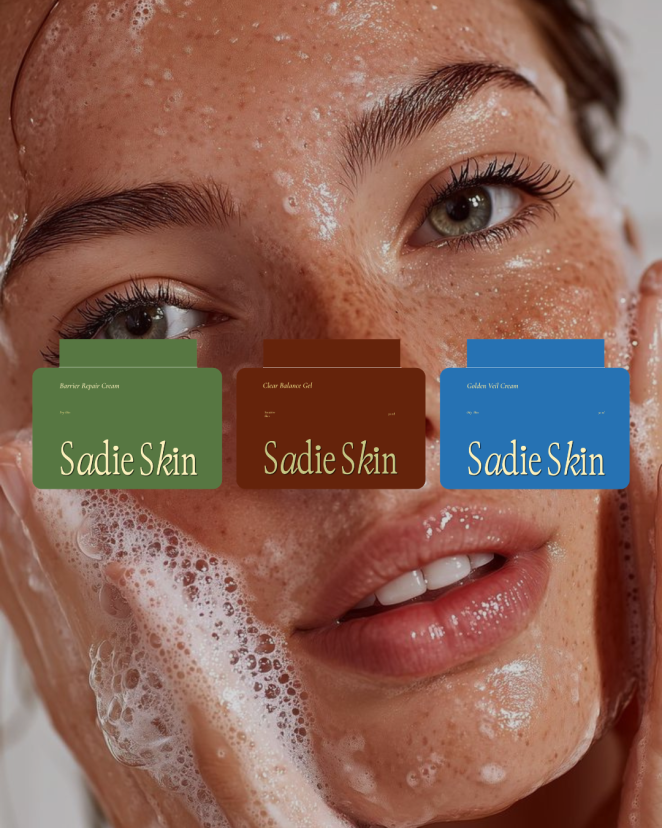
I also like giving myself little challenges. The 36-hour Sadie Skin project came from exactly that. Sometimes putting an unnecessary constraint on yourself is a good way to get out of your usual habits.
What’s the work achievement you’re most proud of?
 I don't think I have one big achievement that stands above everything else. It's probably the collection of smaller ones that have happened along the way.
Building Nuvio Studio as a one-person studio has been a big one. I'm still working with my very first client, more than five years later, which means a lot to me. I've also had the chance to work with brands in completely different time zones and places I've never physically been to, and then see some of that work end up on supermarket shelves, miles away from where I am.
More recently, being featured for my work, getting my first podcast opportunity and now being included in Creativepool's Member Spotlight have all felt like little milestones.
None of them were things I could have really planned for. I think that's what makes them special, looking back and realising how far a one-person studio can travel.
As someone with experience in the industry, what trends do you foresee shaping the future of creativity?
I think there are two things happening at the moment that are particularly interesting to me.
The first is a shift in the visual language we're seeing, especially in India. Desi maximalism is having a real moment, bolder colours, patterns, ornamentation and a much stronger sense of cultural identity. I've also noticed a big increase in illustration-led packaging. It feels like a response to how similar a lot of polished, minimal packaging has started to look, and I don't think that illustration trend is going away anytime soon. I can see us exploring it in many different ways for the next few years.
The other is less of a visual trend and more of a change in how designers are being used. I'm seeing more brands create logos and visuals with AI and then approach designers to clean them up, turn them into proper artwork, or create the final packaging and social-ready files. There's nothing wrong with using AI that way, but it does raise an interesting question about where the designer fits into the process. If we're only being brought in to make an AI-generated idea printable, we're being used very differently from being involved in the thinking and development of the idea itself.
I think we'll spend the next few years figuring out that balance, where technology makes the designer's job better, and where it starts changing what that job actually is.
What do you think sets apart truly exceptional creatives from the rest of the pack?
Curiosity, probably.
The people whose work I remember are usually the ones who are genuinely interested in the world around them. They ask a lot of questions and don't necessarily accept the first answer.
I also think knowing when not to add something is underrated. Sometimes the best decision in a project is the thing you decide to leave out.
How do you think technology has influenced the creative industries and how have you adapted to these changes?
 Technology has made a lot of the execution side of design much faster, which is great, as long as we don't confuse faster with better.
I'm pretty comfortable experimenting with new tools, including AI, but I'm selective about where I use them. For example, I'll happily use AI to explore a mock-up or generate something that would otherwise take hours to produce manually. I don't want it deciding what the brand should be or why a consumer should care about it.
For me, it's another tool in the process rather than the process itself.
What is the one thing that you would change about the industry?
I'd probably change our relationship with speed.
Everything feels like it needs to happen yesterday, the brief, the concept, the content, the next post. I understand why, especially in commercial work, but I don't think every problem benefits from being solved faster.
Sometimes the best thing you can do is spend another hour thinking before opening the software.
Any websites, books or resources you would recommend?
My list is probably less design-focused than you'd expect. I read quite a bit of fiction,The Midnight Library, Kafka on the Shore and The Book Thief are a few that have stayed with me. I like books that make you think about people, choices and the way we see the world. That inevitably finds its way into how I think about design too, even if I'm not consciously looking for inspiration.
For day-to-day work, I'm usually jumping between It's Nice That for discovering interesting creative work, The Brand Identity when I want to see how brands are being built, and Typewolf when I'm deep in typography research. Typewolf is particularly useful when I'm trying to find a typeface or see how something behaves in an actual design rather than just looking at a font specimen.
For mock-ups, I actually have my own little list of websites that I've collected over time and keep going back to depending on what I'm working on. Pacdora is useful when I need something more specific to packaging, while Mockup World and Bento are two others I regularly browse when I'm looking for a particular format or presentation.
I also tend to keep a running list of typefaces and references as I come across them, rather than relying on one particular resource. A lot of my process is honestly just having a few good places to return to when I need them.
And probably the most useful resource is still going into a shop and looking around. There's something very different about seeing design competing for your attention in the real world rather than scrolling through perfectly presented projects online.


Deepti Khatri today, at dawn
Thank you, Creativepool, for the lovely feature! It was nice to reflect on the journey so far and share a little about what goes on behind the work. ????