
Winners of Creativepool’s Creative Team of the Year 2025, Andrew Bao and Charlie Dejean have built a reputation for bold, culture-defining ideas that refuse to play it safe. From Legacy Lager to The Hidden Eye Test and Meet Younger You, their campaigns consistently challenge conventions, blending emotional storytelling, clever media use, and sharp creative strategy. Their belief? The biggest risk in advertising isn’t pushing boundaries, it’s boring people.
As creative partners, Andrew and Charlie have mastered the art of balancing risk with resonance, crafting ideas that connect audiences and brands through surprise, empathy, and meaning. In this exclusive interview, they reflect on their journey, process, and principles, from mentoring emerging talent to shaping the next wave of innovation in a world where AI, storytelling, and technology collide. Their message to the industry is clear: creativity thrives where curiosity and courage meet.
Congratulations on your win! How does it feel to have earned the Creative Team of the Year award?
We’re absolutely stoked. To be picked out among such a lineup of heavy-hitters is surreal. Massive thanks to the judges, and big props to everyone who was shortlisted or people’s choice’d. Here’s to hoping everyone’s imposter syndrome took a little hit that day.
What made you decide to enter into The Annual?
As juniors we would often stay back late and flick through the dozens of vintage award Annuals that lined the office walls. It was incredibly inspiring. Ever since, we’ve yearned to make work for those very annuals to inspire the next generation in the same way. ‘Legacy Lager’ ticked that box this year. ‘Creatives of the Year’ is the cherry on top (although hopefully someone finds inspiration from our headshot… maybe ‘if they can do it, anyone can’?).
What role do you think awards play in motivating creativity and innovation within the industry?
Each year, international award shows like Creativepool challenge and expand our view of what creativity can achieve. It’s like being in a theme park that keeps growing. Just when you’ve ridden every ride and think you’ve seen it all, the park unveils a whole new section: faster, stranger, more thrilling than before. It feels like the whole industry, sprawled across every corner of the world, is working to show that the best work is always ahead of us…
…and when you’re one of the people who helped expand that park? That’s the best kind of validation there is.
You generate high-impact, culturally resonant work (Hidden Eye Test, Legacy Lager, Meet Younger You) with surprising formats and emotional stakes. How do you ideate risk vs comfort and what is your creative steering compass?
Jerry Della Femina once said: “The biggest risk in advertising is boring people to death.” And many years later, we say: “The less risk you take, the more you risk being forgotten.”
People get sick of advertising pretty fast. The second they sense you’re saying the same thing in the same way, they’re gone. You’ve got to earn attention through surprise, emotion, entertainment (and so on). That only happens by pushing way past comfort, and steering the way with a creative compass sharpened by staying passionate students of the industry, learning to trust your gut, and surrounding yourself with creative leaders who light the way when you’re lost at sea (because we’ve all been there).
In “Hidden Eye Test,” a campaign that doubles as an accessibility check, how did you translate concept into execution (media, experiential, metric) while ensuring brand fit and impact?
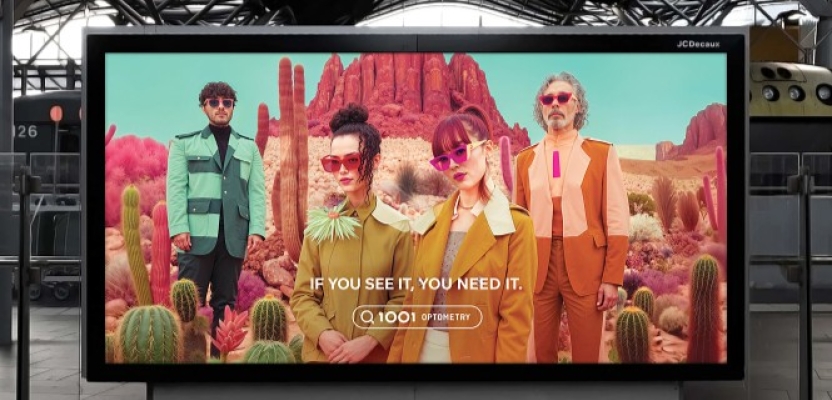
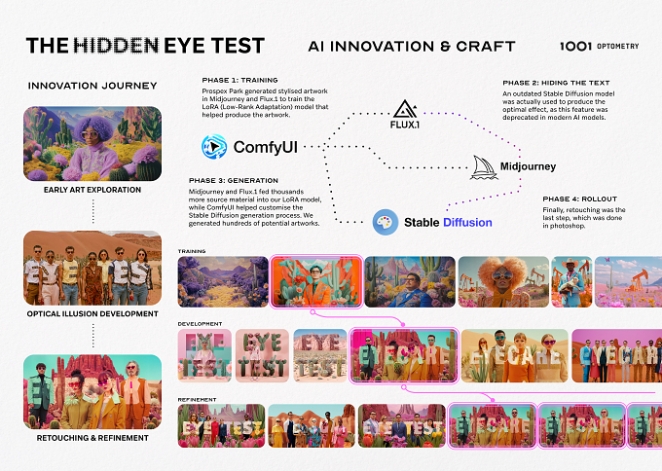
‘The Hidden Eye Test’ was born out of a fascinating irony: people with bad eyesight can’t see ads warning them about their bad eyesight. So we set out to flip that… with eye tests only visible if you need one.
Optical illusions play between what your eyes see and what your brain wants to see. Rather than the default of bad eyesight seeing less, we found that if we got the balance just right, we could leverage those illusion techniques to actually add visual information for people whose brains naturally fill in what their eyes miss. Pretty cool, huh?
Because illusions (and eye tests, for that matter) rely on controlled distance, we used cross-track posters; one of the only media formats that controls viewing distance without the need for any prompts.
The result? Eye tests for bad eyesight. High-fashion ads for preventative wear for everyone else. And a CTA that would shape meaning based on each viewer’s immediate needs.
Your portfolio spans stunts, digital, AI, earned media. How do you maintain coherence, excellence, and integrity across such diversely executed ideas?
We’re not loyal to any medium, technique or process. Just the idea. Once the idea’s strong, everything else is about finding the smartest and most unexpected way to make it land.
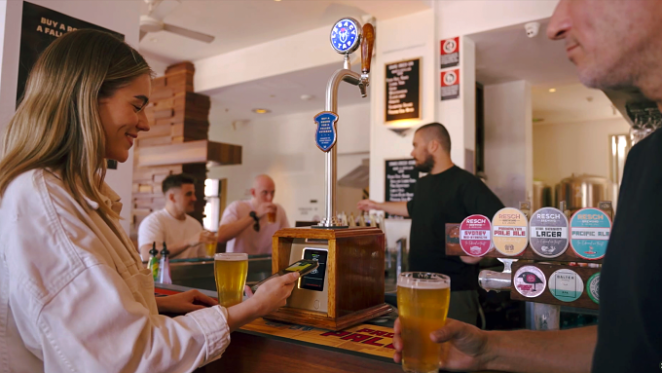
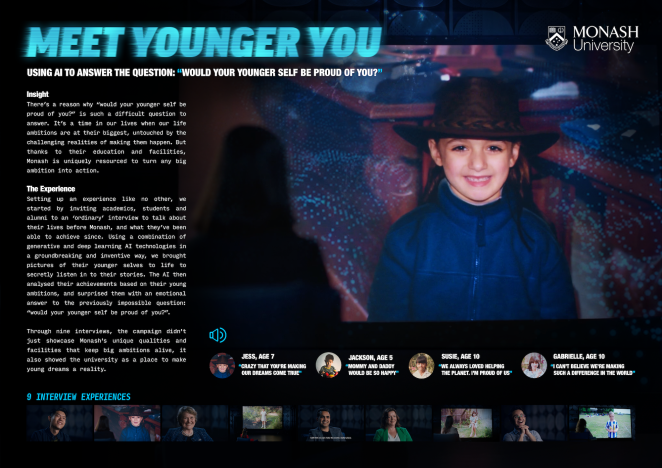
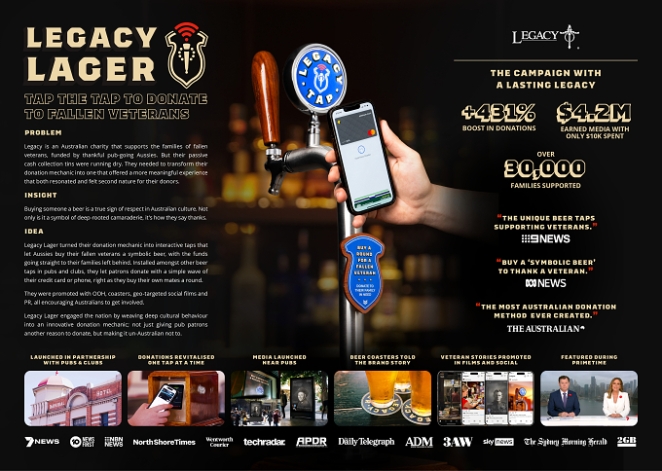
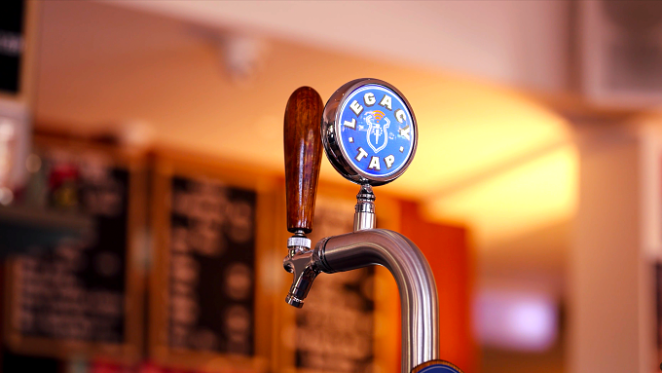
Whether it’s a beer tap that lets Aussies thank their veterans the way they’ve always wanted to, an AI experience that brings your younger self to life to answer the age-old question “Would your younger self be proud of you?”, or a chocolate shoey pouring peanut butter to welcome an American brand into the country, we’ll always chase the version that makes the idea impossible to ignore.
When working with large clients or legacy brands, how do you preserve your voice, disruptiveness, and emotional core inside constraints and stakeholder expectations?
We genuinely believe that every brand, even the oldies, should aim to disrupt. Playing it safe only guarantees invisibility.
Big clients do naturally come with layers, approvals, and committees though, meaning that ideas can quickly get watered down if we drop our guard for even a second. That’s why we protect what makes an idea great with everything we’ve got, making sure we remind everyone that creativity isn’t just a garnish; it’s the main ingredient that leads to effectiveness and will help solve their biggest marketing problems. We know (and the results show) that the most creative ideas do that. Large clients and legacy brands know this too. They ultimately have engaged us as an agency to deliver that for them and they also want to make great work. So, it isn’t hard to preserve our voice and continue disrupting because the work speaks for itself.
You mentor, judge, teach. How do you guard your own creative energy and integrity while generous with others’ growth?
Some people say those things drain their batteries. For us, it’s the exact opposite: it’s energising in indescribable ways. This industry has given us so much, and those are some of the few ways we love to give some of that energy back. Seeing how others think, question, and solve reminds us why we fell in love with creativity in the first place.
It also gives us perspective. When you’re deep in client work or chasing awards, it’s easy to forget how exciting ideas felt when you were just starting out. Spending time with students and emerging creatives brings that spark back. It reminds you that curiosity and play are the real engines of creativity, not the deadlines or trophies.
Mentoring also forces us to articulate our own process, which only makes us sharper. It’s like a creative gym session. While we’ve probably skipped leg day a thousand times, we never miss brain day.
When campaigns go “viral” or unexpected, how do you manage scaling, versioning, iterative tweaks, client demands, and maintain control over core narrative?
“Viral” looks effortless from the outside, but it’s usually 1% inspiration, 99% sweating the details (surely we’ve heard that from someone).
The trick is to prepare for any possible outcome before launch, then stay nimble enough to ride whatever wave hits. What you see is only ever the very tip of the iceberg.
We’ve also learned a ton from some seriously smart PR and media partners. The people who can turn a spark into a proper wildfire.
A creative team’s dynamic is key. How do you balance your partnership (division of roles, conflict, growth) so the work is stronger than either individually?
A wise creative named Tatsuki Kamekawa once told us: “any good creative team should be 1 + 1 = 3.” And we’re constantly making sure we do that.
We both bring different skills, experiences, and perspectives to the table. But we respect that the real magic happens once we come together, allowing ideas to evolve into something neither of us could have thought of alone.
That “third force” comes from conscious effort: constant challenge, trust, and a healthy dose of creative friction. We believe that’s what any good pair of creatives should build into their partnership. It’s certainly worked for us.
What is a piece of work that failed or underdelivered and what did you learn about process, team, client or creative decision-making?
Early on, we learned that you’ll never “accidentally overdeliver.” If you want to make great work, you have to treat every brief like it could change the industry.
The reality is, for a variety of reasons out of your control, a lot of briefs won’t ever let you reach that peak. But great creative opportunities often come from places you’d never expect (like a client who’s suddenly feeling brave… or bored), and you’ll only ever set yourself up for success if you’ve made a habit of aiming high every single time. Creativity is also a numbers game. The best chance of making great work is to come up with plenty of ideas.
You push narrative, craft and surprise. How do you prototype or test ideas (audience reaction, internal review) to avoid “too weird to land”?
We work in a tight-knit creative department, surrounded by creatives we can riff with, which makes for a pretty comfortable environment to test and prototype ideas. Even the weirder ones… We’re all on the same team, with no egos. That kind of environment is hugely important to an agency making great work.
But also, the more we make, the sharper our gut instinct gets at spotting something special; the kind of weird that works, not the kind that gets you quietly uninvited from the next review.
Looking forward: as brand, tech, media, AI converge, what kinds of creative teams (structure, skillsets, hybridity) do you believe will be ideal and how are you evolving to be that?
The best creative teams of the future will be the ones that stay curious; constantly learning how to blend new technologies, different cultures, and creativity in entirely new ways. As they have always been doing. The lines between craft, data, and storytelling are blurring, so the real advantage will come from people who can move fluidly between them.
AI is just one part of that mix… but it’s a big one. It’s helping us work faster and smarter, but we’re conscious not to let it do the thinking for us. We use the time it saves to dig deeper, explore more, and make sure we’re ultimately being more human. Because that’s the part no machine can fake.
Do you have any particularly exciting projects in the pipeline that might be contenders for the awards in 2026?
Perchance, a few in the pipeline, but this industry’s made us both a little superstitious. Don’t want to jinx them… you’ll just have to wait and see!
What advice would you give to anyone looking to take home their own accolade next year?
Treat it like you would your own portfolio: put your best foot forward and show diverse thinking that’s effective and grounded in human insight. That’s what separates work that’s just ‘cool’ from work that’s legitimately purposeful. Keep making great work, and don’t forget to tell the world about it.
And hey, feel free to reach out. We’re always happy to tell people what they need to hear. We’re pretty easy to find on LinkedIn.