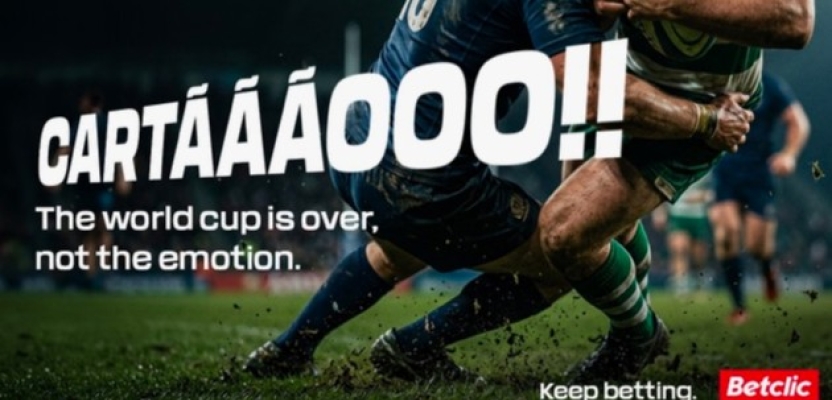

Football dominates Portugal’s sporting culture, but what if that same passion could be used to make other sports feel just as exciting? For Betclic and the Millennium Estoril Open, creative Danaë Pimentel Dos Santos explored exactly that question, developing a playful sports advertising campaign that translates the drama, language and emotional codes of football into tennis and other sporting moments.
Created as a speculative campaign, the project uses AI-generated imagery, art direction, copywriting and Photoshop to create a series of visual parallels between football and other sports. From a tennis ball hitting the net to moments in golf, volleyball and rugby, familiar sporting situations are reframed through the exaggerated emotion of football. The result is a campaign designed to make tennis feel more accessible, culturally relevant and entertaining to a Portuguese audience.
What was the brief?
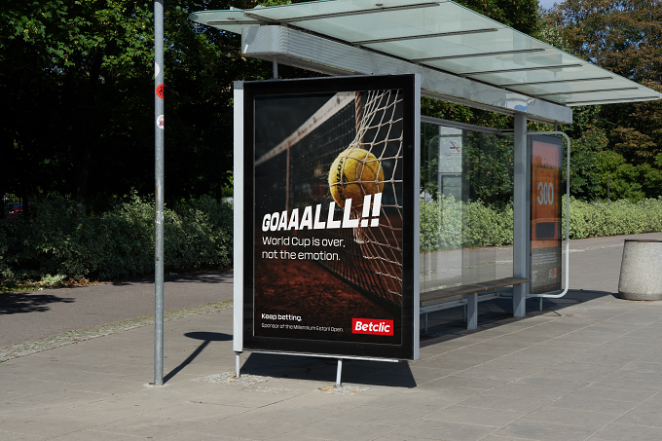 The initial brief was about how Betclic could make tennis, and more specifically the Millennium Estoril Open, more attractive to people in Portugal.
The challenge was to show that tennis can also be fun, accessible, emotional, and relevant to a new generation. Betclic wanted to bring more energy, more attitude, and more cultural relevance to the tournament.
How did the initial pitch/brainstorming phase go?
The first phase was really about understanding the cultural context. Being half Portuguese, I know how much football dominates the conversation in Portugal. People don’t just watch the Seleção; they live it. Especially with Ronaldo, and with this World Cup carrying so much anticipation, football becomes almost the only sport people talk about.
So the thinking quickly became bigger than tennis. The real opportunity was not just to make tennis look more attractive, but to use the emotion people already associate with football and redirect it toward other sports.
What was the process behind ideating the concept?
The idea came from a simple question: how can we make people feel about tennis the way they already feel about football?
Instead of trying to explain why tennis is exciting, I wanted to borrow an emotional language people already understand: football. The shouting, the drama, the tension, the exaggerated reactions, the words people scream during a game.
From there, the concept became about translating football references into other sports, showing that the same emotion can exist outside of football too.
What was the production process like?
I started by analyzing images from different sports and looking for moments that could create a parallel with football: a tennis ball hitting the net like a missed goal, a volleyball handball moment, a golf ball near the hole, or a rugby action that could feel like a card or foul.
Then I used AI to generate the base images and Photoshop to refine the art direction, layout, composition, copy integration, and final campaign look. The goal was to make each visual feel like a real sports moment, but with a football emotion attached to it.
What was the biggest challenge during production? How did you overcome it?
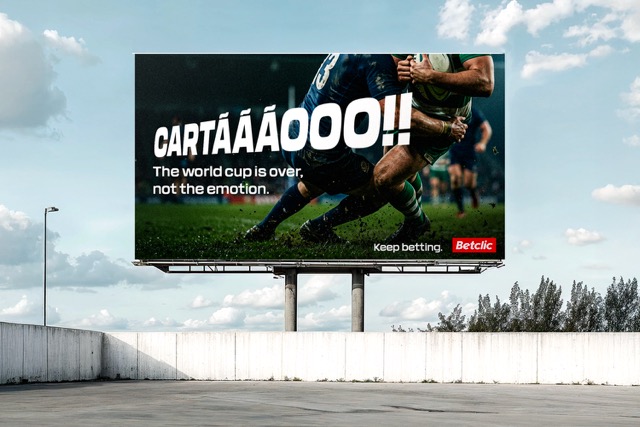 The biggest challenge was that it was a speculative campaign, so I couldn’t shoot the exact images I had in mind. I had to be very precise with the visual direction and prompts to get as close as possible to the idea.
I overcame it by treating the AI process almost like a photoshoot: defining the angle, the sport, the action, the emotion, the lighting, and the exact moment I wanted to capture. Then I used Photoshop to push the images further and make them feel more realistic and campaign-ready.
What kit/tools/software were used to create the project?
The project was created using AI-assisted image generation, Adobe Firefly, Nano Banana, and Adobe Photoshop for retouching, layout, typography, and final art direction.
What is one funny or notable thing that happened during production?
Finding moments where the logic of one sport completely contradicts the logic of football.
For example, in tennis, if the ball hits the net, it is usually a bad thing. But when you look at it through a football lens, it suddenly feels like a “goal” moment. Those little “mistakes” or misunderstandings between sports became part of the humor of the campaign.
What’s the main message of this project and why does it matter?
The main message is that the emotion of sport does not belong to football only.
In a country where football dominates so much of the conversation, other sports and other athletes can easily be overlooked. This project matters because it uses football’s cultural power to bring attention to tennis and other sports, making them feel more accessible, entertaining, and emotionally relevant.
How long did it take from inception to delivery?
The project took around one week from the first idea to the final executions.
Can you describe the creative spark or inspiration behind the initial concept? Was there a specific moment or insight that ignited the idea?
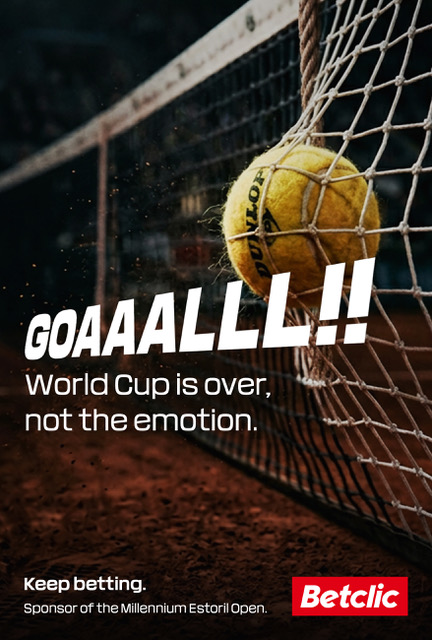 The spark came from my own connection to Portuguese culture. Being half Portuguese, I know how emotional football is in Portugal, and how much the country lives around the Seleção and Ronaldo.
This year, with the World Cup feeling even more important, I realized football would dominate every conversation. So the idea was: instead of fighting against football, what if Betclic used football’s emotional codes to make people care about other sports too
How did you ensure that the concept aligned with the brand's values, goals, and target audience?
Betclic has a bold, playful, and culturally sharp tone, so the idea needed to feel entertaining rather than too serious.
The campaign speaks directly to people who understand football culture. The exaggerated words, the drama, and the visual jokes are instantly recognizable to football fans, but they are used to open the door to other sports. That made the idea feel aligned with Betclic’s voice while also supporting the brand’s goal of making the Millennium Estoril Open feel more exciting and accessible.
Were there any alternative concepts or ideas considered during the ideation phase? If so, what led to the selection of the final concept?
Yes, one alternative idea was focused on showing close-ups of fans reacting in a tennis stadium, with copy like “This is tennis.” The idea was to show that the emotion in a tennis crowd can be just as intense as in a football stadium.
I liked that direction, but the final concept felt stronger because it had a clearer creative mechanism. By using football codes directly inside other sports, the campaign became more immediate, more humorous, and more ownable for Betclic
Can you discuss any collaborative or interdisciplinary aspects of the ideation process, such as working with other departments or external partners?
This was a speculative project, so I developed it independently. But the process still combined different disciplines: strategy, cultural insight, copywriting, art direction, AI image generation, and post-production.
I approached it like an agency campaign, moving from the strategic problem to the creative platform, then to the visual system and final executions.
What role did consumer research or market analysis play in shaping the concept and its execution?
Research was important because the idea had to be based on real cultural behavior, not just an assumption.
I looked at how football is talked about and celebrated in Portugal, especially around the Seleção, Ronaldo, and major tournaments. I also looked at visual references from different sports to understand which moments could create a believable parallel with football. The goal was to make sure the audience would immediately understand the joke, the emotion, and the connection.
Can you discuss any unique or unconventional production techniques or approaches used to bring the idea to life?
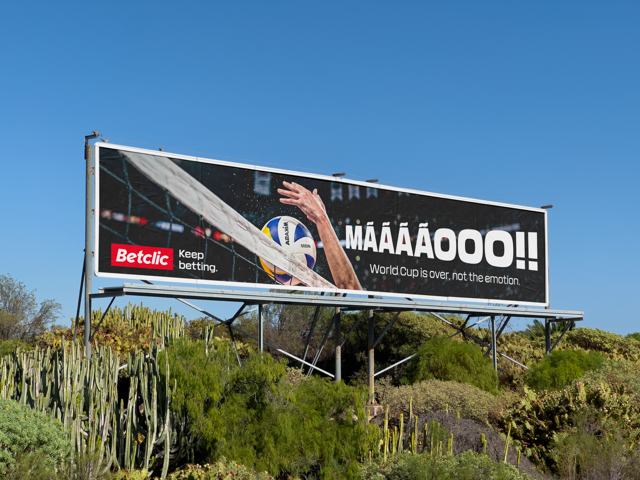 The most unconventional part was using AI as a production tool to create very specific sports moments that would have been difficult to shoot for a speculative project.
The process was not just “generate an image.” It was about directing the image: finding the right sport, the right action, the right similarity to football, and the right emotional tension. Then I refined everything in Photoshop to make the images feel closer to real OOH campaign visuals.
How did you ensure that the concept remained innovative and stood out in a crowded marketplace?
The idea stands out because it works on two levels. At first, you see a sports image with a football-style reaction. Then you understand the joke: this is not football, but the emotion feels the same.
That double reading makes the campaign simple, but also memorable. It does not just say “tennis is exciting”; it proves it by translating a familiar football emotion into a new sports context.
What do you hope it achieves for the brand?
I hope it helps Betclic become associated with sports excitement beyond the biggest football moments.
The goal is to show that Betclic can keep people engaged not only during major tournaments, but also around other competitions like the Millennium Estoril Open. It makes the brand feel more culturally connected, more playful, and more capable of turning any sport into an emotional moment.
Credit list for the work?
Danaë Pimentel Dos Santos — Concept, Art Direction, Copywriting, AI Image Direction, Retouching and Design.