
BearJam founder and Executive Creative Director James Hilditch shares how the production company has evolved from a one-person operation in a Southwest London bedroom into an established creative production business working across live action, animation and AI-generated content. From winning early projects for major brands including John Lewis to building an in-house creative and post-production team, Hilditch reflects on the challenges, opportunities and decisions that have shaped BearJam's growth.
In this Creativepool Q&A, Hilditch explores the growing role of AI in video production, how BearJam is adapting its creative process, and why creative judgement remains essential as technology changes the industry. He also discusses finding new clients, building a strong team culture, encouraging experimentation, investing in professional development, and the future value of creative intelligence in an increasingly AI-driven production landscape.
How was your company born and where are you based?
 I started BearJam back in 2012. At the time I was in a completely different career - I was a qualified surveyor working in the real estate industry, and filming and editing was my side hustle. I was doing wedding videos, making a bit of a name for myself, working evenings and weekends. Then I started getting asked to do more corporate and commercial work and quickly realised I couldn't do both. So I quit the day job and turned the side hustle full time.
BearJam was literally born as a one-man band out of a bedroom. It's funny to look back on that now, given the journey the business has been on since. We've always been Southwest London - I was living in Clapham at the time, I'm in Earlsfield now, and the business has been through Battersea, Brixton, and we've now got a great office in Wandsworth Town.
What was the biggest challenge to the growth of your company?
Consistent new business, without a doubt. We're a project-based business. We do get a lot of repeat work from existing clients, but it's not a retained model, and as the business grows and overheads grow, you need even more work coming in to keep everyone busy and keep the lights on.
Finding a reliable new business engine has been a challenge throughout our history. It feels like only in the last 12 months we've really started to crack it, through investing in the right things, testing different approaches, and finally landing on something that works. But it's been a long time coming.
Which was the first huge success that you can remember?
Back in the early days, a lot of things felt like big wins just because we were finding our feet. But one I really remember: we were starting to build relationships with agencies and won a couple of projects through Adam & Eve - filming the behind-the-scenes of some John Lewis Christmas ads, which were obviously huge at the time.
Getting that phone call - "yeah, we want to work with you guys, here's the budget" - was a real moment. It was exactly the type of work we wanted to be doing, for a great brand, genuinely exciting. And then being able to put Adam & Eve and John Lewis on the website really paid dividends for our credibility in the market.
What’s the biggest opportunity for you and your company in the next year?
It might sound like a cliché, but it's AI and there are two distinct sides to that for us.
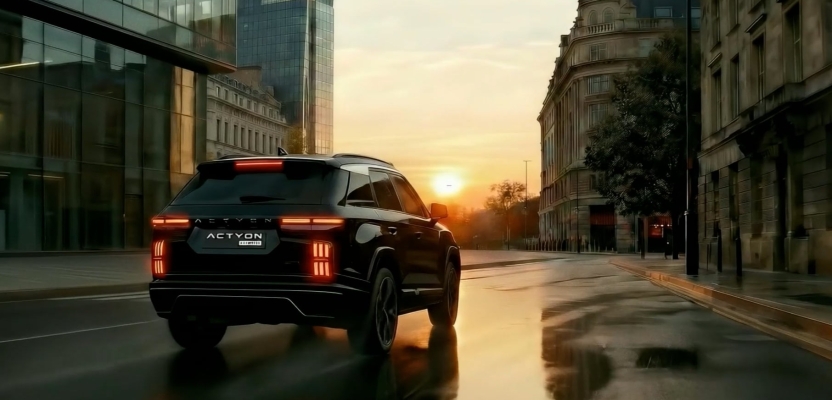
The first is generative video. We've really jumped on board with AI video technologies, investing early, building our in-house team, and making a name for ourselves in the space. People are now proactively reaching out to us when they've got AI projects, which is brilliant. We've got a brilliant AI Architect in-house and we're actively growing that capability.
The second is operational efficiency using AI to speed up things like risk assessments, call sheets, and other production admin. A lot of those tasks can be automated or partly automated in a way that makes the team's lives easier and probably improves the quality of the output too. It's a genuine win-win.
The bigger ambition is to use all of this to take on more TVCs and creatively ambitious projects, while also making genuinely high-quality work accessible to smaller businesses who wouldn't traditionally have the budget. It's moving incredibly quickly, and while I think we do have a first-mover advantage right now, that won't last forever so the focus is on using this foundation to push forward.
Can you explain your team’s creative process? What makes it unique?
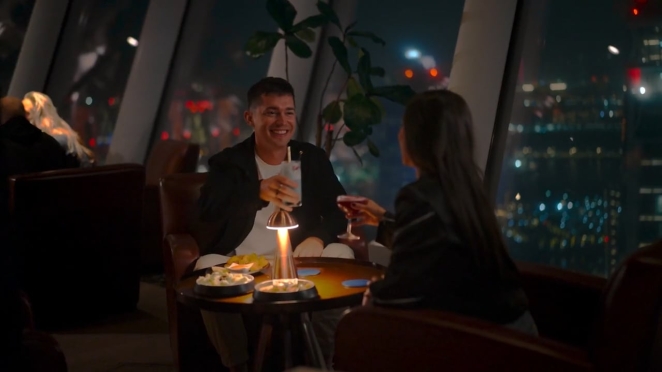 A lot of production companies are smaller core teams that freelance up for each project. BearJam works differently; we have a strong in-house team across creative direction, self-shooting directors, editing, and animation, which means we can take a project from brief to delivery entirely in-house when we need to.
We don't always do that there are projects that need bigger crews or specialist skills, and we bring those people in without hesitation. But having that creative and post-production capability in-house means we can really protect the idea all the way through, and gives our clients a much more flexible and responsive service. Feedback comes in late? Timeline shifts? We can react without scrambling to rebook freelancers. That kind of agility is something clients genuinely value - especially on complex, fast-moving projects.
How does your team remain inspired and motivated?
A lot of it comes from the people themselves, nobody in the team is just going through the motions. Everyone shows up wanting to do their best work.
Being all in the same space helps enormously. We're constantly looking at each other's work, suggesting improvements, sharing things that excite us from outside of what we're doing. That culture of openness and collaboration is what keeps the standard high and keeps people genuinely engaged.
We also run a rigorous internal review process, by the time work goes to a client, it's already been through several rounds of feedback internally. So what the client sees is work we're already proud of.
Tristan, our MD, is also brilliant at making sure people have got what they need to do their best work every day. He understands that a happy, supported team is a more creative, more productive one and that shows.
How has COVID-19 affected your company?
COVID was a strange and challenging time. We were a bit smaller then, had to furlough most of the team, and for a while it was just two or three of us keeping things moving. We had to pivot fast — figuring out remote production, sending cameras out to contributors, doing more animation, directing people via webcam. Things we occasionally still do now, which always takes me straight back to that period.
A couple of big animation projects genuinely kept the business going during that time — and the work still stands up today.
One project I'll always remember was for Netflix, promoting the launch of their Eurovision film. I ended up shipping headphone and microphone kits to all the contributors — including the members of Blue — prepping everything from my kitchen, then directing a kind of Gogglebox-style piece entirely remotely. It ended up on breakfast TV and was a real success for Netflix. Against all the odds of producing it during lockdown, we pulled it off.
The low point: my internet went down mid-shoot while I was on a call with Blue. I got on my bike, cycled as fast as I could to our Brixton office, and finished the session from there. I've never done that commute so quickly in my life.
Which agencies do you take inspiration from? Do you have any heroes in the industry?
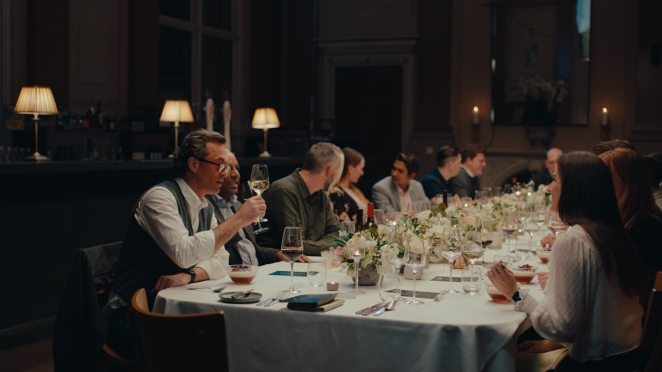 We're constantly looking at what other people are doing — production companies of all sizes, people with interesting niches, and some of the bigger players too.
Through the APA I've made some really good connections over the last couple of years. A lot of those members are doing larger-scale TVC work, and while we're not always at that scale, it's genuinely valuable to look at how they operate and let that inform what we're building in the branded content and social video space.
One person I'd single out is Ramy at Common People — great guy, we chat regularly, and I love the work that comes out of their studio. They're also doing interesting things with AI, which makes the conversation even more relevant.
What is the one tip you would give to other agencies looking to grow?
Get the right people in the building. It's much easier said than done, but every real step change BearJam has made has been possible because of having the right people in place. We haven't always got it right — sometimes you have to make difficult decisions and part ways with people, which is never easy. But if it's right for the business, it has to be done.
When you do have the right people, give them what they need to thrive. Be as open and transparent as possible — about the work, about how the business is doing, about the financials. In the early days I was cautious about how much to share, but over time I've opened right up. We share profit and loss with the whole team regularly now. That transparency builds trust, and trust builds great work.
How do you go about finding new clients?
It's a combination of things. Referrals and repeat business still make up the majority of where our work comes from, and that's something we actively protect — keeping in regular contact with existing clients, understanding their challenges, and finding ways to help before they even come to us with a brief.
Beyond that, we've invested in improving our SEO and AEO visibility, and we've recently revamped the website to make it better at converting leads. The biggest shift this year has been investing more meaningfully in PPC advertising — we've seen real results from that and we're continuing to scale it up.
The temptation is always to chase new and shiny things, but you cannot underestimate the value of your existing client base. Nurture those relationships. They're the foundation everything else is built on.
How do you balance maintaining your company's unique creative voice while meeting the diverse needs of clients?
Honestly, I'm not sure we have a singular house style — and I've made peace with that. The work we do ranges enormously across animation, live action, and increasingly AI-generated content, and those projects can look very different from one another. I don't think an outsider could look at any single project and say "that's definitely BearJam." Whether that's a strength or a weakness probably depends on who you ask, but for me it keeps things genuinely interesting and lets us flex different creative muscles.
What is consistent is the quality and the client experience. Nothing goes out without being thoroughly reviewed — by the producers, by myself, by Trey as Creative Director. If a cut needs an extra frame, we'll push for it. If the grade isn't right, we'll fix it. We keep going until we're happy. That's the BearJam standard, regardless of the style or the client.
And when we think we can add creative value, we don't hold back. We'd always rather push the work and make something brilliant than play it safe and make something forgettable.
What strategies do you employ to adapt to changes and trends in the industry while staying true to your values?
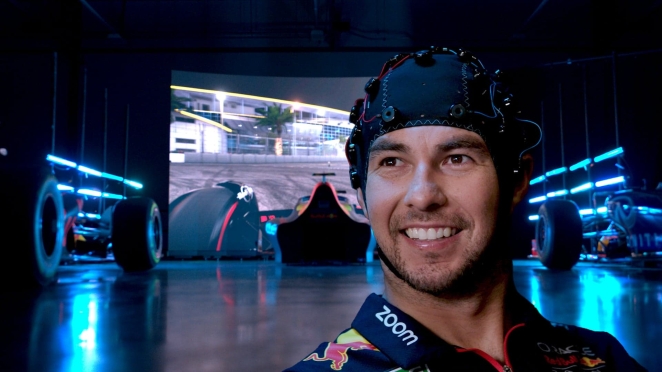 We're a relatively small, nimble team — and that's actually one of our biggest assets. We don't have huge layers of process to navigate when something new comes along, so we can evolve and experiment quickly.
We want every project to be better than the last. The team are constantly growing, picking up new influences, and pushing the work in new directions. We'll try new things, take on new types of brief, and challenge clients with different creative options when we think there's a better way to do something.
Don't get me wrong — there are plenty of talking heads and podcasts in our workload right now. But we're always looking for the angle that makes a piece stand out, because the content landscape is incredibly noisy and saturated. Standing out matters more than ever.
Can you share a memorable client success story that exemplifies your approach?
One of the best examples of how BearJam works at its best was our long-running relationship with Osprey, the EV charging network. Over a couple of years, we got deep into their brand, understood their ambitions, and built out a complete content strategy for them — including a structured delivery plan we developed called the JamPlan, which we've since rolled out with other clients.
It was really the definition of strategy, creative, and production working together — delivered in a way that was timely, transparent on budget, and genuinely moved the needle for the brand. It included TV and cinema campaign work, and it's a relationship I'm really proud of, both for what we created and for how we created it.
What's your one big hope for the future of the industry?
With so much focus on AI right now — and the cost savings it genuinely brings, particularly in video production — I really hope the industry finds a better way to price creative intelligence rather than just time and materials.
The traditional model prices on inputs: hours, crew, kit. AI is reducing those inputs. But the outcomes clients can achieve aren't reducing — if anything they're growing. The gap between what something costs to make and what it's worth to the client is widening, and as an industry we need to get smarter about closing that.
There's a concept I believe in called Craft Intelligence — the idea that the deep creative judgement, taste, and experience that gets you to brilliant work using AI tools is something that has real value and should be billable. The risk is that AI just becomes a race to the bottom, a competition to see who can produce the most for the least. I really hope we avoid that, and start thinking more about outputs and outcomes rather than just inputs.
Can you share a defining moment in your company's journey that shaped its identity or direction?
Honestly, I don't think there's been one single defining moment — we've been evolving since day one, and the business I'm running now is almost unrecognisable from where we started.
What I would say is that in the last couple of years, I've deliberately tried to help the business grow up. That's meant bringing in a board of non-execs, elevating people internally into more senior strategic roles, and building the kind of structure and operating rhythm you'd expect from a serious, established company. It's given us a quiet confidence — a real belief in our own expertise and what we've built.
You don't always notice progress when you're in the middle of it, but when you come up for air and look back — at the clients we work with, the work we're making, how the team has developed — it's remarkable how far we've come. And that makes me genuinely excited about what the next chapter looks like.
How do you foster a culture of innovation and experimentation within your team?
It starts at the top. As ECD, I've always been someone who enjoys getting hands on with new technologies — whether that's the latest features of an editing tool, a new camera, or an emerging AI platform. I try to stay close to what's coming out, because if there's a technique or technology that could unlock a brief, I need to understand it before I can recommend it.
The team see me doing that, talking about it, testing things — and I think it gives them permission to do the same. To bring in something they've been experimenting with, to show the team, to talk about how it was made. That kind of collaborative, in-person energy is genuinely hard to replicate and I think it's central to how we push things forward.
We also run something called a Creative Wash Up after key projects — getting the whole team together to unpack what went well, what could have been better, and what we'd do differently. We actually score the projects across creativity, commercials, and wider impact, and we rate the client relationship too. It's honest and direct, and it makes the next project better.
What measures do you take to ensure diversity and inclusion are prioritised within your company?
 I genuinely believe the best ideas come from diverse perspectives — that's not a line, it's something I've seen play out in practice at BearJam.
We recruit based on talent, and we work hard to create an environment where people feel safe, relaxed, and able to be themselves. We have people from all over the world in the team, with very different backgrounds, values, and ways of seeing things, and that diversity shows in the work.
It extends to our freelance roster too — we don't want to see the same faces on set or in the office every time. Pushing for variety there is something we're conscious of and actively working on. I think it pays dividends every day.
Can you describe a project that challenged your team creatively and how you overcame the obstacles?
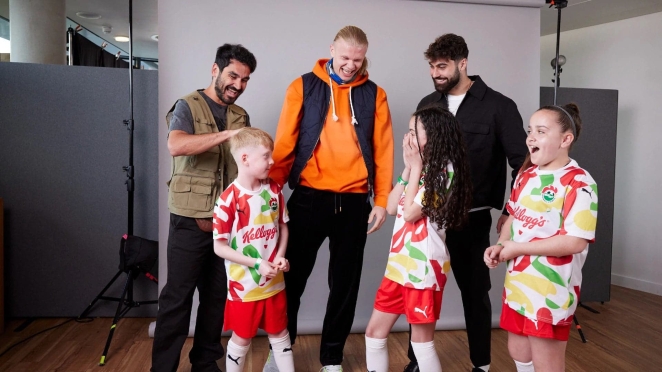
Some of the most demanding projects we take on involve high-profile sporting talent where you're given an extremely limited window — sometimes 40 minutes, sometimes a couple of hours — to deliver an entire creative campaign. Video, stills, assets, the lot.
There's no margin for error. Everything has to be done in pre-production: the talent walks on set, gets a quick briefing, and you're straight into it. You have to assume they don't know anything about what you're doing, which means your preparation has to cover every eventuality.
Through experience — some of it hard-won — we've learned how to handle those days well. And I think that reputation for being reliable and unflappable under pressure is one of the reasons agency clients come back to us for that type of work. When you genuinely cannot afford to drop a ball on shoot day, you need a team you can trust absolutely. Planning, tight schedules, crystal-clear objectives, and the right people around you — that's what gets you through it.
In what ways do you invest in the professional development and growth of your team?
We keep it relatively informal but genuinely committed. Everyone in the team has a training budget each year to spend on courses or learning of their choice — they need to get it approved, but we encourage people to go out and find what they need, and we facilitate it.
Once a quarter we run Training Day — everyone gets half a day off their normal work to go and learn something new. It can be directly relevant to their role or something more left-field, a softer skill or something they've been wanting to explore outside their core day-to-day. It's always interesting to see what people come back with.
We've also recently run some sales training for the more client-facing members of the team, which has been genuinely valuable. As the business evolves and more of the team is involved in new business conversations, that kind of development matters.
How do you approach sustainability and ethical practices within your company's operations?
We've got an initiative I'm really proud of: we've pledged 1% of revenue from all AI-based projects to habitat regeneration here in the UK. We've partnered with Nature Impact, who work with biodiversity net gain credits, and through them we're rewilding land in Kent.
I've been down to the farm to see the work for myself, and later in the year I'm hoping to take the whole team down there to see what our contribution is actually doing on the ground — the restoration, the rewilding, the land management techniques Nature Impact have pioneered.
We've tried different sustainability initiatives over the years, but I wanted something tangible and close to home. This feels like the right fit — directly tied to the part of our business that's growing fastest, and with a visible, real-world impact we can connect to.
Can you discuss a time your company had to pivot or innovate in response to an unforeseen challenge?
 I've already touched on COVID, which was obviously a major one — having to pivot quickly into remote production, doing more animation, figuring out how to keep making great work when in-person shoots weren't possible. We came through it, and some of the work we made during that period still stands up today.
But more recently, the rapid rise of AI has been an equally significant shift. Rather than resisting it, we've embraced it wholeheartedly. We've pushed the team to learn new skills, test new platforms, and get genuinely hands-on — not just on client work, but beyond that too, so we really understand what these tools can and can't do.
That knowledge base is what lets us speak confidently to clients about AI as a genuine creative option, not just a cost-cutting measure. The tools are developing faster than almost anyone anticipated, and we're shifting our team and resources accordingly. The next few months are going to be really interesting — we've already got some exciting projects in the pipeline where AI is the right answer creatively, not just commercially.
Do you have any websites, books, or resources you'd recommend?
One I come back to regularly is Eyecandy.com — it's a visual technique library for anyone who loves the craft of filmmaking. It breaks things down by technique: match cuts, lazy Susans, fast motion, you name it. When we're working through a brief and thinking about which production approaches to apply, it's a brilliant starting point for inspiration.
I do want to be careful not to over-engineer things with technique for technique's sake — you never want the production craft to overshadow the storytelling or the message. But as a place to explore and get your eyes working, it's genuinely great. I've lost many hours down its rabbit holes and don't regret a single one.