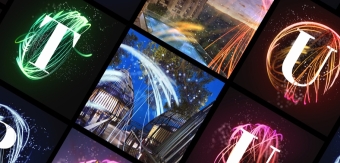

There was a brief, rather innocent period back in 2023 when spotting AI-generated creative work felt like a round at a pub quiz.
Count the fingers. Look for the wonky teeth. Spot the gibberish on the shop sign. Examine the earrings and see whether one has quietly fused with somebody’s neck. Case closed.
Those days are long gone.
Generative image tools are getting considerably better at anatomy, typography, lighting, consistency and all the other small failures that once gave the game away. The question of what makes something “look like AI” has therefore become much more interesting because increasingly it isn’t about errors at all.
It’s about taste.
Anyone who has spent more than five minutes looking through AI-generated imagery will probably recognise the feeling. The image might be technically immaculate, beautifully lit and full of expensive-looking detail, but something feels strangely familiar. Perhaps it’s the glowing skin, the symmetrical composition, the elaborate cinematic lighting or the peculiarly enthusiastic amount of atmospheric haze. Perhaps it’s an illustration full of tiny decorative details that don’t quite add up to an actual idea. Perhaps everything simply feels a bit too finished, too heightened, too immediately eager to impress.
That is what we’re increasingly talking about when we talk about the AI aesthetic.
And for brands, designers, illustrators, photographers, filmmakers and agencies starting to make generative AI part of everyday creative workflows, it’s becoming something worth actively avoiding.
Not because using AI automatically makes the work bad, but because looking like everybody else using AI rather defeats the point of being creative.
Understanding the AI Aesthetic: When Creative Work Starts Looking Like AI
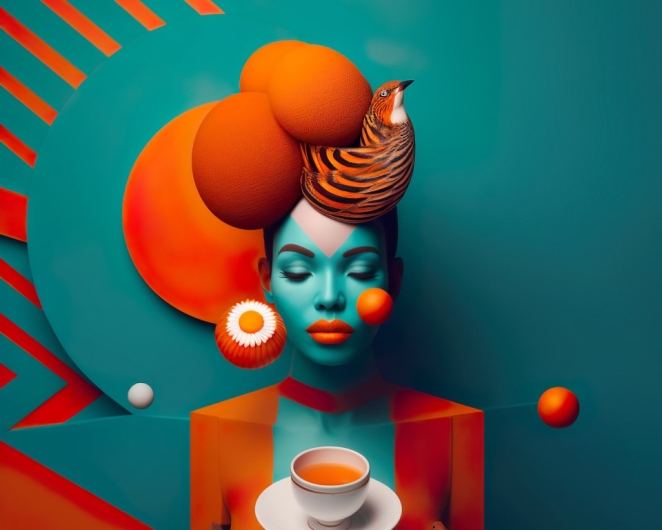
Luciano Koenig Dupont
The first thing worth establishing is that there isn’t really one AI aesthetic.
Midjourney doesn’t produce exactly the same visual language as Firefly. A deliberately trained custom model won’t necessarily resemble something generated from a generic prompt. An experienced designer using references, compositing, retouching and multiple tools can create something vastly different from somebody typing “futuristic luxury advert, cinematic, hyper-realistic, 8K” and accepting whatever appears 20 seconds later.
So when people describe something as “looking AI”, they’re generally reacting to a cluster of tendencies rather than identifying a specific visual style.
The most obvious is a kind of frictionless polish. Generative systems are exceptionally good at producing an image that looks immediately impressive at thumbnail size. Surfaces gleam. Colours harmonise. Lighting behaves dramatically. Faces are beautiful in that slightly unnerving way expensive hotel lobbies are beautiful. Everything feels art-directed even when nobody has actually art-directed anything.
That capability is extraordinary. It’s also why so much AI-generated design risks collapsing into a similar visual middle.
Creativepool has already explored how AI is commoditising average creative output, and this is essentially the visual version of the same problem. The machine has become exceptionally capable at delivering the established signals of quality. What it doesn’t automatically provide is the reason those signals belong together, the cultural tension behind them or the point of view that makes one polished image meaningfully different from another.
The result is often work that looks expensive without necessarily looking distinctive.
That distinction is going to matter enormously.
What Makes AI-Generated Design Look Like AI?
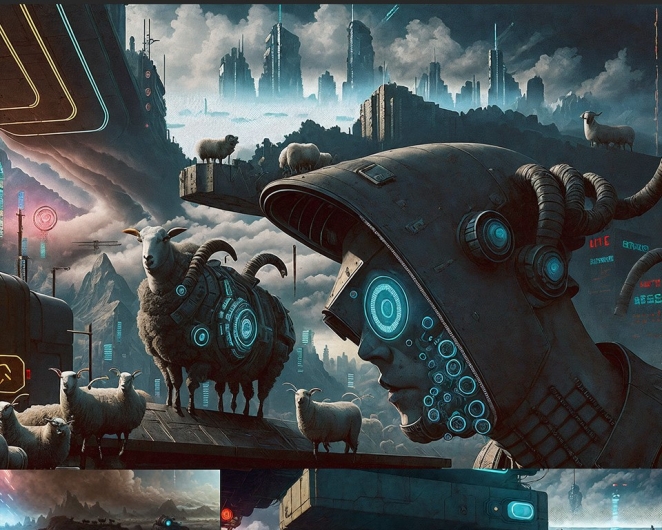
Hasmik Mkhchyan
The temptation here would be to produce one of those forensic checklists full of malformed fingers, disappearing jewellery and impossible shadows.
Unfortunately, that checklist would probably be out of date before this article finished indexing.
The more enduring tells are conceptual.
Generic AI-generated work often looks like the most statistically persuasive answer to a creative question rather than the most interesting one. Ask for “a successful entrepreneur”, “a futuristic city”, “premium skincare”, “young people at a festival” or “the future of work” without supplying much more context and you’re effectively inviting a system trained on enormous quantities of existing material to assemble something recognisable from the dominant visual conventions surrounding those ideas.
That can produce stereotypes as well as clichés. Studies of text-to-image systems have found significant stereotyping and homogenisation in generated human imagery. That matters creatively as much as ethically. If everybody asking broadly similar questions receives broadly familiar answers, the work doesn’t merely risk bias. It risks becoming boring.
This is one reason the generic AI design graphic has become so recognisable despite the underlying tools becoming dramatically more sophisticated. It’s not necessarily the rendering technology giving itself away anymore. It’s the absence of specificity.
A human photographer doesn’t merely photograph “a café”. They photograph that café, at 7:43 on a wet Tuesday morning, with condensation on the windows and a handwritten sign that somebody stuck up because the card reader has broken again. A good illustrator doesn’t simply draw “urban youth culture”. They notice the weird trainers, badly repaired bus stop, local takeaway menu, half-removed sticker and particular posture of somebody waiting for a friend who’s already 20 minutes late.
Specificity creates texture.
Generic prompting often removes it.
That’s when artificial intelligence and design start producing something technically capable but creatively anonymous.
Why Does Generative AI Design So Often Look the Same?
Bray Leino
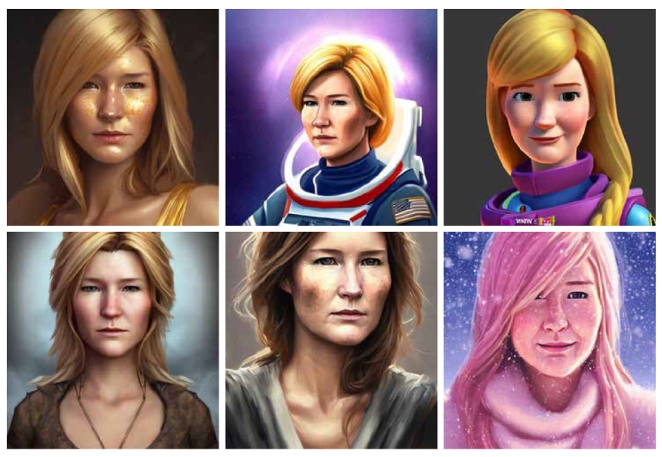
There’s now growing evidence that the suspicion of sameness isn’t entirely imaginary.
Research into AI-assisted brainstorming has found an intriguing trade-off: generative AI can improve the creativity of an individual idea while reducing the diversity of the overall pool of ideas. More recent large-scale work has similarly found that humans tend to show greater variability at the highest end of creative performance.
That doesn’t mean AI is genetically programmed to make everything beige.
In fact, newer research suggests the homogenising effect can be reduced when creatives deliberately introduce more varied perspectives and AI personas. Some of the sameness, in other words, may come not simply from the models themselves but from our habit of asking the same machines broadly similar questions in broadly similar ways.
That’s an important distinction.
The problem isn’t necessarily generative AI design. The problem is lazy generative AI design.
If ten designers start with the same tool, use similar prompts, request the same fashionable visual language and choose whichever of the first four results looks most polished, we shouldn’t be terribly surprised when the results start resembling one another.
Human creativity has always suffered from trends and imitation, of course. Anyone who remembers the endless parade of millennial pink branding, corporate Memphis illustration or every start-up deciding that lowercase geometric sans serif typography meant “disruption” knows that designers hardly required artificial intelligence to start copying one another.
AI simply accelerates the feedback loop. Creativepool’s look at the rise of synthetic content at scale explores the larger consequence of that acceleration: once polished content can be generated almost without friction, the internet doesn’t necessarily become more creative. It can simply become fuller.
Trends can become defaults before we’ve even had time to get sick of them.
Stop Asking AI to Have the Idea for You

Huge
This might be the most useful practical distinction of all.
There’s an enormous difference between using AI to explore an idea and asking AI to supply the idea.
The first approach begins with some form of human position. There’s an observation, argument, visual reference, contradiction, joke, memory, emotion or piece of strategic thinking already in play. AI is then used to push against that starting point, generate variations, explore executions, test possibilities or remove the tedious friction involved in getting something out of somebody’s head and into a form other people can respond to.
The second begins with a blank prompt box and the words “Give me ten creative ideas for…”
That’s where trouble starts.
Not because AI cannot generate decent ideas. It plainly can. The problem is that once the machine supplies the conceptual starting point, visual language and execution, the creator’s role can very quickly become one of selection rather than authorship.
And selection is only creatively valuable if you’re ruthless about it.
That’s also why curation is becoming as important as creation. When generation is effectively infinite, creative value increasingly resides in recognising what deserves to survive rather than congratulating yourself on producing another 40 options.
The most useful model is probably one in which AI sits inside a genuinely hybrid human-AI creative workflow rather than acting as a vending machine where a brief goes in and polished work comes out. Human judgement needs to enter early enough to challenge the direction rather than simply approving whatever arrives looking finished.
That “looking finished” problem is particularly important with visual AI. A sketch on a piece of paper announces itself as provisional. A beautifully rendered AI image doesn’t. It can seduce teams into treating execution as concept, because suddenly everyone is discussing the colour of the jacket and nobody has remembered to ask whether the idea underneath it is any good.
One of the best ways to stop your work looking AI-generated is therefore remarkably simple.
Have the idea before you have the image.
Give the Machine Better Ingredients
Laundry
AI models are trained on extraordinary quantities of existing material, so generic inputs are understandably inclined to produce generic outputs.
The antidote isn’t necessarily a 900-word prompt full of camera specifications and increasingly frantic adjectives.
It’s better source material.
If you’re working on a brand project, feed the creative process actual brand history, product details, customer language, overlooked archive material, strange stories, physical objects, local references, real photography and visual material that genuinely belongs to that organisation. If you’re producing editorial work, start with the story rather than an aesthetic. If you’re creating a campaign around a particular place, spend some time actually understanding the place instead of asking the model what “authentic Manchester street culture” looks like and hoping for the best.
The more generic the inputs, the more likely the output is to drift towards category shorthand.
This is also where traditional creative research suddenly feels incredibly modern again. Go outside. Read something that wasn’t generated algorithmically for you. Visit an archive. Photograph textures. Speak to somebody. Make a mess in a sketchbook. Dig into subcultures, local history, packaging, old catalogues, family photographs, industrial design, nature, bad typography and whatever peculiar little corner of culture has absolutely nothing to do with the immediate brief.
It’s precisely why human creativity is becoming more valuable as machine output becomes abundant. The useful advantage isn’t that humans can produce a prettier gradient. It’s that we carry around experiences, memories, curiosity, cultural context and strange little observations that didn’t arrive because somebody requested them in a prompt.
AI is extraordinarily useful for processing material.
You still need interesting material to process.
Put Friction Back Into the Creative Process
Mike Somin
For decades, creative software has largely been designed to remove friction.
That sounds unquestionably positive. Nobody misses Letraset. Nobody sensible wants to spend three hours masking somebody’s hair manually merely to prove their commitment to the craft.
But creative friction and production friction aren’t always the same thing.
Some friction is where decisions happen.
It’s the moment when the sketch doesn’t work and forces you somewhere unexpected. It’s the photograph ruined by somebody walking into shot that suddenly becomes much more interesting. It’s the layout that refuses to balance until you realise balance was never what the idea needed. It’s the creative director saying the obvious route is boring. It’s a constraint that stops you producing the first thing everybody else would have produced.
It’s telling that some creatives are already deliberately putting mistakes and mess back into work that feels too smooth. That isn’t nostalgia for bad craftsmanship. It’s a reaction to a creative environment in which effortless polish is becoming so abundant that the irregularity of an actual decision can feel unusually alive.
That should make intuitive sense to anybody who has made creative work professionally.
Creativity isn’t simply the removal of obstacles between intention and output. Sometimes the obstacle changes the intention.
If every visual thought immediately arrives beautifully rendered, there’s a risk you stop exploring once the first plausible solution appears. One useful way to resist the AI aesthetic is therefore to deliberately make the process less efficient at certain stages. Generate something deliberately wrong. Work in black and white before thinking about finish. Restrict the palette. Force an awkward constraint. Combine references that shouldn’t belong together. Move between analogue and digital. Give different people the same problem without showing them the existing outputs.
That isn’t anti-technology. It’s pro-decision.
Anything that prevents “polished enough” from becoming the stopping point is probably healthy.
Don’t Prompt for Style. Build a Point of View
love retouch ltd
One of the clearest shortcuts to generic AI imagery is a prompt made almost entirely from aesthetic adjectives.
“Premium.”
“Cinematic.”
“Editorial.”
“Luxury.”
“Futuristic.”
“Minimal.”
“Hyper-real.”
Each carries an enormous amount of pre-existing visual baggage. They’re useful descriptors, certainly, but they also ask the model to retrieve a cultural average of what that idea tends to look like.
Ask for “luxury” and you’ll probably get the visual vocabulary that currently signifies luxury. That may be perfectly useful if your ambition is simply to look like the category.
It’s less useful if you want to change it.
This gets us to the fundamental difference between style and point of view. Style is visible. Point of view is why the visual decisions exist.
A hand-drawn line isn’t inherently more human than a generated one. Grain isn’t authenticity. Bad kerning isn’t evidence of soul. Deliberately making AI output rougher, uglier or more analogue doesn’t solve the problem if the underlying concept remains generic.
You can put film grain over a cliché.
It remains a cliché.
The better question is what the creator believes, notices or wants the audience to feel that another creator might not. That’s why originality becomes more valuable in a world drowning in content. When competent visual production becomes abundant, differentiation moves away from surface quality and towards authorship.
The work needs fingerprints.
Not necessarily literal ones. Creative fingerprints are the strange preferences, recurring obsessions, cultural references, sense of humour, restraint, awkwardness, exaggeration and occasional bad decisions that make one person’s work recognisably theirs.
That’s much harder to generate from “make this more creative”.
Make the Edit More Important Than the Generation
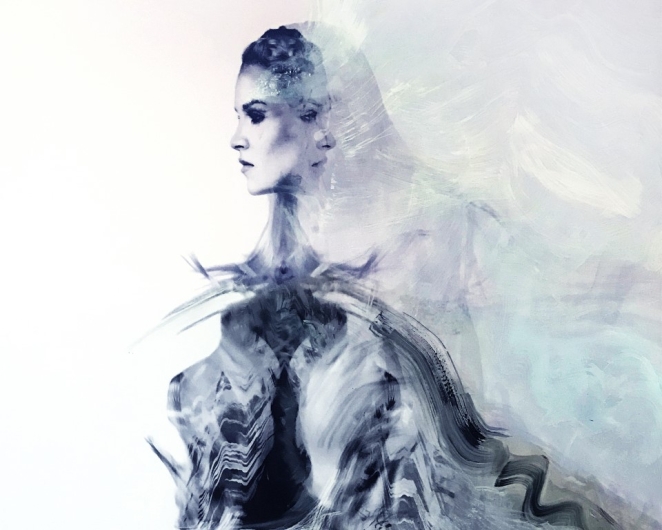
Elisabeth Grosse aka LIZITA
Perhaps we need to stop judging AI creativity by what comes out of the machine.
That’s only the raw material.
A photographer might shoot 800 frames and use three. A film editor can fundamentally transform footage through rhythm and juxtaposition. A designer might fill pages with variations before finding the system. A writer deletes far more sentences than anybody ever sees.
Nobody calls that waste.
It’s editing.
The same logic should apply to AI-assisted creative work. If the first generated image appears almost unchanged in the finished campaign, there’s a reasonable chance the machine has done rather more of the creative decision-making than the human involved might like to admit.
Instead, generate, reject, crop, composite, redraw, rephotograph, distort, simplify and rebuild. Take something from one output and collide it with something developed elsewhere. Use AI for background elements but photograph the hero object. Generate an impossible texture and build the typography manually. Use a model to prototype something that ultimately gets recreated physically.
This is where the distinction between AI-assisted design and AI-generated design becomes genuinely meaningful.
The former can describe a creative process in which AI is one material among many. The latter suggests the system has effectively produced the work.
Neither category is automatically good or bad. But if your aim is to make something that doesn’t carry the machine’s defaults on its sleeve, greater human intervention gives you more opportunities to push away from them.
That also demands a different kind of creative skill. As Creativepool’s work on the AI skills needed in future-ready creative businesses makes clear, the important capability isn’t simply knowing which buttons to press. It’s understanding where AI improves a workflow, where human responsibility needs to remain absolute and when speed is quietly flattening the thing you were trying to make distinctive in the first place.
Can AI-Generated Design Still Be Original?
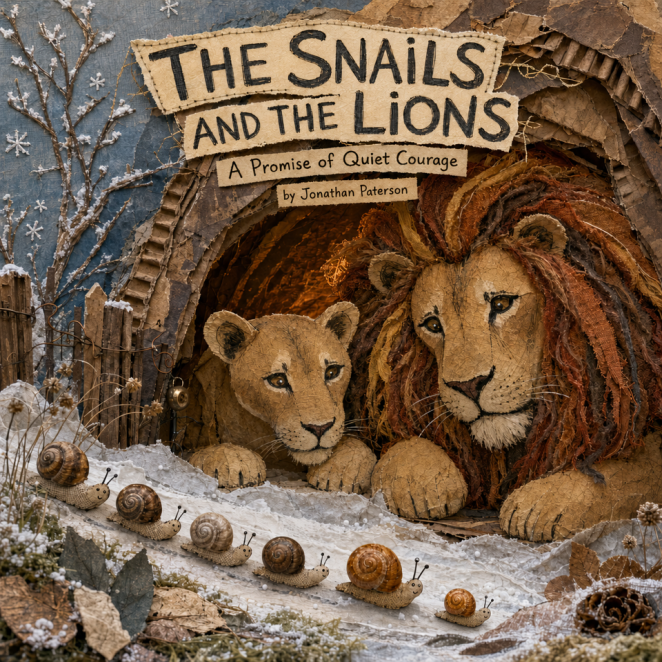
Jonathan Paterson
Of course it can.
This is where the debate needs to avoid becoming tedious.
A paintbrush doesn’t make something original. Neither does Photoshop, a camera, Cinema 4D or a particularly expensive notebook. Technology creates possibilities and constraints. Originality comes from what somebody decides to do within them.
The same applies to AI.
Indeed, the fact that research has identified homogenising tendencies doesn’t prove sameness is inevitable. Experiments using deliberately varied AI personas suggest that creative diversity can be designed back into human-AI collaboration. The problem can lie partly in uniform deployment rather than simply in the existence of generative systems themselves.
That feels like a useful creative principle far beyond prompting.
Don’t ask the system for a bigger pile of versions of the same thought. Change the thought.
Change the perspective. Change the input. Change the reference material. Change the constraint. Ask what the obvious answer is and deliberately go somewhere else. Use the machine to explore competing creative philosophies rather than endlessly polishing the safest one.
That kind of judgement is also becoming central to the new skills creative agencies need to build. As technical access becomes widespread, simply possessing generative tools tells a client very little. Knowing how to use them without allowing them to dictate the work is considerably more meaningful.
And, crucially, know when to stop using AI.
Sometimes the strongest thing an AI system can do for a project is help you discover that the interesting answer needs to be photographed, drawn, built, written, performed or designed by somebody else entirely.
That isn’t AI failing.
That’s the creative process working.
Does Using AI Make Creative Work Less Authentic?
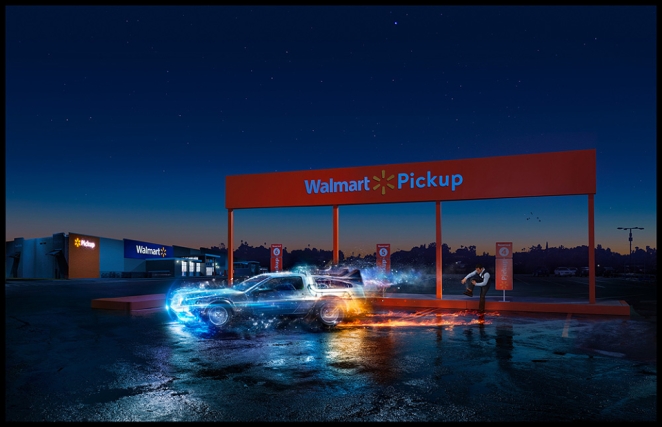
Taylor James
Not inherently.
Authenticity isn’t a software setting.
A campaign made entirely without AI can still be cynical, derivative and hollow. A piece of work that uses generative tools heavily can still contain a genuinely human idea, carefully considered choices and a distinctive authorial voice.
The problem arrives when the technology starts replacing the very thing the work is claiming to represent.
If you’re building a campaign around craftsmanship and quietly replacing the craftsperson with generated imagery, people might reasonably feel something has gone missing. If you’re trying to communicate intimacy, community, vulnerability or lived experience while manufacturing all the humans involved, the creative shortcut can begin undermining the emotional proposition.
That’s one reason the emerging idea of “Made by Humans” as a creative and marketing signal is more interesting than a simple anti-AI backlash. The attraction isn’t necessarily purity. It’s provenance. Audiences increasingly have reason to care about where an image came from, whether the person in it exists and who, if anybody, stood behind the decisions that produced it.
The industry is also developing more robust ways of communicating that provenance. Modern Content Credentials can carry machine-readable information about AI involvement and an asset’s production history, which matters because the answer to AI becoming harder to detect shouldn’t be a permanent visual guessing game.
Ultimately, avoiding an “AI look” shouldn’t mean disguising AI involvement.
It should mean making better creative work.
How to Use AI Without Losing Your Creative Identity
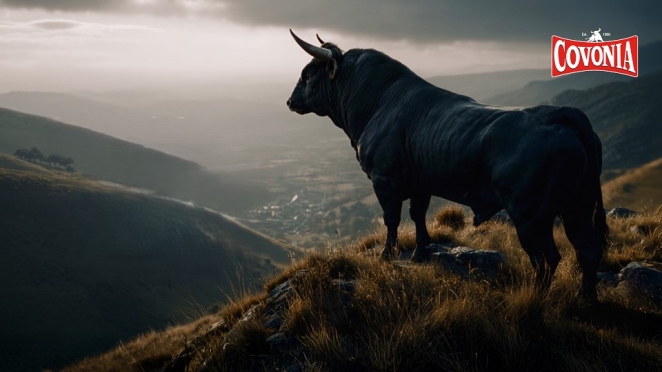
Bray Leino
The most dangerous thing about the AI aesthetic isn’t that somebody might look at your work and correctly guess which tool you used.
It’s that they might not care who made it at all.
That’s the real creative challenge.
We’ve become slightly obsessed with whether machines can imitate humans when the more immediate risk may be humans gradually imitating machines. The perfectly balanced composition. The smoothed-out language. The frictionless concept. The endless visual competence. The strange gravitational pull towards whatever looks most immediately like the thing we asked for.
That’s how creative identity gets lost. Not because somebody opened an AI tool, but because they stopped arguing with it.
As AI becomes embedded into the everyday infrastructure of creative workflows, the creatives who retain the strongest identities probably won’t be the ones who reject it outright. They’ll be the ones who understand exactly where to let it into the process and exactly where to shut the door again.
They’ll use it to widen possibility rather than narrow everything towards one polished answer. They’ll bring better references, stranger inputs, genuine research and personal experience into the process. They’ll treat first outputs as beginnings, not deliverables, and they’ll recognise that becoming genuinely future-ready means knowing what technology should change as well as protecting the creative standards that shouldn’t.
Most importantly, they’ll keep asking the question generative systems make surprisingly easy to forget: why does this need to look like this at all?
Because the biggest problem with AI-generated design isn’t actually that it looks artificial.
Artificial can be brilliant. Surreal can be brilliant. Impossible can be brilliant. Nobody is asking creativity to retreat into documentary realism simply to prove a human was involved.
The problem is when it looks inevitable.
When it looks like the same answer everybody else would have received. When the AI aesthetic becomes a substitute for an idea. When all that incredible generative capability produces something nobody could object to and nobody is particularly likely to remember.
AI can give creatives more images, more routes, more iterations and more possibilities than we’ve ever had before. That’s an extraordinary advantage. But when possibility becomes practically infinite, the ability to choose, reject and refine becomes more important rather than less.
The goal, then, isn’t to make work nobody could possibly suspect was touched by AI. Nor is it to sprinkle imperfections over generated imagery in the hope that a bit of grain and wonky typography will somehow restore its soul.
It’s to make work with enough specificity that another person wouldn’t have arrived at precisely the same answer. Work that contains decisions rather than merely defaults. Work where the references come from somewhere, the visual choices mean something and the finish serves the idea instead of impersonating one.
That’s ultimately the best way to escape the AI aesthetic.
Don’t try to make the machine look more human.
Give the work more of yourself.