

New business used to be understood as a department. Usually, it was one relentlessly upbeat person with an alarming number of LinkedIn connections, a battered credentials deck and the apparently superhuman ability to sound excited about another chemistry meeting.
That model was always slightly reductive. In 2026, it’s becoming actively dangerous.
Winning and retaining business now depends on much more than generating leads, answering RFIs and putting the agency’s best work into a handsome presentation. Clients are assessing whether agencies can challenge their thinking, understand the commercial problem behind the brief, apply AI responsibly, exercise judgement in a world of infinite output and explain why their creativity is worth paying for.
These aren’t isolated new business skills. They’re business capabilities: repeatable organisational strengths that shape how the agency behaves before, during and long after a pitch.
The distinction matters because a brilliant strategist, commercially astute managing director or charismatic new business lead can’t compensate indefinitely for an agency that lacks the processes, language and confidence to translate its talent into value.
The agencies that thrive over the next few years won’t necessarily be those with the biggest teams, the loudest profiles or the most extravagant pitch theatre. They’ll be the ones that can make their intelligence visible, their judgement legible and their value commercially undeniable.
Why Business Capabilities Have Become a Competitive Advantage

Sky UK
For all the perennial hand-wringing about the death of the agency model, clients still want agencies. They just want rather more from them.
According to the IPA (The Institute of Practitioners in Advertising), nine in ten clients believe agencies are either central to their commercial success or make a meaningful contribution to it. The same proportion expect their use of agencies to grow or remain stable during the next three years.
That’s the encouraging bit.
The more uncomfortable finding is the gap between the kind of thinking clients value and what they believe agencies currently provide. While 83% value “stretch and growth thinking”, only 48% believe they receive it. Meanwhile, 77% value agencies that challenge their briefs and assumptions, but only 43% feel their agencies actually do so.
Among C-suite, EVP and VP respondents, that challenge gap expands to an extraordinary 48 percentage points.
In other words, clients aren’t simply asking agencies to make things. They want them to notice things, question things and help them make better decisions. Yet many agencies are still selling their executional muscles while keeping their most valuable thinking coyly hidden behind the curtain.
This is where strategic capabilities become a genuine competitive advantage. When production becomes faster and more accessible, the ability to diagnose, interrogate, prioritise and decide becomes the valuable part of the offer.
AI has intensified the shift. Nine in ten clients surveyed by the IPA now describe AI skills as either critical or very important when choosing creative and media agencies. At the same time, 82% believe agencies could do more to help the voice of the customer reach the boardroom.
Put those findings together and the opportunity becomes clear. The modern agency must be technologically literate, commercially credible and creatively brave enough to challenge a client without turning every meeting into an undergraduate debating society.
That’s a considerably broader job than “winning the pitch”.
The Difference Between Business Skills and Business Capabilities
A skill belongs to a person. A business capability belongs to the organisation.
Someone might be brilliant at presenting creative work, for example. But if only that person can do it, the agency doesn’t have a presentation capability. It has one employee everyone desperately hopes isn’t on holiday when the pitch date lands.
A business capability combines people, skills, behaviours, processes, knowledge, tools and evidence. It allows an agency to produce a valuable result consistently rather than heroically.
Creative judgement is a skill when an experienced ECD can identify the right route. It becomes a capability when the agency has a shared language for evaluating ideas, can show clients how decisions were made, helps junior people develop the same judgement and protects the strongest work throughout the approval process.
AI literacy is a skill when somebody has taken a prompting course. It becomes a capability when agency leaders can identify appropriate uses, redesign workflows, govern confidential data, manage intellectual property risk, evaluate output quality and explain the agency’s approach to clients.
That’s the purpose of a business capability model. It maps what an agency must be able to do reliably, regardless of which individual happens to be in the room.
For a creative agency, that model shouldn’t resemble an enterprise consultancy diagram involving 200 boxes and a colour key that requires its own induction course. It can be a practical map of the capabilities that drive reputation, opportunity, conversion, delivery, retention and growth.
The important thing is to stop treating business skills development as a handful of courses for the new business team. If a capability affects how the agency wins, prices or protects its work, it needs to exist across the business.
1. Diagnose the Business Problem Before Selling the Solution

RipenApps Technologies
One of the most important new business skills is also one of the easiest to claim and hardest to demonstrate: strategic diagnosis.
Almost every agency describes itself as a strategic partner. Rather fewer can resist responding to the stated brief before establishing whether it’s the right brief.
Strong diagnosis begins with commercial curiosity. What is the client actually trying to change? What would happen if they did nothing? Which audience behaviour matters? What internal pressure created the brief? How will success be recognised by marketing, finance and the board? Is the supposed communications problem actually a product, experience, distribution or organisational problem wearing a jaunty marketing hat?
This doesn’t mean obstructing momentum for the sake of appearing clever. It means improving the quality of the decision before everyone starts spending money on its execution.
The best agencies enter new business conversations with hypotheses rather than prefabricated answers. They research the category, identify tensions, test assumptions and show the client something useful about their own problem.
As explored in our guide to the skills creative agencies need to win better clients, stronger prospects want agencies to understand the business challenge, not simply parade their creative wares. They need to see how insight, strategy, creativity, execution and measurement connect.
This changes the tone of a pitch. Instead of saying, “Here’s what we’d like to make”, the agency can say, “Here’s what we believe is preventing growth, here’s the role creativity can play and here’s how we’ll know whether it worked.”
That’s a much more valuable conversation. Unsurprisingly, it’s also a much harder one for procurement to reduce to a column of hourly rates.
2. Turn Taste, Judgement and Creative Confidence into a Capability

So Good Studio Ltd
Taste has become one of the creative industry’s favourite answers to AI. Machines can generate; humans can decide. The trouble is that the word is often deployed as if everyone agrees what it means.
Charlotte Bunyan, Head of Innovation at We Are Collider, captures the problem perfectly:
“‘Taste, judgement, creative confidence’ has become the industry’s favourite shorthand for a quality that hasn’t been properly defined, no-one can reliably interview for it, nor quite know how to train it - if that is even possible. We know it when we see it. We struggle badly when asked to explain it.
“This matters more now than it ever has, because AI can generate competent creative work at scale, and competence is no longer the bar. What it cannot replicate is the instinct that knows when something is almost right but not quite: the editorial eye, the willingness to trust an uncomfortable choice, the confidence to hold a position under pressure. These are the skills that separate creative leaders from creative operators.
“But we need to do the harder work of articulating what we mean. How do you ask for evidence of taste in a portfolio review? What questions actually surface judgement in an interview? Until we can answer those questions precisely, we’ll keep saying it is the new differentiator with no way of fathoming how to pin it down.”
Agencies have always relied on tacit knowledge. Senior people develop an instinct through years of looking, making, arguing, failing and occasionally watching a supposedly terrible idea become the best thing in the room.
But “you know it when you see it” isn’t an especially robust business capability model. It makes judgement difficult to teach, nearly impossible to measure and dangerously dependent on hierarchy. Too often, taste simply means the most senior person’s preference survived the meeting.
To turn taste into a capability, agencies need to make creative decisions discussable. That means showing what was rejected as well as what survived. It means asking what makes a route distinctive, strategically relevant and culturally alive. It means separating technical finish from conceptual strength and personal preference from evidence.
It also means asking better questions in interviews and portfolio reviews. Which piece did the candidate fight to protect? Which promising route did they kill, and why? When did research change their mind? Where did they knowingly break a category convention? What did they remove from the work to make it stronger? How did they respond when the room preferred the safer option?
These questions don’t produce a numerical taste score, thankfully. But they do reveal how someone makes decisions.
Becky McOwen-Banks, ECD at Plain, believes this discernment has become a commercial product in its own right:
“For most of my career, speed was a selling point. Fast turnarounds won pitches, kept clients, built reputations. AI has quietly ended that. When everyone can be fast, fast is worth nothing - it’s table stakes, not a differentiator. What clients will pay a premium for now is the thing the machine can’t supply: someone with the taste to look at fifty competent options and know which one is right, and the confidence to defend that call when the room disagrees.
“I call it the human premium, and I’d encourage every creative to audit their own value against it. The skills we spent decades calling soft - discernment, conviction, the nerve to say no to work that’s merely fine - have become the hardest commercial assets we own.
“Taste used to be something you developed quietly in the background while your portfolio did the talking. Now taste is the product, and the portfolio is just the receipt. The creatives who struggle in the next few years won’t be the ones AI replaces. They’ll be the ones who kept pricing themselves on speed and volume long after the market stopped paying for either.”
This is the uncomfortable commercial adjustment agencies must make. If the agency continues selling volume and speed, it will be compared with tools designed to produce volume and speed. That’s a fight the agency will lose, even if it wins a few miserable rounds by working its people into the floor.
If it sells judgement, strategic clarity and the reduction of expensive uncertainty, the value equation changes.
That requires evidence. Case studies need to explain the critical choices behind the work, not just display the finished assets. Proposals should show how the agency’s judgement changes the outcome. Creative reviews should train people to defend decisions without retreating into “I just feel”.
Taste might remain partly instinctive. It doesn’t have to remain invisible.
3. Build Creative Literacy on Both Sides of the Relationship

Sleek Events
Creative literacy sounds like a client capability, but helping clients develop it is rapidly becoming an agency capability too.
Neil Hooper, Creative Director at Circle Agency, explains why:
“Brands don’t lose great agency work because agencies lack talent. They lose it because they can’t articulate what ‘good’ looks like. Creative literacy isn’t about having a strong opinion, it’s the ability to separate strategy from taste. It’s being able to explain why something works or doesn’t and give feedback that identifies a problem, without dictating the fix.
“The pitfalls include decisions made by committee consensus, agency churn that never actually fixes anything and creative that gets safer with every round because compliance gets rewarded over craft. Brands with strong creative literacy get ideas that stand up to be counted and agencies that bring their best thinking. Not forty-seven rounds of amends.
“The fix: separate strategy feedback from execution feedback, ask ‘What job is this work doing?’ before your subjectivity says ‘Do I like this?’”
Many agencies complain privately about poor feedback while doing remarkably little to improve the conditions under which feedback is given. They present several routes without agreeing evaluation criteria. They invite every stakeholder into the review. They ask, “What do you think?” and then act surprised when everyone tells them.
Creative literacy can be built into the relationship from the beginning.
Before presenting work, agree what decision is being made, who owns it and which criteria matter. Reconnect the room to the brief. Separate concerns about strategic direction from comments on execution. When feedback is vague, diagnose the underlying problem instead of treating the suggested fix as an instruction.
If someone says, “Make the logo bigger”, the real issue might be brand recognition, hierarchy, confidence or the political necessity of proving that the brand team attended the meeting. Each requires a different response.
Agencies should also teach clients how to protect productive disagreement. Committee consensus feels safe, but it tends to reward the work nobody objects to rather than the work anyone might remember.
This is commercially important because good feedback reduces wasted rounds, protects margin and improves the finished work. More importantly, it helps transform the agency from a supplier receiving instructions into a partner improving decisions.
4. Move AI Literacy Out of the Training Calendar and into Leadership

studio Shigeki Yamamoto
AI literacy has too often been treated as tool fluency. Learn how to prompt, generate a few images of suspiciously smooth humans drinking coffee and declare the agency transformed.
But an agency doesn’t develop an AI capability simply because its employees use AI. It develops one when leadership understands where the technology creates value, where it introduces risk and how it changes the agency’s operating and commercial model.
Becky McOwen-Banks puts the leadership problem bluntly:
“AI literacy has been badly mislabelled. It’s been treated as a training line item - send the team on a prompt course, tick the box, done. But the expensive failures I see aren’t happening at desk level. They’re happening in leadership meetings, where decisions about AI get made by people who’ve never used the tools and can’t interrogate what they’re being sold.
“I’ve trained teams inside global brands and the pattern repeats: capable people waiting for direction that never comes, because nobody senior can articulate what AI is actually for in their business. That vacuum gets filled one of two ways - blanket adoption that flattens the work into competent sameness, or quiet prohibition driven by fear. Both cost real money.
“AI literacy at leadership level isn’t knowing how to prompt. It’s being able to look at your own operation and say: here’s where the machine belongs, here’s where it doesn’t, and here’s why. Leaders who can’t make that argument are delegating strategy to whoever shouts loudest about the technology. That’s not caution. It’s abdication.”
The wider evidence supports that distinction. The World Economic Forum’s Future of Jobs Report 2025 identifies AI and big data among the fastest-growing skills, but it also expects creative thinking, analytical thinking, leadership, resilience and curiosity to increase in importance.
Technology and human judgement aren’t competing columns. They’re becoming interdependent.
Similarly, McKinsey’s 2025 State of AI survey found that redesigning workflows had the greatest effect on whether organisations reported EBIT impact from generative AI. Yet only 21% of respondents using generative AI said their organisations had fundamentally redesigned at least some workflows.
That’s the gap agencies need to close. The value isn’t in adding AI to the existing process like an unusually excitable intern. It’s in deciding which parts of the process should change.
Where can AI remove repetitive effort? Where can it support research, prototyping, adaptation or knowledge retrieval? Where must human oversight remain mandatory? How will confidential information be handled? Who owns generated outputs? When must AI use be disclosed? How will the agency prevent speed from overwhelming quality control?
These are operating-model questions, risk questions and new business questions. A prospective client increasingly needs to know not only whether an agency uses AI, but whether it can be trusted to use it intelligently.
That’s why our guide to the AI skills every leader needs to build a futureproof agency places governance, workflow design, commercial translation and talent development alongside technical literacy.
The most convincing AI proposition isn’t “we use all the latest tools”. It’s “we know which tools to use, which problems they should solve and where human responsibility must remain absolute”.
5. Understand the Experience and Reputation AI Creates

Huge
Agencies also need to move the AI conversation beyond internal efficiency. Clients don’t experience a workflow saving. Customers experience the recommendation, chatbot, search result, interface or piece of content the workflow produces.
Marc Holbrook, Senior Digital Strategist at Conran Design Group, argues that AI literacy is therefore becoming a customer experience capability:
“Most conversations about AI literacy focus on tools. The real challenge is understanding how AI shapes customer experience.
“Just as digital literacy became essential when customer journeys moved online, AI literacy is becoming essential as intelligent systems become embedded in search, recommendations, customer service and content.
“Every AI decision is ultimately an experience decision.
“Many organisations still approach AI through the lens of efficiency. But customers don’t experience efficiency; they experience products, interactions and journeys. When a recommendation feels irrelevant, a chatbot feels frustrating or a decision lacks transparency, that’s an experience problem, not a technology one.
“That’s why AI literacy is moving into the boardroom. Leaders don’t need to understand every model or platform. They need to understand how AI influences trust, behaviour and customer perception.
“The organisations that succeed won’t be those using the most AI. They’ll be the ones asking better questions: Does this create value? Does it build trust? Does it make the experience better?
“Technology can generate more content and more outputs than ever before. Human judgement is still what determines what is useful, appropriate and meaningful.
“Ultimately, AI literacy isn’t about understanding the technology. It’s about understanding the experience that technology creates. That’s where trust is built, loyalty is earned and competitive advantage is won.”
This creates a significant new business opportunity for agencies. Brands will need help designing AI-mediated experiences, auditing automated journeys, establishing a recognisable tone for conversational systems and deciding when automation becomes actively hostile to the customer.
They’ll also need help communicating about AI without drifting into hype, evasion or AI-washing.
Conrad Arnavutian, SVP at MikeWorldWide, sees this as an increasingly urgent reputation issue:
“From hardy commanders of battles fought thousands of years ago to the grizzled CEOs of modern corporates today, some leadership skills remain (and will remain) evergreen: trust, confidence, resilience, decision-making and there are indeed many others. I would also now add AI literacy into this forever bucket, where AI is set to determine the future of communications (my industry) and many others besides.
“AI is now fundamentally a reputation issue; how do agency leaders and brands communicate AI without hype or fear? How do brands avoid AI-washing? What does ‘being on the wrong side of AI’ actually mean for corporates? These are all questions that leaders from industry are already having to answer now and will be compelled to answer more bravely in future.
“Those who lead by example will be the ones who show empathy, recognise where humans remain indispensable and build confidence, rather than sowing seeds of confusion.”
An agency that can connect AI decisions to experience, trust and reputation has a much stronger proposition than one offering faster content production.
It can help clients define responsible principles, anticipate audience reaction, communicate difficult choices and ensure the technology serves the brand rather than quietly rewriting it.
That’s not an additional technical service bolted onto the agency. It’s a strategic capability sitting squarely at the intersection of brand, communications, experience and organisational change.
6. Learn to Find the Thinking Inside the Finish

Zara Picken
AI hasn’t only increased the amount of work. It has raised the superficial standard of mediocre work.
Weak ideas can now arrive beautifully rendered, correctly typeset and presented in enough glossy variations to tire a room into submission. The traditional signals that helped reviewers dismiss poor routes quickly are becoming less reliable.
As Becky McOwen-Banks explains:
“Here’s what’s changed in the review room: the bad work got better. Five years ago you could spot the weak option across the room - clumsy type, lazy crop, first-idea thinking worn openly. Now everything arrives polished, because polish is what machines are for. Which means the traditional shortcuts for judging work have stopped working. If everything looks finished, finish tells you nothing.
“So I’ve changed what I look for. I want to see the decisions. Where did someone kill a perfectly good option, and can they tell me why? Where does the work deviate from what any model would produce from the same brief? If I can’t find a choice in it - a moment where a human looked at the obvious answer and went somewhere better - then I’m looking at output, not work.
“This is a learnable discipline, and it needs to be learned fast, because the volume is only going up. The reviewers who matter in 2026 won’t be the ones with the best eye for craft. They’ll be the ones who can find the thinking inside the finish, and give feedback that sharpens judgement rather than just polishing polish.”
This should change how agencies run internal reviews and how they present work to clients.
Instead of judging only the visible output, reviewers should look for the meaningful choice. What convention has been rejected? What tension has been resolved? Where did the team move beyond the statistically obvious answer? What makes this idea belong to this brand rather than any reasonably competent competitor?
The strongest presentations should make those choices visible. Clients don’t need to be dragged through every abandoned layout, but they should understand the logic that created the recommendation.
This is where creative judgement becomes part of new business. Showing a prospect how the agency thinks is usually more persuasive than repeatedly insisting that it thinks differently.
It also protects the agency against a future in which everyone’s credentials deck contains equally polished work. When finish becomes abundant, the quality of the decisions behind it becomes the distinguishing evidence.
7. Prove and Price the Value of Thinking
Paul Garland
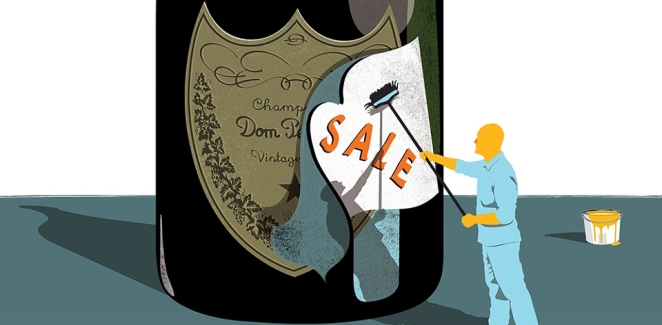
Agencies cannot credibly claim that judgement, strategy and creative confidence are their premium capabilities while continuing to price almost everything through hours.
The industry knows this. It just hasn’t done much about it.
The IPA found that only 27% of agencies believed they received a fair price for their work, while 58% reported little or no progress in reforming commercial agreements. Agencies acknowledged that traditional FTE-based models no longer reflected the strategic complexity of their services, yet continued using them because they were familiar, comparable and procurement-friendly.
More recent IPA research suggests clients see the problem too. Two-thirds agreed that existing charging models undervalue agency work, while 54% expressed a preference for exploring outcome-based fees.
Commercial fluency is therefore one of the most important business capabilities agencies can develop.
That doesn’t mean blindly replacing every retainer with a performance fee and betting the agency payroll on sales numbers controlled by distribution, pricing, availability and several other factors nobody mentioned in the briefing call.
It means understanding the available models, the risks they allocate and the behaviours they encourage.
The IPA’s 2026 Pricing Playbook covers input, output, subscription, performance, equity and hybrid models. The right choice depends on the predictability of the scope, the measurability of the result, the agency’s appetite for risk and the client’s ability to provide the necessary data.
Our own guide to agency pricing models makes the same fundamental point: pricing models aren’t merely charging mechanisms. They help design the agency and shape the relationship.
To price value, agencies first need to define it. That requires stronger scoping, baseline measurement, agreed outcomes and a clear theory connecting the work to commercial performance. It also requires the nerve to explain why a faster process doesn’t automatically make the result less valuable.
If AI allows an experienced team to solve a £10 million problem in two weeks rather than six, pricing the work by the reduced number of hours is commercial self-harm with a timesheet attached.
The agency’s new business, strategy, account leadership and finance teams need a shared language for value. They should understand margin, risk, utilisation, attribution, intellectual property and the difference between an output and an outcome.
Creativity deserves better than being sold by the kilogram. Agencies need the business skills to make that argument stick.
8. Build a New Business System, Not a Pitch Dependency

A mature new business capability begins long before an opportunity appears.
It includes clear positioning, a defined market, visible expertise, intelligent outreach, opportunity qualification, diagnostic discovery, commercial modelling, persuasive storytelling, disciplined follow-up and the development of existing accounts.
Too many agencies focus almost exclusively on conversion. They spring into life when an RFP lands, consume themselves for three weeks, neglect existing clients and then either celebrate a win or conduct a strangely brief post-mortem before doing it all again.
That’s not a system. It’s an adrenaline dependency.
A practical business capability model for new business should include:
Positioning: Can the agency explain what it does exceptionally well, for whom and why that matters?
Market intelligence: Does it understand the sectors, organisations and business pressures most likely to create demand?
Reputation building: Does it publish useful thinking, maintain relevant relationships and give prospects a reason to remember it before they need it?
Qualification: Can it identify which opportunities fit the agency’s strengths, commercial needs and desired future?
Strategic diagnosis: Can it uncover and challenge the business problem behind the brief?
Creative judgement: Can it explain why its recommended route is stronger, not simply more attractive?
AI literacy and governance: Can it use emerging technology effectively, responsibly and confidently?
Commercial design: Can it scope, price and negotiate work in a way that reflects value and protects margin?
Effectiveness: Can it define success, measure progress and turn results into persuasive evidence?
Client development: Can it identify new opportunities inside existing relationships rather than treating “new business” and “current clients” as separate planets?
Each capability needs an owner, a repeatable process and evidence that it works. That evidence might include win rates, margin by opportunity type, time invested in pitches, average sales cycle, referral volume, client retention, organic account growth or the proportion of case studies supported by meaningful commercial results.
The purpose isn’t to bury creative people under dashboards. It’s to stop the agency making major growth decisions entirely on instinct and vibes.
How to Identify the Biggest Capability Gaps in Your Agency

Messy Collective
The simplest way to identify capability gaps is to follow the journey from market awareness to long-term client value and ask where quality becomes inconsistent.
Where do the right prospects first encounter the agency? Do they understand what makes it different? Which opportunities enter the pipeline, and why? How are they qualified? Who leads discovery? At what point is the commercial model decided? How does the agency demonstrate strategic value? What happens after a pitch is lost? How does learning return to the business?
Then score each capability according to its maturity.
- At the lowest level, the capability is ad hoc. It depends on individual effort and produces inconsistent results.
- Next, it becomes repeatable. The agency has begun using the same basic process, although quality may still vary.
- At the defined level, responsibilities, methods and standards are clear.
- At the measured level, the agency can assess performance and identify what improves results.
- Finally, an adaptive capability evolves as the market, technology and client expectations change.
Most agencies will discover an odd profile. They might have outstanding creative judgement but weak opportunity qualification. Strong relationships but unclear positioning. Sophisticated AI production but no governance. Brilliant strategy but limited effectiveness evidence. A persuasive pitch team but a pricing process based largely on who appears most confident in the finance meeting.
The objective isn’t to score five out of five everywhere. It’s to identify the capabilities that have the greatest impact on the agency’s chosen strategy.
A specialist production studio, brand consultancy and integrated network shouldn’t have identical capability maps. Each needs to know which combination allows it to create distinctive value and win the kind of work it actually wants.
Can Agencies Build These Capabilities Without Hiring New Talent?

Kirill Pavlov
In many cases, yes.
Capability building doesn’t always begin with recruitment. It often begins by making better use of knowledge already scattered across the agency.
The strategist who excels at challenging briefs can turn their approach into a discovery framework. The ECD can make review criteria explicit. The finance lead can teach commercial fundamentals to client teams. Account directors can document the signals that reveal account-growth opportunities. Producers can identify where AI genuinely removes friction and where it threatens quality.
Business skills development becomes more effective when it’s connected to live work rather than confined to training days. Teams need opportunities to practise diagnosis, pricing, feedback, judgement and negotiation on real briefs, followed by honest reviews of what happened.
A useful 90-day capability sprint might begin with 30 days of mapping. Identify the capabilities the agency needs, assess current maturity and locate the most damaging gaps.
The next 30 days can focus on building a small number of shared practices: a qualification scorecard, new discovery questions, a creative review framework, AI governance principles or a more disciplined approach to pricing.
The final 30 days should test those practices on live opportunities and client relationships. Measure what changed, gather feedback and refine the process.
Hiring becomes necessary when the agency genuinely lacks important expertise or capacity. But hiring somebody into a broken system merely gives the broken system another person to disappoint.
What Prevents Agencies from Building These Capabilities?

Ray Knox
The first obstacle is the founder bottleneck. In many independent agencies, positioning, selling, pricing, senior relationships and creative judgement remain concentrated in one or two people. This can work while the business is small. Eventually, it limits growth and makes every holiday feel like a governance crisis.
The second is utilisation pressure. Capability building doesn’t look billable, so it’s repeatedly postponed in favour of client delivery. The agency remains busy but becomes no more capable, and senior people continue solving the same avoidable problems.
The third is the mythology of soft skills. Judgement, creative confidence, relationship intelligence and commercial courage have often been treated as personal qualities people either possess or don’t. That belief saves agencies the inconvenience of working out how to develop them.
The fourth is pitch theatre. A huge amount of energy goes into producing a dazzling answer for one opportunity, while too little goes into building the strategic capabilities that would improve every opportunity.
The fifth is fear. Challenging a brief risks upsetting the prospect. Rejecting a poor-fit pitch risks shrinking the pipeline. Defending a bolder idea risks losing consensus. Proposing a different pricing model risks giving procurement a headache.
Yet capability requires choice. An agency that never says no, never challenges and never defends a position hasn’t created a frictionless new business process. It has removed the evidence that it brings anything distinctive to the relationship.
Why Business Capability Will Define the Next Generation of Creative Agencies

Muhammad Waseem
The next generation of successful creative agencies won’t be defined by a single fashionable service or piece of technology.
They’ll be defined by the ability to combine capabilities that have traditionally lived apart: creative judgement and commercial fluency, AI literacy and human empathy, strategic challenge and relationship intelligence, technological speed and the confidence to slow down when a decision matters.
Some of these capabilities are technical. Others have spent decades being dismissed as soft. Most become valuable only when they work together.
Taste without explanation becomes personal preference. AI without judgement becomes accelerated mediocrity. Strategy without commercial understanding becomes an interesting deck. Creativity without measurement becomes vulnerable when budgets tighten. New business without organisational capability becomes an exhausting cycle of promises the rest of the agency must scramble to keep.
The market isn’t asking agencies to abandon creativity and become management consultancies wearing more interesting trainers. It’s asking them to build the business capabilities that allow creativity to operate at a higher level.
Clients still want excellent work. They also want clearer thinking, constructive challenge, technological confidence, commercial understanding and partners who can help them navigate decisions that are becoming more complex by the week.
That’s the real opportunity.
New business is no longer simply the ability to persuade someone to hire the agency. It’s the ability to build an agency worth hiring, explain precisely why it matters and keep proving that value once everyone has left the pitch room.