
There are some businesses that arrive with interestingness more or less built in. Travel brands get beaches, mountains and the fantasy that everybody else’s holidays involve considerably less queuing than yours. Fashion gets beautiful people and aspiration. Entertainment has stories by definition. Food can generally rely on appetite doing at least some of the strategic heavy lifting. Give a creative team a new trainer, a boutique hotel, a festival or something involving cheese being pulled apart in slow motion and you’re already working with a fairly generous box of toys.
The real test tends to arrive with the businesses that don’t have any of that obvious glamour to lean on: industrial drill bits, payroll software, commercial insurance, structural steel, boiler servicing, waste management, pension administration, freight forwarding. These are the briefs that frequently arrive accompanied by a lengthy product deck, several photographs of machinery and a stakeholder explaining that their customers are “very rational people”, at which point everyone begins lowering their expectations before anybody has actually had an idea.
That’s usually the first mistake, because there are remarkably few genuinely boring businesses. What we have instead are businesses that have become accustomed to describing themselves in boring ways. They have spent years talking internally about capabilities, service lines, features, manufacturing tolerances and technology stacks, then simply moved that language into their external communications and wondered why nobody beyond the sales department feels especially moved by it.
Yet scratch beneath the functional description and supposedly dry industries are often full of more human drama than the glamorous ones. Insurance exists because homes flood, cars crash and livelihoods disappear unexpectedly. Cybersecurity exists because somebody, somewhere, is actively trying to get into something they shouldn’t. Logistics is one of the largely invisible systems preventing modern life from grinding to a halt. Pension planning is really a conversation about what the final decades of somebody’s life might feel like. Even boilers become fascinatingly important at 11pm on a freezing January night when yours has decided it has had enough.
So the challenge behind a creative brand strategy for an apparently boring company isn’t to manufacture excitement around something inherently tedious. It is to identify the human stakes that the company has become too close to notice. Instead of asking how you make accounting exciting, ask what happens because the accounting is right, or disastrously wrong. Instead of trying to persuade somebody to develop an emotional attachment to an industrial component, look at the extraordinary thing that component makes possible.
The technical feature remains true, but the story moves one level above it, towards consequence, tension, risk, ambition and human experience. It’s the same shift Creativepool explored in its look at what brands are actually looking for from branding and positioning in 2026: polished presentation on its own is no longer enough when the underlying position feels generic. Once you start from something more specific, a surprising number of “boring” businesses stop looking boring at all.
Is Your Business Really Boring?

Nine874 Creative
You can see how the problem develops by spending ten minutes browsing almost any collection of B2B websites. After a while they begin to merge into one enormous corporate organism offering “innovative solutions”, “trusted expertise”, “end-to-end capabilities” and “customer-focused partnerships”. Everyone is leading. Everyone is agile. Everyone is passionate about delivering exceptional outcomes. There are clouds, handshakes and people in glass meeting rooms staring purposefully at charts.
None of it is necessarily wrong, which is precisely why so little of it is memorable. The language has been sanded down until it communicates professionalism without communicating much personality, difference or meaning. Businesses end up describing themselves from the inside out, prioritising whatever took the greatest engineering effort or caused the most difficult internal meeting, while the customer is standing outside asking a much simpler question: why should I care?
A useful brand value proposition begins by answering that question in terms the outside world can understand. It doesn’t discard product detail, particularly in complex categories where expertise genuinely matters, but it stops treating the mechanism as the destination. A data-backup provider might technically sell storage capacity and redundancy, but the emotional value is the continued existence of years of somebody’s work when everything goes wrong.
A commercial cleaning business provides labour and equipment, but the consequence is a workplace people are willing to enter every morning. A specialist manufacturer might produce industrial fasteners to exceptionally precise tolerances, but what the client is ultimately purchasing is confidence that two enormously expensive things are going to remain attached. Creativepool’s guide to building a brand identity around genuine positioning rather than surface aesthetics makes much the same point: the identity is an expression of what the business means and why it matters, not a substitute for working those things out.
SomeOne founder Simon Manchipp gets to the heart of the issue rather more colourfully. “Lazy creatives and terrified clients create boring businesses. If you sell industrial drill bits, talk about the beautiful violence of tearing through concrete, or the fact that a tunnel without your drill is just a very dark cave. You make a business interesting by elevating the stakes from the functional to the philosophical. B2B is actually Brain to Brain, and brains crave drama, tension, and wit. Find the hidden absurdity, the latent power, or the undeniable truth in the product, and blow it up until the rest of the market looks like cowards for playing it safe.”
What I like about that argument is that it doesn’t suggest coating the product in borrowed excitement. The drill bit remains a drill bit. We haven’t given it sunglasses, launched a TikTok account for it or employed a comedian to pretend carbide tooling is inherently hilarious. We have simply asked what the object does in a more meaningful sense. It tears through concrete. It makes tunnels possible.
Follow that logic into almost any supposedly dull sector and the foundations of a much stronger brand storytelling strategy begin to appear. The logistics network keeps medicine cold on its way across a continent. The fraud platform prevents someone discovering their life savings have vanished. The payment provider keeps thousands of businesses trading when the technology beneath them is under pressure. The engineering consultancy makes something possible that previously existed only as a drawing. Products have functions, but functions have consequences, and consequences are where people usually start paying attention.
Find the Story That the Business Has Stopped Seeing

SampsonMay
One reason an outside creative perspective can be so valuable is that organisations become desensitised to their own interesting material. If you work in a factory every day, the extraordinary machinery becomes furniture. If you have spent twenty years designing bridges, a structure hanging over a river no longer feels quite as miraculous as it probably should. If every customer conversation concerns death, bereavement or insurance, the emotional intensity that would stop an outsider in their tracks becomes ordinary professional context.
Familiarity is useful for expertise but terrible for recognising stories, which is why so many businesses go searching for a brand narrative somewhere in the abstract when the best one has been sitting in the building all along.
SomeOne’s work for death-planning business Beyond is an obvious case in point. Death is hardly lacking in human meaning, but the category had traditionally communicated with an extremely narrow emotional palette: sombre, restrained, cautious and overwhelmingly beige. SomeOne’s task was not to make death itself more interesting. It was to rethink the conventions the sector had accumulated around talking about it, creating a brand designed to address planning, mortality and usefulness with considerably more openness and humanity.
The project eventually took Gold in Creativepool’s Annual, and Simon described the thinking behind it in Creativepool’s spotlight on SomeOne’s branding for Beyond. The strategic lesson is more interesting than the award. Sometimes an industry feels dull because everybody inside it has collectively agreed that there is only one acceptable way to behave. Breaking that convention can reveal how much emotional territory was sitting unused.
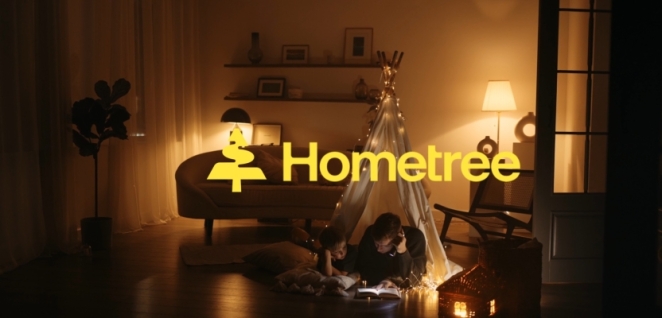
How Studio confronted a different version of the same problem with Hometree. A company concerned with boilers, home-energy services and the transition towards lower-carbon homes could easily have fallen into the usual category language of efficiency percentages, warranties and photographs of white boxes attached to walls. Instead, as Creativepool explored in “Think boilers… think, boring? Think again”, the brand positioned itself around the idea of being a “Transition Companion”.
That meant recognising that the genuinely interesting problem wasn’t the appliance itself but the confusing, expensive and increasingly urgent process homeowners are being asked to navigate as domestic energy changes. Maple, an animated assistant within the identity, emerged from that strategic idea, supported by warm photography, optimistic motion and a far more personable visual world. It works because the personality is downstream of the proposition. The company isn’t pretending boilers are glamorous. It is acknowledging that keeping a home warm, affordable and prepared for a lower-carbon future matters quite a lot to the person who lives there.
The same principle applies to highly technical B2B sectors. When Launch Digital began working with structural-steel specialist J&D Pierce, it found a business whose work already included projects such as the expanded stand at Anfield, the Silverstone Bridge and the conversion of the Olympic Stadium, yet much of that extraordinary engineering story had barely been expressed through the company’s digital presence.
Creativepool’s profile of Launch Digital’s work with J&D Pierce describes the challenge as cultural as much as creative, requiring the agency to understand the engineering business deeply enough to communicate its scale without trivialising it. The interestingness didn’t need to be invented by an advertising team. It needed to be recognised and framed.
Fifty years of people solving difficult structural problems, putting enormous pieces of infrastructure into place and leaving physical evidence of their work across the built environment is already a story. The failure was simply that the business had historically communicated its expertise more effectively than its significance.
This is where “brand storytelling” gets misunderstood. A brand storytelling strategy shouldn’t mean attaching a heroic narrative to every product description or forcing a three-act structure onto the About Us page. It means understanding which tensions, beliefs, histories and consequences make the business intelligible to people who don’t live inside it.
The story might be the founder’s frustration with an industry convention. It might be the customer problem everyone else accepts as unavoidable. It might be a piece of engineering that sounds routine internally but extraordinary externally. It might even be the category itself, particularly when every competitor has adopted exactly the same visual codes and language.
That is also why originality becomes more valuable as the amount of competent content explodes. The interesting business is rarely the one producing the most content. It is the one that has developed a perspective recognisable enough for the content to mean something.
Professional Doesn’t Have to Mean Forgettable

Burger King
Perhaps the greatest enemy of interesting business communications isn’t the product at all, but the fear of appearing insufficiently serious. There remains a peculiar corporate belief that professionalism has a recognisable aesthetic: dark blue, lots of white space, photographs of anonymous architecture, sober typography and sentences long enough to discourage anyone from questioning them.
In a high-stakes category, the instinct is understandable. Trust matters. Credibility matters. Nobody wants their pension provider to behave like an energy-drink brand having a particularly excitable morning. But professionalism and personality are not opposites, and repeatedly treating them as though they are has created enormous categories in which everybody appears broadly competent and almost nobody appears meaningfully different.
That tension between looking polished and becoming anonymous has only become sharper now that almost any organisation can create an immaculate-looking identity, something Creativepool recently explored in Can AI Make Your Brand Look Professional Without Making It Look Like Everyone Else?.
Insurance offers perhaps the clearest British example. Few categories are more functional on paper. The product exists to manage risk, much of the purchasing process is driven by price and nobody spends Sunday afternoon looking forward to renewing their car policy. Yet the sector has produced some of Britain’s most recognisable advertising assets precisely because brands realised that competing exclusively on policy details would create a communications swamp.
When Droga5 was asked to rethink GoCompare, the challenge was particularly awkward because Gio Compario had already achieved something most brands spend fortunes trying to create: extraordinary recognition. He was also famously irritating. Throwing him away would have discarded years of accumulated memory, while continuing unchanged risked leaving the brand trapped inside the joke.
As the creatives explain in Creativepool’s Behind the Idea feature on the redemption of Gio Compario, the answer was to reinterpret Gio as a crash-test dummy and use real insurance claims to dramatise what insurance is actually for. The campaign retained a recognisable brand asset while reconnecting it to the consequences of the category: when accidents happen, the details of the policy stop being abstract very quickly.
That’s a much better model for supposedly boring businesses than simply trying to become funny. Humour can be extraordinarily effective, particularly in categories where competitors all sound alike, but a brand personality strategy is not a commitment to jokes. A serious company can remain serious and still possess character. It can be warm without becoming twee, authoritative without sounding pompous, technical without becoming unreadable, direct without being rude and confident without becoming insufferably self-impressed.
Creativepool’s feature on the power of brand personality makes a useful point here: once functional offers become easier to compare, personality can become part of the reason one company feels preferable to another. The useful exercise is therefore to stop asking whether the brand is “professional” and start asking what sort of professionalism feels appropriate.
Is this the brilliant specialist who explains difficult things clearly? The calm expert in the crisis? The obsessive engineer who notices what everyone else misses? The challenger who thinks the category has become lazy? Those are all personalities, even though none requires the social team to start posting memes.
This matters because customers, including B2B customers, are still human beings. The fact that a purchasing decision involves a committee, a procurement process and several zeros on the invoice does not mean everybody involved suddenly loses their capacity for curiosity, emotion or boredom. The technical buyer might need detailed evidence before signing the contract, but first they have to notice, remember and distinguish the company presenting it.
The strongest brand communication strategy therefore needs two gears. It should be capable of earning attention through drama, character, clarity or surprise, while still delivering the substance necessary to justify the choice. The creative work gets somebody through the door; the evidence gives them permission to stay. One without the other creates either wallpaper or empty theatre.
This relationship between visibility and credibility also sits behind Creativepool’s argument that trust is becoming more valuable than reach in marketing. Attention is useful, but only when the brand gives people a reason to believe what happens after it has their attention.
Find the Drama, but Don’t Manufacture It

Nucco
Drama is a particularly useful word here because it is broader than humour and less superficial than excitement. There is drama in risk, scale, contrast, transformation, precision, time pressure and the possibility of failure. Industrial businesses are often overflowing with all of these things but communicate them as specifications because that is the language the organisation uses internally.
One of the most useful tasks a creative team can perform is simply to restore a sense of proportion to what the company actually does.
Volvo Trucks’ famous “Epic Split” remains an almost absurdly pure example. The proposition behind it was a commercial-truck steering system. Written that way, it sounds like the opening sentence of a brochure you would politely accept at an exhibition before immediately searching for coffee.
Forsman & Bodenfors instead demonstrated the precision of that steering technology by placing Jean-Claude Van Damme between two reversing trucks and having him perform the splits as the vehicles separated. The spectacle was enormous, but the important point is that the drama belonged to the product. The campaign didn’t distract from an engineering claim; it translated that claim into something anybody could understand at a glance.
Most businesses will not require Jean-Claude Van Damme, two trucks and an excellent insurance policy, but the principle travels surprisingly well. If you manufacture components, what extraordinary conditions do they survive? If you write compliance software, what disaster does it quietly prevent? If you provide specialist recruitment, what happens when a business cannot find the person it desperately needs?
If you operate warehousing infrastructure, how many apparently ordinary moments in daily life depend on it working invisibly? The interesting story often appears when you stop describing the product and start following its consequences out into the world.
Specificity helps enormously here. “Integrated engineering solutions” is difficult to picture. A sentence explaining that your component prevents a wind turbine from shaking itself apart in the North Sea immediately contains weather, scale, danger and function. “Global logistics expertise” disappears almost on contact with the brain. Following one temperature-sensitive shipment of life-saving medicine from production to patient creates a story.
Specific details give otherwise abstract businesses texture, and texture is one of the easiest things organisations inadvertently remove from themselves in the pursuit of corporate consistency.
That is becoming even more important as polished, generic communication gets cheaper. Generative AI can produce perfectly competent B2B copy and imagery in seconds, particularly when prompted with the same collection of words that have defined corporate branding for years: innovative, trusted, premium, seamless, future-ready, customer-centric.
The result may look highly professional while communicating almost nothing uniquely attributable to the company. Creativepool’s piece on how to avoid making creative work that looks like AI makes the wider point that generic inputs tend to pull creative work towards familiar cultural shorthand.
Specificity is the antidote because proprietary detail is harder to flatten into category convention. Your particular factory, history, people, failures, eccentric processes, customer phrases and technical obsessions belong to you. The more interesting question isn’t how to make a dry company resemble a fashionable consumer brand. It’s how much of the material that only this company can credibly talk about has been accidentally edited out.
Give People a Reason to Choose You, Then Give Them a Reason to Remember It
brandegree
Eventually all of this needs to return to the commercial question, because being interesting is not a business objective in itself. Customers choose companies for complicated combinations of price, availability, trust, experience, distribution, relationships, service, product capability and sheer inertia. Brand does not wave a magic wand over those realities.
If your competitor’s product is half the price, twice as good and available tomorrow while yours arrives in six months on the back of a donkey, an amusing tone of voice is unlikely to save you.
But many markets are not that cleanly differentiated. Customers often face several credible companies that can all broadly solve the problem, which means the battle shifts towards which one they notice, understand, trust and remember. That is where the brand value proposition and the creative expression of it have to reinforce one another.
The strategic answer identifies why this organisation should be chosen; the creative answer makes that difference mentally available when the choice arrives.
This is why generic adjectives are such weak foundations. Reliable, experienced, innovative, flexible and customer-focused all sound positive, but they rarely create preference because almost every competent competitor can claim them. Stronger propositions tend to contain some form of tension or specificity.
Perhaps the company rejects a norm the rest of the category accepts. Perhaps its method is demonstrably different. Perhaps it serves one audience unusually well. Perhaps it has a philosophy that changes how it behaves. Sometimes even an apparently ordinary functional advantage becomes distinctive if the company has the confidence to articulate it more sharply than anyone else.
That is the underlying challenge in building a truly distinctive brand rather than simply a well-designed one: recognisability has to be constructed deliberately and repeatedly, not assumed to emerge from polish.
The crucial step is then to translate that proposition into a recognisable world. Manchipp has spoken elsewhere about SomeOne preferring the idea of a “BrandWorld” to the traditional fixation on logos: strategy, story, voice, colour, typography, movement and behaviour working together so that the organisation feels like somebody rather than merely something.
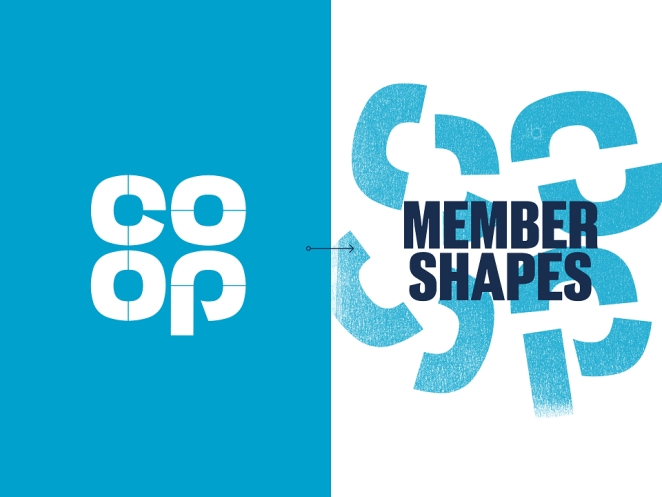
In Creativepool’s interview on making brands feel like somebody and building SomeOne’s BrandWorld approach, he describes that ecosystem as the means by which a brand becomes immediately recognisable and genuinely preferable rather than simply acquiring a badge.
That approach is particularly relevant to dull categories because one brave campaign cannot compensate indefinitely for a brand that retreats into anonymity everywhere else. If the television work is witty but the website returns to stock photography and “leading solutions”, or if the social channels have character but the sales deck sounds like it was produced by legal counsel during a power cut, customers notice the inconsistency even if they couldn’t articulate it.
Interesting brands compound. Their colours become familiar. Their voice becomes recognisable. Their recurring devices gather meaning. Their particular way of explaining the category begins to belong to them.
This is why distinctiveness matters so much alongside differentiation: the audience needs more than a reason to choose you; it needs a way to recognise you quickly enough for that reason to become useful. Consistency, in this sense, is not the enemy of creativity. It is what stops creativity evaporating after each campaign.
Creativepool’s wider look at what brands should be building before 2030 makes the same long-term point: recognisable assets, strategic clarity and coherent systems become more valuable as producing individual pieces of content becomes progressively easier.
None of that requires the business to turn itself into a circus. A specialist financial-services firm might decide that calm clarity is more powerful than exuberance because everybody else hides complexity behind jargon. An engineering company might build its personality around obsessive precision. A logistics company might embrace the almost comical scale of what it coordinates every day.
A software platform might become memorable by being unusually candid about the problem its category normally disguises. Interesting is contextual. The objective is not to become louder than everybody else but to become more specific than everybody else.
What Does an Interesting “Boring” Business Actually Look Like?

Getty Images
Probably the most useful answer is that it still looks like itself. It simply stops reducing itself to the least interesting possible description. The structural-steel company does not need to masquerade as a lifestyle brand. It needs to show people the extraordinary structures its expertise makes possible.
The boiler company doesn’t have to pretend heating systems are aspirational objects; it can build a brand around the comfort, cost and transition anxieties that already surround the home. The insurance business can dramatise what risk actually means rather than simply listing policy features. The industrial manufacturer can talk about violent, precise, extraordinary things happening to real materials rather than defaulting to “innovative engineering solutions”.
That’s also why humour should remain an option rather than a requirement. A boring category can support a funny brand, but a strong brand doesn’t need to be funny to escape dullness. It needs a perspective.
Sometimes that perspective is irreverence. Sometimes it is warmth, authority, candour, obsession, optimism or even righteous frustration with the way the category normally works. What matters is that the choice grows from the proposition rather than being painted on afterwards.
The same applies to storytelling. You don’t need to turn every LinkedIn post into a heroic narrative about changing the world. You need to find the parts of the business where there are actual stakes and give them enough room to breathe.
Show the engineer who solves the thing nobody else could. Show the failed prototype and why it mattered. Show the customer moment when the invisible service suddenly becomes essential. Talk about what happens when the product doesn’t exist. Find the details that have become ordinary inside the company but remain extraordinary to everyone outside it. That is usually far more persuasive than another brand manifesto about passion.
Ultimately, what makes a business memorable is rarely the sheer quantity of creative material it produces. It is the clarity and consistency of the impression that material leaves behind. A good creative brand strategy finds something genuinely ownable in the company. A useful brand storytelling strategy turns that something into meaning rather than corporate mythology.
A coherent brand personality strategy gives people a recognisable way to experience it, while the brand communication strategy ensures the same idea survives contact with every channel rather than disappearing the moment the campaign ends.
None of that requires you to deny the functional reality of the business. Quite the opposite. The most interesting version is usually hidden inside the function rather than floating somewhere above it. The drill tears through concrete so the tunnel can exist. The steel carries the building. The boiler keeps the house warm. The insurance policy becomes important precisely when somebody’s ordinary day suddenly isn’t ordinary anymore.
The software might look like a dashboard, but somewhere downstream it is preventing a very real human problem. Businesses become boring when everyone gets so familiar with these truths that they stop seeing them.
The creative opportunity is to see them again, enlarge them and give them a form people can remember. Not to add excitement for the sake of it, and certainly not to dress a serious company in somebody else’s personality, but to recover the drama, absurdity, craft, consequence or conviction that corporate language has gradually flattened out.
A tunnel without the drill is, after all, still just a very dark cave.