
Advertising has always romanticised the idea of doing more with less. Give an agency £10 million and it will happily spend six months arguing about the colour grade on a helicopter shot. Give it £10,000 and, suddenly, everybody becomes an expert at squeezing blood from a stone.
There’s a reason some of the most satisfying campaign case studies begin with an apparently impossible constraint. No media budget. No celebrity. No time. No money for a giant production. No realistic prospect of outspending the market leader. The creative team is forced to stop thinking about how much advertising it can buy and start thinking about what might actually be interesting enough for somebody to notice.
That does not mean, however, that budgets don’t matter. They matter enormously. Money buys reach, frequency, talent, production quality, testing, research, rights, speed, scale and the luxury of being able to make a few mistakes without immediately having to explain them to the finance director.
Budget matters, and spending enough to meet the objective remains one of the foundations of effective advertising. Creativity is extraordinarily powerful, but it does not repeal mathematics.
That distinction is important because conversations about low-cost advertising often collapse into one of two equally unhelpful positions. The first is that a huge budget automatically produces better advertising. It plainly doesn’t. We’ve all watched spectacularly expensive campaigns disappear without troubling anybody’s memory.
The second is the more romantic agency version: money is basically irrelevant if the idea is good enough. That isn’t true either. The wonderful £500 guerrilla stunt that earns millions of impressions exists, but it’s memorable partly because it isn’t the normal outcome.
A genuinely affordable campaign sits somewhere more useful between those extremes. It accepts the limits of the money available and then becomes ruthlessly selective about where that money is allowed to go. It knows who it needs to reach, what it wants them to remember, what action matters and which part of the campaign has to be exceptional. It cuts everything else.
The distinction, really, is between cheap advertising and cost-effective ads. The cheapest possible campaign can still be a complete waste of money. A slightly more expensive one that produces meaningful awareness, leads, sales or cultural attention might represent terrific value. Affordability is therefore less about the size of the number on the spreadsheet than the amount of useful effect squeezed out of it.
Creativepool formalised that idea this year with a dedicated Low Budget category in the Creativepool Annual 2026, recognising work where “the strength of the idea, ingenuity and execution” are central to success under financial constraint.
Its winners cover everything from PR stunts to filmmaking and social campaigns, but the common thread is striking: very few try to look like a £5 million campaign made for £50,000. The best accept their limitations and allow those limitations to shape the idea.
That might be the most important lesson of all.
Does a Bigger Budget Make an Advertising Campaign Better?

JDO Global
It certainly makes some things easier.
A large advertiser can afford widespread coverage, repeat exposure, better production options, established talent and enough media weight to ensure that even mildly interested consumers encounter the campaign several times. Brands with substantial budgets can also afford continuity, which is often overlooked when people compare a clever one-off stunt with a major brand platform that has been running for ten years.
The IPA’s latest effectiveness work has been warning against what Les Binet and Will Davis describe as “small thinking”: excessive fixation on short-term efficiency, narrow performance metrics and underinvestment when the real business objective is growth. Their 2026 Go Big or Go Home report argues that the industry has become too preoccupied with efficiency at the expense of effectiveness. There is a useful warning in there for anyone reading an article about low budget advertising and hoping to discover that spending less is automatically cleverer. It isn’t.
If your commercial objective requires national awareness, a £2,000 Instagram budget cannot be rescued by an unusually elegant typeface. If a product needs a million buyers, reaching 20,000 incredibly engaged people may simply not be enough. If you need sustained mental availability, disappearing from view for ten months because the campaign won a design award in February is probably not ideal either.
Where creativity changes the equation is in the productivity of that investment. Kantar and WARC matched advertising quality data against commercial effectiveness evidence and found that highly creative and effective advertising generated more than four times as much profit as weaker work. Kantar’s broader argument is that creative quality is one of the biggest controllable influences on advertising ROI and can substantially amplify the value of media investment.
System1 and Effie’s more recent Creative Dividend project reaches a compatible conclusion from a huge body of effectiveness data. Based on 1,265 campaigns and consumer responses from more than 200,000 people, it argues that media and creative quality work together, and that stronger creative advantage can materially improve business results.
This is why “Can a strong creative idea make up for a smaller advertising budget?” is slightly the wrong question.
It can make a smaller budget work significantly harder. It can create earned attention. It can improve memorability. It can encourage sharing. It can attract media coverage. It can generate distinctiveness that would otherwise require greater repetition to establish.
What it cannot do is guarantee infinite reach for free.
The smart objective is therefore not to pretend the budget doesn’t matter, but to avoid wasting any of it on forgettable work.
Small Budgets Force You to Decide What Actually Matters
There’s something creatively healthy about having nowhere to hide.
Huge campaigns can accumulate things. More films. More channels. More cutdowns. More influencers. More activations. More content. More deliverables until somebody eventually discovers they are producing 213 assets in seven aspect ratios and can no longer remember the sentence that started the campaign.
A tight budget makes that much harder. You have to choose.
If you have limited money, the campaign usually needs a brutally simple centre of gravity. You should be able to explain what you want people to understand or feel without requiring the strategic equivalent of the Rosetta Stone.
Some of Creativepool’s strongest examples are almost absurdly simple.
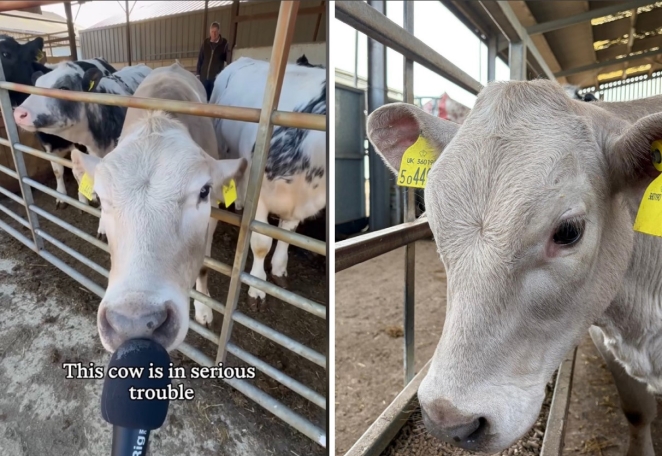
Take Beau Vine: the cow that changed the law, from Woodrow Communications and the Country Land and Business Association. The problem was about as dry as communications briefs get: weaknesses in the UK waste carrier licensing system were allowing criminals to obtain licences without meaningful checks, contributing to illegal fly-tipping.
Rather than mount a heavyweight lobbying campaign about regulatory reform, the team applied for a waste carrier licence in the name of a cow.
Beau Vine was approved.
The entire campaign cost £184, the application fee, which was subsequently refunded when the licence was revoked. Yet the absurdity gave journalists something irresistible to talk about. BBC, ITV, LBC, the Daily Mail and others picked up the story. Around a month later the Government announced reforms to the licensing system, and Beau was eventually namechecked by the Waste Minister while explaining how the new process would work. The campaign won Gold in Creativepool’s 2026 Low Budget category.
There’s no expensive trick hidden in there. The effectiveness comes from finding the one action capable of dramatising an invisible problem.
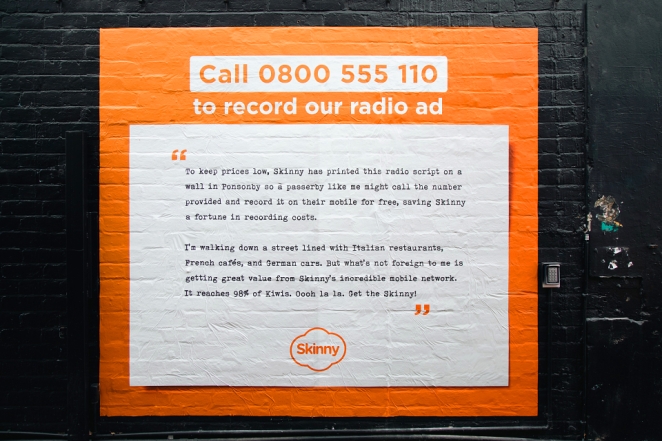
The same logic sits behind Phone It In for Skinny. The New Zealand mobile network couldn’t afford expensive celebrities or lavish production, which was actually perfectly aligned with a brand built around keeping costs down. So rather than paying professional voice talent, Skinny invited ordinary New Zealanders to phone in and record its radio commercials themselves. Scripts appeared on billboards, posters, beer mats and other everyday surfaces, with people calling a number to read them aloud. Those recordings then became the ads. The public effectively became both the production infrastructure and part of the media idea.
Creativepool’s coverage reported a 34% increase in network sign-ups, but what makes the idea particularly instructive is that the budget limitation didn’t sit behind the campaign apologetically. It became the campaign’s personality.
That’s much smarter than making a conventional radio campaign badly.

Another older Creativepool project, A4e’s low-cost ambient campaign, used guerrilla and ambient techniques to reach long-term unemployed people receiving incapacity benefit. Rather than buying expensive conventional media, the “below the surface” concept placed messages into environments in ways designed to create a double take. Again, the constraint wasn’t simply a production issue. It shaped the media behaviour.
Then there’s No Pic, No Vote, which faced the fairly unpromising combination of no budget, no media and almost no time while trying to encourage young Londoners to engage with new voter-ID rules. The campaign used strong graphic posters developed with young people themselves and relied on relationships with Brixton Finishing School and JCDecaux’s Community Channel to access the media necessary to make the work visible.
The interesting lesson across all four isn’t “guerrilla marketing is cheap”. Sometimes guerrilla work is surprisingly expensive once permissions, fabrication and logistics arrive.
The lesson is that an effective advertising campaign with a small budget usually needs its constraint to influence the concept itself.
If you develop an idea that requires a £500,000 film and then spend three weeks looking for ways to shoot it for £20,000, you’re probably solving the wrong problem.
How Creative Makes a Small Advertising Budget Work Harder
One reason creative quality matters so much under constraint is that poor work requires the media budget to compensate for it.
If the message is generic, you need more repetition before anybody remembers it. If the branding is weak, you may successfully entertain someone on behalf of whichever competitor they mistakenly attribute the ad to. If the idea lacks emotional or cultural interest, you’ll be buying every single second of the audience’s attention rather than earning any of it.
Great affordable work tends to give people a reason to carry the message onwards.
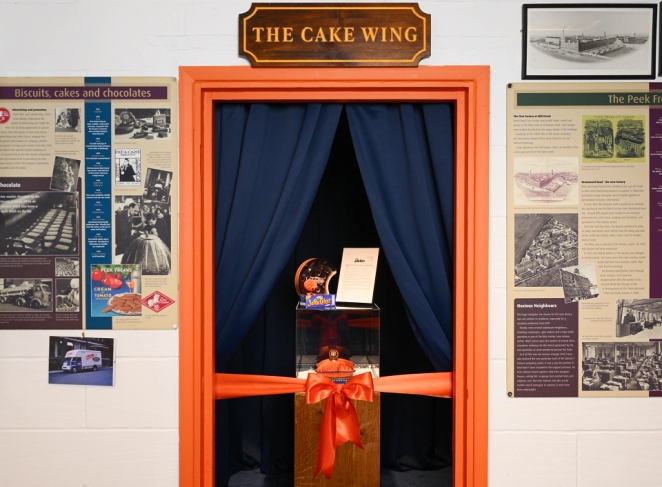
Consider The Cake Wing by The Romans for Jaffa Cakes, another Creativepool Annual 2026 Low Budget winner. The campaign took one of Britain’s most exhausted marketing debates, whether a Jaffa Cake is technically a cake or biscuit, and deliberately pushed it into new territory. When the tiny Biscuit Museum categorised Jaffa Cakes as biscuits, McVitie’s responded with a mock cease-and-desist before ultimately building the museum a new “Cake Wing”.
That deliberately silly escalation turned a modest PR activation into a story people wanted to pass around. According to the case study, the campaign generated 122 pieces of top-tier coverage within 48 hours, 17 broadcast segments over two weeks and a 17% sales uplift, producing Jaffa Cakes’ best month in almost three years.
The campaign didn’t need to buy the equivalent amount of attention because the idea gave publishers, broadcasters and the public material they could play with.
That’s one of the more useful ways to think about a successful advertising campaign on a limited budget. Ask what part of the idea might travel without additional spend.
Humour can do it. Utility can do it. Controversy sometimes does it, though I wouldn’t recommend manufacturing outrage because the media plan looks a little underweight. Participation can do it. A clever physical object can do it. A surprising use of an existing platform can do it.
And occasionally authenticity is cheaper precisely because you stop trying to disguise the lack of money.

CURIOUS IS CALLING – YOU YANGS, produced by BALANCE for Tourism Geelong and the Bellarine, used a micro crew alongside friends-and-family talent to create a restrained tourism film around a simple visual reveal. The production openly leaned into intimacy and authenticity rather than attempting the glossy helicopter-shot language of major destination marketing. It went on to win Bronze in Creativepool’s Low Budget category alongside recognition elsewhere in the Annual.
Cheap-looking and inexpensive are not the same thing.
The important production question is whether the aesthetic feels intentional. A grainy handheld film made because the creative idea needs immediacy can feel wonderful. A grainy handheld film produced because the camera budget disappeared on Thursday afternoon usually feels rather different.
Where Should You Spend a Limited Advertising Budget?
This is where small-budget campaigns often get into trouble, because marketing teams understandably want their £30,000 to behave like £300,000. The campaign consequently appears on LinkedIn, Instagram, TikTok, YouTube, display, paid search, three varieties of OOH, an email newsletter and a branded tote bag, with approximately £17.40 supporting each execution.
More channels do not automatically mean more impact.
WARC highlighted this problem in 2026 through what it called the media investment gap. Analysis of more than 633,000 ads found that brands are producing increasing quantities of creative while the average media support behind each asset has fallen. Around 93% of the ads analysed received less than $10,000 in media investment. The danger is obvious: cheaper production makes it tempting to manufacture more content than the media budget can meaningfully support.
For brands with restricted budgets, the question shouldn’t be “How many channels can we afford to appear on?” It should be “Where can this idea achieve enough weight to matter?”
That doesn’t necessarily mean using one channel exclusively. Cross-media effects are real, and different channels can reinforce one another. The IPA has suggested that smaller brands can build what it calls “Fragmented Fame” by concentrating on culturally or behaviourally coherent communities before expanding into adjacent ones. Its advice remains rooted in reach, distinctiveness and consistency rather than scattering content indiscriminately.
Think of the media plan as another creative constraint.
A brilliant poster idea should probably make serious use of OOH. An idea built around community participation might be better served by physical activation, social amplification and PR. A strong demonstration might belong in video. A useful tool could naturally generate search traffic. A highly specific B2B proposition might achieve far more from targeted industry media, email and LinkedIn than pretending it needs a TikTok dance.
The important thing is to find the media behaviour that makes the idea more interesting.

The Full Stop campaign for UN Women is a lovely example of this principle. Created to challenge digital violence against women in Turkey, the campaign turned a simple orange dot into a participatory symbol that people, institutions, sports clubs and broadcasters could use online. There was no conventional media buying behind the campaign. Instead, organic participation and partnerships carried the idea, helping it generate millions of impressions across news, television, outdoor and digital coverage.
Likewise, #peasplease for The Food Foundation managed to spread through thousands of physical locations, schools, Co-op branches, social platforms and media coverage after agency ifour supported the campaign without charging for its creative contribution. Celebrity endorsement and partner networks helped an otherwise modest campaign travel dramatically further than its direct resources would normally have allowed.
This is where the idea of “earned media” needs a little caution. You can’t simply write “go viral” into the media plan and leave early for lunch. Earned attention still requires a story worth covering, relationships, PR expertise, timing and frequently a considerable amount of work.
But a small budget should absolutely ask whether partnerships, collaborators, communities, publishers or the public have a reason to help distribute the idea.
If the only way your campaign travels is by paying for every impression, you need to be realistic about how far the budget will get you.
Don’t Spend Production Money Merely to Look Expensive
There’s also a slightly strange insecurity around affordable advertising in which brands with smaller budgets become obsessed with disguising the fact.
Sometimes that’s sensible. Nobody wants their product to look shoddy because the shoot couldn’t afford proper lighting.
But polish isn’t automatically persuasion.
Ben Ducker of Journey Further wrote for Creativepool about producing stock-only television ads for roughly a tenth of the cost of even low-budget conventional productions. The trick wasn’t simply buying cheaper footage. The creative process changed. Scripts were written around what high-quality material already existed, then bespoke CGI, grading, editing and VFX were used selectively to turn that source footage into something coherent and brand-specific.
That is resourcefulness.
Beginning with an idea written for three locations, 50 extras and a stunt helicopter, then attempting to recreate it with stock footage is not.
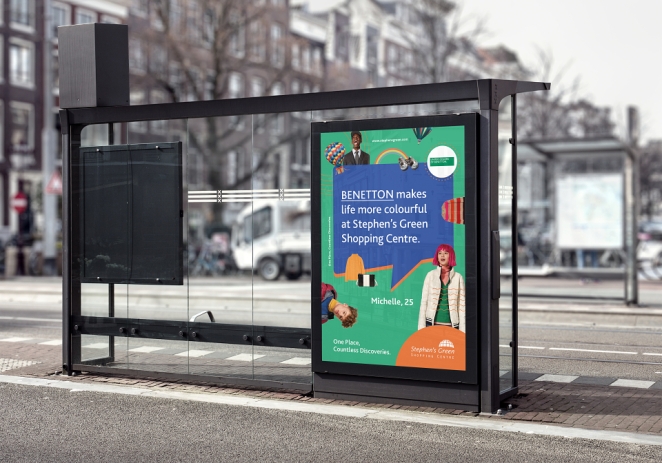
The same principle applies to existing brand assets. Stephen’s Green Shopping Centre’s 2018 brand campaign used imagery already owned by the client and turned it into a flexible print, outdoor and digital campaign rather than commissioning an entirely new asset library. The constraint became a design problem rather than a reason to produce something apologetic.
Technology gives brands even more options now. AI can be useful for previsualisation, rough concepting, resizing, versioning and certain production tasks. Templates can remove repetitive layout work. Remote production can reduce travel. Stock libraries are more sophisticated than they once were. Smaller crews can achieve extraordinary results using cameras that would have looked like witchcraft to production teams twenty years ago.
None of that means the cheapest production method is automatically the best one.
Rights still matter. Originality matters. Brand distinctiveness matters. So does knowing when the heart of an idea depends on hiring a proper photographer, director, illustrator, animator or craftsperson rather than saving 20% and quietly deleting the reason the idea was interesting.
This is why low-budget advertising benefits enormously from experienced creative judgement. A senior producer who knows where not to spend money can save more than a cheap production company. An experienced art director can identify the one shot that needs to be brilliant and the twelve that can be solved another way. A good writer can sometimes remove an entire production requirement with a better line.
The cheapest person on the quote isn’t always the cheapest person for the project.
Great Low-Cost Campaigns Often Build Participation Into the Idea
Some of the most interesting Creativepool work also shows how limited budgets can turn audiences from passive recipients into part of the mechanism.
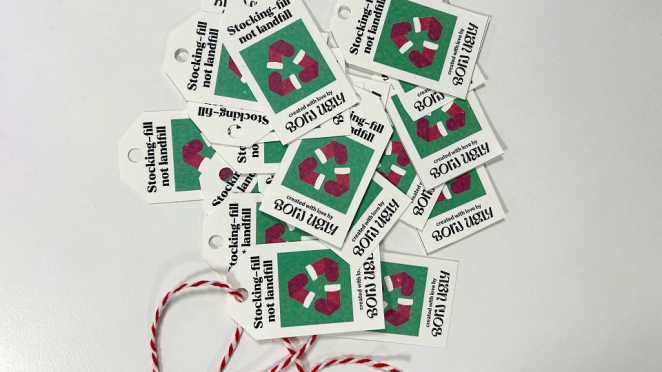
Stocking-fill not landfill by Born Ugly started locally in Leeds, transforming waste and discarded materials into handmade Christmas products sold through a pop-up shop, with proceeds supporting charity. The work relied on donated materials, local collaborators and the agency’s own creative skills. It became simultaneously a brand exercise, community event, sustainability project and source of press coverage.
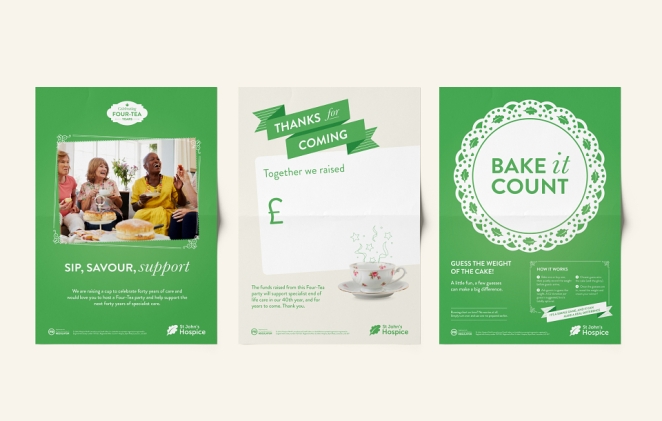
Four-Tea & Fabulous for St John’s Hospice takes a similarly participatory approach from a charity perspective. Rather than concentrating scarce resources on a conventional awareness push, the campaign created a simple fundraising proposition centred around hosting tea events, supported by flexible materials that helped the public become the distribution network.
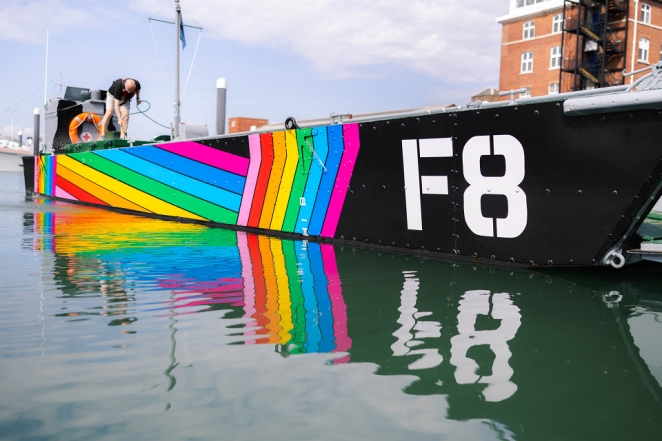
And Veteran Pride for Portsmouth Historic Quarter turned an existing naval object into the media. Working with Fighting With Pride, the campaign wrapped a historic naval vessel in Pride colours to draw attention to the experiences of LGBTQ+ military veterans who had served when homosexuality was banned in the Armed Forces. Creativepool’s case study reports a 94% surge in veteran enquiries for compensation following the campaign.
These examples are very different, but each finds something already present in the problem and turns it into communication.
The waste becomes the product.
The supporters become the organisers.
The ship becomes the billboard.
That’s a much more productive definition of affordability than simply negotiating everyone’s day rate down.
What Should You Prioritise When the Advertising Budget Is Tight?
If money is genuinely constrained, a useful order of priorities is:
- One clear commercial or communications objective.
- One strong proposition people can actually remember.
- A distinctive creative idea with enough flexibility to travel.
- The channel or audience where the idea has the best chance of gaining meaningful weight.
- Enough craft that inexpensive never becomes careless.
- Measurement agreed before the campaign begins.
Everything after that should earn its place.
This is especially important because small budgets magnify indecision. Every extra deliverable has a disproportionate opportunity cost. The second shoot day might mean losing half the paid social budget. The ninth content format might consume the designer time needed to make the first three genuinely good. A £5,000 influencer partnership could be transformational or it could simply absorb a quarter of the campaign budget because somebody said “creator strategy” during a meeting.
Focus is not glamorous, but it is incredibly powerful.
How Do You Know Whether a Low-Cost Campaign Actually Worked?

Havas Lynx
This ought to be obvious, but advertising has developed an extraordinary talent for declaring victory using whatever number moved in the desired direction.
A campaign intended to drive sales suddenly becomes a wonderful awareness campaign when sales fail to move. A lead-generation exercise becomes an “engagement success” because the video received lots of likes. A brand launch produces seventeen million impressions, although nobody quite remembers whether any of the seventeen million people noticed whose impression it was.
Affordable advertising needs tighter measurement because there is less money to waste.
The metric should follow the objective. If the campaign exists to produce sales, look at incremental sales, revenue, customer acquisition or profit. If it’s lead generation, track qualified leads rather than just form fills. If you’re building awareness, use appropriate brand tracking, search behaviour, prompted and unprompted awareness, recognition and reach. For a PR-led idea, quality of coverage, message inclusion and resulting behaviour usually matter more than an enormous and somewhat fictional “potential audience” number.
Media efficiency metrics such as CPM, CPC and CPA can be useful diagnostics, but they don’t automatically prove value.
A cheap click that never buys anything is still expensive.
Likewise, a brilliant effective advertising campaign may initially look less efficient than a tactical performance campaign because it is creating demand that appears elsewhere later.
The more constrained your resources, the more important it becomes to agree what success means before the work launches. Pick a small number of metrics that reflect the actual business problem and establish what you can reasonably measure.
Otherwise “affordable” becomes another word for “we spent less and hope something happened”.
How Creativepool Can Help You Build the Right Lean Campaign Team
Imposter Inc.
There’s one final element that tends to determine whether a small budget produces brilliant resourcefulness or complete chaos: the people.
One of the most expensive mistakes a brand can make is assuming that an affordable campaign requires the cheapest possible talent.
It usually requires the opposite in a few critical places.
When there isn’t enough money to hide a weak idea beneath production spectacle, experienced strategic and creative judgement becomes incredibly valuable. You need people who can recognise which problem actually deserves solving, simplify the brief, identify a concept that fits the available resources and know where craft matters enough to spend properly.
The advantage is that you don’t necessarily need a large permanent team to access those skills.
Creativepool now explicitly supports three different hiring routes: brands can hire individual talent, freelancers or agencies through Creativepool, including commission-free Studiogigs for freelance briefs and Studiobriefs for finding agency partners. That flexibility is particularly useful on affordable campaigns because the delivery model can follow the problem rather than automatically inheriting the overhead of a traditional agency structure.
For a straightforward campaign, you might begin by finding an experienced Creative Director capable of turning the business problem into a tight creative platform, then build a small freelance team around them. If the campaign is fundamentally visual, an Art Director and Graphic Designer might form the core. If the proposition and verbal idea are doing the heavy lifting, Creativepool’s Copywriter directory lets you look specifically for writers with relevant advertising and campaign experience rather than simply finding somebody who can produce competent words.
Where original imagery is worth the investment, the Creativepool photographer directory is particularly useful because portfolios can be judged by genre. That matters enormously on lean production. Hiring an excellent photographer who understands exactly how to achieve the required look in one day can be much more economical than hiring a cheaper generalist and discovering afterwards that the entire shoot needs rescuing in post-production.
And if the problem needs more coordination than a collection of freelancers can sensibly provide, use Creativepool to find a specialist creative company or agency instead. There is no prize for assembling fourteen independent suppliers simply because each one appeared cheaper on paper. Coordination has a cost too.
That’s ultimately how brands should think about the team:
Hire the smallest credible group capable of making the idea excellent.
For one project that might mean a strategist, copywriter/art director pair, designer and producer. Another might need a social strategist, creator and editor. A PR-led activation could benefit far more from a senior PR thinker, designer and nimble photographer than from a traditional advertising team. A local business might need only a strong creative generalist working alongside someone who understands media buying.
When reviewing Creativepool portfolios, look beyond visual polish. Search for evidence of constraint.
Has this person created compelling work without enormous production infrastructure? Does the case study explain the problem and result, or merely display beautiful frames? Have they worked with small organisations? Can they simplify? Are they comfortable adapting their craft when resources change?
Creativepool’s 2026 Low Budget winners are useful references precisely because they demonstrate that kind of thinking. The Annual’s Low Budget winners range from Beau Vine’s £184 policy stunt to The Cake Wing’s earned-media theatre and You Yangs’ micro-crew filmmaking. Different disciplines, different budgets, same underlying skill: knowing which part of the idea matters most.
The brief matters too. Tell people the real budget.
Nothing useful is achieved by describing £15,000 as “TBC” while everyone develops a campaign that secretly costs £80,000. Good creatives are often at their most inventive when they understand the boundaries from day one. Be explicit about what is included, what is media spend, what is production, who owns the assets, what usage rights are required and which outcomes genuinely matter.
Constraints are only creatively useful when everyone knows what they are.
What Does a Successful Low-Cost Advertising Campaign Actually Look Like?
CZAR Be
Probably nothing in particular.
That’s the point.
It might be a cow with a waste licence.
It might be a radio commercial recorded by somebody reading a billboard into their phone.
It might be a Pride-wrapped ship, a museum extension dedicated to a Jaffa Cake, a poster campaign secured through donated media, a film shot with friends and family, a pop-up filled with things rescued from landfill or a beautifully constructed television commercial assembled largely from stock.
The format isn’t what makes the campaign affordable. The thinking does.
Great low cost advertising understands the difference between cost and value. It knows where money meaningfully improves the result and where convention merely tells us we’re supposed to spend it. It invests enough in craft to make the work intentional, but refuses to confuse production value with creative value. It concentrates media where there is a realistic chance of being noticed, while designing ideas with enough energy to spread beyond the paid plan.
It measures the thing the campaign was actually meant to achieve.
And it resists perhaps the most dangerous temptation of all: trying to imitate the appearance of a much bigger campaign.
Because a bigger advertising budget usually is an advantage. It can buy attention, scale and persistence that smaller brands simply don’t have. Pretending otherwise is wishful thinking.
But money doesn’t decide what people remember. That’s where creativity earns its keep.
The smartest affordable campaign doesn’t begin by asking how cheaply everything can be made.
It begins by asking which decisions genuinely deserve the money available:-
- What are we trying to change?
- Who needs to notice?
- What do we want them to remember?
- Where can the idea naturally travel?
- What is the one thing we absolutely cannot compromise?
Answer those properly and suddenly a limited budget becomes less of an apology and more of a design constraint.
That doesn’t mean starving the work. It means focusing it.
And when every pound has a clear job to do, you might be surprised how much advertising you can actually afford.