
There’s an obvious problem with writing an article about old-school skills in 2026: it’s very easy to sound like somebody’s remarkably ill-informed dad.
"Back in my day, we remembered phone numbers. We could find our way somewhere without a blue dot telling us we’d missed the turning. We wrote things down with pens. And if you wanted to know something, you occasionally had to experience the unimaginable hardship of not knowing it for several hours."
None of that automatically made us better, obviously. Technology has removed a staggering amount of pointless friction from everyday life, and very few sensible people are campaigning for its return. Nobody needs to resurrect the A–Z solely because spending 25 minutes driving around Croydon looking for an unsigned industrial estate apparently built character. Spellcheck is preferable to carrying a dictionary into every meeting. Calculators are quite good at calculating. Washing machines remain, on balance, an improvement over rocks.
But there’s a difference between a tool taking away unnecessary work and a tool taking away the opportunity to develop a capability, and that distinction feels increasingly important.
The current conversation around skills for the future quite rightly focuses on AI literacy, data, cybersecurity and technological fluency. Yet the World Economic Forum’s latest skills outlook also puts analytical thinking, creative thinking, resilience, curiosity, leadership and social influence among the capabilities employers expect to remain important. Empathy and active listening sit alongside the technological skills rather than being neatly replaced by them.
That makes the future of skills rather more interesting than “learn the newest software”. Because some of the abilities that might help us operate intelligently in a highly automated world look suspiciously like things we were doing before the automation arrived.
Why Old-School Skills Suddenly Look Quite Modern
Eamon Croghan
It’s tempting to divide skills into two neat piles: the modern things we need to learn and the old fashioned skillstechnology has sensibly made obsolete. Reality isn’t nearly that tidy. A lot of those supposedly outdated activities weren’t valuable simply because there was no alternative. They also exercised judgement, memory, dexterity, observation, patience and problem-solving. When we replace the activity, we sometimes remove that practice too.
That doesn’t mean every disappearing skill needs rescuing. I don’t think the knowledge economy is crying out for more people who can programme a VCR or change a typewriter ribbon. But the broader issue of cognitive and practical outsourcing becomes harder to dismiss when digital systems increasingly handle not only execution but navigation, remembering, summarising, writing, searching, calculating and even aspects of creative thinking.
We've already looked at how AI is commoditising average creative output and why human creativity may become more valuable rather than less. The same logic applies beyond creativity. Once a machine can perform an activity on demand, the interesting human advantage often shifts away from pure execution and towards understanding, judgement and knowing when the machine’s answer is wrong.
That’s also why the practical skills worth protecting aren’t necessarily the ones machines struggle with most. Sometimes they’re the ones machines do so well that we’re in danger of forgetting why we ever learnt them ourselves.
10 Old-School Skills Worth Relearning

Osamu Watanabe
1. Writing things down by hand
Let’s begin with something so technologically primitive it requires only a surface and an object that makes a mark on it.
Handwriting has increasingly become the thing you do when the courier hands you a touchscreen that refuses to recognise your finger. Most of our serious thinking now happens through keyboards, voice input and, increasingly, prompts. That’s understandable because typing is faster, editable and searchable. Nobody expects the news page to be lovingly handwritten every morning by a monk. But speed isn’t always the objective.
There’s evidence that handwriting engages the brain differently from typing. A 2024 high-density EEG study found much more extensive patterns of brain connectivity when university students wrote words by hand than when they typed them, including patterns associated in previous research with memory formation and encoding. That doesn’t prove that picking up a Bic will magically make everybody cleverer, but it does underline something useful: handwriting and typing aren’t cognitively identical activities.
That difference feels particularly interesting creatively. Writing something by hand slows the thought down just enough that you have to process it while it’s happening. You can’t effortlessly drag paragraph five above paragraph two, there’s no autocomplete eagerly finishing your sentence and every revision leaves a physical trace. You have to live with the ugly crossing-out, the arrow squeezed into the margin and the idea that suddenly appears somewhere it was never meant to.
It’s less efficient, but that’s partly the attraction. As we explored in how to avoid making creative work that looks like AI, there’s sometimes value in putting friction back into a process when that friction forces decisions. A notebook doesn’t need to replace your laptop, obviously, but using one occasionally may stop every stage of your thinking from taking place inside an environment specifically engineered to make everything faster and easier.
2. Sketching badly
This one is particularly important for anybody who has decided they “can’t draw”. You probably can. You may not be able to draw a photorealistic horse galloping through water, but that’s not really what sketching is for.
The old-fashioned creative skill worth recovering is the ability to get an idea out of your head quickly enough that another person can understand it. A box. An arrow. A stick person. Three panels showing how something might work. A dreadful perspective drawing with the words “CAMERA HERE?” scrawled above it. It doesn’t have to be beautiful because beauty, at that stage, might actually get in the way.
Before creative tools could produce polished visualisations almost instantly, there was an obvious distinction between thinking and finishing. The rough drawing belonged firmly to the first category. It existed to find the idea rather than sell it. Generative AI has complicated that distinction because it can make a half-formed thought look extraordinarily finished. Suddenly, an idea that hasn’t survived five minutes of scrutiny arrives with cinematic lighting, immaculate production design and something suspiciously close to a Cannes case-study aesthetic. That can create a false sense of resolution.
Sketching fights that tendency because it keeps the idea cheap. There’s a reason our contributors still talk about the importance of being able to articulate ideas through drawing, modelling and conversation rather than relying on a single medium. Drawing isn’t valuable because analogue is morally superior to digital. It’s valuable because a crude sketch remains psychologically easy to change.
The AI visual invites people to discuss whether the jacket should be blue. The ugly pencil sketch still lets somebody ask whether there should be a jacket at all.
3. Reading something long without asking for a summary
This might be the least fashionable suggestion in the entire article: occasionally, read the whole thing.
Not the executive summary. Not the five bullet points. Not the AI-generated “key takeaways”. When something actually matters, read it from beginning to end.
Digital reading itself isn’t inherently shallow, and the research comparing screens and paper is considerably more nuanced than the usual “phones have destroyed our brains” headline. The bigger issue now may actually be our growing obsession with compression. We’ve built extraordinary tools for reducing 40 pages to four paragraphs, four paragraphs to five bullets and five bullets to “TL;DR”. That’s wonderfully useful when the information itself is merely instrumental. Nobody needs to read all 94 pages of a dishwasher manual to discover what error code E17 means.
But understanding isn’t always compression. Sometimes the important thing is the qualification halfway through page 26. Sometimes you need to hear the author construct the argument, encounter the evidence in context and notice the apparently throwaway sentence that wasn’t important enough to survive somebody else’s summary.
Deep reading gives you raw material too. One reason originality becomes more valuable in a world drowning in generated content is that everybody increasingly has access to the same compressed middle. The person who has actually read the obscure book, sat through the full interview, explored the archive or finished the difficult article may carry something into the room that summary culture discarded.
Reading deeply is slower, of course. You’re beginning to notice a theme.
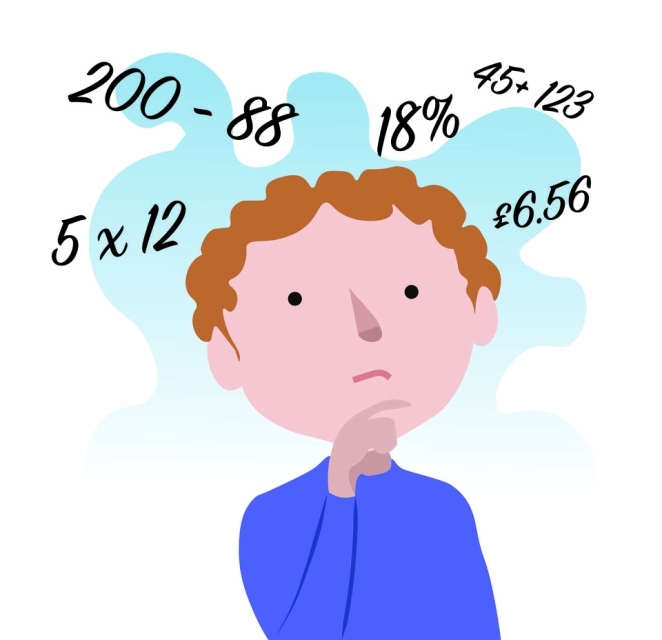
4. Doing enough maths in your head to know when the calculator is lying
Osamu Watanabe
Nobody needs to become Rachel Riley. Calculators are brilliant. Spreadsheets are brilliant. Computers can perform mathematics that would make most of us quietly leave the room. The useful skill isn’t competing with them; it’s estimation.
If a £12.50 product is supposedly discounted by 20% and the checkout says £11.80, you should have enough numerical intuition to feel that something’s gone wrong. If an AI-generated business case claims a campaign with 200,000 impressions and a 1% conversion rate produced 20,000 customers, a number somewhere in your head should start flashing.
That’s less about arithmetic than plausibility. Analytical thinking remains the top core skill in the World Economic Forum’s employer research even as AI and big data rank among the fastest-growing technological capabilities. That pairing is revealing. Greater computational power doesn’t remove the need to reason about what computation gives us.
The old-school habit of estimating a percentage, roughly adding a bill or working out whether an answer is in the right order of magnitude gives you an internal reference point. You don’t need to beat Excel. You need to notice when Excel has been fed nonsense.
Increasingly, the same applies to AI. As the technology becomes better at generating confident outputs instantly, creative judgement over what the machine produces becomes part of professional literacy. Being able to sanity-check numbers is one small but surprisingly useful part of that.
5. Remembering some things instead of remembering where to find them
There’s a lovely modern argument that nobody needs to remember facts anymore because we can look everything up. There’s also an obvious flaw in it: you need things in your head to think with them.
Creativity is largely combinatorial. Strategy involves recognising relationships between things that don’t initially appear connected. Conversation depends on having enough knowledge immediately available that you can respond to another person rather than pausing every 20 seconds to ask a search engine what you think. External access to knowledge is astonishingly useful, but access and possession aren’t quite the same thing.
This doesn’t mean memorising railway timetables for recreational purposes. It means resisting the assumption that external access and internal knowledge are interchangeable. The creative person who remembers a film, a statistic, an old campaign, a passage from a book, a strange historical story and something a client said six months ago has material immediately available for association. The database may contain vastly more information, but somebody still needs to form the connection.
That’s particularly relevant as generative AI makes retrieval almost effortless. Our piece on the skills that make work distinctive in an AI-saturated market argues that curiosity and divergent thinking become more important when conventional answers become easier to generate. Those capacities need material to work on.
So learn the names. Remember a few phone numbers. Know roughly when important things happened. Commit the poem, pitch, recipe or presentation opening to memory once in a while. Not because the internet might disappear, but because your brain isn’t merely a badly organised version of Google.
6. Finding your way without blindly following the blue dot
To be clear, GPS is magnificent. It has prevented countless arguments, saved us from the collossal drudgery of stopping outside petrol stations to unfold maps the size of duvets and given everybody the magical ability to arrive on time, every time.
But there’s a difference between using GPS as a map and using it as remote control for your body.
A study published in Scientific Reports found that greater habitual GPS use was associated with poorer spatial memory during self-guided navigation. Its much smaller longitudinal component also found greater GPS use over a three-year period was associated with steeper declines in hippocampal-dependent spatial memory, although the authors were careful to acknowledge the limited follow-up sample.
Again, the answer isn’t throwing your phone into a canal and navigating London by the position of the sun. It’s simply paying attention. Look at the route before you leave. Notice landmarks. Understand roughly where north is. Work out how the streets connect. Try walking somewhere familiar without instructions. Take an actual map on a proper hike rather than assuming the universe has personally guaranteed you 5G.
Navigation is a nice example of what technology can quietly remove when it works perfectly. The machine gets you there, but you never actually build a model of where “there” is.
And yes, there’s a metaphor for AI in there so painfully obvious I’m going to resist writing it.
7. Having an actual conversation
Not networking. Not “engaging with stakeholders”. Talking to another person.
That means listening long enough to realise they haven’t said what you expected them to say, asking the follow-up that wasn’t on your discussion guide and resisting the urge to look at your phone the second the conversation hits a silence. It sounds almost insultingly basic, but interpersonal skills become more interesting, not less, as digital mediation increases.
Employer research continues to put empathy and active listening alongside technological literacy and lifelong learning, while skills rooted deeply in human interaction remain among the hardest to substitute directly with current generative AI. For creative professionals, this matters particularly because an extraordinary amount of useful information still lives in the bits of conversation that don’t fit neatly into a transcript.
Customer research is better when somebody notices hesitation. A client relationship is better when the agency understands what the client is worried about but hasn’t put into the brief. A creative review is better when people can disagree without turning the room into either a fight or a hostage negotiation.
The AI era could actually make conversation one of the most useful skills to learn, simply because synthetic communication is becoming abundant. We can generate emails, decks, meeting summaries, customer personas and polished responses on demand. Genuine attention is considerably harder to automate.
Our work on the skills agencies, brands and creatives need now makes a similar point. As teams become more technologically augmented, the ability to explain ideas clearly, give direction, listen properly and bring people with you doesn’t disappear. It becomes part of what makes the technology useful in the first place.
The future may contain a lot more AI. It will, inconveniently for the antisocial among us, still contain other people.
8. Fixing something before replacing it
Rafail Prokopiou
There’s a particular feeling that comes from successfully repairing something you were fairly certain you’d destroy. The toaster works again. The button is back on. The chair no longer wobbles. The bike stops making that noise you’ve been deliberately ignoring since March. You are, briefly, Brunel.
Repair is one of the clearest examples of an old practical skill gaining new relevance. European right-to-repair legislation and the wider push towards a more circular economy reflect growing political and commercial interest in extending product lifetimes rather than treating replacement as the automatic answer.
You don’t need to become an electrician, obviously, and there are plenty of repairs involving gas, mains electricity or structural safety that absolutely belong with qualified professionals. But basic competence with tools, sewing, patching, tightening, replacing simple components and diagnosing why something has failed gives you something technology often removes: agency over physical objects.
Repair teaches a style of thinking too. What actually broke? What connects to what? Which part is essential? Can I isolate the problem? What happens if I change this? That’s systems thinking with a screwdriver.
It’s also wonderfully corrective in a culture where so much technology encourages us to treat the finished product as magic. Open something up and the magic becomes components, fasteners, materials and decisions. Not everything should be repaired, but it’s useful to remember that things can be.
9. Cooking without needing an app to tell you every move
Cooking might be the ultimate practical skill because it sits somewhere between chemistry, budgeting, craft, care and improvisation. You can follow a recipe perfectly and still ruin dinner. Wonderful.
That uncertainty is part of what makes the skill valuable. Cooking teaches you to notice what’s actually happening rather than simply obey instructions. Is the pan hot enough? Does this need acidity? Is the dough too wet? Is the onion burning? Can the depressing collection of ingredients remaining on Thursday night somehow become food?
Research into cooking and food skills has found links between cooking confidence or frequency and aspects of diet quality, although the evidence is far more complicated than simply declaring that everybody who owns a saucepan becomes healthier. Income, available time, access to ingredients and wider circumstances all matter. The more interesting point for our purposes is that knowing how to cook gives you options.
It also provides a fairly straightforward answer to the question: what skills can help you become more self-reliant? This one certainly can.
Knowing how to make a handful of decent meals from inexpensive ingredients reduces your dependence on whichever app, delivery service or prepared product happens to be available. It can save money, gives you more control over what you eat and makes you far less intimidating to host at 7pm when there’s nothing planned for dinner.
And, rather nicely, it’s creative. Constraints, improvisation, taste, failure, adjustment and the transformation of raw material into something somebody else experiences. Frankly, agencies have built much grander methodologies around less.
10. Standing up and explaining an idea without hiding behind a deck
There’s a dangerous moment in modern presentations when the slides are removed and the presenter appears to stop existing.
We’ve become exceptionally good at outsourcing communication to screens. The deck contains the argument. The bullet points contain the confidence. The animation tells everybody where to look. Presenter notes quietly contain the sentence you’re currently pretending to remember.
Now AI can make the deck as well, which makes the old-school ability to stand in front of a room and explain something clearly feel surprisingly future-facing.
This isn’t really about public speaking in the TED Talk sense. You don’t need dramatic pauses, wireless microphones or a childhood anecdote that somehow demonstrates the future of B2B procurement. You need to know what you think, why the idea matters and how to explain it to somebody who hasn’t spent the past six weeks living inside the project. You also need to answer the question you weren’t expecting and adapt when somebody in the room clearly hasn’t understood you.
Leadership and social influence remain among the capabilities employers expect to be increasingly important, while our contributors repeatedly stress the enduring value of being able to explain the “why” as clearly as the “what”.
AI will make it easier to generate perfectly structured presentations. That may make it even more obvious when the person presenting them has nothing to add.
What Technology Is Actually Taking From Us
Paul Pateman
There’s an important distinction running through all ten of these skills. Technology isn’t necessarily making us incapable of them. It’s reducing the number of occasions on which we need to practise them.
That’s a subtler problem than the usual panic about technology “making us stupid”. You don’t suddenly lose your sense of direction because you used Google Maps on Tuesday. Your handwriting doesn’t evaporate because you bought a laptop. Reading an AI summary won’t destroy your ability to read a book, and ordering a curry isn’t the first stage of culinary collapse. Skills weaken through disuse because the opportunities to exercise them gradually disappear.
That’s why the question “What practical skills are people losing because of technology?” is probably slightly misphrased. Technology doesn’t march into your house in the night and confiscate your long division. We surrender activities because the alternative is easier, then occasionally discover that the activity contained something useful beyond the result.
Navigation wasn’t merely reaching the destination. Handwriting wasn’t merely producing text. Cooking wasn’t merely acquiring calories. Conversation wasn’t merely transferring information. Drawing wasn’t merely producing an image. Each activity contained a collection of smaller cognitive, sensory and social processes that become invisible once we judge the task purely by its output.
That’s particularly relevant as AI moves beyond replacing physical or repetitive labour and begins performing more knowledge work. The latest labour-market forecasts don’t suggest human capability becomes irrelevant as technology advances. Quite the opposite. Employers expect advanced technological skills to grow alongside creative thinking, resilience, curiosity, leadership and analytical judgement, with the World Economic Forum estimating that 59% of workers will require some form of training by 2030.
Our Future Skills analysis reaches much the same conclusion from a creative-industry perspective. AI literacy matters enormously, but it sits alongside judgement, adaptability and the ability to operate across disciplines rather than replacing them.
Perhaps the most useful way to think about these old skills, then, isn’t as emergency backups. They’re cross-training for capabilities we still need.
Why These Are Still Skills for the Future
John Cooper
The strange thing about technological progress is that it can make basic human capability more valuable by making it less common.
Consider copywriting. When everybody can generate competent copy instantly, merely being capable of producing grammatically correct sentences becomes less distinctive. Knowing what you actually want to say, recognising when language is empty and developing an individual voice becomes more valuable.
The same thing happens visually. When polished images are infinitely available, the ability to sketch isn’t useful because the sketch itself looks better. It’s useful because sketching can expose the thinking before the polish disguises it. And when practically every fact is retrievable, possessing a large enough store of connected knowledge to make an unexpected association may become more useful rather than less.
This is essentially the dynamic we’re already seeing across the creative industries. As AI raises the baseline of creative production, distinction shifts towards curiosity, judgement, cultural understanding and the decisions made around the output.
It’s why I’m increasingly sceptical of any “future skills” list consisting entirely of names of software products. Software changes. The current platform will become the old platform, the interface will become conversational and the prompt itself may eventually disappear as agents learn enough about context to act with far less explicit instruction. A technical skill that looks like witchcraft today can become a default button surprisingly quickly.
Human capabilities age differently. Being able to explain something clearly was useful in 1926, 2026 and will probably remain irritatingly relevant in 2126. So will knowing how to listen, solve a problem, estimate whether an answer looks wrong, navigate uncertainty and make something with your hands.
These aren’t alternatives to technical fluency. They’re what make technical fluency useful.
Old-School Skills and New Technology Aren’t Enemies
Dagmara Kukla
There’s a version of this article that ends with everybody smashing their smartphones, buying fountain pens and gathering around a wood-burning stove to darn socks.
That would be silly.
The point isn’t to choose analogue over digital any more than a photographer has to choose between film and Photoshop to prove they possess artistic integrity. Some of the most interesting creative processes already move happily between both. An illustrator can sketch on paper and finish digitally. You can ask AI to interrogate notes you originally wrote by hand. GPS can get you into the right area and your own sense of direction can take over once you’re there. You can use an app to learn a repair. A generated first draft can become the thing you stand up and explain entirely in your own words.
That hybrid approach is probably healthier than treating old and new capabilities as ideological enemies. We’ve seen the same lesson in human-AI creative workflows: the most useful relationship with automation tends to be one in which people retain enough understanding and control to make decisions rather than simply surrendering the whole process.
That’s the principle here too. Use technology to extend capability, but try not to let convenience quietly become dependency.
You don’t need to calculate every restaurant bill manually, but you should probably know if £38 each for four people adds up to £600. You don’t need to navigate every trip from memory, but knowing broadly where you are remains a reassuring life skill. You don’t need to sew your own wardrobe, but being able to reattach a button shouldn’t feel like an episode of The Repair Shop.
And you certainly don’t need to reject AI. As we've argued repeatedly, future-ready creative professionals will need genuine AI literacy. But AI literacy ought to mean understanding where the technology helps, where it changes the nature of the task and where keeping humans actively involved produces something better.
That’s a much more useful relationship with technology than either worshipping it or pretending it isn’t happening.
The Future Doesn’t Have to Make Us Helpless
There’s something slightly ironic about the way we discuss skills for the future. We tend to imagine the future arriving with a completely new set of requirements, as though everybody will wake up one Tuesday morning to discover that empathy has been deprecated and prompt architecture is now a basic condition of human existence.
But technological change doesn’t wipe the slate clean. It rearranges the value of what was already there.
Yes, learn AI. Learn data. Understand how agents work. Get comfortable with emerging tools, because refusing to engage with technology has rarely proved a particularly successful long-term career strategy. But perhaps learn how to fix a chair as well. Write something down occasionally. Draw the bad version first. Cook without Deliveroo. Remember a few things rather than immediately searching for them. Read the difficult article rather than its summary. Walk somewhere without staring constantly at a map. Talk to somebody and actually listen to the answer.
These practical skills aren’t valuable because the past was better. In many ways it manifestly wasn’t. They’re valuable because they develop capacities that still matter when the convenient layer disappears, fails or simply gives you an answer you don’t entirely trust. More importantly, they give you some relationship with the process rather than only the outcome.
And perhaps that’s the thread connecting all ten.
A future full of extraordinary technology will make it possible to outsource more and more of the steps between wanting something and getting it. Words appear, routes arrive, meals turn up, images generate and answers materialise. Increasingly, agents will perform entire sequences of tasks before we’ve had much reason to think about how those tasks actually happen.
That’s progress. But there’s value in remaining the kind of person who understands at least some of what happens underneath. Not because you’re preparing for a dystopian weekend when the cloud collapses and civilisation urgently needs somebody who can sew a trouser hem, but because capability feels good.
It makes you harder to fool, less dependent on a single system and more confident when circumstances stop behaving as expected. It gives you more ways to think, make, communicate and solve problems.
The most valuable old-school skills were never really old-fashioned.
They were just human.
And that’s one technology we probably shouldn’t rush to decommission.