
As 2025 draws to a close and agencies gaze toward the promise and uncertainty of 2026, the rules of client acquisition are being rewritten. This article explores which emerging trends will shape how agencies attract clients — from having a purposeful, performance-oriented agency website to embracing evolving business trends that respond to shifting expectations.
In a world where clients increasingly demand speed, transparency and data-driven strategy, agencies must evolve beyond creativity alone. By understanding what clients will value most in the coming year (agility, clarity of value, and strategic insight) agencies can position themselves to not just survive, but to win.
How to Win New Clients in 2026
It’s almost December and if there’s one thing creatives like to discuss at this time of year (besides which Christmas ads they hate the least), it’s what trends are going to be dominating the industry landscape next year. This year, however, it could be argued that every trend will sit within the general goalposts of our old friend AI.
Because, like everything else under the digital sun, the agency/client landscape is increasingly being driven by AI. As such, clients now expect data-driven strategy, speed, and transparency and if you want to win new clients in 2026 and beyond, you're going to have to adapt or sink.
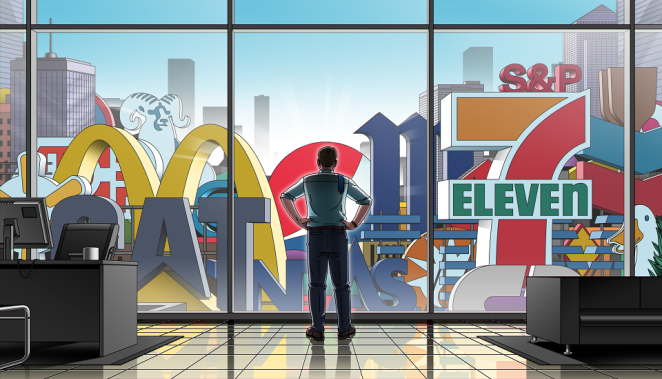
As Paul Aitkenhead, Head of Communications at Gamma warns, brands must own their data so AI sees them as authoritative. In parallel, agencies must sharpen their client focus. Jen Judd, Co-Founder & Managing Director at Animade, also notes that pitches overloaded with agency logos and history often miss the mark. Instead, they need to “get to talking about the client quicker and get rid of that logo wall.”
To help agencies prepare for what promises to be another year where the carpet continually gets pulled out from under us, this article will explore five key trends to embrace if they want win and retain clients in 2026.
Trend 1: Own Your Data, Own the Narrative
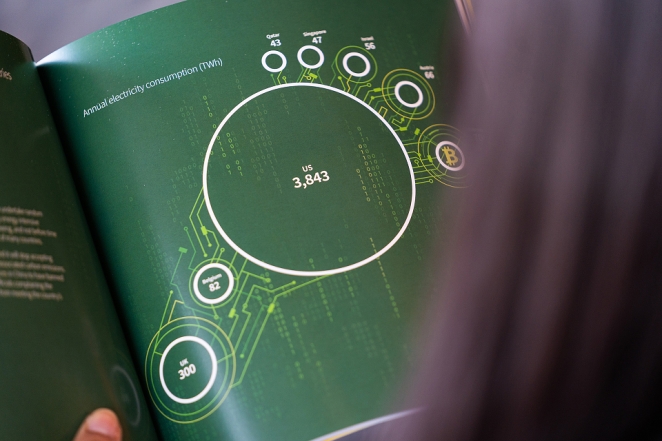
LLMs and AI-driven search are asking for more brand data while sending less traffic. Modern AI assistants (ChatGPT, Gemini, etc.) scan entire websites and structured data feeds to generate answers, often without a direct click. Brands must consolidate their owned data (website copy, product feeds, reviews, knowledge bases) into machine-readable form.
In fact, research shows first-party brand sites and listings supply the vast majority of AI answer citations. One recent Yext study found that 86% of AI citations come from brand-controlled sources like websites and review platforms, underscoring the power of owned data.
“A quarter of AI answers referenced brand websites and roughly 86% were informed by owned or brand-controlled sources,” notes Aitkenhead. Agencies that audit and optimise every owned signal – site pages, local listings, knowledge graphs – will dominate visibility in AI search. This requires a GEO (Generative Engine Optimisation) mindset: tailoring content by geography, intent, and context so that AI models surface it.
Structured, human-authored content is what AI answers continually cite. In practice, agencies should build data-architecture playbooks: mapping client entities (locations, products, FAQs) into centralised knowledge bases and ensuring consistent schema markup. For example, an agency might help an e-commerce brand publish rich product metadata and reviews so that Gemini or ChatGPT can cite it directly.
What to check today
Does your client have structured data (schema.org) on all key pages? Are business facts (hours, services, locations) consistently updated on site and directories? Is your content clean and organised for an AI to parse?
Build for tomorrow
Develop an “owned data playbook” – a centralised fact repository and feed system (for products, events, team bios) that AI can ingest. Assign geo-specific content where needed. Prioritise first-party resources (site, app, CRM data) as the single source of truth for brand answers.
Trend 2: Win Where Discovery Actually Happens

Traditional search engines no longer dominate how people begin their journeys. Younger audiences, especially Gen Z, increasingly start on social platforms and AI assistants. Recent data show only about half of 18–24-year-olds start their search journeys on Google, with over a quarter starting on TikTok or YouTube. Meanwhile, roughly 28% of Gen Z now initiate searches on ChatGPT.
In other words, 29% or fewer of Gen Z start on “traditional” search engines, as Aitkenhead observes. Agencies must therefore meet audiences in TikTok feeds, YouTube searches, Instagram Reels, and chatbots, not just on Google.
Content strategy must shift from “link-first” to “feed-first.” That means creating short-form videos, carousels, podcasts, or image posts that live natively on platforms and can satisfy AI queries in place.
For example, an Instagram Reel or a YouTube Short might answer a customer question directly, so that TikTok’s or Gemini’s AI may use it as a source. Measurement shifts too: instead of tracking click-outs, track in-platform engagement and “visibility” metrics (e.g. “featured on TikTok search” or “answered by ChatGPT”).
Agencies should update briefs and creative guides to prioritise these formats. Mini-checklist for “discovery readiness.”
Are your campaigns designed for vertical/short video and social graphic formats?
- Do you provide clear, factual content that AI can parse on each platform (titles, captions, transcripts)?
- Are you optimising for on-platform engagement (likes, saves, follows) as proxies for top-of-funnel success?
In short, winning agencies harness the new front-door platforms. They craft content for TikTok, YouTube, and AI Q&A, ensuring brand narratives are front-and-center where people discover new brands.
Trend 3: The Website’s Role Changes but Data Becomes More Critical
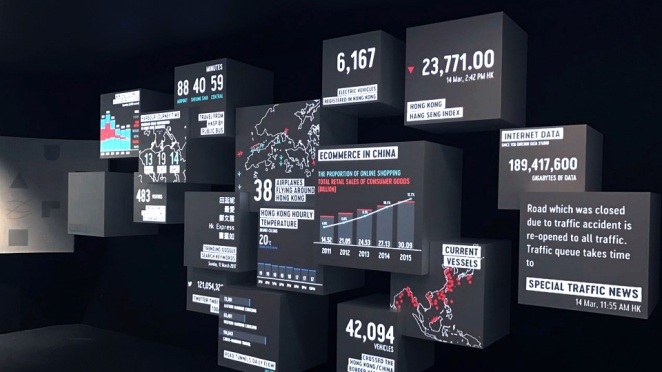
The corporate website remains the central source of truth, even if its direct traffic plateaus. AI agents still crave brand websites for authoritative info. The Yext survey referenced earlier found that first-party sites generated 44% of all AI answer citations, making them the single largest source. However, agencies no longer just tinker with aesthetics: they transform websites into data hubs.
That means prioritising backend investments over superficial tweaks. Resources shift from endless design revisions to improving site structure, data feeds, reviews, and scenario-based content (e.g. “How to use our product in situation X”).
For example, a mid-size e‑commerce brand might save on front-end upkeep and instead allocate budget to integrate its product database (price, specs, stock) via clean feeds and schema. This “AI-readable” content ensures the brand shows up in generative search answers. Aitkenhead advises focusing on “structured data, clean feeds, reviews, and scenario content AI can read.”
This aligns with best practice because visibility in AI search is driven by structured, consistent information distributed across the right sources. Agencies should audit client sites for data hygiene (no broken links or outdated info) and enrich pages with schema, review widgets, and AI-friendly FAQs.
In pitches and strategies, emphasise this data-readiness: show clients how your team will make their owned data “AI-visible.” The website is no longer just a billboard; it’s the authoritative knowledge base that feeds the AI ecosystem. Delivering on that is now table stakes.
Trend 4: Proof of AI in Delivery: Not Just Promises

Paul Aitkenhead: "Clients will ask how AI speeds the work and improves quality. Winning agencies will show concrete gains: 30 to 50 percent faster on research, drafting, and QA-heavy tasks, with a human strategic layer for ideas, voice, and sign-off. No jargon. Just workflow and evidence."
Simply claiming to be “AI-enabled” won’t cut it. Clients will demand concrete evidence of efficiency and quality gains. Agencies must show, don’t tell. This means tracking metrics on how AI has accelerated workflows: for instance, time saved on research, drafting, or QA tasks.
As a benchmark, a St. Louis Fed study found frequent generative-AI users report saving about 5.4% of their work hours (2.2 hours per 40-hour week). Forward-thinking agencies will aim even higher on key processes.
For example, an agency might measure how long it takes to produce a blog draft or ad copy with and without AI tools. The agency that can cite “we achieved 30–50% faster turnaround on research and first drafts” has hard evidence.
Transparency is critical: track factual accuracy rates (e.g. checking an AI draft against approved sources), editing time, and iteration counts. In client conversations, replace AI buzzwords with workflows. For instance: “With our new AI drafting process, we complete initial copy in 2 days (versus 4 before) and maintain 99% fact accuracy based on our reference deck.”
Building a case study or report demonstrating these gains will differentiate an agency. It aligns with what clients will ask: “Show me how AI makes things quicker and better.” Over time, agencies should develop internal dashboards or scorecards that log these KPIs (time saved, error rate, etc.) per project.
This data can be a powerful sales tool. As Aitkenhead notes, winning agencies will offer “the workflow and the evidence,” not just empty AI hype.
Trend 5: SLAs and Pricing Evolve with Transparency
With AI streamlining repeat tasks, agencies will move to metrics-based SLAs (Service Level Agreements). Deliverables will come with clear guarantees and accountability, rather than vague assurances. Clients will expect concrete promises (for example, “first draft delivered in 2 working days”) and the data to back them up.
Aitkenhead suggests setting expectations like “first draft in 2 days, 99% factual accuracy, <1% post-publish errors.” This reflects a broader shift: modern AI SLAs focus on outcomes (accuracy, response quality) over just uptime.
For agencies, this means codifying internal standards. For instance, if you claim 99% accuracy against an approved facts layer, you need a process to monitor and report it. If errors arise, have a remediation plan (e.g. update the source, flag in analytics).
Pricing will adjust accordingly: as AI lowers the cost of repeatable work, agencies can offer tiered models (e.g. standard vs. accelerated vs. enterprise packages), with each tier backed by specific metrics. Funds saved through efficiency should be reinvested into creative development or testing, not pocketed as margin. This transparent reallocation is itself a selling point – it shows clients the value of AI is fueling more experimentation, not just cheaper outputs.
In summary, future contracts between agencies and clients will read more like performance commitments. Instead of “we’ll try to get it done soon,” expect language like “deliverable X in Y days with Z% accuracy”. Agencies that embrace this clarity – backed by monitoring and exceptions reporting – will build trust and differentiate themselves.
Bringing It Together: A 2026 Readiness Framework

To prepare for 2026, agency leaders can use a simple framework built on the five trends above. For each dimension, audit “What to check today” and plan “What to build for tomorrow.” For example:
Owned Data Architecture & Signals
- Today: Inventory all client-owned content (site pages, feeds, profiles). Are facts consistent across sources?
- Tomorrow: Create a centralised knowledge hub (facts database, customer data platform) and implement schema markup. Integrate APIs to auto-update listings and review channels.
Discovery Strategy (Platforms + AI)
- Today: Map where each target audience begins their search (Google, TikTok, YouTube, ChatGPT, etc.). Do your content formats match those platforms?
- Tomorrow: Develop channel-first content (short videos, interactive stories, voice/Q&A formats). Align measurement (engagement, AI citation rates) with campaign goals.
Website & Structured Data Maturity
- Today: Check website health (speed, mobile-friendliness) and data completeness (product feeds, local info).
- Tomorrow: Shift budget to data engineering – complete product/service feeds, enable review widgets, build AI-consumable FAQ and scenario pages.
AI-Enabled Delivery & KPIs
- Today: Pilot AI in research/copy processes and time your workflows. Gather baseline metrics on speed and errors.
- Tomorrow: Formalise AI tools in project management. Set KPIs (e.g. X% faster research, Y% fewer edits) and embed them in your reporting.
Transparent SLAs/Pricing
- Today: Review your service agreements – are deadlines and quality levels explicit
- Tomorrow: Redesign contracts to include clear metrics (e.g. draft turnaround times, accuracy rates, defect limits). Build pricing tiers that fund creative innovation from AI gains.
By walking through this checklist, agencies can spot gaps and opportunities. It’s better to start experiments now (pilot an AI-driven workflow or revamp a data feed) and refine as you go.
Ed Barrett: "Have a look through three of your most recent pitches and check how long it takes you to get to talking about the client, their needs, and the project they’ve approached you about."
Challenges and Caveats
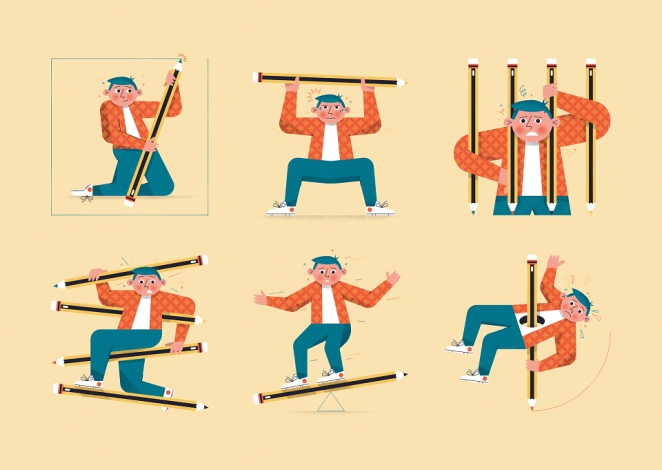
Embracing these trends is not without hurdles. Data privacy regulations (GDPR, CCPA) constrain how brand data can be used, so agencies must build trust and compliance into data architectures through a robust GRC solution.
Clients may resist change and legacy processes and silos can stall new AI-driven workflows. Technical debt on old CMS or CRM systems may limit how quickly you can implement structured data. Talent gaps are real: not every team has AI specialists or data engineers in-house.
To mitigate these, agencies should pursue partnerships (with AI platform vendors, data providers) and invest in up-skilling. Start with small, internal pilots before scaling to major clients. Use proof-of-concept projects to build client confidence. Managing expectations is key: emphasise incremental progress and stay flexible in attribution (attributing results becomes harder when AI intermediates discovery).
Finally, no single trend is a panacea. Agencies must adapt these principles to their size, sector, and client base. A boutique creative shop’s roadmap will look different from a multinational’s.
The common thread is a mindset shift: viewing AI and platform shifts as strategic levers rather than threats. It’s the agencies that treat these changes not as threats, but as strategic levers that will win in the new landscape.
How to Retain Clients and Win Clients in 2026
Looking ahead to 2026, agencies that succeed will be those that combine strategic foresight with operational clarity. A well-designed agency website, transparent value propositions and a readiness to respond to emerging business trends can act as a magnet to attract and retain clients.
As clients become more sophisticated (seeking partners who can deliver measurable impact rather than just creative output) agencies that prioritise data-driven strategy, trust and adaptability will stand out. Ultimately, winning and keeping clients in 2026 will require embracing change, delivering real value, and proving relevance in a rapidly shifting landscape.
How Creativepool Can Help You Win Clients
If this article proves anything, it’s that succeeding in 2026 will require new skills and partners as much as new strategies. Creativepool can connect agencies with the talent and teams to execute these trends:
Hiring a Digital Strategy Specialist
If you need in-house capability (e.g. an AI content strategist, data analytics expert, or platform-native content creator), Creativepool’s talent network is a great start. Search and contact specific professionals by filtering portfolios (e.g. “AI marketing,” “social media strategy,” “content analytics”). Already know what you need? Use the site’s filters to find top performers and reach out directly.
Post a Gig
For immediate needs, post a Studiogig detailing your challenge – whether it’s building a structured data feed, creating an AI-aware campaign, or optimising your TikTok outreach. Relevant specialists will pitch their ideas and solutions, often within hours. You choose the best fit and get moving fast.
Post a Job
Building a team around data-driven, always-on marketing? Create a job listing for roles like “AI SEO Strategist,” “Digital Discovery Specialist,” or “Data Integration Engineer.” Your listing appears on Creativepool’s Jobs Board, reaching candidates who live and breathe these skills.
Hiring a Studio to Lead Your Campaign
For projects that span strategy to execution (perhaps a cross-channel generative AI campaign or a data-driven brand story), search Creativepool’s directory of studios and agencies. Filter by specialty to find partners who know how to fit into feeds and platforms.
Post a Brief
Need ideas first? Submit a project brief on Creativepool outlining your goals (audience, channels, AI tools, budget). Agencies will pitch back with creative approaches and timelines. You’ll receive curated proposals showing how they’d tackle your vision with the latest trends in mind.
In short, Creativepool helps agencies build the right team and partnerships for the future. Whether it’s hiring that next-gen talent or finding a studio to guide your AI-powered content strategy, Creativepool’s network is a one-stop resource. Don’t wait to adapt – start your search today, and make sure your agency is armed to win in 2026 and beyond.