
There are few things more likely to produce vague nodding in the creative industries than the phrase “we’re speaking to a few agencies.” It sounds simple enough. Mature, even. Reassuringly normal. But it usually conceals a small mess of confusion.
What kind of agency? For what kind of problem? A brand agency? An ad agency? A social shop? A design studio that would rather die than be called a “content partner”? A production outfit that quietly does better ideas than half the strategy teams in London?
Or one of the increasingly common hybrids that does a bit of everything and introduces itself with the sort of neat confidence that only makes the underlying complexity more annoying?
That confusion is understandable, because the agency world no longer divides itself into tidy little boxes, assuming it ever really did. The old distinctions still matter, but they’re messier now. Clients want brand thinking and performance results. They want strategy, speed, systems, social instinct, cultural literacy and commercial clarity, preferably from one relationship and preferably without paying for three.
Agencies, meanwhile, have spent years reshaping themselves around digital transformation, platform fragmentation, AI, tighter budgets and a general market mood that can best be described as “do more, prove it faster, and don’t make it look expensive.”
Agency structures are changing because the work itself has changed, with hybrid teams, pod models and more fluid specialisms becoming the practical response to a more demanding market.
So this guide is not an attempt to pretend there are twelve perfectly sealed agency species wandering the business world in pure form. There aren’t. What there are, however, are recognisable agency types, distinct commercial logics and different strengths. If brands want to choose better partners, and if creatives want to understand where they fit, it helps to know what each kind of agency is actually for, where each tends to shine and where the labels start lying a bit.
Because the truth is that different types of creative agencies exist for a reason. They solve different problems, organise themselves differently, hire differently, measure differently and, at their best, bring different kinds of intelligence to the table.
The trick is not memorising the labels like some joyless industry taxonomy exercise. It is understanding the shape of the business problem before deciding which kind of agency can genuinely help solve it.
First, stop assuming every agency does the same job in a different typeface
One of the most persistent problems in client-agency relationships is the belief that agencies are interchangeable. A company needs “some creative support,” so it sends the same brief to a mix of brand consultancies, digital agencies, social specialists and full-service shops, then acts surprised when the responses feel radically different in cost, tone, ambition and usefulness. That is a bit like asking an architect, a builder, an interior designer and a civil engineer to all “sort out the house” and then ranking them based on who sent the nicest PDF.
The reason agencies feel so different is that they are built around different ideas of value. Some are designed to define what a brand means. Some are built to grow attention fast. Some are structured around media efficiency, some around design systems, some around production scale, some around cultural instinct, some around performance data, and some around the promise that they can combine several of those without collapsing into chaos. The category “agency” is therefore less a precise description than a broad commercial umbrella.
That is even more true now than it used to be. Modern creative agency structure increasingly depends on hybrid teams and clear role ownership rather than old, rigid departmental models. In other words, even the agencies themselves are less interested in behaving like the old stereotype of a mysterious creative temple upstairs and account management downstairs.
So before getting into the main types, it’s worth establishing a simpler principle. Agencies generally sit on a spectrum between three broad functions: defining brands, communicating brands and optimising brands. Most do some mix of all three. The question is which one they are structurally best at, commercially geared toward and culturally organised around.
That is usually what the label is trying, however imperfectly, to tell you.
Brand agencies: the ones clients call when the problem is bigger than the logo
Hackman Creative
Let’s begin with brand agencies, partly because they are often misunderstood and partly because they are where a lot of surface-level confusion starts.
A brand agency is usually brought in when the issue is not simply how something looks, but what it means, how it should be positioned and how it should behave coherently across touchpoints. Sometimes that leads to a new identity. Sometimes to a refresh. Sometimes to naming, tone of voice, architecture, proposition work or messaging systems. And sometimes, in the more honest moments, to a difficult conversation about whether the business has a strategy problem it was hoping to solve with typography.
The best brand agencies are not there to apply decorative seriousness to a PowerPoint deck. They are there to close the gap between business direction and market expression. They work upstream. They define the thing before it gets rolled out. That is why they often look expensive to people who are only counting deliverables. The client may think it is buying a visual identity. In reality it is often buying diagnosis, strategic clarity and a system that stops the business speaking in five voices at once.
This is also why brand agencies are sometimes unfairly accused of being lofty. In bad versions, that accusation is deserved. There are certainly consultancies out there that can turn a simple proposition into a fog of mystical language and very expensive off-white slides. But the good ones do something more commercially useful. They make decisions usable. They build clarity that can survive contact with product, comms, leadership, recruitment and growth.
They are particularly useful when a business is undergoing change: repositioning, entering a new market, merging, maturing, correcting drift or trying to escape category sameness. What they are often less suited to is being treated like an all-purpose execution engine once the strategy work is done. Some brand agencies will absolutely handle rollout and implementation beautifully. Some will very obviously wish you had hired somebody else for the monthly asset production.
That is not failure. It is specialism.
Advertising agencies: the ones built to make the message land loudly
JSR Agency
If brand agencies tend to begin with “what are we and how should we be understood?”, advertising agencies tend to begin with “how do we get people to notice, remember and act?”
Traditional ad agencies, or creative agencies in the classic sense, were built around campaign thinking. Big ideas. Platforms. Concepts. Creative territories. Work that could travel across channels and scale beyond a single placement. Even in a fragmented media world, that remains their core muscle: making communications memorable rather than merely present.
This is still a serious capability, despite the occasional attempt to act as though the age of platforms and campaigns has been replaced entirely by performance dashboards and endless content streams. In reality, strong campaign thinking remains one of the main ways brands create memory, distinctiveness and broader cultural relevance. The category may have changed shape, but the need for work people actually remember has not gone away simply because media buying got more granular.
What has changed is the environment around these agencies. The pressure to prove value more quickly is real, and the staffing and structural pressures across UK ad agencies are real too. Reporting this year on IPA figures, The Guardian noted major staffing declines in UK creative agencies and growing anxiety about AI being used as a blunt cost-cutting tool rather than a thoughtful creative aid. That context matters, because it is reshaping what advertising agencies are expected to be: faster, leaner, more integrated and more obviously commercial.
Still, the essential role of the advertising agency has not disappeared. It is there to transform strategy into attention-worthy communication. To dramatise a truth. To sharpen a proposition. To create memory structures. To connect brand and audience through ideas rather than just distribution.
Brands should hire this type of agency when the problem is communication power. When the strategy exists, the proposition is reasonably clear and the business now needs work that can travel, persuade and endure. They should probably not hire one when the real issue is a broken offer, a confused business model or a vague sense that “the brand feels a bit tired and finance hates marketing.”
That is not an ad problem. That is a bigger problem wearing a brief.
Full-service agencies: the ones promising fewer headaches and one throat to choke
Leopard Co
There was a time when “full-service agency” sounded like a neat answer to complexity. One partner. Multiple disciplines. Strategy, creative, media, digital, production, maybe PR, all under one roof or at least one commercial relationship. For clients, the appeal is obvious. Less fragmentation. Fewer introductions. Fewer people blaming each other over the edge of a status call.
The model still has appeal, especially for brands that want integration without managing five specialist shops and a diplomatic crisis every quarter. But the phrase “full-service” can mean wildly different things in practice. Sometimes it means genuinely integrated capability. Sometimes it means “we know some people and can probably sort it.” Sometimes it means a holding-company ecosystem. Sometimes it means a mid-sized independent that can handle a lot more than its positioning modestly suggests.
The good version of a full-service agency is not just a business that offers many services. It is one that can connect them properly. That means strategy flows into creative, creative into production, production into media logic, media into performance insight, and all of it into a coherent client relationship. The bad version is simply a place that has accumulated departments.
That distinction matters because clients often buy “full service” for convenience and then discover that convenience alone is not the same as quality. Breadth is useful, but only if the disciplines speak to one another rather than living in parallel universes united by a shared timesheet system.
These agencies tend to work best for brands that want ongoing support across multiple touchpoints and would rather build one deep relationship than coordinate a relay race of specialists. They are often particularly attractive to scale-ups, challenger brands and mid-market businesses that need breadth but do not necessarily want a roster the size of a government inquiry.
They are less convincing when they try to pretend they are equally world-class at everything. Nobody really believes that. Nor should they.
Marketing agencies: the broad commercial operators

The Artist as Photographer
Let’s start with one of the biggest omissions, because “marketing agency” is one of those labels everybody uses and almost nobody defines properly.
A marketing agency is usually broader than a traditional ad agency and more commercially generalist than a specialist creative studio. It tends to sit closer to growth, demand generation, customer acquisition, channel planning and measurable business outcomes. That may include campaign planning, email, CRM, content, paid media, SEO, automation, lead generation, funnel design, analytics and broader strategic support. In some cases, it may also include brand and creative work. In others, the creative is presentable but clearly not the native language.
That is the important distinction. A marketing agency is typically built to help a business grow through coordinated activity across channels. The best ones understand that creativity still matters inside that system. The weaker ones can drift into optimisation theatre, where everything is measurable, nothing is memorable and the brand slowly begins to sound like a polite robot in a fleece gilet.
Brands should look at a marketing agency when the challenge is broad-based growth rather than a single identity, campaign or production problem. If the question is how to improve pipeline, sharpen messaging across multiple touchpoints, connect strategy to channel execution and make marketing activity feel less fragmented, this kind of agency can be extremely useful. It is often the right fit for businesses that need joined-up commercial thinking rather than one isolated creative deliverable.
Creative agencies: the flexible middle ground

Paulo Pampolin
“Creative agency” is one of those labels that sounds precise until you actually start asking what it covers. In practice, it often sits somewhere between a classic ad agency, a brand-led shop and a modern integrated partner. It usually suggests an agency whose central value lies in ideas, communication, execution and creative problem-solving rather than in one narrow channel or discipline.
That flexibility is part of the appeal. A good creative agency can often move between campaign concepts, brand thinking, content systems, social ideas, launch work and broader communication challenges without needing the client to decode six different specialist titles first. It is often a useful term for agencies that do not want to be boxed into “advertising” alone, particularly in a market where the work now spills across channels and formats too fluidly for the old labels to hold neatly.
My recent article on agency structure makes much the same point: the strongest agencies increasingly work in hybrid models because the client problems themselves are no longer tidy enough for old departmental silos.
For brands, a creative agency is often the right call when the challenge is message, concept, expression and rollout rather than deep operational marketing or purely technical delivery. If the business knows it needs strong thinking and memorable execution, but does not want to over-specify the exact route too early, a creative agency is often where the conversation starts.
Brand strategy agencies: where the real question gets asked first

Untangld
A brand strategy agency deserves its own section because it is not quite the same thing as a general brand agency, even though the two overlap constantly.
A brand strategy agency is less about simply creating an identity and more about defining the logic underneath it. Positioning. Audience understanding. proposition design. architecture. narrative territory. category diagnosis. market differentiation. In blunt terms, these are the agencies you bring in when the business needs to answer “what do we stand for, why should anyone care, and how should we be understood?” before anyone starts arguing about colour palettes or launch videos.
That is why these agencies often feel more upstream. They are usually most valuable when a business is in flux: entering a new category, repositioning, fixing internal confusion, bringing structure to a messy offer, or trying to stop five senior stakeholders describing the company in five incompatible ways. They are not there simply to make the brand prettier. They are there to make it make sense.
For buyers, this distinction matters. If the organisation’s problem is fundamentally one of clarity, proposition or direction, then hiring a more execution-led partner first can create the expensive illusion of progress while leaving the real issue untouched. A strong brand strategy agency is often the right answer when the visual or campaign work is likely to fail unless the underlying thinking is sorted first.
Graphic design agencies: not superficial, just specific

Foxface Design
Graphic design agencies also deserve clearer treatment, because they are too often flattened into “the people who make things look good,” which is both lazy and commercially unhelpful.
A graphic design agency is typically focused on visual communication: identities, editorial systems, print, packaging, campaign design, typography, layout, visual assets, brand applications and all the practical ways a business shows up in the world. The strongest agencies in this space understand that graphic design is not cosmetic. It is how clarity, distinction and recognition get organised visually.
These agencies tend to be most useful when expression is central to the problem. A business may already know who it is and what it wants to say, but still need a partner who can turn that into a coherent visual system rather than a collection of disconnected assets. This is especially true in crowded categories where visual sameness quietly destroys attention.
For buyers, the question is usually whether the problem is one of strategic uncertainty or expressive inconsistency. If the strategy is reasonably settled but the brand looks generic, messy or fragmented, a graphic design agency may be exactly the right specialist.
Content agencies: built for rhythm, volume and usefulness

Thumbstoppers
Content agencies have become far more important as brands have realised, sometimes belatedly, that “we should be posting more” is not actually a strategy.
A content agency is usually built around planning, producing and distributing ongoing content across channels. That can include editorial, branded content, social content, video, articles, email, SEO-driven content, campaign extensions and always-on systems. The good ones do not simply create volume. They create structure, consistency and relevance. They help brands behave like publishers without sounding like they’ve swallowed a content calendar whole.
This matters because many businesses do not really need a giant one-off campaign first. They need a sustainable way to keep showing up intelligently, consistently and in formats their audience will actually engage with. That is where content agencies tend to shine. They are especially useful for brands that need thought leadership, audience education, search visibility, social presence or long-term nurture activity rather than one heroic burst of creative drama.
The danger, of course, is that “content” can become a euphemism for endless low-level output. So buyers should look carefully at whether the agency understands strategy, audience and channel behaviour, or whether it is simply promising industrialised publishing with a smile.
Production agencies: where the work becomes real at scale

Antiestático
Production agencies absolutely belong here, and not only because modern marketing would quietly fall over without them.
A production agency is there to make the work real. Film, photography, motion, animation, audio, shoots, editing, asset creation, rollout, versioning, adaptation, technical delivery. These agencies are often the point at which ambition meets logistics and somebody has to work out how the thing actually gets made without collapsing under timelines, formats and practical reality.
The best production agencies are not just service suppliers at the bottom of the chain. They often bring executional intelligence that shapes the feasibility and quality of the idea itself. In a world of fragmented channels and endless deliverable variations, that is not a minor capability. It is one of the reasons good work survives contact with reality.
Brands should turn to production agencies when the strategy and concept are reasonably defined and the challenge is now craft, delivery and scale. Some production partners also bring creative development and format strategy upstream. Some, frankly, are sharper than the teams briefing them. Either way, if the business needs high-quality execution across multiple assets or platforms, production expertise should not be treated as an afterthought.
Post-production agencies: the invisible specialists who often save the work

Absolute
Post-production agencies are one of those categories people forget until the project reaches the point where timing, polish, editing and finishing suddenly decide whether the work feels expensive, coherent or flat.
These agencies focus on what happens after the raw material exists: editing, grading, VFX, sound design, finishing, motion graphics, versioning, localisation, delivery specs and all the detailed technical and creative work that turns captured material into something ready to go live. In some sectors, they are central from the outset. In others, they are brought in late and expected to rescue timelines, quality and consistency in one heroic pass.
For brands, post-production specialists matter when audiovisual quality is central, when campaigns require many cutdowns and adaptations, or when a project’s success depends on craft that the original production team is not set up to handle end-to-end. They are not always the first agency a buyer thinks of, but they are often one of the clearest examples of why specialist capability still matters.
Music agencies: sound is branding too
Jackleg | Music & Sound Design
Music agencies are another specialist category that gets overlooked by people who still think branding is mostly visual and campaigns are mostly visual too.
A music agency can cover sonic branding, composition, licensing, supervision, audio identity, original music, artist partnerships and broader sound strategy. That might mean a brand mnemonic, a score for a campaign, a music-led activation, a playlist ecosystem, licensing support or a longer-term sonic identity system that helps the brand feel recognisable beyond the screen.
That may sound niche until one remembers how much branded experience now happens through film, digital, retail, events, social and audio environments where sound carries emotional weight faster than a line of copy ever will. For the right brand, a music agency is not a flourish. It is a serious part of building memory, tone and emotional distinctiveness.
Buyers should think about music agencies when sound is strategically important rather than merely decorative: launches, entertainment partnerships, sonic identity, experiential work, branded content and campaign worlds that need a recognisable emotional signature.
Events agencies: where the brand leaves the screen
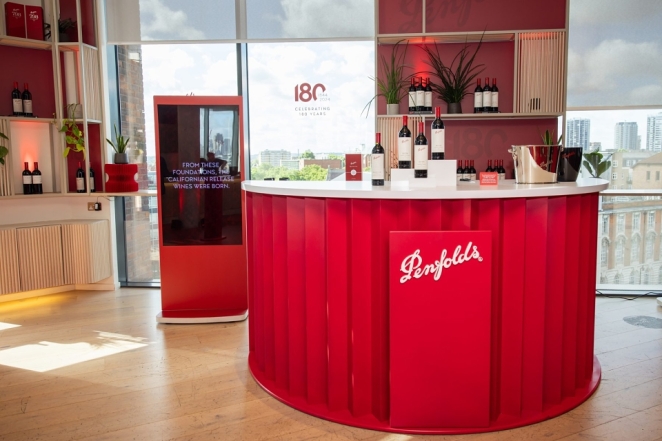
A*live
Events agencies deserve a proper place in the guide because live experience remains one of the clearest ways a brand can stop talking about itself and start being encountered directly.
An events agency typically works across activations, live experiences, launches, conferences, exhibitions, experiential marketing, installations, brand moments and all the planning, logistics and creative coordination those formats require. The strongest ones combine spatial thinking, operational discipline, audience understanding and a sharp sense of what will actually feel meaningful in person rather than simply photograph well afterwards.
These agencies are especially useful when the business needs audiences to experience the brand physically, socially or emotionally in real time. Product launches, industry events, immersive activations, cultural moments, employer brand experiences and community-building exercises often benefit enormously from specialist live expertise. That is particularly true when the brief requires not just spectacle, but clear purpose and a real understanding of audience behaviour in physical space.
For brands, this is often the right category when the goal is encounter rather than exposure.
Digital agencies: born online, now trying not to sound like 2014
AKQA
The digital agency label has suffered a bit from the same problem as “innovation consultancy” and “creative technologist.” It was once exciting, then became generic, then became so broad that it stopped clarifying much at all.
Still, the underlying type remains very real. Digital agencies are generally built around digital products, digital experiences, digital marketing systems or digital growth. That can include websites, ecommerce, UX, product design, platform development, CRM journeys, email systems, app experiences, content ecosystems, paid social, SEO, digital campaigns and any number of combinations thereof.
The best digital agencies understand that digital is not just a channel. It is often the place where the brand is most tangibly experienced. A website is not merely a set of pages. An ecommerce flow is not merely conversion plumbing. UX is not a decorative layer for someone else’s strategy. These are commercial environments, and good digital agencies tend to think in systems, journeys and interactions rather than simply assets.
They are especially useful when the thing that matters most is user behaviour. When the question is not just “what should we say?” but “what should people do, where do they drop off, what gets in the way, what experience supports the business outcome?” That is where digital agencies often outperform more classically campaign-led shops.
The problem is that “digital” is now so universal that the label can start to feel like saying “electric restaurant.” Most agencies do digital things. The real distinction lies in whether digital is their native operating logic. Can they build, optimise and think through product and experience as well as messaging? If yes, the label still means something.
If not, it is just a slightly dated way of saying “we also know what a website is.”
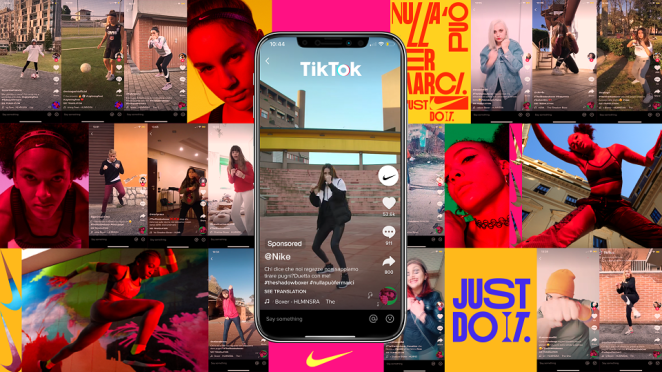
Social agencies: the ones who understand that platforms are not just mini billboards
Clockwork Media
Social agencies have had to fight a peculiar reputation problem. On one side, they are sometimes underestimated by older marketing brains who still treat social as an add-on, a junior channel or a place where brands go to post lightly patronising captions about national days. On the other, they are sometimes oversold by people who confuse platform fluency with strategic depth.
The reality is that good social agencies are useful because they understand platform behaviour, content dynamics, creator ecosystems, community logic and cultural timing in ways generalist agencies often do not. They know that what works on TikTok is not simply “a shorter ad.” They know that comment sections, trends, reaction formats, edit styles and creator collaborations are not cosmetic. They are part of the communication itself.
This matters because a lot of brands still treat social as distribution for ideas made elsewhere. Sometimes that works. Often it leads to elegant campaign thinking being dragged into spaces where it feels too polished, too slow or too self-important to survive.
A strong social agency can help a brand behave less like it is politely visiting the internet and more like it understands where it is. That might mean creator partnerships, fast-turn content systems, reactive formats, channel strategy, community management or platform-native campaigns. It may also mean telling a client that its idea is simply too stiff to live in the places it wants attention from.
These agencies are strongest when the brand genuinely needs cultural presence, channel fluency and a live relationship with audiences. They are weaker when clients expect them to also solve deep brand-positioning problems they were never brought in to define.
Again, that is not a flaw. It is about matching the agency to the problem instead of expecting every specialist to become a miracle worker by lunchtime.
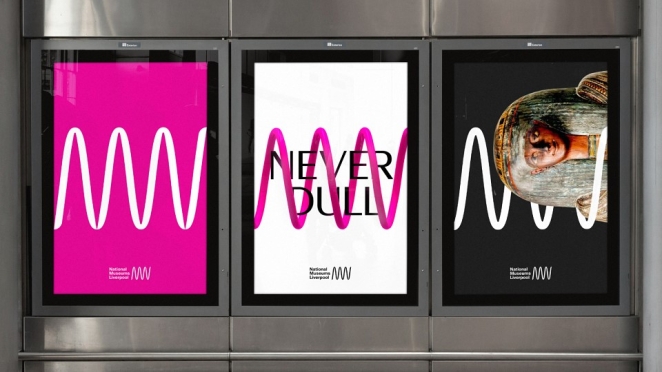
Design studios: the ones who know form is not superficial
SomeOne
Design studios often suffer from the opposite problem. Where social agencies are sometimes underestimated as “just making posts,” design-led studios are sometimes underestimated as “just making it look nice.” Both misunderstand what specialised creative thinking actually does.
A serious design studio is often concerned with form as strategy. Identity systems, editorial design, packaging, spatial thinking, motion, typography, interface design, art direction, visual storytelling. In the best studios, all of that is connected to meaning, distinction and behaviour. They do not merely make things attractive. They make them legible, ownable and culturally precise.
This is especially visible in sectors where visual sameness becomes a tax on attention. When categories begin to look like they have all been moodboarded from the same Pinterest graveyard, strong design becomes commercial differentiation, not aesthetic indulgence.
Design studios often shine when the business knows that expression is central to the challenge. A new identity. A packaging system. A visual world. A publication. A motion language. A spatial experience. Something where the execution is not downstream from the strategy but part of how the strategy becomes real.
Some will also do strategy beautifully. Some are quietly excellent at it. Others would prefer not to be dragged into rooms where six stakeholders want to debate business architecture in abstract nouns. That is worth knowing before commissioning them.
The important thing is not to confuse “design-led” with “surface-level.” Good design agencies often understand something many businesses forget: people do not encounter brands as strategy documents. They encounter them as experiences, signals and impressions. Design is one of the ways meaning gets felt before it gets explained.
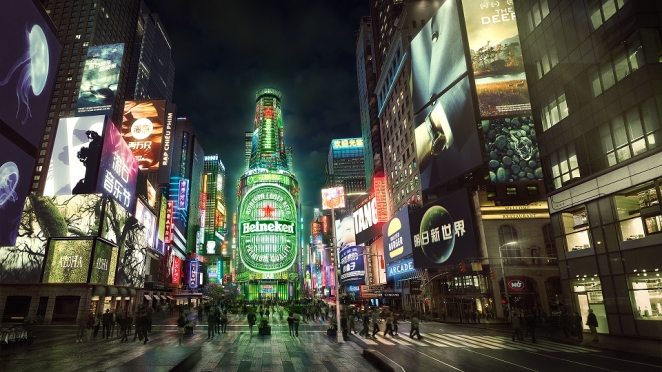
Production agencies and content studios: where the idea becomes real, repeatedly
Taylor James
Production companies, content studios and production-led agencies occupy a particularly interesting place in the ecosystem because they are often treated as downstream suppliers when in practice many have serious creative intelligence of their own.
Traditionally, production shops were the people who made the thing. The film, the animation, the stills, the edits, the motion system, the rollout assets, the craft. Increasingly, though, many operate more like creative partners, especially in a market that now demands more content, more versions, more speed and more technical versatility than the old campaign model was built to handle elegantly.
That makes them invaluable when the real challenge is scalability and executional quality. A brand may have the strategy and even the campaign platform in place, but still need a partner who can actually produce work across formats, markets and timelines without the whole operation turning feral. That is where production-led agencies and content studios come into their own.
They are also central to one of the less glamorous truths of modern marketing: ideas do not only fail because they are bad. They also fail because they are impossible to scale, too expensive to adapt, too slow to execute or too thin to survive versioning. Production intelligence matters. Increasingly, it is part of the idea, not merely what happens afterwards.
These partners are strongest when the client already knows what must be made and now needs quality, consistency and delivery discipline. Some also offer concepting, editorial direction and creative development upstream. Some, frankly, have better instincts than the people supposedly giving them the brief.
The industry probably ought to admit that more often.
Media agencies: not always seen as “creative,” still central to whether creative works
WIREWAX
Media agencies do not always get welcomed into “creative agency” conversations with open arms, mostly because some people are still haunted by an outdated split between the people who make the work and the people who place it. That split has always been less useful than the industry sometimes pretends.
Because here is the awkward truth: media thinking changes the shape of creative success. Reach, frequency, context, sequencing, channel mix, attention quality, timing, audience logic, platform behaviour. These are not merely post-idea concerns. They affect whether the work lands, how often it is seen, in what state of mind, and what sort of effect it has a chance of generating.
That does not make media agencies “creative agencies” in the conventional sense, but it does make them crucial agency types in the wider creative-commercial system. Especially now, when measurement pressure, platform complexity and media fragmentation mean brands cannot sensibly separate communication quality from communication delivery.
The best media agencies today are not just placement experts. They increasingly claim strategic influence over effectiveness, audience understanding and channel design. The less good ones are still doing maths around mediocre assumptions and calling it optimisation. As ever, the label tells you something, but not everything.
Clients tend to need media specialists when the challenge is scale, efficiency, performance, planning complexity or investment allocation. They need them even more when creative is being judged harshly without anyone examining whether the media conditions gave the work a fighting chance in the first place.
PR and communications agencies: where reputation, influence and narrative get organised

The Romans
PR agencies sit in an interesting overlap space. They are not always thought of as part of the “creative agency” family, yet many absolutely are, especially as earned media, founder narrative, corporate storytelling, reputation management, cultural moments and influence strategies have become more intertwined with creative communication.
A strong PR or communications agency is usually not there just to get coverage. It is there to shape narrative and manage how an organisation is understood by different publics. That can involve media relations, thought leadership, crisis comms, launches, partnerships, campaigns, cultural positioning and a lot of careful work around timing, framing and credibility.
Where advertising agencies are often at their best when the brand wants to say something loudly, PR agencies often come into their own when the question is who needs to hear it, who needs to repeat it and what makes it believable. That is a different capability. Sometimes it overlaps beautifully with campaign thinking. Sometimes it sits in productive tension with it.
The smartest clients understand this. The less smart ones brief PR agencies as though they are simply free media vending machines and then act wounded when reality fails to cooperate.
These agencies are most useful when trust, reputation, influence or external narrative are central to the business challenge. They are also often brought in when something has gone wrong, at which point everyone suddenly rediscovers the value of communications strategy they were trying not to pay for six months earlier.
A timeless industry tradition.
Specialist agencies: the ones who do one thing very well and therefore keep getting hired
AnalogFolk
Then there are the specialists. Shopper agencies. Employer-brand agencies. Healthcare agencies. B2B agencies. Packaging specialists. Motion shops. Naming consultancies. CRM specialists. Experiential agencies. SEO-focused content agencies. Influencer agencies. Gaming agencies. Sustainability communications outfits. Internal comms specialists. Employer-value-proposition experts. Search shops. Cultural strategy boutiques. On and on it goes.
Some people still speak about specialists as though they are narrower, and therefore somehow less strategically serious, than bigger integrated agencies. That is usually lazy thinking. A good specialist agency often possesses something many broader agencies lack: concentrated pattern recognition. It knows the regulations, behaviours, risks, formats, buyer logic and practical constraints of a particular domain. It has seen the boring mistakes repeatedly and knows how not to make them again.
The danger with specialists is not that they are too niche. It is that clients sometimes hire them for problems outside their native lane and then wonder why the chemistry feels off. A healthcare specialist may not be the right partner for a mass-market cultural rebrand. A brilliant naming agency may not be the right choice to run your entire go-to-market system. A performance-led ecommerce shop may not be the place you go first for rethinking brand purpose.
But when the problem is genuinely specialist, these agencies often outperform generalists for the exact same reason specialists outperform generalists everywhere else: they are built for the terrain rather than visiting it.
The hybrid era: why the labels are blurrier now

Studio Nuts
Now for the awkward bit. All of the categories above remain useful. None of them are clean anymore.
The modern agency market is full of hybrids: brand-and-digital agencies, design-and-strategy studios, social-and-production shops, PR-and-content outfits, creative consultancies with media brains, production companies doing concepting, agencies with in-house creator networks, specialist shops expanding into broader advisory, and small independents built around pods that combine strategy, creative, client leadership and makers in one tight team.
This is not just a branding fad. It is a response to how clients now buy. Businesses do not experience their problems in neat agency-shaped chunks. A company may need repositioning, a better site, sharper messaging, a content system, launch communications and a paid campaign in the same quarter. Unsurprisingly, it starts looking for partners that can either connect those things or at least understand how they connect.
Clearer ownership, cross-functional pods and more flexible operating models are increasingly necessary if agencies want to grow without snapping. The hybrid model therefore makes a lot of sense. It can reduce fragmentation, improve continuity and make the work feel less like a relay race between people using different strategic languages. The risk, obviously, is dilution. Every agency wants to look flexible and full of modern range. Not every agency can genuinely do that without becoming vague.
So when evaluating a hybrid agency, the useful question is not “Do they offer many things?” It is “What is their centre of gravity?” What do they fundamentally understand best? What kind of problem are they naturally structured to solve? What do they do brilliantly enough that the surrounding services feel like coherent extensions rather than opportunistic add-ons?
That question tends to cut through a great deal of positioning fluff very quickly.
Big networks, independents and boutiques: size changes the experience as much as the discipline

Momentum Worldwide
Agency type is not only about capability. It is also about scale.
A global network agency and a ten-person independent design studio may both call themselves creative partners, but they will behave very differently. One may offer geographic reach, layered resource, specialist depth and institutional process. The other may offer closeness, speed, founder-level attention and a more unified point of view. Neither is automatically better. They simply solve different operational as well as creative problems.
Large agencies can be brilliant when scale, governance, procurement logic, multinational rollout or broad roster support really matter. They can also be maddening when the client ends up buying senior credentials and receiving middle-management choreography.
Smaller agencies and boutiques often win on sharpness, chemistry and craft. They can feel more committed, more direct and less diluted. They can also struggle if the client expects 24-country rollout, complex procurement dance routines or endless service breadth for one modest fee.
This is why smart clients should not ask only “What kind of agency are they?” but also “What kind of relationship do we actually need?” Do we need reach? Focus? Senior access? Volume? Specialism? Strategic reinvention? Daily responsiveness? Production muscle? Organisational comfort? Honest challenge? A lot of disappointing agency relationships start because one side bought intimacy and the other sold infrastructure, or vice versa.
So which kind of agency should a brand actually hire?

Sleek Events
Annoyingly, the answer is still: it depends. But it depends in a more useful way than people usually mean.
- If the problem is identity, positioning or clarity, a brand agency or brand strategy agency is usually the strongest place to begin.
- If the problem is communication power, campaign thinking or memorability, a creative agency or advertising agency is often the better fit.
- If the challenge is broader growth, channel coordination and measurable marketing activity, a marketing agency may make more sense.
- If the business needs a strong visual system, packaging, editorial design or brand application work, a graphic design agency is often the right specialist.
- If the issue is ongoing publishing, search visibility, audience education or always-on content, a content agency is likely more useful than a one-off campaign shop.
- If the strategy exists and the problem is now execution, rollout or asset scale, production and post-production partners become central.
- If sound, sonic identity or music-led storytelling matter, music agencies can play a much bigger role than many buyers initially assume.
- If the audience needs to experience the brand in the real world, event agencies are often the right answer.
And if the business is still unsure which route fits, that uncertainty is usually a sign that it should not start by guessing.
That's partly why Creativepool’s hiring routes are useful here. Brands can either search and contact agencies directly through the directory, or post a free studiobrief and receive responses from vetted agencies matched to the brief. Creativepool describes studiobriefs as a free, no-obligation service that helps brands reduce the friction and uncertainty of finding the right supplier, with brief development, curation and direct contact built in.
The real point of understanding agency types
Deorwine Infotech
In the end, the reason to understand the different types of creative agencies is not to build an elaborate glossary for its own sake. It is to avoid buying the wrong kind of help.
Because agencies are not interchangeable. They solve different problems, structure their talent differently, price differently, think differently and define value differently. Some build brands. Some communicate them. Some optimise them. Some bring them to life in motion, sound or live space. Some do several of those things well. Some say they do several and very obviously should not.
The brands that choose better tend to start from the problem rather than the label. They get clearer on whether they need strategy, expression, campaigns, content, production, experience, growth or specialism, and then find a partner built for that terrain. Do that, and the agency search becomes a lot less foggy, a lot less jargon-drunk and a lot more commercially useful.
Which is generally preferable to emailing six wildly different shops the same brief and then acting surprised when the answers arrive from six different planets.