
Creative people are often remarkably good at making the work and strangely reluctant to explain it.
We upload the finished film, identity, illustration, website or campaign, add the client’s logo and assume the brilliance will radiate naturally from the screen. Perhaps we include a sentence explaining that the client wanted to “disrupt the category” and that we responded with “a bold, integrated solution”.
Then we wait for the awards, enquiries and increasingly frantic emails from recruiters.
The problem is that work rarely speaks for itself. It mutters. Occasionally, it points vaguely towards a mood board.
The person viewing your project doesn’t know what the original brief looked like, what you personally contributed, which constraints shaped the idea or why the finished result was difficult to achieve. They can see what you made. They can’t necessarily see the intelligence, judgement, persuasion, experimentation and occasional professional miracle required to make it.
That’s what a case study is for.
A strong case study isn’t an extended caption or a chronological diary of everything that happened. It’s a carefully structured argument. It shows that you understood a problem, made deliberate decisions and produced something valuable as a result.
This matters whether you’re a freelancer trying to win clients, an agency pitching for new business, a creative looking for a job or a team preparing an award entry. In every case, the reader is asking roughly the same question:
Why should I believe you could do something valuable for me?
Good case study writing answers that question without sounding like it’s answering that question. It combines proof with personality, detail with pace and confidence with enough honesty to feel credible.
Here’s how to write a case study that people will actually read, understand and remember.
Why Great Case Studies Stand Out
Alex Dring
A portfolio shows what you’ve made. A case study explains why it matters.
That distinction is more important than it might initially appear. Two people might display the same campaign, but the person who can explain the problem, insight, decisions and outcome will appear more strategically capable than the person who simply uploads six immaculate mock-ups.
The work hasn’t changed. The viewer’s understanding of it has.
This is why our guide to creating pitch-ready portfolios recommends framing projects with context, clearly identifying your contribution and providing evidence of outcomes. One sharp, well-explained project can reveal more about your ability than six beautiful pages that leave the reader playing an unwanted game of professional detective.
A great case study performs several jobs at once. It demonstrates your craft, reveals your thinking, shows how you respond to constraints and gives the reader evidence that you can produce more than an attractive final image.
It also makes collaborative work easier to assess. Most commercially significant creative projects involve several people. A finished campaign might have passed through strategists, creatives, designers, directors, developers, producers, account teams, researchers and a client stakeholder who became unexpectedly passionate about the exact curvature of one letter.
Without context, nobody knows what you did.
That uncertainty is dangerous because readers rarely fill gaps in your favour. If your contribution is unclear, they won’t necessarily assume you masterminded the whole project. They may assume you changed the button colour on page seven.
Research by the Nielsen Norman Group involving 204 UX professionals responsible for hiring found that reviewers wanted to understand the candidate’s role, process, constraints and ability to produce value. It also found that hiring managers rarely read an entire portfolio word for word, making clarity and scannability essential.
The strongest case studies therefore work at two speeds. A hurried reader can scan the headline, role, challenge, solution and results in under a minute. A genuinely interested reader can continue into the detail.
That isn’t “dumbing down” your work. It’s respecting the person you want to persuade.
What to Prepare Before You Write a Case Study

Flying Object
The worst time to reconstruct a project is eighteen months after it ended, when three people have left the company, the analytics dashboard has been replaced and nobody can remember why the client rejected the first route.
Good case studies begin with good evidence. Ideally, you should start collecting that evidence while the project is still active.
Choose the right project
The best project for a case study isn’t automatically the one with the largest client logo.
Choose work that helps you make a specific argument about your capabilities. If you want more brand strategy projects, select a case that reveals strategic thinking. If you want to direct films, show how you shaped the story, performance and production. If you’re targeting UX roles, prioritise a project that demonstrates research, iteration and measurable improvement.
Relevance usually matters more than fame.
A modest project in which you solved a difficult problem can be more persuasive than a global campaign where your contribution was relatively small. The famous logo might attract the first click, but substance has to survive the second.
A useful project usually contains some combination of a meaningful challenge, a clear personal contribution, interesting constraints, visible creative decisions and a credible outcome. It doesn’t have to be your most commercially successful work, but it should allow you to demonstrate something you’d like to be hired to do again.
Side projects can work too. Our guide to using side projects to get hired explains how self-initiated work can demonstrate initiative, specialist interests and relevant capabilities. The important thing is to label speculative work honestly. Don’t invent a client, audience response or set of miraculous conversion figures for a campaign that never left your laptop.
Decide who the case study is for
A case study written for an award judge shouldn’t be identical to one written for a prospective client.
A recruiter may want to understand your role, skills and ability to work within a team. A client will probably care more about commercial relevance, reliability and results. An award judge needs enough context to assess originality, execution and impact against a particular category.
The underlying facts remain the same, but the emphasis changes.
Before you write, complete this sentence:
After reading this case study, I want this audience to believe that…
Perhaps you want them to believe that you can simplify complex financial products, build distinctive identities for challenger brands or deliver ambitious work on an unforgiving budget.
That sentence becomes your editorial filter. If a detail doesn’t support it, the detail probably doesn’t need half a page.
Gather the raw material
Collect the original brief, proposal, research, sketches, prototypes, early routes, production stills, rejected ideas, launch materials, client feedback and performance data.
You won’t use everything. That isn’t the point.
Having the material allows you to select the moments that best explain the project. Without it, case study writing tends to become a polished but generic summary assembled from memory.
Try to establish:
- What problem initiated the project?
- What did the client or audience need?
- What was your specific role?
- Who else contributed?
- What constraints affected the work?
- Which insight or decision changed its direction?
- What was actually delivered?
- What happened afterwards?
- Which claims can be supported?
Ask collaborators what they remember too. The moment you considered an unremarkable production detail might have been the decision that saved the entire project.
Secure permission and check confidentiality
Never assume that because work has launched publicly, every part of its development can be shared.
Contracts and non-disclosure agreements may restrict client information, research, financial details, prototypes or unpublished creative routes. Ask for permission where necessary and agree which results can be disclosed.
If exact commercial figures are confidential, the client may allow percentages, indexed results or broader wording. “Sales increased by 18%” may be acceptable even when the revenue figure isn’t. In other cases, you may need to anonymise the client or describe the challenge without showing sensitive material.
Our guide to building a strong creative portfolio offers further advice on redacting, anonymising and presenting work responsibly when confidentiality applies.
Protecting client information won’t make your case study weaker. It shows professional judgement, which is generally considered a useful quality in someone you might trust with more client information.
Write the project in one sentence
Before tackling the full case study, summarise it using this formula:
We helped [audience or client] achieve [objective] by [central idea or approach], resulting in [outcome].
For example:
We helped an independent food brand attract younger shoppers by turning its sustainability credentials into an irreverent packaging and social campaign, helping the first production run sell out three weeks ahead of forecast.
This sentence may not appear in the finished version, but it forces you to identify the story.
If you can’t explain the project in one reasonably controlled breath, you probably haven’t yet decided what the case study is about.
How to Write a Case Study Step by Step

David Graham
There’s no law requiring every case study to use identical headings. However, most strong examples contain the same essential information: context, challenge, insight, response, execution and outcome.
The precise order can change. The need for clarity doesn’t.
1. Lead with the point
Don’t begin with 400 words about the history of the client.
Begin with the project.
Your opening should tell the reader what changed, why the work was needed and what makes it worth their attention. If there’s a strong outcome, consider placing it in the headline or introduction.
“Brand identity for North & Co” identifies the deliverable.
“How we helped North & Co turn a local following into national retail growth” identifies the value.
The second gives the reader a reason to continue.
Avoid headlines that depend entirely on campaign slogans. The line might be delightful once the project is understood, but meaningless before then. You can retain the campaign name while adding context:
“Waste Not. Want Another”: Making Sustainable Snacks Feel Irresistible
Now the reader gets both personality and information.
2. Provide a project snapshot
Near the beginning, make the essential facts easy to find. Include the client or organisation, sector, timeframe, your role, collaborators and principal deliverables.
For example:
Client: Pantry Club
Project: Brand positioning, packaging and launch campaign
Role: Lead strategist and copywriter
Team: Creative director, designer, illustrator, photographer and social agency
Timeline: Eight weeks
Deliverables: Positioning, verbal identity, packaging copy, OOH and social content
This prevents confusion later and helps readers decide whether the project is relevant to them.
It also establishes honest attribution. Be precise about what you led, supported or delivered. “We created” becomes suspiciously foggy when twelve agencies and a production company appear in the credits.
As explored in our guide to hiring a copywriter, the strongest portfolios explain the problem, audience, role and constraints rather than merely displaying the final output.
3. Explain the challenge
A case study needs tension, but it doesn’t need a villain.
Explain what wasn’t working, what needed to change and why the project mattered. Be specific enough that the reader understands the difficulty.
“The brand wanted to increase awareness” is technically a challenge, in the same way that “the football team wanted to score more goals” is technically a strategy.
What kind of awareness? Among whom? In which market? Why was it low? What prevented growth? How would improvement be recognised?
A stronger version might be:
Pantry Club had built a loyal following among environmentally conscious shoppers, but research showed that its worthy messaging made the product feel more like a moral obligation than an enjoyable snack. The launch needed to broaden appeal without abandoning the brand’s sustainability credentials.
Now the creative problem has shape.
Include the stakes where relevant. Perhaps the client was entering a crowded market, responding to declining engagement or trying to unify several acquired brands. The reader needs enough context to understand why an obvious solution wouldn’t have been sufficient.
4. Introduce the constraint
Constraints make decisions meaningful.
Mention a limited budget, short production window, legacy technology, regulatory requirement, unusual format, stakeholder complexity or lack of audience familiarity if it genuinely affected the work.
Without constraints, every project appears to have taken place in a frictionless creative utopia where budgets were infinite and nobody from legal ever opened the document.
Don’t present constraints as excuses. Explain how they shaped the response.
A four-week deadline might have required a modular production system. A small media budget might have inspired a highly targeted activation. Accessibility requirements might have improved the clarity of the entire experience.
The constraint should lead somewhere.
5. Reveal the insight
The insight is the point at which information becomes direction.
It might emerge from research, customer behaviour, cultural observation, stakeholder interviews or an unexpected feature of the product. Whatever its source, it should explain why your creative response made sense.
Avoid dressing an ordinary observation in ceremonial language.
“People like food that tastes good” isn’t an insight. It’s the continued basis of the food industry.
“Environmentally aware shoppers supported the brand’s mission but felt its communications made pleasure sound irresponsible” is more useful. It exposes a tension the creative work can resolve.
If formal research wasn’t available, say how the conclusion was reached. You might have analysed competitors, interviewed customer-facing staff, reviewed comments, studied search behaviour or tested early ideas with a small audience.
Transparency is more credible than pretending every instinct arrived carrying a clipboard.
6. State the central idea
Don’t bury the idea beneath a production diary.
Give it a clear sentence of its own. Explain how it answered the challenge and connected to the insight.
For example:
We repositioned sustainability as a source of appetite rather than sacrifice, building the launch around the line “Waste Not. Want Another.”
Then unpack it.
A reader should be able to distinguish the idea from its executions. “We made a film, six social posts and some posters” is a list of outputs. It isn’t a creative proposition.
7. Show the decisions that mattered
Process is valuable when it explains the work. It becomes exhausting when it merely proves that work occurred.
You don’t need to show every Post-it note, wireframe, script revision or logo that briefly existed on a Tuesday afternoon. Select the moments that reveal judgement.
Show how research changed the brief, why one route was chosen, how audience testing altered the experience or how a production limitation produced a better solution.
Rejected ideas can be valuable if they demonstrate discernment. Include them when the comparison helps the reader understand why the final direction was stronger.
Your creative process probably wasn’t perfectly linear. Very few are. Don’t fabricate a suspiciously smooth march from brief to revelation to standing ovation. It’s more credible to acknowledge that an early route failed, feedback exposed a weakness or the team needed to rethink an assumption.
The aim isn’t to make yourself look infallible. It’s to show that you can respond intelligently when reality gets involved.
8. Use visuals as evidence
Images shouldn’t decorate the case study. They should advance it.
Use early sketches to reveal exploration, side-by-side comparisons to show change, annotated screens to explain decisions and final applications to demonstrate the breadth of the system.
Caption them. A picture may be worth a thousand words, but it can still benefit from twelve explaining why we’re looking at it.
Our advice on how to talk about your work recommends using process imagery, mock-ups and before-and-after comparisons to make creative decisions easier to understand.
Put the strongest visual near the top, but don’t reveal so little context that it becomes meaningless. The ideal sequence lets the reader enjoy the work while understanding what each image proves.
Video should be edited with similar discipline. A two-minute case film shouldn’t require 45 seconds of atmospheric city footage before acknowledging the existence of the project.
9. Explain the execution
This is where you show how the central idea became a real piece of work.
Discuss the most important channels, formats, production decisions or system components. Explain how they worked together and how the execution retained the original strategic intent.
Avoid simply listing deliverables again. If the campaign moved across packaging, OOH and social, explain how each format played a distinct role. If you created a design system, show how its rules allowed different teams to apply it consistently.
Give craft the attention it deserves, particularly when it solved a genuine problem. A technically demanding shoot, bespoke typeface or innovative production method may be central to the project. Just connect the craft to the outcome rather than treating technical complexity as automatically impressive.
10. Close with credible results
Results complete the argument.
Use measurable outcomes when they exist: sales, conversion, enquiries, engagement, retention, audience growth, completion rates, donations, applications, media coverage, cost savings or reductions in production time.
Give numbers enough context to mean something.
“Engagement increased by 200%” sounds impressive until the reader discovers that three people became nine.
State the measurement period and comparison where possible:
During the six weeks after launch, organic social engagement was 64% higher than the previous campaign average.
Separate causation from correlation too. If several activities occurred simultaneously, don’t claim your redesigned button personally delivered the company’s entire annual growth.
Awards guidance for the Creativepool Annual also encourages entrants to cover the brief, concept, execution and results while keeping the story clear and relevant to the work being judged.
11. Add a reflection
A short closing reflection can show maturity, particularly in a personal portfolio.
What did the project teach you? What would you change? Did the work lead to a second phase, a longer relationship or a new internal process?
Keep this honest and concise. You don’t need to announce that the experience taught you “the importance of collaboration” unless you had previously believed collaboration to be a dangerous fringe concept.
A useful reflection demonstrates that you can evaluate your own work rather than simply preserving it in amber.
The Best-Case Study Format
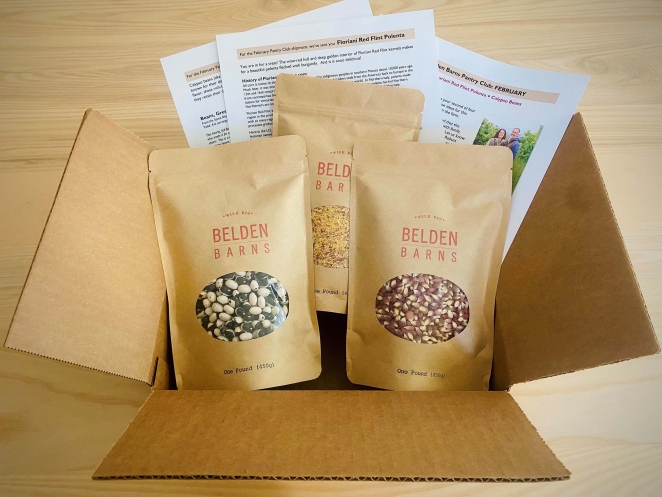
The best case study format is usually:
Headline → Project Snapshot → Challenge → Insight → Idea → Execution → Results → Reflection
That structure is flexible enough for designers, writers, animators, photographers, agencies, production companies and digital specialists. You can rename or combine sections, but the narrative logic should remain visible.
Here’s a condensed, fictional case study format example.
Waste Not. Want Another: Making Sustainable Snacks Feel Irresistible
Client: Pantry Club
Project: Brand positioning, packaging and launch campaign
Role: Lead strategist and copywriter
Timeline: Eight weeks
The Challenge
Pantry Club produced snacks using vegetables that would otherwise have gone to waste. The proposition was environmentally strong, but its earnest communications appealed mainly to existing ethical consumers.
Research suggested younger shoppers admired the mission but expected sustainable products to involve a compromise on taste. Pantry Club needed to broaden its appeal without losing the values that made the business distinctive.
The Insight
People didn’t reject sustainability. They rejected being made to feel that choosing responsibly was a form of homework.
Taste needed to lead the conversation, with environmental impact providing an additional reason to feel good about the choice.
The Idea
We repositioned sustainability as a source of appetite rather than sacrifice.
The line “Waste Not. Want Another” transformed a familiar phrase into an invitation, allowing the brand to discuss food waste while keeping pleasure at the centre of the campaign.
The Execution
We developed a more playful verbal identity and rebuilt the packaging hierarchy around flavour. Oversized product descriptions led each pack, while short stories about rescued ingredients appeared on the reverse.
The launch campaign used close-up photography and deliberately excessive descriptions of crunch, seasoning and texture. Environmental claims remained present but no longer carried the entire burden of persuasion.
The central line connected packaging, retail posters and social films, creating a recognisable system that could accommodate future flavours.
The Results
The first production run sold out three weeks ahead of forecast. Sales during the launch period were 24% above the client’s target, while 76% of participating independent retailers placed a repeat order.
Post-launch research also found that customers were more likely to describe the brand as “delicious” and “fun” without any decline in its association with sustainability.
The Reflection
Leading with appetite didn’t dilute the brand’s purpose. It made that purpose easier for more people to embrace. The project subsequently developed into a continuing relationship covering two additional product launches.
That example isn’t especially long. It works because every section contributes something different. The reader understands the problem, sees the logic connecting insight to idea and receives evidence that the work achieved something.
How Long Should a Case Study Be?
Tosh Hall
There’s no universal ideal length.
For an online creative portfolio, roughly 500 to 1,000 words is often enough for a substantial project. A smaller project might need only 250 to 500 words. A genuinely complex transformation may deserve more than 1,000, provided the additional detail continues to earn its place.
Award entries will be shaped by the form and word limits. Sales presentations may divide the story across eight or ten slides. A case study used in an interview might need a five-minute spoken version and a deeper version for follow-up questions.
The more useful principle is to make the case study layered.
A reader scanning for 30 seconds should grasp the project, role, idea and result. Someone investing five minutes should understand the challenge, process and principal decisions. A specialist looking closely should be able to find supporting detail.
Short doesn’t automatically mean clear, and long doesn’t automatically mean comprehensive. A 300-word case study can still spend 250 words saying nothing.
Include everything the reader needs to understand and believe the story. Remove everything that exists purely because you remain emotionally attached to the project.
Can a Case Study Work Without Measurable Results?
Grey (Thailand) Ltd. (Head Office)
Yes, but it still needs evidence.
Creative work doesn’t always produce a neat percentage. Data may be confidential, delayed, unavailable or impossible to isolate from other activity. A film can influence perception without generating a dashboard notification. A new identity may require years rather than weeks to demonstrate its full commercial effect.
If hard metrics aren’t available, use the strongest truthful evidence you have.
That might include client feedback, audience comments, user testing, repeat commissions, retailer adoption, stakeholder approval, press coverage, shortlistings, awards, successful rollout across markets or improvements to the production process.
You can also explain what changed operationally. Perhaps the new system reduced inconsistencies, allowed internal teams to create assets more quickly or helped several previously disconnected products feel like one brand.
A strong qualitative result might read:
The identity was adopted across all twelve regional teams, replacing five inconsistent local systems and giving internal staff a shared set of templates for the first time.
That isn’t a sales figure, but it’s still a meaningful outcome.
When results are pending, say so. “The campaign launched in July, with brand-lift research scheduled for October” is honest. You can return and update the case study later.
Never invent a result, present a target as an achievement or describe predicted performance as though it happened. “Designed to increase conversion” and “increased conversion” are not interchangeable sentences.
Credibility takes years to build and approximately one suspiciously unsupported percentage to damage.
What Makes a Case Study More Memorable and Persuasive?

Sinelab
Specificity is usually more memorable than spectacle.
Readers remember the awkward regulatory constraint, the audience contradiction, the unexpected research finding or the production decision that almost failed. These details make the work feel real.
“After extensive research, we developed a bold solution” could describe almost every case study ever uploaded to the internet. It tells us nothing about what was researched, what was learned or why the solution was bold.
Use concrete details.
Explain that customer interviews revealed a fear of hidden charges. Show that the team had six days to build the prototype. Describe how the colour system needed to remain legible on ageing factory equipment. Tell us that the original product name was routinely mispronounced by the people expected to buy it.
These are the things that give a project texture.
Let the idea remain simple
Some creatives try to make their work sound more sophisticated by making the explanation more complicated.
Resist.
Complex work can have a simple explanation. In fact, the ability to simplify it is often evidence that you understood it properly.
Avoid strategy language that obscures rather than illuminates. If your case study contains six consecutive sentences featuring “ecosystem”, “framework”, “cultural currency” and “brand world”, send help.
Make your role unmistakable
Use “I” where you acted individually and “we” where the work was collective.
Credit collaborators. If you led the strategy but didn’t design the identity, say so. If you animated a film created by another agency, explain what you contributed to its movement, character or production.
Clear attribution doesn’t reduce your achievement. It demonstrates that you understand how good work is made.
Use client testimony carefully
A strong testimonial adds a perspective you can’t provide yourself.
The best quotes mention a specific quality, decision or result. “They were great to work with” is pleasant but generic. “Their research changed how our leadership team understood the audience and gave us the confidence to abandon our original brief” is far more persuasive.
Keep testimonials brief and obtain permission before publishing them.
Adapt the case study to the opportunity
Don’t send every audience the same material in the same order.
If you’re applying for a particular role, lead with the aspects most relevant to it. If you’re entering an award for craft, make the execution easier to assess. If you’re pitching to a client in a similar sector, emphasise the transferable challenge without pretending the two businesses are identical.
Our guide to getting noticed by recruiters and hiring managers recommends updating older case studies, using accurate project tags and keeping your profile aligned with the work you want next.
A case study isn’t merely a record of where you’ve been. It’s a signal about where you’d like to go.
Common Case Study Writing Mistakes to Avoid

Luke Middleton
The first common mistake is beginning too far from the work. Unless the client’s history directly shaped the problem, we probably don’t need to know who founded the company in 1974.
Another is hiding behind vague collective language. “We were tasked with transforming the brand” says very little. Who tasked you? What did transforming involve? What was your role?
Then there’s the process landfill: 40 screenshots of workshops, Post-it notes and cursor-filled design files presented without explanation. Process should reveal decisions, not provide forensic proof that the team had access to stationery.
Many case studies also bury the central idea. The reader reaches paragraph twelve having learned about the market, methodology and stakeholder workshops but still doesn’t know what was made. Context matters, but the work is allowed to arrive before closing time.
Unsubstantiated superlatives create another problem. “Groundbreaking”, “iconic”, “revolutionary” and “game-changing” should generally be conclusions reached by other people. If the work genuinely transformed its category, show us the evidence.
Be wary of vanity metrics too. Millions of impressions may sound impressive, but were they paid for? Did anyone engage? Did awareness, behaviour or sales change? Choose results that connect to the original objective.
Jargon is another reliable way to weaken perfectly good work. Write for an intelligent reader who may not share your specialism. Explain technical details when they matter, but don’t require a glossary for the opening paragraph.
Don’t remove every sign of difficulty either. Case studies that present the creator as an all-knowing genius and the project as a flawless procession of correct decisions rarely feel believable. Showing how you adapted to a setback can be more persuasive than pretending setbacks don’t apply to you.
Finally, don’t publish and forget. Broken links, outdated job titles, missing credits and results labelled “coming soon” three years after launch create the impression that the project stopped mattering to you.
The reader may decide it shouldn’t matter to them either.
How Often Should You Update Your Case Studies?

Impero
Review your main case studies at least every six months and whenever your professional direction changes.
Add meaningful results as they become available. Replace temporary mock-ups with live work. Update links, credits, testimonials and awards. If a project no longer reflects the standard or type of work you want, archive it or move it out of the leading position.
A quarterly check is sensible if you’re actively looking for work or developing new business. You don’t need to rewrite everything each time. Small improvements to headlines, imagery, evidence and relevance can make an older case study significantly stronger.
Look at the collection as well as the individual projects. Five excellent case studies can still form a confused portfolio if they point towards five unrelated versions of your career.
Your selection should create a coherent impression of what you’re good at and what you want to do next.
Final Checklist Before You Publish Your Case Study
i2i Art Inc.
Before publishing, ask:
- Is the headline clear enough to make the project worth opening?
- Can a reader understand the project and your role within 30 seconds?
- Have you explained the problem rather than merely naming the deliverable?
- Is the central insight genuinely useful?
- Can the reader distinguish the idea from its executions?
- Does the process reveal meaningful decisions?
- Have you credited collaborators accurately?
- Are the strongest visuals near the top?
- Does every image have a purpose or useful caption?
- Are all results truthful, specific and properly contextualised?
- Have you removed confidential information?
- Is the language clear enough for a non-specialist?
- Have you cut repetition and unsupported adjectives?
- Does the project demonstrate work you’d like to do again?
- Are all links, names, dates and figures correct?
- Is there an obvious next step for someone who wants to contact or hire you?
Once it’s ready, you can upload the project to your Creativepool profile, where the combination of visuals, credits, description and project tags can help both the community and potential employers understand what you contributed.
Ultimately, a case study shouldn’t try to make ordinary work sound miraculous. It should reveal the intelligence, craft and value that the finished output can’t communicate alone.
Show us the problem. Show us the choices. Show us what changed.
Most importantly, make it easy to understand why the work became better because you were involved.
Because your work may be capable of speaking for itself. But given how much competition it has for attention, there’s no harm in lending it a microphone.