
As the Global Innovation Director at The Fifth, a leading social and influencer agency, Jordan Carroll thrives amidst the industry's inherent unpredictability. His role defies routine, oscillating between developing AI-driven content tools, crafting client measurement strategies, and delving into cultural phenomena like Italy's anime scene.
With a career rooted in the nascent stages of influencer marketing, Jordan has been instrumental in transforming scepticism into widespread acceptance, solidifying social media's pivotal role in today's media ecosystem.
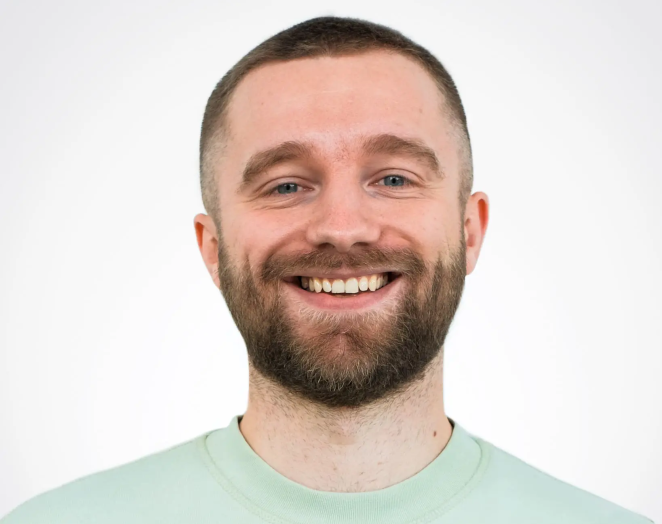
In this interview, we delve deeper into Jordan's journey, exploring the challenges he's overcome, his vision for the future of the industry, and the insights he's gathered along the way.
From his early days at Kairos Media, where he led tech stack and digital innovation efforts, to his current endeavours at The Fifth, Jordan shares his perspectives on embracing change, fostering creativity, and the evolving landscape of influencer marketing.
Tell us a bit about your role! Is there a “typical” day?
Innovation within a social and influencer agency is pretty atypical I’d say, which suits anyone like myself who likes to lean into a bit of chaos! You’ve got all the speed of agency life with the bleeding edge of innovation.
In one afternoon, I could jump from developing an in-house AI assistant that helps with content creation; to putting together a client measurement plan; to conducting cultural research on Anime in Italy. And then tomorrow afternoon will be a completely different kettle of fish.
What was the biggest challenge in getting to your current position?
Like anyone working in influencer marketing and social media, the biggest challenge has been the relative nascency of our industries in the context of the wider media ecosystem.
In 2025, social media and influencer has a very important seat at the table, and with all the M&A and consolidation, the domination of political headlines by social platforms, the cultural impact of social media, and the crazy growth of our industry, it feels like a great place to be.
This can make it funny to look back and think of the times when you weren’t pitching creative platforms for social media campaigns, but were actually pitching social media and influencer marketing as a concept to people who weren’t quite bought in yet.
When you meet that level of resistance, you might think that it would put a halt on how progress, but both industries have been an unstoppable force, a great result for those in a similar position to me who were involved early enough to have developed and grown with the industry.
What advice would you give to your younger self?
Mistakes build character; they don’t define character. Failure is necessary for growth!
What’s your one big dream for the future of the industry?
I’m intrigued to see how tech and agency will converge thanks to AI, and where they will remain disparate. My ultimate dream is that the technology allows human creativity to flourish even further, by taking away the jobs that dampen our creativity.
What are your top tips for aspiring creative professionals?
Find out what your reasonable limits are and make yourself a pledge to seek out every single opportunity up for grabs until you exceed those limits. People that do this and set their limits pretty high are the people that I bump into two or three years later and find out they’ve had some big promotions and are absolutely flying.
What are your top tips for other creative leaders?
In a nutshell, my role is all about finding new ways to solve problems for others. However, it can sometimes feel impossible to identify certain problems to solve if I don’t actually know what it feels like to do what might be a teeny tiny portion of somebody else’s role.
By having a glimpse of what my colleagues do in a day, I can understand what some of their problems might actually be. For that reason, I would advise people to acquire as many hard skills as they can and become an elite multi-disciplinarian.
You will always retain expertise in the thing that you actually boss, but knowing a little about a lot of other things helps you understand your colleagues from other teams better, what is required from them in their role, and therefore what they might require from you.
The dream scenario is knowing say the top three work problems that people in your team have, and you then spot an emerging industry trend making its way into focus that you know can help them.
When you think about your team, what is the thing that matters to you the most?
Curiosity is the key to everything. You need people who are always sniffing around to try and identify newness. When they alight on something that is exciting, they spend the time nerding out on it, learning it inside-out, creating pet projects with what they’ve learnt, and building that confidence to then be able to share it internally. This approach always helps us forge a path to do bigger and better things personally and as a business.
How do you approach collaboration with other creatives or teams and what do you believe makes for successful partnerships?
When collaborating on client pitches, my mandate is to ensure there’s something in there which is novel and distinctive.
This approach usually manifests in me pitching something relatively weird, which I’ll then regrettably need to take away and figure out! But that’s often where success comes from, when you’re feeling like you’re pushing yourself and the others in your team.
You don’t want nodding dogs in an ideation — you want a safe space where there can be difference of opinion. Ideally, there’ll be lots of ambition and scary new territory, but with the solid upfront strategy work that convinces you it’s going to work.
Most importantly, you want to be able to feel you can share a random idea that someone will jump in on and perhaps save you from your blushes by expanding on and making the idea better.
What industry trends do you foresee taking hold in the coming months?
This is more of a forecast over many years, but I think AI is democratising hard skills to the point that we will see roles become less discipline-focused and more skill-agnostic. People skills are going to become the highest priority in a hire, as we will want people with more holistic problem-solving abilities.
AI is already allowing us to be more productive and across more things, so therefore, we want people piloting these tools who have greater emotional intelligence, greater critical thinking, greater adaptability, and greater quality of communication.
How do you handle creative blocks or burnout?
I think avoiding creative block is all in the practice and is hard to retrospectively fix quickly. If you’re constantly opening yourself up to inspiration then creativity will flow through you with ease. If you’re not and you’re stifling yourself, going from work, to home, to work, chained to your desk and bringing work home with you, you’re not going to feel your most creative.
If you’re spending enough time reading, watching, listening, and experiencing good things, that’s when the good ideas come thick and fast. It might even be that they randomly spring on you whilst you’re doing something like the washing up!