
In this exclusive Company Spotlight, we delve into the innovative world of Garden Brand Consultancy, where founder, CEO and Creative Director Joseph Hedges is redefining the art of branding. Born out of East London in 2010, Garden was established with a mission to transform traditional branding by integrating sensory experiences (merging movement, sound, texture, and more) to create truly immersive brand narratives.
From overcoming the challenges of exaggerated AI expectations to pioneering a unique, research-driven creative process, Hedges shares the journey behind iconic projects like the groundbreaking rebrand of Sainsbury’s Tu. Join us as we explore how passion, curiosity, and a playful approach are cultivating bold ideas that continue to shape the future of branding.
How was your company born and where are you based?
Garden grew out of East London in June 2010, driven by a desire to colour the world through branding, packaging design, and retail environments. Having already worked for many large branding consultancies and design agencies, and having run multiple departments within them, I wanted to create a branding consultancy that understood and explored branding beyond a logo and colour palette.
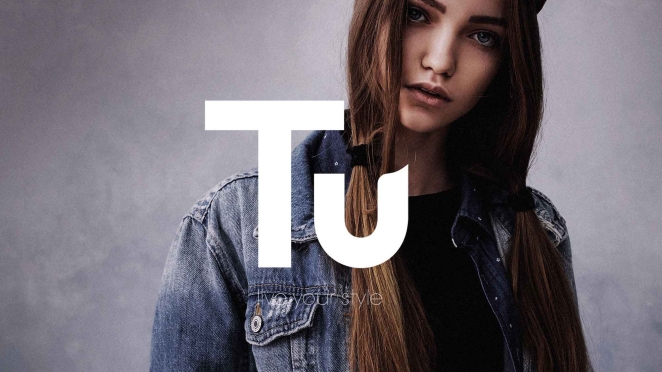
I wanted to merge movement, sound, environment, texture, scent, taste—everything that people experience. Hence the name Garden; we wanted to conjure up a place that brought all these elements together and inspired people.
What was the biggest challenge to the growth of your company?
There are many challenges, one being the misconception around AI and its capabilities. Many clients are overly excited about AI, often with exaggerated expectations and little
understanding of how to best benefit from its use.
We began integrating AI into our workflow around two years ago, using software to analyse brand sentiment. AI is powerful and highly effective, but as even AI systems themselves acknowledge, they rely on large datasets. However, creativity and originality don’t emerge from large datasets—they come from small, nuanced ones. I assume this will remain a issue for some time to come. In the meantime, we simply need to keep educating our clients around capabilities of AI and the benefits it brings them.
Another challenge has been research. While we are strong advocates of research, it needs to be properly understood in the context of branding. Knowing when and how to use research effectively is crucial. We have developed our own research methodology and team, allowing us to navigate complex areas, but educating clients on when to use research or how to conduct testing can sometimes be difficult.
For example, we use research in all our projects to understand the competitive landscape and market opportunities. However, when it comes to testing, careful consideration must be given to the questions being asked.
The most influential brands today have cut through the noise by differentiating themselves, building strong recall through bold, unconventional work that often sits outside typical consumer expectations. If you ask someone who doesn’t actively think about branding for their opinion, they are likely to default to familiar brands they already align with, leading to misleading results. The challenge again is around educating the client on how to use research that can actually benefit the end result.
Which was the first huge success that you can remember?
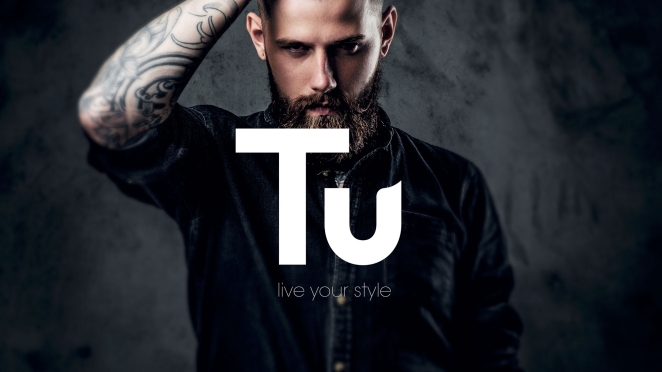
When we rebranded Sainsbury’s Tu, we demonstrated how strategically directing a brand can significantly boost revenue and overall business success. The power of understanding every detail—positioning a brand within a specific demographic, refining product ranges, and realigning the brand—helps consumers grasp its value and purpose. This, in turn, builds connections, strengthens recall, and drives long-term growth.
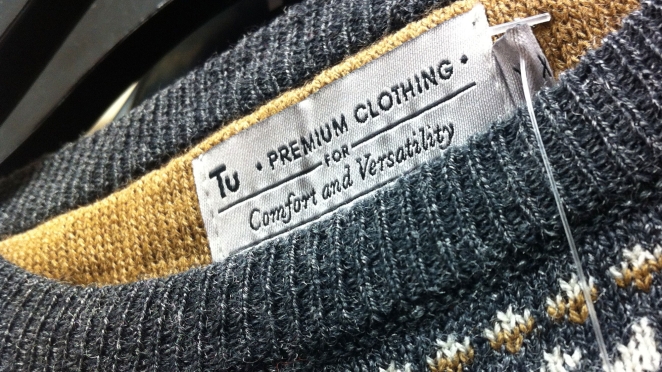
Sainsbury’s Tu was a huge success, with the rebrand increasing profits by as much as 15% and growing at three times the rate of their food business—proving the impact of strategic branding beyond just a logo.
What’s the biggest opportunity for you and your company in the next year?
Although we don’t see that AI will be able to create creative thought, for a while yet anyway, it does bring lots of power in terms of understanding consumers, and this is an area we are exploring with some new partners.
As mentioned, we do already use many AI tools daily and have been for many years, but there are some new and exciting things coming out, especially in researching in a qualitive way through mass respondent pools, this brings us real value in understanding how consumers really feel outside of a typical research environment - watch this space.
Can you explain your team’s creative process? What makes it unique?
We devised our process many years ago—25 years ago, in fact—when I first developed our methodology. Over the years, it has remained largely consistent, with some evolution in certain areas. Essentially, we follow a three-stage design process that incorporates client knowledge, benchmarking, market gap analysis, customer insights, and stakeholder vision (we call this K-lab). This then feeds into a strategy that defines mission, vision, values, purpose, proposition, and market gap analysis.
Once we have established the target, we move through a three-stage design process, starting with broad exploration before refining concepts for testing and trademark searches. While this may sound functional, after 25 years of experimenting with different approaches, this method has consistently proven to be the most successful.
The creative aspect of this process is explored in different ways, depending on the project’s needs, but we have always embraced an inclusive approach to ideas, allowing for exploration in multiple directions. We aim to challenge our clients’ expectations and broaden their perspectives as much as possible.
One of the most important things we do is encourage clients to experience what is happening in the wider world rather than forming judgments based solely on their existing awareness of standout brands. When clients gain exposure to the broader landscape, they often become more open to bold, rule-breaking ideas.
How does your team remain inspired and motivated?
I believe from my own experience, that there are only two ways to create unique but relevant work, one is inspiration from what’s been before and what we can see around us, the other is play.
Experience tells us what is acceptable and all things around us can inspire us, but play brings surprises and mistakes, and that can lead to new ideas, therefore for me, play is the best approach to idea generation, and play in-itself can be inspiring.
How has COVID-19 affected your company?
Oddly it helped our business model in many ways, the company was already set up to work globally allowing us to continue as we were. We were already at the time using systems like Skype and Zoom to communicate with different countries, and because we are a global branding consultancy, we simply transferred our working practices to home – it worked well for us.
What is one tip that you would give to other agencies looking to grow?
Curiosity + play = origination, which in turn creates growth.
How do you go about finding new clients/business? (Pitching, work with retainers, etc.)
So far, we haven’t had to do too much as we have grown from reputation. We don’t do free pitching really, in fact we haven’t done that for many years.
We do put retainers in place where we can, fixed fees are hard to control and can spiral, meaning lots of legal discussions before starting a project, or face the risk of losing income.
What’s your one big hope for the future of the industry?
I hope that free pitching is banned, AI is curbed and research gets smarter, and I hope that the world continues to push the boundaries of branding – how exciting things are for the future!
What measures do you take to ensure diversity and inclusion are prioritised within your company?
We have a wide cultural group of people, and we are very careful on how we mix this, always trying to make it work as well as possible. Because our clients are in so many different countries, we are very used to knowing what works in one country often won’t work in another. In fact, a recent challenge was trying to help a client understand that what works in their country of origin needs to dramatically adapt to a global market, meaning massive changes to approach, even how things are stored, distributed, tone of voice, purpose etc.
For this reason, diversity is vital to us and is fundamental to what we are about, although I completely understand the need to be culturally diverse, we don’t have to think that way, it is part of who we are. In fact, we only recruit on who has the best or most appropriate capability and personality to work with the rest of the team, we never think more than this, to us diversity should be natural, not forced.
Can you describe a project that challenged your team creatively and how you overcame any obstacles?
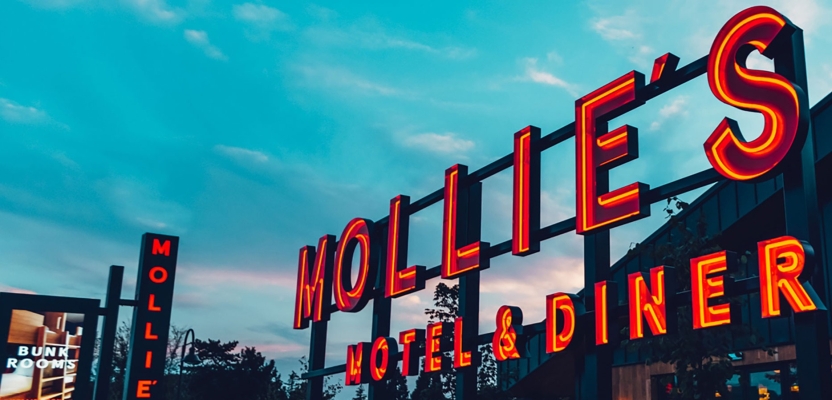
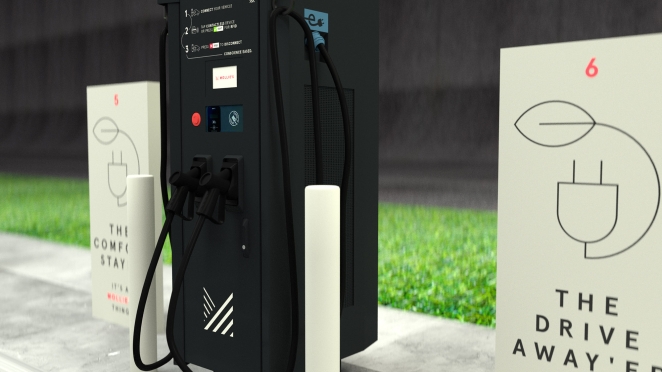
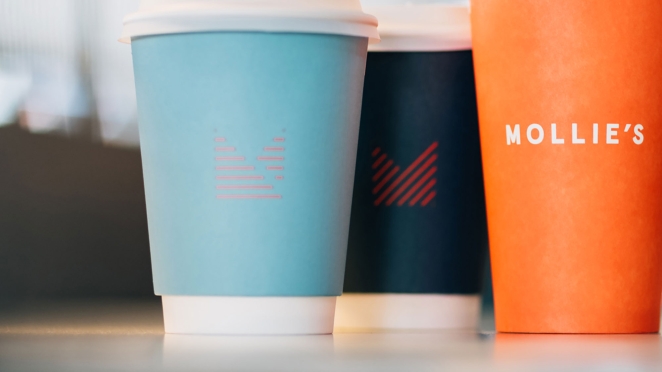
Mollie’s was a project that challenged us in many ways, however the result was great. The reason for the challenge was on several levels:-
1 – it was a multiple agency relationship and managing roles and expectations ‘could’ have been difficult, as it turned out it was great, although a few wobbles at the beginning. It was our responsibility to make sure everyone played well and respected each other for our core skill sets, it worked extremely well and we worked with some amazing people.
2 – This is a brand about all kinds of people, not just the cool. Originally a Soho House concept, it was a very cool concept imagined by Nick Jones, however we were brought in to give it personality and relevance. It started out a roadside dinner and motel with an American theme, we picked this up and evolved it, building it around diversity and inclusion i.e. for the baker, the high-staker and the popcorn maker.
The end result manages to stretch across lots of complex demographics, the young and cool, the older and wise, the sporty and the foodie, the traveller, the family etc, all while retaining an air of coolness. The end result is a logo that always changes and has different looks, but always follows a simple M shape.