
AI, fashion, advertising, and the fear of looking straight ahead
In every era of change, there is an uncomfortable moment: the instant when everyone knows something has already shifted, yet many still behave as if nothing has happened.
Creative industries rarely deny the future because they lack intelligence. They deny it because they fear what that future reveals about the present.
Today, that fear has a name: artificial intelligence.
And perhaps the most interesting discussion is not whether AI can create images, imagine campaigns, write copy, generate visual worlds, or accelerate processes. That is already happening. The deeper question is: what does it force us to see about the way we were working?
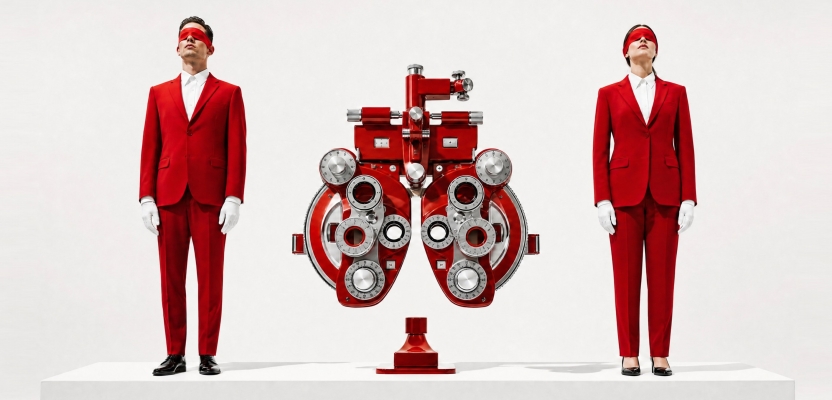
Because there are none so blind as those who will not see.
Vogue Business has been documenting how artificial intelligence is entering fashion from multiple fronts: AI-generated or partially AI-generated campaigns, internal processes, digital twins, personalization, product discovery, and new forms of visual production. Mango, H&M, Zalando, Valentino, Moncler, Guess, and J.Crew appear in that conversation not as isolated cases, but as signs of an industry that is already testing, failing, correcting, and learning.
That is the starting point.
The question is no longer whether AI belongs in fashion, advertising, retail, or beauty. The question is who will have the judgment to use it well.
When production stopped being enough
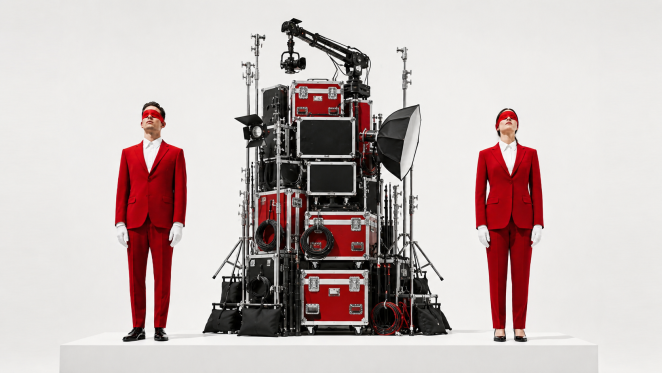
For years, an important part of creative value was associated with production: the location, the set, the team, the casting, the budget, the shoot days, the logistical complexity.
All of that still has value when it makes sense. Some images need body, real light, accident, skin, presence, texture, and physical experience. Some campaigns must be photographed. There are moments when reality contributes something that no simulation can replace.
But the market has changed.
Today, a brand no longer needs only a campaign. It needs a living visual system.
It needs content for social media, e-commerce, retail media, newsletters, marketplaces, screens, launches, promotions, capsules, seasons, audiences, vertical and horizontal formats, still and moving images, aspirational and commercial assets.
Visual demand has multiplied. Speed has accelerated. Budgets have not always grown at the same pace. And public attention has become more fragmented, more demanding, and harder to win.
In that context, AI does not enter only because it is fascinating. It enters because it responds to a real pressure: to produce more, test faster, adapt better, reduce costs, explore new routes, and maintain visual coherence in an increasingly complex ecosystem.
So the question is not why AI entered the industry.
The question is why anyone thought it would not.
I am not writing this from technology
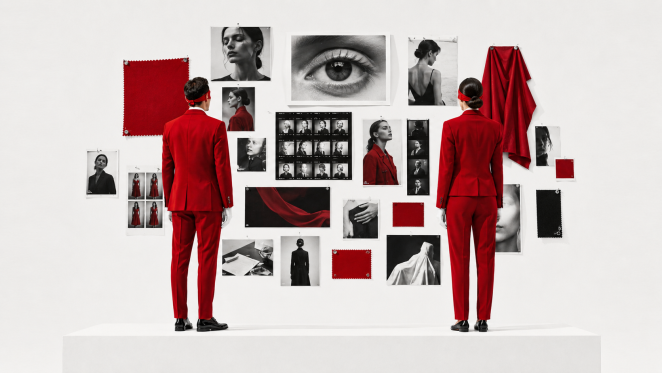
I do not look at AI as a technology journalist. I look at it from the craft.
I come from images. From photography. From direction. From light. From bodies. From sets. From the client looking at the monitor. From the budget that is never enough. From the casting that changes a campaign. From the garment that does not fall right. From the skin that must feel real. From the location that promises more than it gives. From the pressure of building an image that is not only correct, but memorable.
After 25 years of working with images, you learn something: an image is never just an image.
It is an aesthetic decision.
It is a commercial decision.
It is a cultural decision.
It is an emotional decision.
Where the light falls. What is shown. What is hidden. What feels true. What feels false. How aspirational an image can become before it turns artificial. What makes a model feel present rather than inserted. What gives a garment desire rather than mere information. What makes a campaign feel like a world, not just an execution.
That is why I find it hard to believe in the idea that AI “does everything by itself.”
It does not.
AI produces possibilities. But someone has to know how to look.
It can generate an image.
But it does not know why that image should exist.
It can create a hundred versions.
But it does not understand which one has truth.
It can imitate an aesthetic.
But it has no emotional memory.
It can accelerate production.
But it cannot replace the human instant in which someone looks at an image and knows: this works, this does not, this has force, this is dead.
The tool can generate.
Judgment decides what deserves to survive.
The problem is not AI. It is the lack of vision.
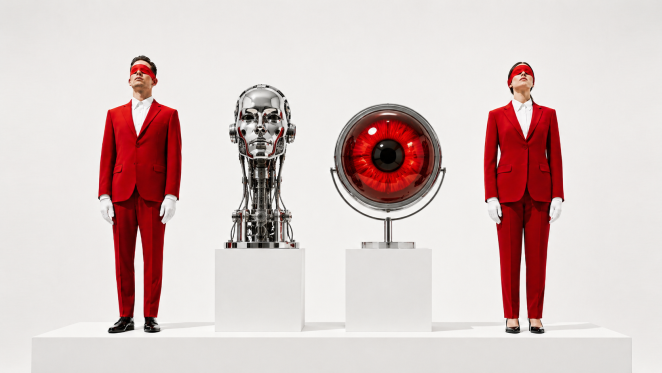
Some AI campaigns have been celebrated. Others have triggered rejection. There is an important lesson in that.
The public does not react only against technology. It reacts against a lack of sensitivity. Against an image that feels made to save money, not to move people. Against a brand that confuses novelty with an idea. Against an aesthetic that is perfect but empty.
A bad image made with AI is still a bad image.
A bad idea generated faster is still a bad idea.
Artificial intelligence does not solve the absence of thought. It exposes it.
That is the point many conversations avoid. AI does not threaten true creative craft. It threatens the part of the craft that became automatic.
It threatens the formula.
It threatens repetition.
It threatens “this is how we have always done it.”
It threatens execution without vision.
It threatens production that confused complexity with value.
And that is uncomfortable, because it forces us to ask what part of our work was truly creativity and what part was simply process.
For years, the industry often confused production with thinking. A great location looked like a great idea. A huge team looked like a great campaign. A high budget seemed like creative assurance.
But it was not always so.
Production can amplify an idea.
It cannot invent it.
Technology can accelerate a vision.
It cannot replace it.
AI can open doors.
But someone must know which one to enter.
The new structure of talent
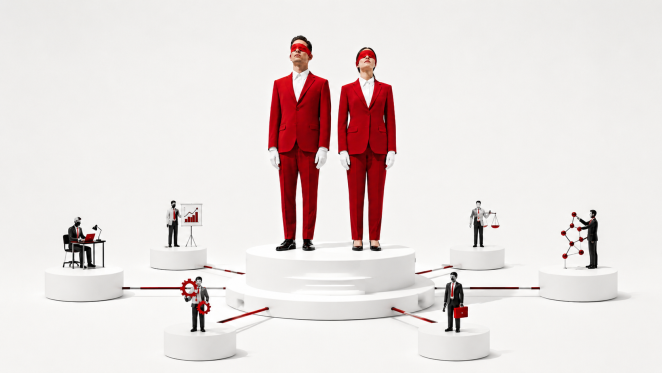
This is one of the most delicate and real points.
AI does change the structure of work. It would be naive to deny it.
In certain stages of the visual process, tasks that once required several profiles can now be concentrated in one person with experience, judgment, and technical command. One person can imagine, direct, produce, iterate, correct, adapt, and build variations at a speed that would have seemed impossible only a few years ago.
But that statement has one essential condition: not just anyone.
AI does not automatically turn someone into a creative director. It does not give taste. It does not give a world. It does not give craft. It does not give sensitivity. It does not give commercial experience. It does not give visual culture. It does not give obsession with detail.
It gives speed.
And speed, without judgment, only produces more noise.
A person without vision can generate a hundred images in an afternoon.
A person with vision can build a world.
When everyone can produce, value will no longer sit only in production. It will sit in deciding. In selecting. In directing. In building meaning. In understanding which image represents a brand, which image moves people, which image sells, which image connects, and which image has a reason to exist.
AI democratizes access to visual production.
It does not automatically democratize taste.
Fear is also part of change
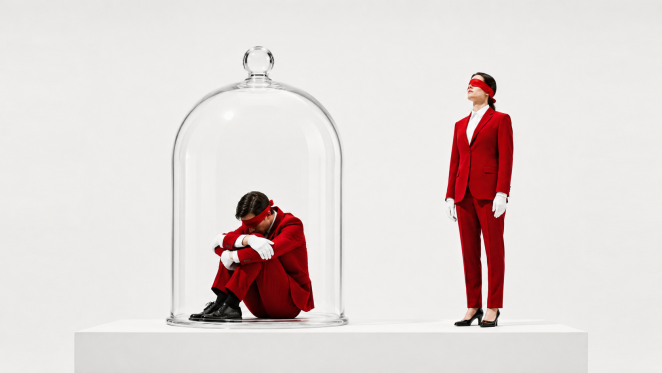
There is fear. And it must be acknowledged without ridicule.
Fear of losing work. Fear of losing value. Fear that years of experience may seem compressed into seconds by a tool. Fear that brands will choose speed over sensitivity. Fear that the market will confuse efficiency with creativity. Fear that the craft will become invisible.
That fear is not ridiculous.
It is human.
But fear can take two paths.
It can become denial, resentment, and nostalgia. Or it can become curiosity, learning, and movement.
Not everything new deserves celebration. But not everything old deserves defense.
Maturity lies in knowing the difference.
Perhaps the deepest fear is not that a machine can make an image. Perhaps the fear is discovering that part of our professional identity was built on processes that can change.
That question is uncomfortable because it does not point only to technology.
It points to us.
That is why so many discussions about AI become emotional so quickly. We are not discussing only tools. We are discussing identity, value, future, craft, ego, and survival.
But creativity has always carried a degree of discomfort.
Comfort rarely produces an aesthetic revolution.
More images do not mean more culture
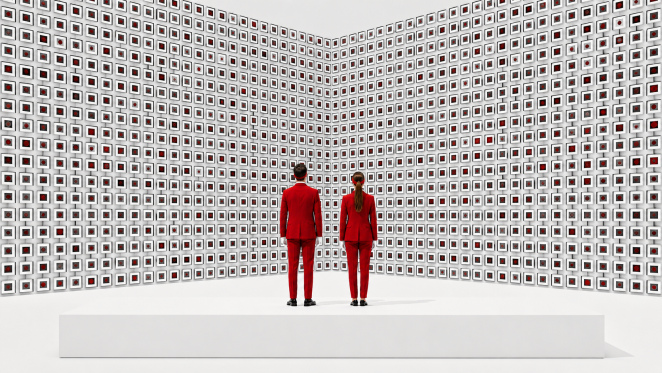
Fashion and advertising have always lived from building desire. But desire does not come from volume. It comes from precision.
A brand can produce a thousand images and build nothing. It can feed every channel and leave not one image in memory. It can publish every day and still say nothing.
That is one of the great risks of this stage: confusing abundance with relevance.
AI can accelerate emptiness. It can multiply mediocrity. It can fill the world with correct, polished, luminous, forgettable images.
That is why the conversation should not be only technological. It should be cultural.
What kind of images do we want to produce?
What kind of sensitivity do we want to defend?
Which part of the process adds real value?
Which part only adds cost?
What deserves to be physically produced?
What can be digitally imagined?
What must remain human?
What can change without losing meaning?
These questions do not destroy the craft. They refine it.
This is not an invitation to produce more for the sake of producing more. It is an invitation to think better about what deserves to be produced.
The idea returns to the center
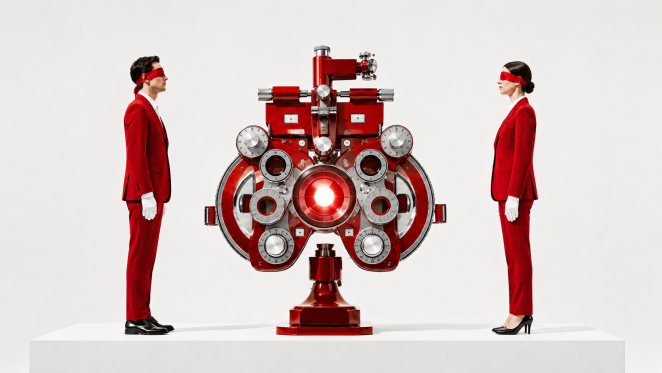
Perhaps the most interesting thing about this moment is that the idea returns to the center.
When production was harder, difficulty itself could be confused with value. But when production becomes more accessible, the question changes.
It is no longer enough to say: we can do it.
The question is: is it worth doing?
That shift is enormous.
AI can help visualize worlds, explore routes, reduce uncertainty, prototype campaigns, adapt content, imagine scenarios, work with real products, build universes, and accelerate processes. But if there is no idea behind it, we are only decorating speed.
And speed, by itself, is not creativity.
Creativity lies in deciding what should exist.
In an industry saturated with images, the future will not belong to whoever produces more. It will belong to whoever sees better.
It is not a war between humans and machines
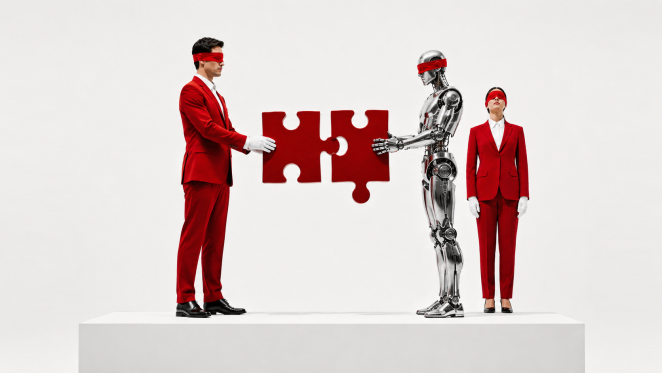
The poorest conversation is the one that frames this as a war.
Photographers against AI.
Models against avatars.
Creatives against algorithms.
Physical production against generative production.
Reality is more complex.
There will be campaigns that must be photographed. There will be images that need real presence, real bodies, real light, real texture, and real accident. There will be fashion that is understood only when it falls on a person. There will be beauty that needs skin, pores, gesture, and breath.
And there will be other projects where AI will allow us to imagine better, test faster, produce more efficiently, reduce unnecessary costs, expand possibilities, and open paths that were once limited by budget, time, or logistics.
Intelligence will not lie in choosing a side.
Intelligence will lie in knowing when to use what.
The question will not be “AI or real production?”
The question will be: what does this idea need in order to exist in the best possible way?
Perhaps the question is no longer whether AI can create images. It can.
The question is whether we still know how to look.
Whether we can distinguish a beautiful image from an empty one. A useful tool from a superficial trend. An opportunity from an imagined threat. A legitimate defense of craft from simple resistance to change.
The creative industry does not need less talent. It needs more awake talent.
It needs people capable of looking at the present without automatic nostalgia and at the future without naivety. People who understand that technology does not replace sensitivity, but it does punish the lack of evolution. People who are not afraid to learn new tools, but who also do not forget that an image is not valuable because of the tool that produced it, but because of what it manages to provoke.
We are not facing the end of creativity.
We are facing the end of a comfortable way of understanding it.
And that, even when it is uncomfortable, can be deeply inspiring.
Because if production becomes more accessible, then true creative value must rise. It must live in the idea, the vision, the judgment, the culture, the ability to build meaning.
AI is not taking creativity away from us.
It is asking whether we were truly using it.
And perhaps that is the question many do not want to look at directly.
Because the future will not wait for everyone to feel comfortable.
And creativity, when it is alive, has never been comfortable.