
As AI makes it easier than ever to produce polished but painfully predictable work, genuine originality is becoming an increasingly precious commodity.
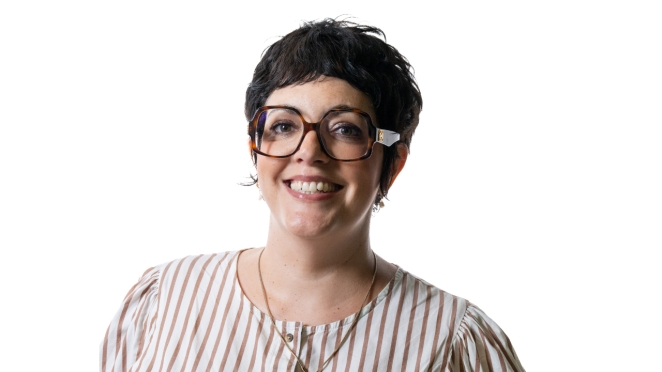
Mary Brannan, Client Services Director at Sense, argues that the curious, uncompromising “weird kids” who never quite fitted in at school could now be the creative industries’ greatest defence against algorithmic sameness.
Here, she explores why their instinct for spotting unusual connections matters more than ever, and how agencies can identify that difference before conventional recruitment processes smooth it away.
Every school had a weird kid.
Maybe you can picture them now. Creating a personal style statement through an eclectic mix of a home-cut haircut, maybe a sneaky swipe of make-up, and a proudly worn collection of handmade baubles, badges and bangles. They brought a flair and flourish to the compulsory uniform of bulky blazers, stiff collars and sensible shoes.
It's that innate youthful ability of the weird kid to spot, collect and curate an aesthetic - often working with little more than whatever could be found in the local charity shop - that creates an indispensable foundation of so much brilliant creativity later in life.
I'm sure the data would show that the majority of agency leaders, creatives, strategists and designers were considered a bit odd at school. Not because they lacked social skills or academic ability, but rather because they didn't fit broader definitions of what was considered cool by a few fickle, pop culture driven, hormone-riddled teenagers.
And without leaning too heavily into childhood trauma, or a Marvel-esk character origin story, I'd wager many have turned those awkward teenage years — spent painstakingly curating mixtapes and playlists, trawling for second hand fashion finds and perfecting niche subcultural signifiers — into the foundations of the creative careers they enjoy today.
Steve Jobs summed it up back in the mid-90s, just as the fear of technology takeover really started to gather speed: “Creativity is just connecting things. When you ask creative people how they did something, they feel a little guilty because they didn't really do it, they just saw something... That's because they were able to connect experiences they've had and synthesise new things.”
So, as we watch businesses search for mythical quick fixes to complex problems, allowing AI to steadily creep into more brand strategy, design and content creation, the weirdos from school - who now make up a sizable proportion of our creative industries - remain our strongest defence against algorithmic slop.
Because the problem isn’t that AI can’t be creative. It can remix, replicate and roll out ideas with astonishing speed. But there’s a world of difference between mixing and mashing up fragments of everything that already exists and nurturing something with genuine creative originality based on uniquely personal experiences and ideas.
That’s where the weird kid is most powerful, because they become the adult who spots unusual, uncomfortable or unlikely connections. They are the strategist who notices a cultural shift before the data does. The client services lead who discovers the untapped opportunity. The designer who borrows inspiration from an unlikely source. The writer who finds a fresh perspective hiding in plain sight. But if weirdness is such a valuable strategic, business and creative trait, the next question is practical: how do agencies recognise these odd qualities before they’ve been buffed and polished out of a portfolio, a case study or a sanitised LinkedIn profile?
Do we need to go into schools at lunchtime and find out who's lurking in the science labs,lost in a book in the library, squeezing in extra practice in the music room, or sitting off listening to ‘weird’ music in the art department? Are we allowed to catch young people in a butterfly net and ask whether they'd like a career in creative marketing? Probably not. And that's probably for the best.
So that leaves us with a pile of CVs to wade through.
In this scenario, optimised keyword-driven AI-powered screening systems are not going to help. It comes down to old-fashioned conversation during those initial, sometimes oh-so-awkward, chemistry sessions. Once you've ticked off the necessary due diligence on basic suitability for the role, it's time to throw in a wildcard:
"What did you want to be when you were younger?"
"Were you a member of any clubs, groups or teams when you were young?”
"What posters were on your bedroom wall as a teen?"
“Did you ever collect anything when you were a child?”
“What did you like to wear on non-uniform days at school?”
"Who were your favourite band or solo artists when you were young?"
"What's something you thought was incredibly cool when you were 16 that’s so uncool now?"
"What would your younger self think about you applying for this role?"
Those questions create space for people to reveal who they were then and who they are now. The answers tell you who liked to live on the fringes, and who preferred the mainstream. Who stood out because they couldn't help it, and who was more comfortable fitting in.
In fact, the very qualities that made someone feel out of place at school are often the same qualities that make them valuable in creative industries later on: curiosity without permission, curation without fear of mistakes, taste without validation and the confidence to pursue interests that nobody else understands yet.
So, while in the hands of a busy marketer, AI becomes increasingly capable of producing competent but somewhat sterile creative and business ideas, those distinctly messy human qualities become more important, not less.
The future advantage won't belong to the people who think most like the machine. It will belong to the people who have spent a lifetime seeing the world differently, even when everyone else thought they were being a big weirdo.