
Creatives have spent a very long time complaining about constraints.
Not enough budget. Not enough time. Legal won’t let us say that. The platform won’t let us do this. The logo has to be there. The product has to appear within four seconds. The thing has to work vertically, horizontally, silently, internationally and somehow still make sense when reduced to the approximate dimensions of a postage stamp.
Constraints are the traditional villains of the creative process. We talk about “removing blockers”, “unlocking possibilities” and giving people “the freedom to think”, as though somewhere beyond the budget spreadsheet, compliance department and horrifying media plan lies a beautiful creative meadow in which the perfect idea is quietly waiting to be picked.
D&AD’s view of the best work of 2026 suggests almost the opposite.
In its 2026 Annual and Trend Report, the organisation says constraint-driven creativity has “exploded” across this year’s work. Rules, regulations, technical limitations, platform mechanics and other irritating bits of reality haven’t merely been obstacles clever creatives managed to overcome. Increasingly, they’ve become the idea itself.
That conclusion comes from a fairly substantial vantage point. According to D&AD, this year’s report, produced with The Thought Partnership, draws on around 50,000 pieces of work from 89 countries across 46 categories, as well as discussion from 42 jury rooms and input from 300 designers, advertisers and creative leaders.
The point of the report isn’t to predict some distant creative future involving holographic billboards and whatever we’ll apparently be doing in the metaverse next time somebody tries to revive it. It’s looking for patterns already appearing in the work judges considered interesting enough to reward.
And the pattern around constraints is particularly intriguing because it arrives at almost exactly the moment technology is promising creatives the opposite.
Generative AI is rapidly removing technical barriers. Images that once required shoots can be prototyped in minutes. Films can be visualised before a production company has been called. Hundreds of ideas, designs, headlines and strategic routes can appear before lunch. The theoretical creative space available to us has never felt larger.
Yet some of the work cutting through in 2026 seems to be doing so because it has found something very specific to push against.
Perhaps infinite possibility isn’t quite the creative gift we assumed it would be.
Perhaps creativity occasionally needs a wall.
When the Obstacle Becomes the Medium
"Let it Fly"
There’s a familiar way of approaching a difficult restriction in advertising: find a workaround.
If you can’t advertise somewhere, advertise around it. If the product has an inconvenient limitation, minimise it. If legislation stops you saying something directly, get legal to approve a version that says approximately the same thing with considerably less personality.
The work D&AD is highlighting feels different because the restriction itself becomes the raw material.
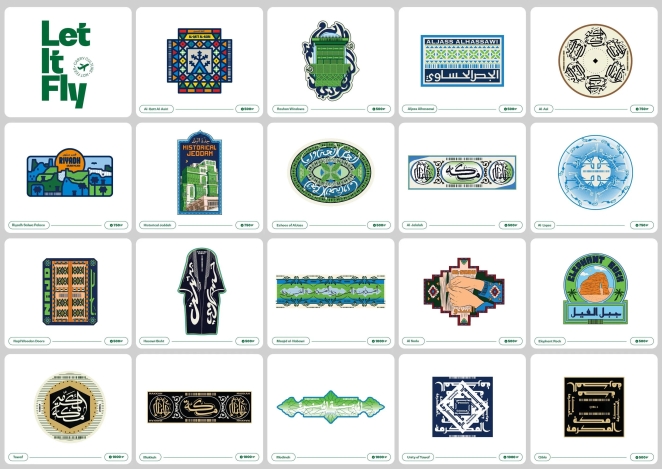
Take Saudia Airlines’ Let It Fly, created by Saatchi & Saatchi UAE and Publicis KSA. International aviation has a painfully simple commercial reality: extra baggage costs money. That becomes an awkward contradiction when you’re an airline encouraging visitors to experience Saudi culture, buy objects from local makers and carry some of that culture home with them.
Rather than treating excess-baggage rules as the annoying final paragraph in the customer experience, the campaign turned them into the mechanism. Special luggage stickers, designed by local artists and drawing on Saudi cities and crafts, allowed cultural purchases to effectively become additional baggage allowance. D&AD awarded the project in both Direct and Media in 2026.
The restriction wasn’t something to hide.
It was the brief.
That distinction sounds small until you start applying it elsewhere. A platform limitation can become a format. A regulation can become a mechanic. A tiny budget can force a useful narrowing of the idea. A physical restriction can become the thing audiences interact with rather than the production problem everyone hopes the audience won’t notice.
"The Wedding Rice"
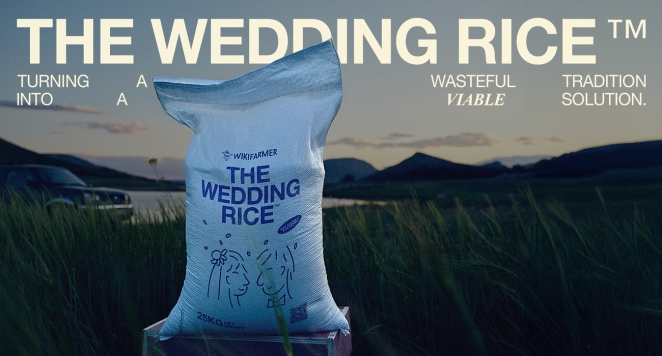
D&AD’s report also points towards McCann Athens’ The Wedding Rice for agricultural marketplace Wikifarmer. The project took rice that wasn’t suitable for sale as food and created a separate product and supply chain around the tradition of throwing rice at weddings. It subsequently won the Creative Commerce Grand Prix at Eurobest, whose jury praised the way the work turned a longstanding problem into a new product, ecosystem and more sustainable use for otherwise unusable rice.
This is what makes the trend more interesting than the slightly tired creative mantra that “limitations can inspire ideas”. Of course they can. Anyone who’s ever worked on a pitch three days before Christmas with one available designer and a budget apparently calculated in Nectar points already knows that.
What’s changing is where the creative act begins.
The question stops being, “How do we make the campaign despite this problem?”
It becomes, “What happens if this problem is the campaign?”
That’s a much more interesting relationship with constraint because the irritating thing nobody wanted suddenly provides specificity. And specificity, in an industry increasingly capable of generating polished generic output at absurd speed, is becoming extremely valuable.
Creativepool has previously explored the same principle through creative problem solving: a difficult limitation can sometimes force a team past the comfortable, obvious answer and towards something sharper. The important word there is sometimes. Constraints aren’t magic, and creative departments probably shouldn’t start celebrating every budget cut with champagne.
But the right restriction can force a decision.
And creative work generally becomes more interesting once somebody has actually made one.
There’s a Difference Between a Constraint and Being Constrained

Sir John Hegarty
Sir John Hegarty makes an important distinction in his contribution to D&AD’s forthcoming Annual.
He’s a long-time advocate of the old line, “give me the freedom of a tight brief”, and describes budget, media and time as practical boundaries that can help get creative thinking moving. Deadlines force a response. A clear set of parameters gives you something to react against. Complete freedom, by contrast, often turns out not to feel very free at all when you’re sitting in front of an empty page wondering which of the planet’s approximately eight billion possible ideas you ought to have first.
But Hegarty also warns against confusing constraints with constraining people.
That feels worth dwelling on, particularly at a moment when the creative industries are being asked to make more things in less time with smaller teams while politely calling the exercise transformation.
A tight brief can be useful. An impossible brief isn’t automatically inspirational.
A £20,000 production budget might force a director to rethink a film in an unexpectedly compelling way. A £200 budget for something that genuinely costs £20,000 isn’t a creative stimulus; it’s somebody refusing to pay for the work. A six-second media format might generate a brilliant idea built around brevity. A client giving a team two hours because somebody forgot to approve the brief on Monday isn’t an exciting experiment in creative compression.
Constraint works when it gives the problem shape.
Constraining people merely reduces their ability to solve it.
That distinction becomes particularly important because successful examples tend to be remembered backwards. Once an ingenious low-budget campaign wins awards, everyone admires the ingenuity and conveniently forgets that thousands of other underfunded projects simply looked underfunded.
The creative industry occasionally romanticises adversity because the survivor stories are wonderful. There are legendary albums recorded under absurd deadlines, films transformed by technical accidents and campaigns made brilliant by budget restrictions. There are also countless mediocre pieces of work produced by exhausted people who needed another week, another specialist and enough money to do the job properly.
Constraints are useful when they generate focus, tension or an unexpected route through the problem. They’re destructive when they remove the resources required to explore the problem meaningfully in the first place.
"Flat Eric"
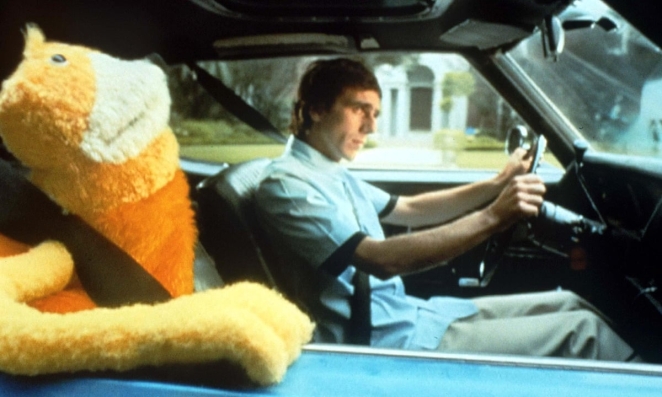
Hegarty’s own example of Flat Eric for Levi’s captures the more productive version nicely. The brief pushed BBH away from the brand’s familiar singular hero towards a relationship between two characters. The creative response didn’t obediently give the client an expected male duo; it took that limitation somewhere stranger and put a fluffy yellow puppet in the passenger seat. Hegarty recalls having to return several times to convince the client before the idea made it through.
That’s the paradox at the heart of a useful constraint.
It closes one door and encourages the creative to climb out of a window nobody had previously noticed.
The restriction gives you a frame, but ambition is still required to escape the obvious thing sitting inside it.
AI Has Given Creativity Infinite Options. That May Be the Problem
This is where D&AD’s finding starts to feel less like an awards trend and more like a reaction to the technological environment surrounding creativity.
AI is giving creative people an astonishing expansion of possibility. It’s making images, films, copy, strategy, prototypes, layouts and iterations easier to produce, while lowering the practical cost of trying an idea simply to see what happens.
That’s genuinely exciting.
It also creates an entirely new problem: too much possibility.
The blank page used to be intimidating because there was nothing on it. The generative version of the blank page can be intimidating because there might be 400 things on it by lunchtime.
Creativepool has already argued that one of the defining AI skills for agencies will be less about generation and more about judgement. When a team can produce 100 AI-assisted routes almost instantly, the valuable skill becomes identifying the one containing strategic tension, cultural life and genuine brand potential. In other words, abundance makes selection more important rather than less.
That’s where constraint suddenly becomes extremely useful again.
Tell a generative system to make “a premium global campaign for a modern lifestyle brand” and you’ve effectively opened the doors to every fashionable visual convention available to it. Tell a creative team the entire campaign has to happen inside one particular physical object, exploit one strange platform rule or solve one frustrating customer behaviour and suddenly the territory becomes narrower but more ownable.
Constraint kills possibilities.
That’s precisely why it can help.
One of the slightly under-discussed consequences of AI-assisted creativity is that “more ideas” and “more creative” aren’t synonyms. Generative technology can radically expand the field, but a field without boundaries can become strangely homogeneous because everybody gravitates towards the same culturally legible ideas of what “cinematic”, “premium”, “disruptive” or “youthful” are supposed to look like.
D&AD itself spent 2025 examining AI’s influence on creativity through research drawing on 300 industry leaders and explicitly looking at questions around originality and the changing economics of creative work. By 2026, it’s interesting that one of the strongest themes appearing in awarded work isn’t technological maximalism but creatives finding ingenious things to do with rules.
Maybe that isn’t a coincidence.
The traditional technical limitations of creativity are disappearing remarkably quickly, which means strong creatives may increasingly need to invent their own limitations.
Choose one camera. Use one typeface. Tell the story in six frames. Make it work without dialogue. Give the copy seven words. Build the entire activation around something the customer already has. Allow one day for exploration. Ban the category’s favourite colour. Force every route to start with a real behaviour rather than an aesthetic reference.
None of those constraints guarantees brilliance. In fact, some will produce rubbish.
That’s fine.
Their purpose is to remove the enormous seductive cloud of technically possible answers and create a smaller space in which somebody has to think.
The irony is rather wonderful. We’ve spent years building technology capable of giving creativity almost limitless freedom, and one of the most useful things we may end up doing with that technology is telling it what it isn’t allowed to do.
The Most Interesting Ideas Are Moving Inside the Business
"Three Words"
The second major thread in D&AD’s 2026 report might ultimately prove more consequential than the first.
D&AD calls it Institutional Conviction, but the simplest version is that creativity is moving beyond what a business says and into what the business actually does.
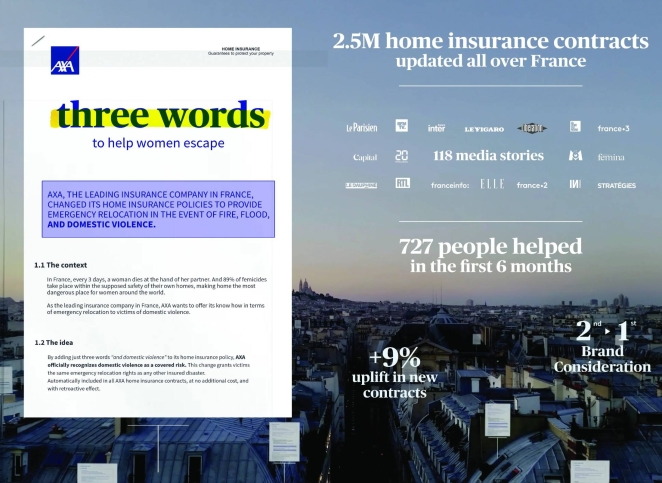
AXA’s Three Words, created with Publicis Conseil, is the clearest example. Instead of developing a communications campaign telling people AXA cared about domestic violence, the work changed the insurance itself. Publicis describes it as an innovation that formally recognises domestic violence as a risk within home insurance policies. D&AD’s say the change was introduced across 2.5 million home-insurance contracts in France.
Three words in a policy.
That’s a particularly satisfying example of a constraint doing something useful because insurance is, almost by definition, a world made from constraints. Contracts, clauses, definitions, covered risks, exclusions, conditions and regulatory requirements are the product. The document isn’t dull administrative matter sitting behind the brand experience. It is the brand experience at precisely the moment somebody needs the company to do what it promised.
So instead of asking how to communicate purpose around domestic violence, the creative question became how the underlying institution could behave differently.
D&AD describes that broader shift as moving the brief from “What should we say?” towards “What can we build, change or invent?”
Advertising has been flirting with that idea for years, but the distinction matters more now because communication itself is becoming so inexpensive to produce. Every brand can publish more. Every brand can generate beautiful statements about its values. Every brand can create a stirring film in which slow piano music accompanies extremely sincere-looking people doing something socially responsible.
The abundance of expression inevitably makes behaviour more interesting.
A brand that changes a policy, redesigns a service, creates a product, alters a customer experience or fixes something genuinely irritating has produced a piece of communication that is much harder to dismiss as copywriting.
This is also where the word “creative” becomes more useful if we stop treating it as a synonym for advertising output.
The creative department doesn’t have to begin at the point where a product is complete and somebody needs a campaign. Creativity can intervene earlier, when the product, policy or service is still changeable.
That gives agencies a considerably more interesting role too.
If AI continues making conventional content production easier and cheaper, agencies that define their value primarily as the people who produce communications are going to feel the pressure rather quickly. Agencies capable of applying creative thinking to business problems, customer experiences and institutional behaviour have a much wider field.
It’s something Creativepool’s coverage of future-facing AI leadership has touched on from another direction: creative businesses shouldn’t merely use technology to do the existing work faster. The more valuable opportunity is to rethink where creative intelligence can alter the system itself.
Perhaps one of AI’s stranger effects will therefore be pushing human creatives further upstream.
When making the poster becomes cheap, solving the thing the poster was supposed to compensate for starts looking considerably more valuable.
Culture Isn’t a Media Buy
The third thread in D&AD’s report may be the least surprising and the hardest to fake.
Community matters.
Brands have spent the last decade becoming extraordinarily fluent in the language of culture. They have social listening dashboards, creator rosters, trend reports, youth councils, Discord strategies and enough presentations explaining Gen Z to make Gen Z itself feel rather tired.
Yet D&AD’s new Cultural Influence Pencil appears to have set an unusually high bar. According to the pre-publication material supplied to Creativepool, the category attracted 354 entries but just 18 were shortlisted or awarded.
That suggests an uncomfortable gap between appearing in culture and genuinely influencing it.
D&AD calls the corresponding trend Closing the Cultural Chasm, with a fairly direct conclusion: deep listening to communities can’t be treated as an optional extra.
The distinction matters because audiences no longer simply receive advertising. They quote it, remix it, ridicule it, recreate it, fact-check it, turn it into memes, explain why it’s trying too hard and occasionally transform something the brand barely noticed into the most important part of the campaign.
Culture is participatory, which means control is increasingly an unhelpful fantasy.
Diipa Büller-Khosla, founder of beauty brand inde wild and one of the contributors to D&AD’s Annual, describes the difference from the creator’s side. Her approach is rooted in letting creators speak to their own communities rather than forcing them through rigid scripts, arguing that creators generally understand the people following them better than the brand does. She also describes building indē wild’s community through online and physical interactions, including events where customers can meet each other around the brand rather than simply receive another piece of branded content.

indie wild
That sounds obvious until you consider how much influencer marketing still consists of brands purchasing another person’s credibility and then immediately asking them to stop behaving like themselves.
The constraint here is social rather than technical.
You don’t own the community.
You don’t control how it talks.
You can’t manufacture years of belonging because the media plan says culture is strategically important in Q4.
You have to work with what already exists.
That is exactly the sort of constraint good creativity can use because it removes the fantasy that a brand can simply parachute into any cultural moment it likes. The community has its own codes, language, memories, tensions and sense of humour. Understanding them properly narrows the number of things a brand can plausibly do.
Again, fewer options.
Again, potentially better work.
There’s a broader lesson here for the creator economy too. Reach is easy to quantify, which is why marketers have spent years obsessing over it. Cultural relevance is much harder because it depends on relationships, context and whether people actually want the brand in the conversation.
D&AD’s apparent reluctance to hand out Cultural Influence Pencils simply for being adjacent to popular culture feels healthy.
Getting seen isn’t the same thing as belonging.
And buying the person with the audience isn’t the same thing as earning the audience’s interest.
A “Year of Reckoning” for Creative Work
Izaak Flanders
The constraint story is only one of six signals D&AD says are visible across its 2026 work. The others include The New Attention Grabbers, Defying Category Conventions and The Brand Hack – Subverting a Big Moment, alongside Institutional Conviction and Closing the Cultural Chasm.
Seen together, they’re less a collection of aesthetic trends than a fairly coherent diagnosis of the industry’s current problem.
There is too much stuff.
Audiences have more content, more brands, more platforms and more opportunities to ignore all of it. Creatives have more technology and more ways to make things. Brands can produce at unprecedented speed. AI can increase that volume further still.
Under those conditions, merely being competent stops being much of an achievement.
That’s why D&AD’s Donal Keenan describes 2026 in the supplied material as a “year of reckoning” for creativity. His argument is that audiences have become harder to impress and easier to lose, while work rising to the top has tended to take risks, demonstrate genuine skill and provide a stronger reason to pay attention.
There’s some external evidence for the value of breaking convention, too. Analysis of Ipsos’ creative-testing database published alongside Effie’s Breaking Taboos work found that breaking taboos and challenging category conventions was associated with a 21% increase in advertising attention, while surprise and empathy were among the characteristics most strongly associated with longer-term brand growth in that analysis.
That doesn’t mean the industry should immediately instruct every strategist to add “break all category conventions” to the brief.
A convention usually exists for a reason.
Banks probably shouldn’t make it deliberately difficult to discover whether they’re banks. Medical brands may wish to retain certain signals of credibility. A funeral director can certainly behave differently from the category, but there are limits to how enthusiastically one ought to disrupt funerals.
The interesting part is recognising the convention consciously rather than following it accidentally.
That idea links all six of D&AD’s trends rather neatly. Rules become useful when somebody notices the rule. Category conventions become interesting once somebody identifies what everybody else is doing. Cultural participation improves when a brand accepts that the community has rules of its own. A big cultural or media moment becomes hackable when somebody understands the existing pattern well enough to exploit it.
Creativity begins with seeing the system.
Then deciding which part of it deserves interfering with.
That’s a rather different definition of creativity from unlimited self-expression. It’s closer to strategic mischief.
And perhaps that’s what feels increasingly valuable at a time when generative technology can produce endless expressions but has no independent business reason to prefer one act of mischief over another.
Creativity Needs Something to Push Against

AKQA
The obvious danger with any trend report is that the industry turns the observation into a formula.
By next Thursday, somebody somewhere will have a slide saying “Constraint-Led Creativity” with a four-stage proprietary methodology underneath it, and we’ll all have to live with what we’ve done.
That would rather miss the point.
The lesson from D&AD’s 2026 work isn’t that every brief needs an artificial restriction added to it. It isn’t that tiny budgets are secretly wonderful, that impossible deadlines make teams stronger or that the compliance department should be invited to write the creative strategy.
It’s that limitations contain information.
They tell you where the friction is.
- Sometimes that friction is commercial: extra baggage costs money.
- Sometimes it’s institutional: an insurance policy doesn’t recognise the situation someone actually needs help with.
- Sometimes it’s cultural: the brand would like to join a community that has absolutely no obligation to welcome it.
- Sometimes it’s technical: the platform doesn’t work the way you wish it did.
And sometimes the limitation is simply that everybody in your category is making exactly the same thing.
The instinctive response is often to remove that friction as quickly as possible so the creative team can get on with having ideas.
Perhaps the more useful response is to stare at it for a little longer.
Because a restriction that everybody else regards as an inconvenience can become an advantage the moment somebody understands it differently.
There’s a pleasing contradiction in that idea arriving in 2026.
This is supposed to be an age of creative abundance. We can generate more images, more writing, more prototypes, more iterations and more routes than any previous generation of commercial creatives could have imagined. Technology is removing constraints so rapidly that the old production question (can we actually make this?) increasingly feels less intimidating.
That should be liberating.
But it also means possibility is becoming cheap.
What remains expensive is having a reason to choose one possibility over all the others.
That requires judgement, context, craft, courage and, rather inconveniently, knowing what you’re trying to solve before you start generating answers.
So perhaps D&AD’s most interesting 2026 finding isn’t really about limitations at all.
It’s about decisions.
Constraints force decisions. Communities force decisions. Real business problems force decisions. Category conventions give you something concrete to reject or preserve. Rules tell you exactly where the edges are.
And edges are useful.
Without them, creative work can float around in an enormous universe of perfectly plausible possibilities until somebody eventually chooses the nicest-looking one.
With them, you have something to resist.
Something to exploit.
Something to turn inside out.
The great creative opportunity of the next few years may not be getting rid of every barrier between an idea and its execution. AI and automation will do plenty of that for us anyway.
It may be learning to recognise which barriers are actually worth keeping.
Because creativity has never really needed infinite freedom.
It needs somewhere interesting to start.