
What does it take to build and grow a creative agency in an industry where ideas, technology and client expectations are constantly evolving? For Sanjay Chauhan, Director at Stratticus, the answer starts with creativity, collaboration and a willingness to challenge the brief. Born from the merger of Atticus Creative and T2, Stratticus brings together expertise in branding and creative thinking with digital design, UI/UX and complex web development, with offices in London and Carlow, Ireland.
In this interview, Chauhan shares the story behind Stratticus, the challenges of bringing two agency cultures together and the role that ideas play in its creative process. He also discusses winning work for organisations including Vision Ireland, ABER Instruments and Acro Aircraft Seating, explains why agencies need to invest in their own sales and marketing, and reflects on building a culture based on trust, collaboration and creative experimentation.
How was your company born and where are you based?
 Stratticus was born from the mergier of two agencies – Atticus Creative and T2. Atticus built a reputation for creativity and branding, and T2 built a reputation for designing and building complex websites. The business has two offices, one in London, UK and the other in Carlow, Ireland.
What was the biggest challenge to the growth of your company?
One of the biggest challenges when two companies merge is culture – both, company culture and for us, the country culture. Both offices focused on design, but the approaches were quite different – UK leaning towards ideas and creativity, and Ireland leaning towards UI/UX and robust and secure programming. We’ve learned to embrace the diversity of approach especially when assembling the team for a project. It’s become one of our strengths and because of our collaborative way of working, we’ve found clients value the thinking and outputs.
Which was the first huge success that you can remember?
Winning the web and app work for Vision Ireland. Vision Ireland has a mission to enable blind and vision-impaired people participate fully in society. Their work includes making digital tools and application fully accessible. The win was the first evidence of the joined-up culture and joint effort from both offices and demonstrated the power of a unified vision and approach.
Can you explain your team’s creative process? What makes it unique?
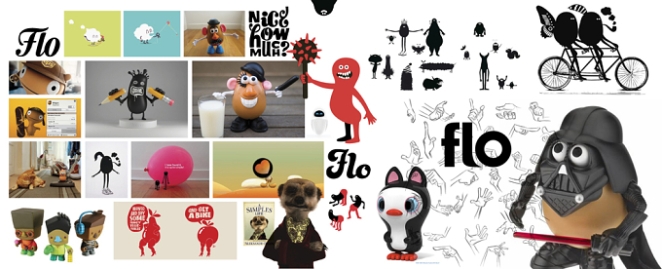 I don’t think our process is unique. It’s simply that we place a high value on creativity and ideas. We invest a lot of time and energy working through ideas - sifting the chaff from the wheat. We work hard to create an environment where any idea, not matter how good or bad can be shared. There’s often some mocking, fun and laughter involved, but we’re careful to make sure people don’t take it personally.
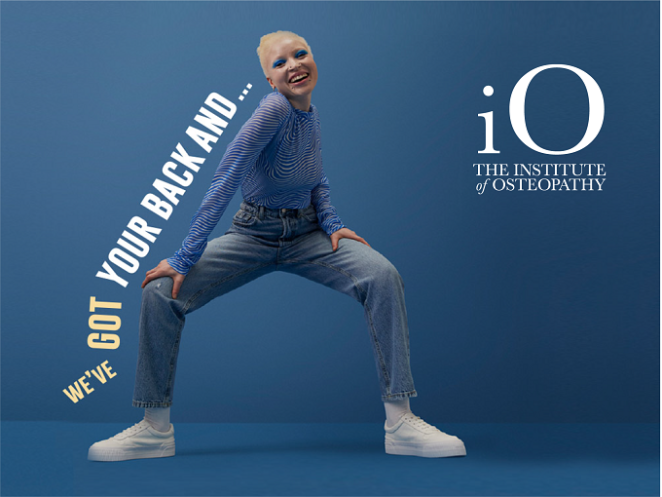
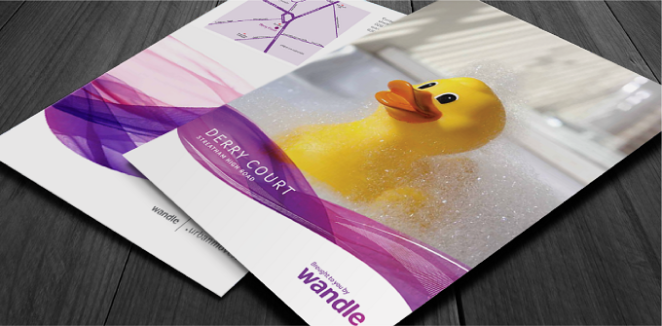
Something else we do is to challenge the client. So much design that we see is created without thought or properly interrogating the brief. An example of challenging the brief from our experience is when one of our clients wanted to promote a new medical centre, this was a major investment for them. Their plan was to create a brochure. We challenged the brief and the result was a brand and marketing that lifted the client’s profile and deeply engaged its audiences.
How has COVID-19 affected your company?
We decided to embrace the change to remote/hybrid working. Typically, we meet in the office once or twice a week. At times those days can seem less productive, but they often produce some of the best ideas, because we’re just chatting and bouncing thoughts off one another.
Years ago, I remember a lecturer saying they had the idea for a brand on the train going home. That’s always stayed with me. Ideas can turn up at the unlikeliest moments. It’s helped us create a culture of trust. We’re not looking over people’s shoulders monitoring the work hours etc… Our team know the brief, deliverables and deadlines. We trust them to get on with it. Of course, we have regular check ins and review sessions, but trust has helped us get the best out of people.
What is one tip that you would give to other agencies looking to grow?
Invest in sales and marketing yourselves. For too long we expected work to fall into our laps, and it did for a long while. But that can run dry and when it does getting momentum behind sales is tough. One of our mentors used to say “What’s the business of the business? Sales!”
How do you go about finding new clients/business? (Pitching, work with retainers, etc.)
 We use several ways to find new business – sales people, marketing, social media, networking. We’ve found it’s not one thing but a combination of things. The temptation is when one thing works to pour all your resources into that thing. But, in our experience it’s not a winning strategy. Of course, we review things regularly and make the odd adjustment here and there. It’s the classic thing, the sum of all parts working together.
Can you share a defining moment in your company's journey that shaped its identity or direction?
Focusing on ideas and creativity then design.
Can you describe a project that challenged your team creatively and how you overcame any obstacles?
 The Background We were approached by ABER Instruments, an employee-owned biotech company based in Aberystwyth, Wales, to update their website. ABER, over 30 years ago pioneered the use of capacitance based technology to measure and monitor viable biomass. Despite inventing such a break-through technolog, ABER Instruments is a relatively small business operating within a massive industry.
The Challenge One of their main competitors, Hamilton, an industry mammoth, had recently released a product offering similar features. The challenge was a classic David and Goliath scenario: how does a smaller company fight a giant that boasts a huge industry presence and a massive marketing budget?
Marketing within the biotech sector is generally product and feature driven. We knew that for our work to be successful, we had to find a way to differentiate ABER. They could no longer rely solely on their technical brilliance and their historical status as pioneers in the field.
The Strategy We started the website update process by gaining a deep understanding of the business, its culture, its products and services, and its underlying philosophy. We put together a comprehensive program involving internal interviews and working sessions to properly define the ABER brand strategy and proposition.
During this process, we discovered that ABER’s true competitive edge wasn’t just their technical innovation, but their ingrained dedication to customer support. We heard story after story of how ABER had gone above and beyond for their clients, even going out of their way to help a customer who had purchased a competitor’s product.
The Execution This insight formed the foundation of our creative solution: "ABER runs through every point."
To bring this concept to life, we implemented several key updates:
- Visual Design: A new graphic device was created to illustrate ABER’s end-to-end service provision.
- Art Direction: We captured new photography showing real people handling and actively using the products.
- Copywriting: We developed new messaging that shifted the focus toward the tangible benefits customers experienced.
- User Experience (UX): The website was given an entirely new structure, ensuring user navigation followed an intuitive path.
- Digital Activation: We launched targeted social media campaigns that drove prospective customers to specially constructed landing pages.
The Results Our approach and work led to a significant increase in sales across both their brewing and biotech divisions.
- A 35% increase in sales of their portable brewing skid.
- The website achieved a huge 350% increase in traffic.
- The business has grown substantially in size, production, capacity, and its global presence. They now have offices in UK, US and China
Can you share a memorable client success story that exemplifies your company's approach and impact?
 There are several and each member of the team has their favourite. Mine is the work we carried out for Acro Aircraft seating. It has remained one of my favourites because of the strength of the idea and branding, and the freedom we were given to apply the brand not only to the website and brochures, but also to the office and manufacturing environments, to the video and animation work, to the event stands and to the advertising. Being able to control how the brand design and messaging was applied throughout meant Acro had consistency across the board.
The idea: We came to the core idea through a rigorous process of research, interviews and working sessions with all the different levels within the business from C-suite through to design, R&D and manufacturing. The idea presented itself in the most beautiful way – a reflection from the design team about their philosophical approach. This tallied up with the sentiment we were hearing from the rest of the business and eventually led to the proposition – Fitting the space around the person.
Part of our research showed that as a sector airline seating manufacturers followed a similar pattern of marketing, focusing on the product and product feature (lightweight, easy to maintain, robust etc…). Fine is you’re a manufacturer selling to a manufacturer. But if you’re selling seats to passengers then you have a different set of concerns such as how can I maximise the number of passengers on my plane? How will this product add to the experience so that they fly with us again?
To show ACRO understood these concerns, we took photography that featured passengers, immediately elevating ACRO’s image and marketing from its competitors. A messaging format was developed focusing on the philosophy and aspiration, and supported by product features and benefits. The event stand was designed to reflect ACRO’s expertise in using space, warmer materials were used throughout to create a great human sense in contrast to the cold glass and steel materials used by competitors.
Results:
- The new ACRO brand was launched at AIX, Europe’s largest and most important aviation event.
- After meeting with senior executives from Virgin Atlantic, one of the team commented to the ACRO CEO how much they liked the new brand and that the ACRO stand was the most passenger focused they had seen at the entire event.
- A few months after the launch we discovered one of Acro’s much bigger competitors had changed their messaging and advertising to match the work we had produced.
- The brand update raised ACRO’s profile and helped the business win a coveted place in the Airbus catalogue.
Do you have any websites, books or resources that you would recommend?
I have a few favourites and go to publications. Below are just a couple
- Little Black Book
- Complaign
- Milton Glaser posters
- Inside Collett Dickenson Pearce
- Portfolio – The work of CDT