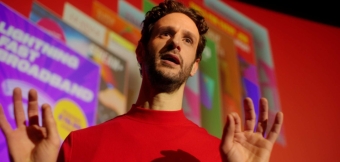

Tito Álvarez de Eulate’s career is rooted in post-production, but defined by something broader: a sustained commitment to storytelling, responsibility, and creative tension. From his early days as an assistant in a post-production services company to supervising large-scale television and documentary projects seen by millions, his path into the industry was gradual, organic, and shaped by experience rather than ambition. Today, working independently from studios in Madrid and northern Spain, Tito selects long-form projects that allow him to move between structure and risk, whether factual series filmed across continents, historical documentaries, or experimental fiction developed with artificial intelligence.
A self-described product of the great television era of the 1970s, Tito approaches creativity with both reverence and skepticism. He resists easy definitions of style, questions the promises attached to new technologies, and draws a clear line between access and creativity itself. In this interview, he reflects on the role of intuition in post-production, the slow and collective nature of creative change, and why respect for the creator matters more now than ever, especially in an industry increasingly shaped by automation and speed.
How did you first get into the industry?
 The story is fairly classic, although time has proven it effective. After finishing my filmmaking studies, I started working as an assistant at a post-production services company. From there, I progressed organically into senior editing, moving through hundreds of projects across very different genres and formats.
When my work began to stand out, mainstream television arrived as a logical next step. It wasn’t a sudden leap, but looking back, it was something I probably should have seen coming.
Even today, I still find it surprising that both my technical and creative work in post-production has been seen by millions of people. That was never part of the plan — and perhaps that’s why it still feels special.
Where are you based now and who do you work for?
I currently run my own studio in Madrid and another one in a small town in northern Spain. I work independently, selecting projects one by one.
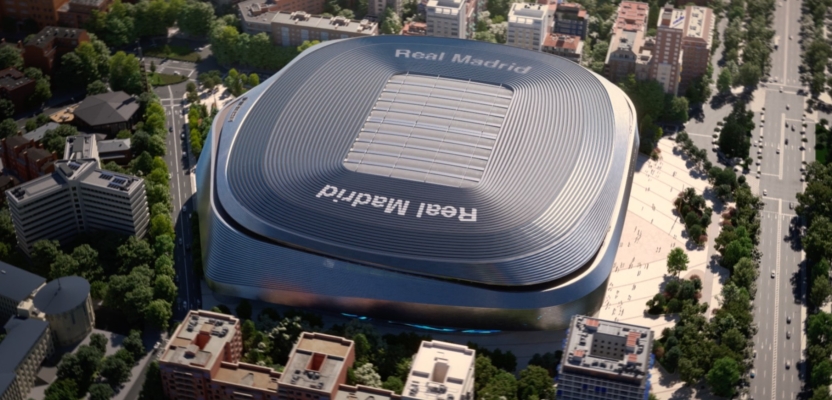
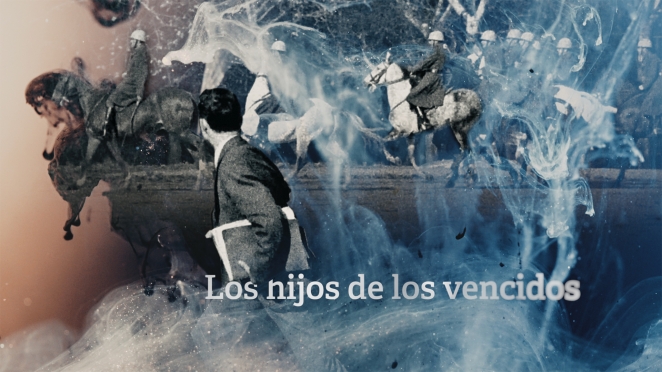
My last three projects each lasted around a year and couldn’t have been more different: a factual series filmed across multiple countries, a historical documentary series about Spain’s political transition, and, more recently, a high-concept fiction series prototype developed using artificial intelligence.
What is your personal background and what role did it play in your career?
 My background is fairly ordinary: middle-class, with a childhood shaped by television as a window to the world. If I had to draw a direct line to my career, I’d say I’m a product of the great television programs of the 1970s an era when the medium still carried strong cultural and narrative ambition.
If we are, in part, what we read, then in our industry we are also what we’ve watched. Television from that period undeniably shaped the way I understand audiovisual storytelling, structure, and responsibility toward the audience.
If you weren’t in your current industry, what would you be doing?
That’s one of those questions usually reserved for movie stars or painters long gone.
Honestly, I’ve never seriously considered it. What I do now is what I enjoy the most. I suspect I’d still be orbiting around something creative — perhaps photography or visual arts — but the truth is, I’ve never felt the need to escape this one.
Can you explain your creative process? What makes it unique?
I don’t believe creative work starts with certainty. If I know exactly where a project is going before it begins, I’m probably just executing a formula.
I make a clear distinction between projects that require craft and projects that require risk. Both matter, but they demand different mental states. What interests me most is the moment where structure is solid enough to allow intuition to take control without collapsing the whole piece.
My process lives in that tension. When it disappears, the work becomes predictable—and I lose interest.
How would you describe your style?
That’s a great question — and one I’m not entirely sure I should answer directly.
Does style originate from within, or is it the unconscious memory of everything we’ve seen before? Where is the line between inspiration and imitation? Can style simply be a distilled sum of a lifetime of images?
That said, I don’t think I’m the right person to define my own style. I prefer to let the work speak for itself.
Which individuals do you gain inspiration from? Do you have any heroes in the industry?
 We’ve been placing one frame after another for over a century, and the list of masters is well known: Lang, Hitchcock, Lubitsch, Buñuel, Welles, Kurosawa, Wilder, Kubrick…
Personally, when I look for inspiration, I tend to look backwards.
What tips would you give to aspiring creatives looking for work?
There is no such thing as a small job.
Every project, even the most modest one, brings something new and unexpected that stays with you. In the long run, coherence matters far more than audience size.
What tips would you give to other professionals to get more clients?
Looking back, the sequence of jobs in my life follows a strangely diffuse logic. Some came by chance, others through contacts, others simply because someone remembered my name at the right moment.
Over time, I’ve accepted that this mixture of randomness and coherence is a natural part of the profession, even if it’s difficult to explain or to replicate deliberately.
Can you share a memorable experience from your career journey that shaped your approach to creativity?
The first time I saw a fiction series I had directed broadcast on the same kind of television channel I used to watch as a child,.
What kind of tools/kit/software could you not do without?
 Today, it’s hard to imagine working without the full Adobe ecosystem; it’s a de facto standard.
In post-production, I’ve tried almost everything, and over time I’ve gravitated toward DaVinci Resolve, which offers a remarkably solid balance between power and control—neither overly opaque nor as simple as it’s sometimes marketed.
At the same time, I’m deeply engaged in exploring generative AI for moving images, particularly through open-source models in ComfyUI, which is emerging as one of the most serious and flexible tools in this space.
What’s your secret to staying inspired and motivated?
By looking at what’s being produced out there, admiring some of it — and then thinking, honestly: I really like what this person is doing.
And then trying to make sure I genuinely like what I’m doing myself.
What’s the work achievement you’re most proud of?
Always the latest one.
And this time, that’s especially true: developing functional prototypes for a fiction series using the most advanced tools currently available.
As someone with experience in the industry, what trends do you foresee shaping the future of creativity?

If I truly knew the answer to that question, we’d probably need a different word for what we currently call “the industry.”
Creativity moves slowly and collectively, almost like an elephant. Only years later, looking back, do you realize how far you’ve traveled — and how unexpected the direction actually was.
That process, sometimes slightly perverse, is also part of what we like to call magic.
What do you think sets apart truly exceptional creatives from the rest of the pack?
Honesty with oneself and the ability to walk away when the tension between idea and reality becomes unsustainable. It’s not easy, but it’s decisive.
How do you think technology has influenced the creative industries and how have you adapted to these changes?
Technology doesn’t democratize creativity; it democratizes access. Creativity itself remains stubbornly selective.
Every new tool arrives with the same promise, more freedom, more possibilities, but the real question is always the same: what survives once the tool becomes invisible?
I approach technology the same way I approach any other cinematic element: if it doesn’t serve language, rhythm, and meaning, it’s just noise, no matter how advanced it is.
What is the one thing that you would change about the industry?
I’d bring back respect for the creator.
In the last decade, the industry has become increasingly comfortable separating creation from responsibility, and that erosion has consequences. Tools change, formats change — but without respect for the creator, everything eventually becomes disposable.
Any websites, books or resources you would recommend?
Creativepool, of course.