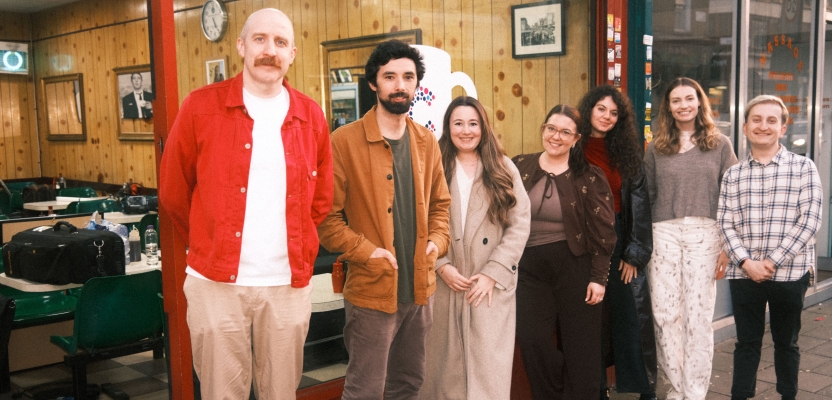

When one of the most significant pieces of public health legislation in UK history became law, Cancer Research UK wanted to mark the moment in a way that felt deeply human rather than politically procedural. Working alongside creative agency eight&four, the campaign celebrated the passing of the Tobacco and Vapes Bill by putting the people whose lives have been shaped by smoking and those who fought for change at the heart of the story.
Instead of relying on statistics or speeches, the team created the Cancer Research UK Café, a welcoming space where cancer survivors, campaigners, researchers and members of the first smoke-free generation could share authentic, unscripted conversations. We spoke to Christopher Slevin, Creative Director at eight&four, about the strategy, collaboration and production process behind a campaign designed to make a landmark piece of legislation feel personal, emotional and impossible to ignore.
What was the brief?
In April the Tobacco and Vapes Bill passed into law, which will ensure anyone born on or after 1 January 2009 will never be legally sold tobacco anywhere in the UK. This campaign was to highlight that law’s vital role in preventing smoking-related cancers, and recognising Cancer Research UK’s legacy contribution in making it possible.
How did the initial pitch/brainstorming phase go?
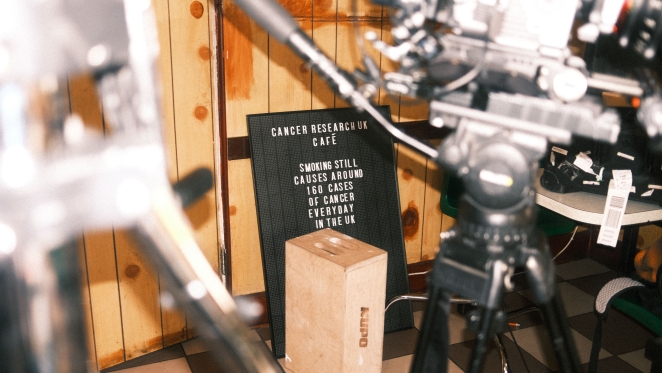 This law is about real people, and came into effect thanks to the work and experiences of those who had suffered and those who had campaigned so tirelessly in order to bring about the first smoke-free generation in the UK. We needed an idea that would put them at the forefront. And what else is a Great British leveller, a space everyone feels welcome, than the traditional cafe?
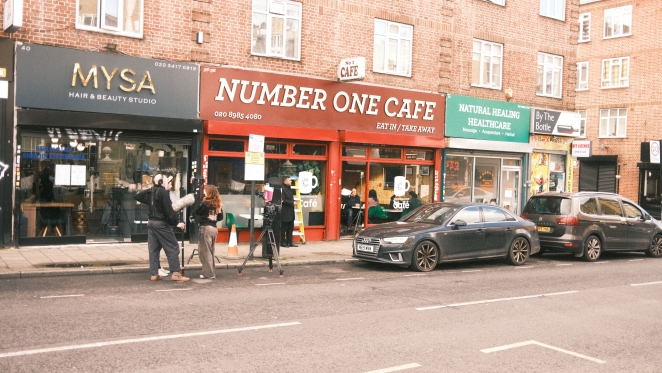
So we opened the Cancer Research UK Cafe, inviting down those real people to share their authentic stories of addiction. People who’d lost loved ones, those who’d suffered from smoking-related cancer themselves, and those who’d campaigned and fought for the change in the law – as well as those who have worked tirelessly for so long researching this disease. And also not forgetting those who represent the new smoke-free generation.
The most important thing was making a space where real people felt open to share their experiences. This is a social-first campaign so it needed to feel real, authentic and put people’s stories and experiences at the forefront.
What was the process behind ideating the concept?
As always, members from our strategy team (this time Director Julius Judah and Audience Lead Annie Harte) set the tone, diving into the research to dig out the insights that would prove invaluable as we progressed through the process.
We settled on two routes through which we believed we could achieve our desired goal. The first was Pride, and the second Belonging. We then developed a creative approach for both options before brainstorming with the team. Following this, six ideas were whittled down and developed to be shared with the client in a tissue meeting. From here routes were chosen and fleshed out before a final presentation.
That winning idea was then taken and developed alongside the client team. As it was such a big piece of news for the charity and country, we needed to be absolutely bang on with the messaging, so that ability to work directly with whoever we needed to at Cancer Research UK was incredibly beneficial.
What was the production process like?
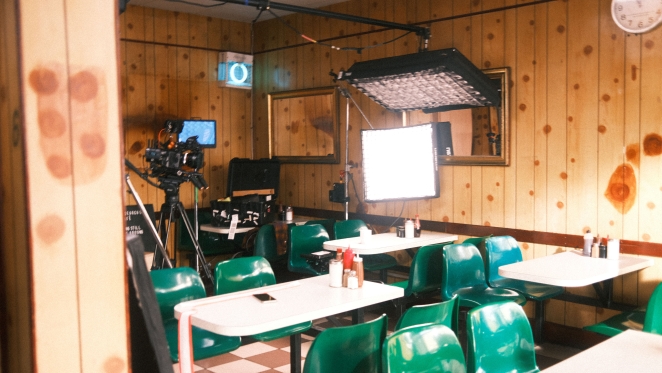
The day of the Royal Assent (which is when the bill becomes a law) was very much a moving goalpost, so we had to make sure we were prepared for the eventuality well in advance. Georgie Sheen ran point-on production alongside our Creative Director for Video Henry Scriven. They pulled a great team together to ensure a smooth process. As we wanted the realness to shine through, we didn’t script the actual interviews, instead working to a modular concept with key beats we wanted to hit. This of course didn’t make life easy for the production team, but it enabled us to get what we needed to keep true to the authentic tone of the charity.
What was the biggest challenge during production? How did you overcome it?
 I’d say the hardest part of the production was listening to some incredibly moving interviews. Not being in this world day-to-day you really can’t be prepared enough for what you are going to hear from the amazing, brave cancer survivors and campaigners. We overcame this through the inspiration they projected. We knew we had a responsibility to do a good job to make their story heard.
What kit/tools/software were used to create the project?
Our approach was built around authenticity, creating a space where real conversations could unfold naturally. We shot on the Sony Venice paired with Canon Sumire primes to support that vision, combining cinematic richness with an observational feel. The Venice allowed us to capture the texture and atmosphere of the café environment in beautiful detail, while the Sumire lenses brought warmth, softness and humanity to the image. Together, they helped create a film that felt immersive and emotionally grounded, as though the camera had simply arrived in the middle of a genuine moment.
What is one funny or notable thing that happened during production?
At one point our social partner Kate Higginson, who was doing an amazing job capturing vox-pops outside the cafe, somehow took a starring role in a music video for a local artist who was passing by. In return they got involved in the vox-pops which was a great exchange.
What’s the main message of this project and why does it matter?
The new law is world-leading legislation to raise the age of sale of tobacco, to create a smoke-free generation. Nothing would do more to prevent cancers in the UK than ending smoking.
How did you ensure that the concept aligned with the brand's values, goals, and target audience?
One of the important things to the client was real people telling real stories. Giving them the canvas of a real place – the Cancer Research UK Cafe – heightened that authenticity and gave our guests a space in which they could feel at home and safe.
Were there any alternative concepts or ideas considered during the ideation phase? If so, what led to the selection of the final concept?
There were indeed. One especially was extremely well received by the client so may happen in another iteration in the future, so sadly I can’t divulge! However, The Cafe put their survivors at the heart of the idea and that’s ultimately what led to its selection.
Can you discuss any collaborative or interdisciplinary aspects of the ideation process, such as working with other departments or external partners?
 At eight&four we always cast a wide net at the beginning of the process, making sure we hear from as many voices as possible. And as mentioned, having a great relationship with the client helped tremendously.
How did you ensure that the concept remained innovative and stood out in a crowded marketplace?
We made sure we made content that was fit for purpose for the channel on which it was appearing. It’s a simple thing but often gets overlooked. As lovely as a widescreen piece of content looks on a big screen, no one wants to watch it played through Instagram on their phone.
What do you hope it achieves for the brand?
More funding, more support, and more laws in the future to protect the people of the UK.