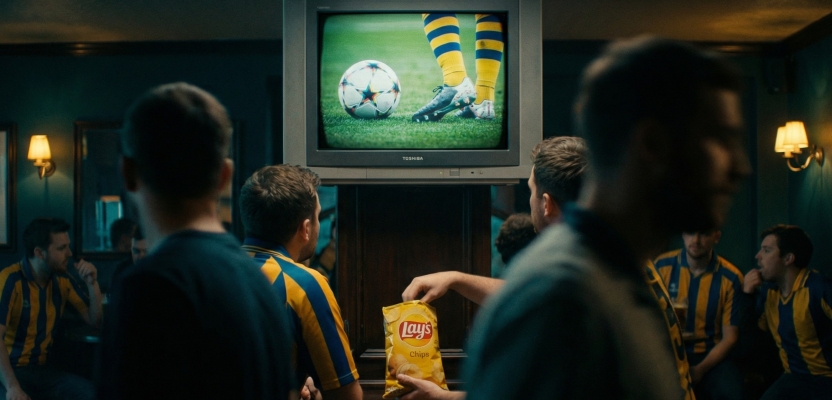

As AI continues to transform the advertising industry, creatives are finding new ways to blend technology with storytelling. A Handful of Passion is an AI-generated spec ad for Lay’s that explores the emotional rituals surrounding football fandom ahead of the FIFA World Cup. Created by Creative Copywriter Julien Marsouin and Art Director Marcos Siquiera, the project demonstrates how AI tools can be used to craft visually cohesive, brand-focused campaigns without losing creative intent.
In this interview, Julien shares the inspiration behind the concept, the challenges of maintaining consistency in AI-generated filmmaking, and the production workflow that brought the project to life. From prompt direction and visual storytelling to the growing role of AI in advertising, he offers valuable insights into the future of creative production and branded content.
What was the production process like?
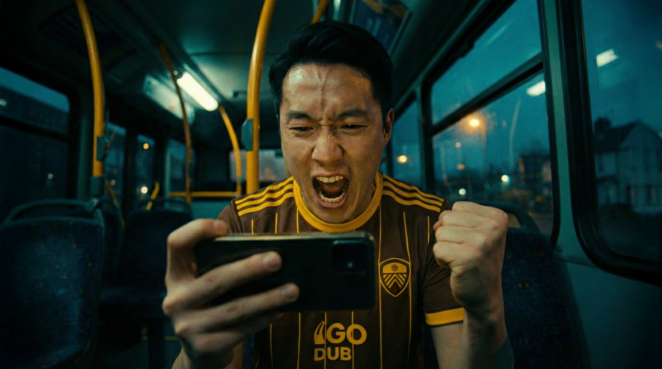 The process was much closer to designing a visual system than producing a typical traditional film. Because the spot was entirely AI-generated, consistency became the real production challenge from day one: consistency of tone, framing, textures, pacing, characters behavior, or camera language.
We approached this spec project almost like an art-direction pipeline. Before generating final shots, we spent time defining a clear visual grammar: lens behavior, lighting logic, color hierarchy, transitions, and motion restraint. All of that allowed us to maintain coherence across scenes, which was one of our main focus, while still exploring visual ideas throughout the whole process.
Another key point we quickly noticed: the AI tools became part of the creative process rather than simple execution tools. I know, cliché, but terribly true. Instead of forcing outputs, we learned to direct them through iteration, selection, and refinement (almost like working with multiple teams simultaneously). In many ways, the production became a balance between precision and letting certain « happy » accidents emerge. The interesting part was not replacing creativity with AI, but building a workflow where creative intent could survive through highly generative systems.
What was the biggest challenge during production? How did you overcome it?
Since we were showcasing the football atmosphere, which is always very difficult in these kind of exercices, we quickly realized that if every scene tried to maximize spectacle, to be « too much », the film would lose its identity. So the solution was actually restraint. We limited the visual language, repeated certain compositional patterns, controlled the pacing, and kept camera movements very intentional and minimal. As you can see, most of the movements are slight push-ins.
Regarding the writing and directions of prompts, we also treated it less as isolated instructions and more as continuity direction. Every new shot had to inherit visual information from the previous one: texture, atmosphere, framing logic, movement rhythm. That mindset helped the film feel more unified and less like a sequence of disconnected AI experiments.
What kit/tools/software were used to create the project?
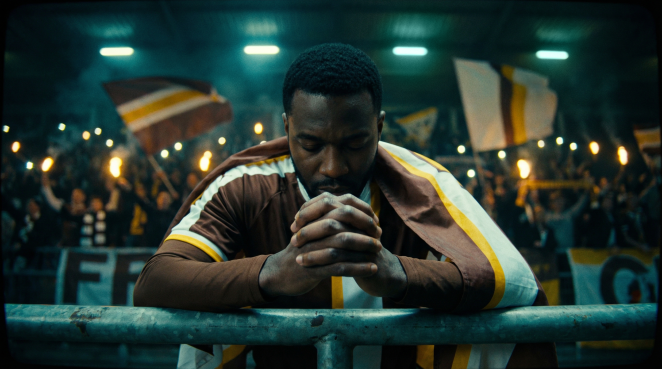 A bunch of tools were used depending on the production stage: Nano Banana Pro for image, storyboard and character generation; Veo3, Seedance, Higgsfield AI and Kling AI for motion and animation; ElevenLabs and Suno for voice, sound design and music; and Adobe Premiere Pro for editing, compositing and color grading.
What is one funny or notable thing that happened during production?
As I said above, the notable thing of this was to see how the process became a HANDS-on exploration of creative choices: how color palettes influence emotion, how camera movement changes the narrative, how lighting can shift the entire atmosphere. It made these nuanced creative choices much more accessible, turning the process into a real creative exploration rather than simply a shortcut.
How long did it take from inception to delivery?
Roughly one month. It’s difficult to quantify precisely because my teammate Marcos Siquiera and I were simultaneously working on other projects. But once the storyboard and creative treatment were validated, the project evolved very quickly.
Can you describe the creative spark or inspiration behind the initial concept? Was there a specific moment or insight that ignited the idea?
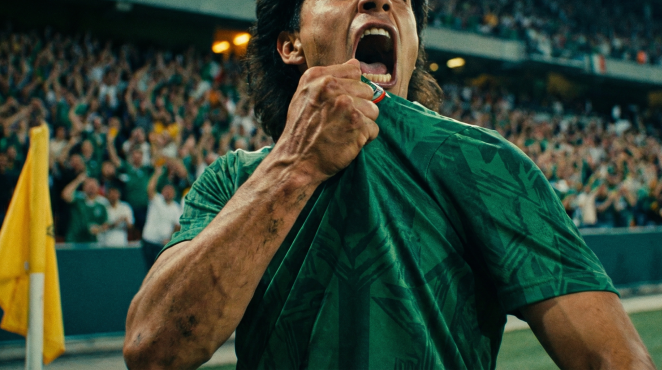 We were looking for a great opportunity to connect the brand with a major cultural moment, especially with the World Cup in the U.S. getting closer.
The idea came from observing the contrasts inside a football match. We realized that hands actually play a huge role in the experience, yet nobody really talks about it: hands freezing before a penalty, covering faces, clapping, clenching into fists, even praying.
From there, the question became: how do we naturally connect that to Lay’s? And the answer was surprisingly simple. Hands opening the bag, grabbing a crisp, going back for “just one more,” but also hands harvesting potatoes. I short, hands literally experiencing the product.
“A Handful of Passion” became a way to capture that emotional and physical connection in a very simple, tangible way.
How did you ensure that the concept aligned with the brand's values, goals, and target audience?
As true football fans, we were naturally aware of this concept was well aligned with the brand. We tried to keep the project aligned with what makes Lay’s such a strong global brand: simplicty, good energy and visual « pleasure ». Even though the production was highly experimental from a technical standpoint, we didn’t want the film to feel cold, too cinematic or overly futuristic. The focus stayed getting a lively tone that still felt recognizable within Lay’s brand universe.
Were there any alternative concepts or ideas considered during the ideation phase? If so, what led to the selection of the final concept?
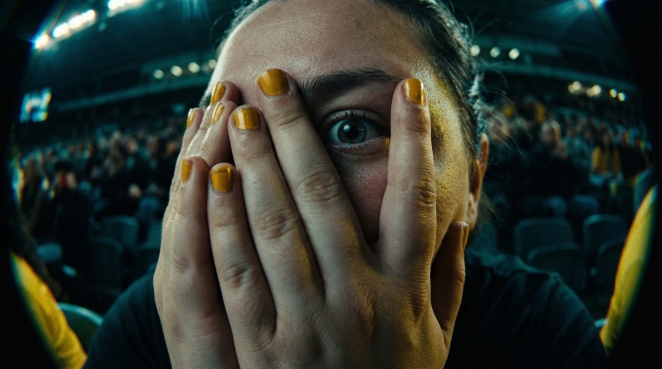 No. The concept felt clear quite early because it made simple emotions… tangible. Lay’s has never really been about the match itself, performance, or what happens on the pitch. The brand lives around the game (with the fans, the rituals, the gatherings, the celebrations.) Therefore, that emotional territory immediately felt like the right direction creatively.
Can you discuss any collaborative or interdisciplinary aspects of the ideation process, such as working with other departments or external partners?
One interesting aspect of this spec ad was to test how closely ideation and execution could become as tight as possible. That was the main goal actually. For us as a creative team, the project became a way to better understand how AI tools could help narrow the distance between an initial creative idea and a finished visual output. That changed the collaboration dynamic quite a lot, because creative thinking, art direction, and production decisions were happening simultaneously throughout the process. Not step by step, as we usually do!
Credit list for the work?
Marcos Siquiera (Art director)
Julien Marsouin (Creative Copywriter