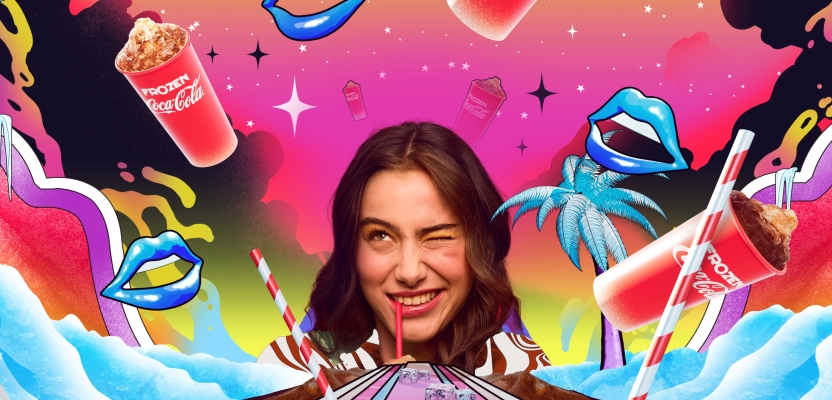

When Coca-Cola challenged Golden Wolf to visualize the unmistakable jolt of a brain freeze in a six-second spot, Associate Creative Director Mathieu Durand and his team didn’t just deliver— they exploded the brief into seven wildly distinct animated universes. From claymation morphs and Y2K digital glitches to pixel-perfect gaming throwbacks and trippy, mind-melting sequences, each mini-film packs enough visual invention to make your head spin.
In this Behind the Idea, Mathieu pulls back the curtain on the front-loaded design process, the creative gambles that paid off, and the cross-disciplinary magic—from influencer edit to AR filter— that turned a regional launch in Asia-Pacific into a full-blown, multi-touchpoint experience. Join us as we trace every storyboard sketch, styleframe flourish, and collaborative spark that brought Coca-Cola Frozen to frosty, unforgettable life.
What was the brief?
Our client approached us to create seven snappy animations promoting Coca-Cola Frozen, their new slushy drink that launched across the Asia-Pacific market in 2023. They specifically wanted us to work on the McDonald's partnership activation, bringing the campaign to life.
We needed to craft a series of punchy 6-second spots that really nailed the brain-freeze sensation you get from Coca-Cola Frozen. We also created some animated content for three influencer collaborations, and we teamed up with Stink to create AR filters for TikTok, making the experience even more interactive.
What was the process behind ideating the concept?
The whole campaign revolved around one core question: what does brain freeze actually look like? We answered this by crafting seven animated universes, each entirely different from the other, and made to embody that ice cold feeling of brain freeze.
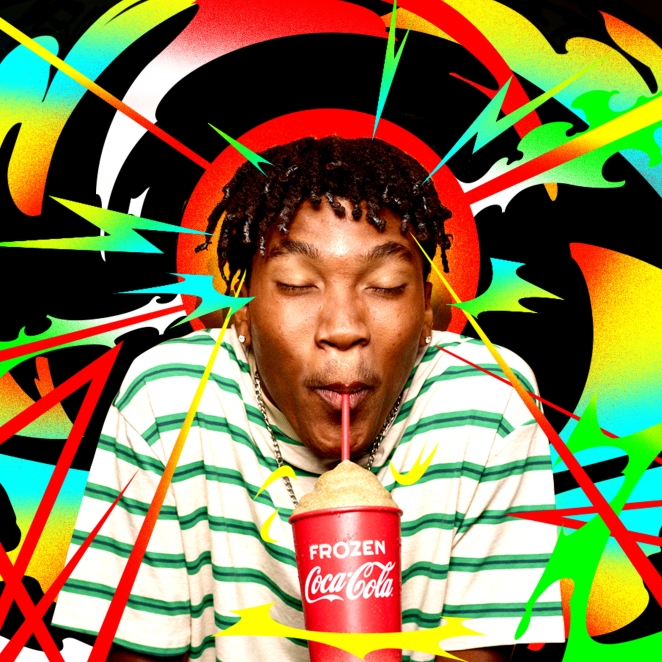
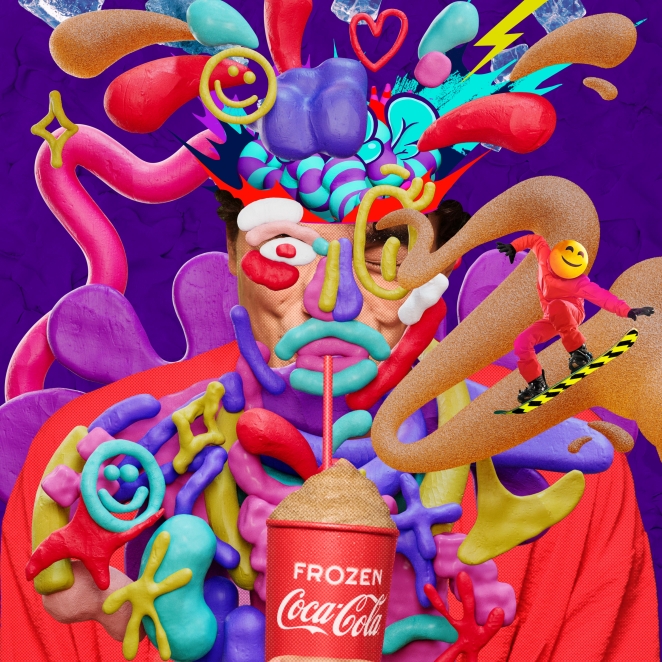
We went all in. We're talking claymation-style 3D morphing, 16-bit gaming nostalgia, trippy face-melting sequences, 90s computer glitch aesthetics… the works. The sheer variety was both our biggest challenge and our biggest reward. We threw ourselves into exploring almost every visual language we could think of, and honestly, we could have kept going!
What was the production process like?
We're firm believers in front-loading the design phase, especially when juggling seven completely different visual styles. Beautiful and detailed styleframes are non-negotiable for us, they're what make the final spots truly memorable instead of just okay.
Each of the seven worlds got the full treatment, with every pixel packed with easter eggs and gorgeous little details that reward closer inspection. Once those designs were locked and loaded, we moved into animation mode.
We split the team strategically, giving each motion designer a spot to own from start to finish. But here's where it got interesting, our artists constantly shared, swapped, and built on each other’s ideas, jumping in to create assets and animate sequences for one another’s films. This kept the energy high and the ideas flowing.
Throughout the whole production, we maintained a tight feedback loop with the client, walking them through our thinking, showing the evolution of each spot, and making sure we stayed aligned. It was intense, creative, and exactly the kind of project that reminds us why we love animation.
What was the biggest challenge during production? How did you overcome it?
Juggling seven distinct motion and design styles was no small feat. Each spot had to stand alone as a mini-masterpiece yet still feel part of a unified campaign - a delicate balancing act.
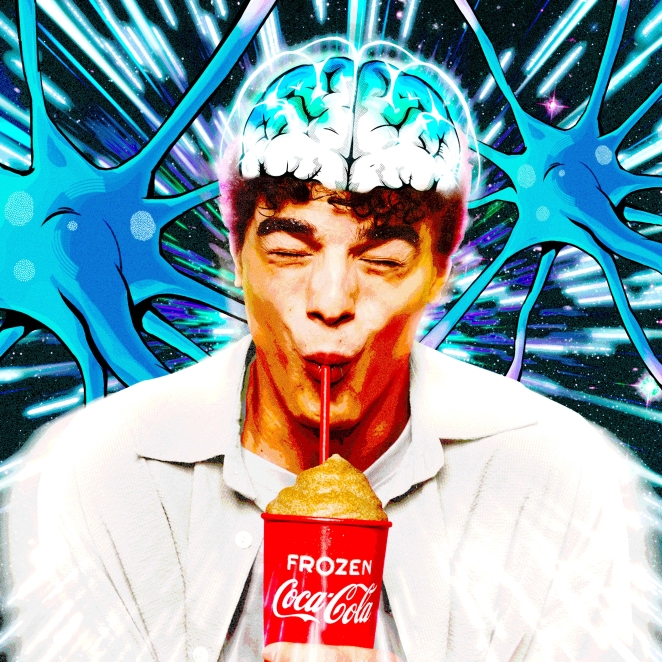
A bigger challenge still, to take all those intricate, detail-heavy designs and make them sing in just six seconds. With each styleframe packed with intricate detail, we had to choreograph the animation perfectly to ensure viewers could actually absorb what they were seeing. It's like trying to fit a short film's worth of visual storytelling into the time it takes to sneeze.
What kit/tools/software were used to create the project?
After Effects for all the motion graphics and compositing, C4D for the 3D and Photoshop/Illustrator for all the designs.
Can you describe the creative spark or inspiration behind the initial concept? Was there a specific moment or insight that ignited the idea?
The client's brief was all about capturing the brain freeze experience in fresh, unforgettable ways, with each film living in its own weird and wonderful world. From this central concept, we developed seven distinct creative routes.
"Clay Brain" celebrated everything we love about claymation, with the entire world morphing into clay the moment our actor sipped that Frozen Coca Cola. "Glitch Core" threw viewers straight into a Y2K fever dream of digital chaos. With "Mind Zoom", we took people on a journey deep inside their own brain as the freeze hit, and the further down we went, the wilder things got.
"Head Banger" leaned into that classic 2D animation style Golden Wolf is well known for, while "Mind Blown" tapped straight into meme culture territory. "Game Freeze" transformed reality into a nostalgic 16-bit video game world, and "Dream Scape" wrapped everything in vibrant colours, glossy textures, and those trippy, dreamy patterns that make you question what's real.
We're suckers for giving our concepts these playful, punchy names. It keeps things fun for the client presentations and gives our team something memorable to rally around during those long production days.
How did you ensure that the concept aligned with the brand's values, goals, and target audience?
Coca-Cola approached us with a challenge we couldn’t resist: how do you make people excited about a new spin on a classic they already know and love?
The key was building a solid partnership with their team from day one. Open communication kept everyone aligned as we crafted a campaign designed to spark curiosity and drive trial. We know animation is a secret weapon, it's unmatched when it comes to creating visuals that stick with people long after they've seen them.
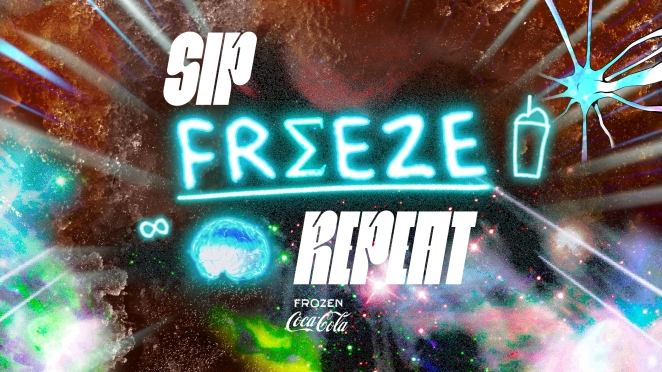
The client brought in real actors for the spots, giving the campaign an authentic human touch that would resonate with Coca-Cola's target audience. We also teamed up with three influencers, taking the raw footage they shot and transforming it into custom animated content that felt uniquely theirs. This gave us multiple touchpoints while keeping everything cohesive.
The final piece was developing three AR filters for social media. These weren't just passive ads, and they let people actually play with the campaign elements, turning viewers into participants and extending the experience beyond traditional media.
Were there any alternative concepts or ideas considered during the ideation phase? If so, what led to the selection of the final concept?
While we went through plenty of iterations on the details, the seven core concepts actually locked in pretty early in the process.
Our original vision for one of the spots was pretty intense – we wanted to show the talent taking a sip of Coca-Cola Frozen and then dramatically melting away, revealing a shiny chrome skeleton. It was visually striking and definitely memorable, but when we presented it to the client, it was clear we'd pushed slightly too far from their original vision.
Rather than scrap the whole transformation idea, we developed a way to dial it back while keeping the core concept intact. We pivoted to having the actor morph into an outer-worldly character made entirely of ice and frozen elements. It still delivered that dramatic visual punch we were after, but in a way that felt more aligned with Coca-Cola's brand personality.
Sometimes, the best creative solutions come from the moments where you have to rethink your approach. Those points where you’re pushed to think a little harder and longer, ultimately produce a stronger creative.
Can you discuss any collaborative or interdisciplinary aspects of the ideation process, such as working with other departments or external partners?
Working with Stink on the three AR filters was one of the most enjoyable parts of the project, fueled by a truly collaborative process from day one.
Our animations became the foundation for the filters, but it wasn't just a case of handing over finished assets and walking away. We started with a series of calls where the Stink team walked us through the technical ins and outs of how AR filters actually function. Understanding their pipeline helped us think differently about how to create content that would work seamlessly in that environment.
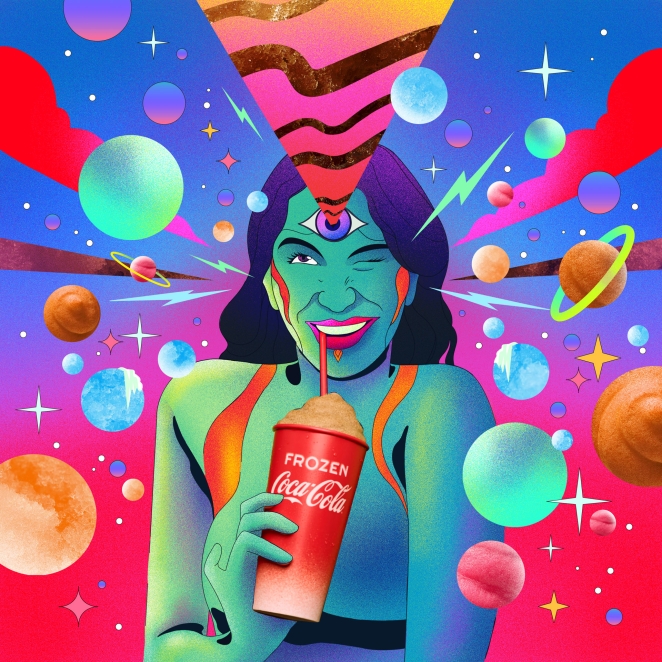
From there, we developed a rhythm of creating animated assets specifically designed for their integration process. It became this ongoing conversation where we'd send over elements, they'd test them in the AR space, and then we'd refine based on what we learned. Sometimes an animation that looked perfect in our standard pipeline needed tweaking to work properly when overlaid on a real-world camera feed.
The back-and-forth kept both teams engaged and invested in making each filter as polished as possible. By the end, we'd created something that felt like a genuine collaboration rather than just a vendor relationship. The final filters exceeded what either of us could have achieved working solo, and they're pretty incredible to play around with!
Can you discuss any unique or unconventional production techniques or approaches used to bring the idea to life?
With seven completely different visual styles, you can imagine the range of techniques we had to pull together for this project. Each concept demanded its own technical approach, which kept things interesting but also meant we were constantly switching between different skill sets.
For the 3D work, we built out a solid library of assets. Everything from detailed models of the Coca-Cola Frozen cup to a model of the actor that lets us move the camera freely around our talent.
The clay-based concepts were particularly fun to tackle. We developed these custom clay shaders that we could apply to all sorts of animated shapes and swirls. There's something satisfying about getting that material to behave just right, capturing that organic, slightly imperfect quality that makes clay feel real rather than digital.
For the retro gaming aesthetic, we went full nostalgia mode and dug deep into classic video game production techniques. We hand-animated character sprites pixel by pixel and recreated those chunky UI interfaces that defined early gaming. Working within those limitations actually sparked some of our most creative solutions.
But honestly, "Head Banger" remains my personal favourite from a technical standpoint. The way we blended 2D and 3D elements created this unique visual language that felt both familiar and totally fresh. It's the kind of hybrid approach that only works when you really understand both techniques inside and out, and seeing it all come together was pretty satisfying and very Golden Wolf!
How did you ensure that the concept remained innovative and stood out in a crowded marketplace?
The key here was how we embraced creative chaos over safe choices. Each style was pushed to its absolute limit with full commitment: hand-animated pixel sprites, custom clay shaders, and our signature 2D/3D hybrid techniques.
Another real differentiator was the interactivity aspect of the project. The AR filters weren't marketing afterthoughts but core campaign elements that turn viewers into active participants. In a world of polished, predictable ads, we chose to be genuinely weird and wonderful, packing each spot with easter eggs that reward repeat viewing.
What do you hope it achieves for the brand?
We wanted to shift perception and drive curiosity around Coca-Cola Frozen - not just announce a product, but make people excited to try something from a brand they thought they knew already.
By showcasing brain freeze through seven wild visual universes, we're positioning Coca-Cola Frozen as delivering a genuinely different experience. The multi-touchpoint approach with influencers and AR filters extends the conversation beyond traditional media, keeping Coca-Cola feeling innovative, fun and, of course, cool! ;)
Credit list
Brand: Coca-Cola
Agency: Hogarth, Ogilvy Singapore
Golden Wolf
Managing Director: Dotti Sinnott
Studio Director: Henry Purrington
Executive Creative Director: Stefan Falconer
Executive Producer: Ginger Hanner
Director of Production: Heidi Stephenson
Associate Creative Director: Mathieu Durand
Senior Producer: Jade Jordan
Associate Talent Director: Beatriz Rodrigues
Production and Resource Support: Caitlyn Burnett
Technical Director: Ian Pinder
Marketing Coordinator: Pixie Barnes
Design: Johnny Cardoso, Nick Stoney, Cendan Claiborne, Jonas Devacht, Lisett Ledon
Fernandez, Andy Cambiasso, Diego Rodriguez, Matthew Schoen, João Lavieri
Animation: Laurence Parsons, Tim Whiting, Yat Fung Leung, Mathieu Dellabe, Jo Baaklini,
Stefan Ahmad
Comp: Laurence Parsons, Yael Bloom, Ian Pinder, Stefan Ahmad
Junior Producer: Danielle Bordelon
Production & Resourcing Intern: Isobel Wilson
Motion Graphics: André Leite, Adrián Domenech, Stefan Ahmad
Comp: Jo Baaklini, Yael Bloom