
In a creative industry often driven by aesthetics and fast execution, Lively Green Strategic Brand has built its reputation on a different philosophy: strategy comes first. Founded by Jeff Au, the Singapore-based agency believes that branding should solve business problems, not just create visual appeal. With experience spanning organisations such as Temasek Holdings, Swire Properties, Standard Chartered, and AXA Singapore, the agency has carved out a niche by combining strategic thinking with disciplined creative execution.
In this interview, Jeff shares how Lively Green grew from a belief that “design without strategy is just decoration” into a trusted branding partner across Southeast Asia. He discusses the challenges of shifting client perceptions around branding, the importance of long-term relationships, the role of AI in the future of creativity, and why human judgment still matters more than ever in an era of endless automated outputs.
How was your company born and where are you based?
 Lively Green started from a simple but firm belief: design without strategy is just decoration. After years managing creative studios across Singapore and Hong Kong — working with organisations like Temasek Holdings, Swire Properties, Standard Chartered Bank, and AXA Singapore — I saw a clear gap. Most agencies were strong on execution but short on strategic thinking. Clients needed a partner who could sit at the business table first, then design from there. That is what we set out to build. We are based in Singapore, with a presence in Hong Kong. From day one, the goal has been the same: help brands grow in a way that lasts.
What was the biggest challenge to the growth of your company?
The hardest challenge has always been getting clients to see design as a strategic business decision, not just a visual one. A lot of organisations come to us focused on what they want — a new logo, a refreshed website, a campaign — without stopping to ask why their current brand is not working. Our job starts with that “why”. Getting buy-in for that deeper conversation takes time and trust, especially when budgets are tight and timelines are short. At the same time, growing the business while holding the line on quality has taken real discipline. We have never chased volume. Every person we bring in, every project we take on, has to meet the same standard we have set from the beginning.
Which was the first huge success that you can remember?
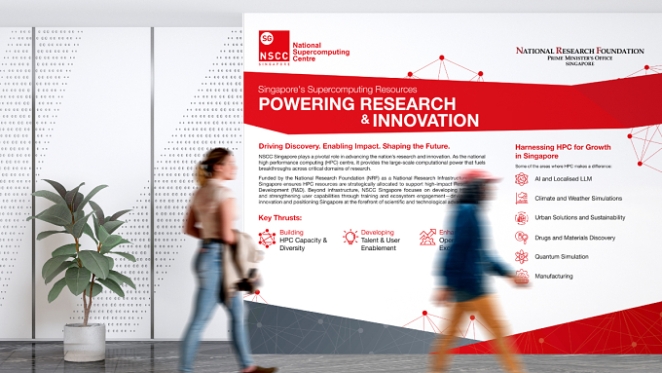
Early on, being brought in by major public sector organisations in Singapore — National Healthcare Group, National Library Board, PUB Singapore, HTX Singapore, National Supercomputing Centre (NSCC), Infocomm Development Authority — was a real turning point. These were not clients who hired an agency on a whim. They had high standards, complex communication needs, and a lot of stakeholders to bring along. Delivering for them gave us a track record that opened doors across both the public and private sectors. It confirmed that what we were doing — leading with strategy, backing it up with solid design — worked in the real world, not just in theory.
What’s the biggest opportunity for you and your company in the next year?
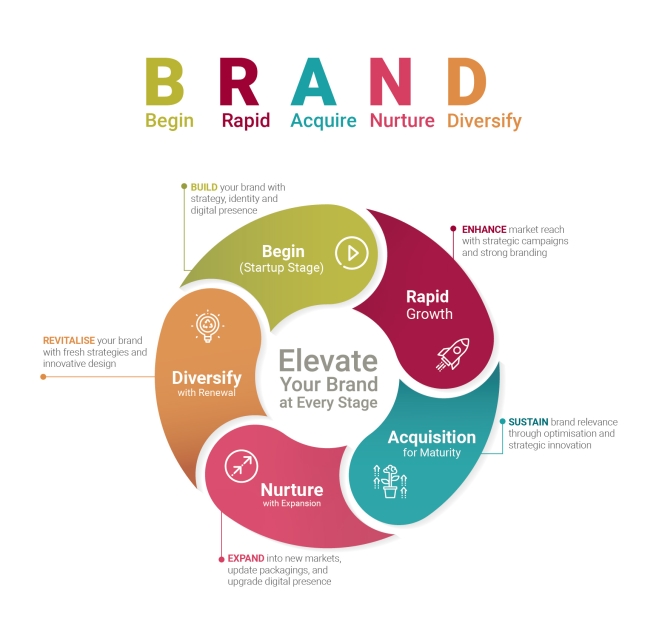 Across Southeast Asia, a lot of businesses are going through significant change — new markets, new digital channels, new audiences. Many of them built their brand identity years ago and it simply was not designed to stretch that far. That is where we see the biggest opportunity: helping organisations rebuild their brand foundations so they can grow with confidence, not just patch things up as they go. We are also doing more work with purpose-led organisations — in healthcare, education, and sustainability — where good branding does not just help the business, it helps the cause. That kind of work matters to us.
Can you explain your team’s creative process? What makes it unique?
We approach every project with a problem statement first. Before we sketch a single idea, we spend time understanding what is actually not working — not just visually, but at the business level. Who are the audiences? What do they currently think, feel, and do? Where is the disconnect? That research shapes everything that follows. We think of it a bit like engineering: break the problem down into its parts, then design a solution that addresses each one. What makes our process different is that we stay in that strategic conversation throughout — not just at the start. Design decisions get made with the brief in mind, not just aesthetic preference. And because our team covers brand strategy, corporate design, publication, digital, and event branding, we can see how all the pieces fit together and make sure they do.
How does your team remain inspired and motivated?
Our team comes from different cultures and backgrounds, and that is genuinely where a lot of our energy comes from. We dedicate time each month specifically for learning — no client work, just exploring. New tools, new industries, new ways of thinking. And when someone brings something back, they share it with the team. That ripple effect keeps things fresh. Beyond that, the clients themselves are a big part of it. Every brief carries a real story — a founder building something from scratch, a long-standing institution trying to stay relevant, a product that deserves a better stage. When you care about those stories, the motivation takes care of itself.
How has COVID-19 affected your company?
 It hit us like it hit everyone — events cancelled, physical work on hold, clients pulling back on spending. But it also forced some useful conversations. We had already been talking about digital-first brand thinking; COVID made that urgent for clients who had been putting it off. We moved quickly to help them adapt — virtual event branding, digital communications, social content. Internally, we sharpened how we worked remotely and documented our processes better. The bigger lesson was this: the clients who kept investing in their brand during that period came out stronger. Brand is not something you pause when things get hard. If anything, that is when it matters most.
Which agencies do you gain inspiration from? Do you have any heroes in the industry?
Landor & Fitch is a long-standing reference point for us — they prove that brand thinking can operate at the highest business level without losing design quality. Wally Olins is someone I keep coming back to. He was one of the first to argue that branding is not about logos; it is about what an organisation actually stands for and how it behaves. That thinking is still underused. Closer to home, we pay attention to what strong Asian firms are building — firms that understand local culture and do not just apply Western frameworks to different markets. Honestly though, some of our best inspiration comes from outside design altogether — architecture, product engineering, even hospitality. The best brand experiences borrow from all of it.
What is one tip that you would give to other agencies looking to grow?
Build relationships before you need them. Most of our growth has come from clients who came back, or who introduced us to someone they trusted. That does not happen if you treat every project as a transaction. Show up properly, be honest about what you can and cannot do, and care about the outcome as much as the client does. The work does the talking eventually — but only if the relationship is strong enough for clients to stay long enough to see it.
How do you go about finding new clients/business? (Pitching, work with retainers, etc.)
 Most of our new business comes from referrals and returning clients. When someone who worked with us moves to a new role, they often bring us with them. When a client recommends us to a peer, it is because the work earned that recommendation. We also keep our portfolio active on platforms like Creativepool and Behance so that new clients can understand what we do before we even speak. For larger projects, we do pitch — but selectively. We would rather spend our energy on the right opportunities than chase everything. And we always pitch with our thinking, not just our credentials.
What’s your one big hope for the future of the industry?
I want to see brand strategy treated as a real business discipline, not something you bolt on at the end. Too often, organisations call an agency when they already have a brief, a timeline, and a fixed budget — and the strategic work that should have informed all of that never happens. The brands that get it right bring design thinking early, alongside product, operations, and leadership. When that happens, the results are completely different. My hope is that more business leaders come to understand that. A well-built brand is not a cost; it is one of the most durable assets a company can have.
Can you share a defining moment in your company's journey that shaped its identity or direction?
Our identity was not forged in a boardroom, but in the moments our clients reached out — not for more options, but for clarity.
We realised that in an era saturated with automated solutions and AI-generated outputs, businesses are often overwhelmed by "more." The shift came when we noticed a recurring pattern: clients were no longer asking us to simply execute a project; they were asking us to help them decide.
While AI can provide a thousand variations in seconds, it lacks the accountability and strategic ownership that a human partner provides. Our clients turn to us because they value our judgment and our commitment to their long-term growth. They aren't looking for a list of possibilities; they are looking for a recommendation they can trust.
This realisation solidified our direction. We aren't just a branding agency; we are the stewards of our clients' long-term visions. We take ownership of the thinking, not just the output — ensuring that every decision is grounded in strategy and driven by purpose.
How do you foster a culture of innovation and experimentation within your team?
 We try not to make innovation a big formal thing. It just has to be part of how you work day to day. We give the team room to push beyond the brief — to ask what if we did it differently — without the pressure of getting it right the first time. We set aside dedicated learning days each month where no one is on client work. Our team uses that time to explore, experiment, and share. When someone discovers something useful, they bring it back to the group. That sharing is important. Good ideas do not stay in silos here. And honestly, some of our best work came from moments where we were not sure it would land. You have to be willing to try.
What measures do you take to ensure diversity and inclusion are prioritised within your company?
It is genuinely built into the team rather than something we manage as a policy. We have people from Hong Kong, Singapore, Indonesia, UK, and other backgrounds — across design, strategy, content, and communications. That kind of range changes how you read a brief and what you notice in the work. We are also deliberate about which clients and causes we take on. Healthcare, education, non-profits, social services — these are not the highest-paying clients, but they matter. Good design should not only be accessible to big budgets. And when you work across different sectors and communities, your design thinking gets better for it.
Can you describe a project that challenged your team creatively and how you overcame any obstacles?
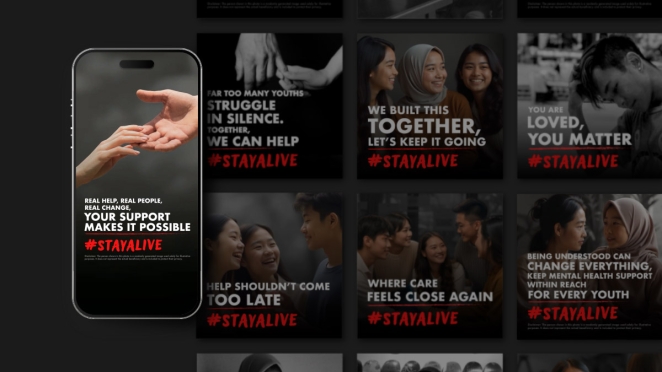
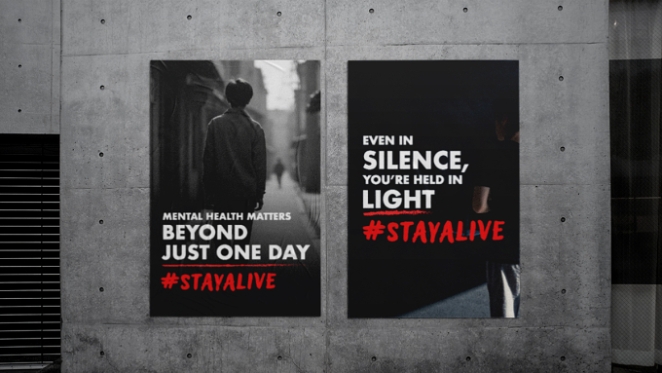
One of the most significant projects we have worked on was a pair of campaigns for Limitless, a non-profit focused on youth mental health in Singapore. The subject matter was sensitive — centred around real stories of youth struggling with mental health, including the story of Zen Dylan Koh — so every creative decision carried real weight. Getting the tone wrong was not just a creative miss; it could do harm.
The practical challenge was limited access to original photography. We used AI image generation to create visuals that felt authentic and reflected Singapore's multicultural community. The creative approach was deliberately restrained — black and white, quiet, human — with a single red accent carrying the message: #StayAlive.
Across both campaigns, we built phased storytelling frameworks that moved audiences from awareness through to action and giving. What this work taught us is that the hardest creative briefs are not always the most technically complex. Sometimes the discipline is knowing what to leave out. Both campaigns exceeded their engagement targets and helped Limitless reach their fundraising goals — which is the only measure that mattered.
How do you balance maintaining your company's unique creative voice while meeting the diverse needs of clients?
 Our voice is not a visual style — it is a way of thinking. We always start with the same questions: who is this brand speaking to, what do they need to feel, and what is standing in the way of that right now? The answers look very different depending on the client, but the approach is consistent. A government agency brief and a lifestyle brand brief will produce completely different work from us, but both will be grounded in the same strategic logic. We do not impose our aesthetic on clients. We adapt it to serve their world. Where we do push back is when a creative direction is not serving the brief — and we do that early and honestly, not after the work is done.
What strategies do you employ to adapt to changes and trends in the industry while staying true to your company's values?
We watch trends but we do not chase them. The question we always ask is: does this actually serve the brand, or is it just interesting right now? AI tools, motion design, immersive digital experiences — we explore all of it, and we use what genuinely adds value for the client. What does not change is how we think. The strategic questions we start with, the care we put into understanding audiences, the commitment to long-term relationships — those stay constant. Trends change the toolkit. They do not change the standard we hold the work to.
Can you share a memorable client success story that exemplifies your company's approach and impact?
Our work with AXA Singapore over the years is probably the clearest example of how we like to work. It was never just one campaign or one deliverable — it was a sustained partnership across marketing collateral, advertising, digital, and go-to-market strategy. Because we invested the time to understand their brand, their audience, and the environment they operate in, the work was consistently coherent and effective. That is the kind of relationship we aim for with every client: not a vendor they call when they have a task, but a team they trust to help them think. The best results come when both sides are invested in the outcome, not just the output.
In what ways do you invest in the professional development and growth of your team members?
 We give people real ownership. Not just tasks — responsibility for the thinking behind the work. That is where growth actually happens. We also dedicate time each month for learning outside of client projects. People use it however makes sense for them — a workshop, a new tool, reading widely, visiting an exhibition. The expectation is just that they bring something back. Beyond that, we try to create an environment where people feel comfortable saying what they think, including when they disagree. The quality of our work depends on that. We want people who grow into sharper thinkers, not just better executors.
How do you approach sustainability and ethical practices within your company's operations and projects?
It is in our name — Lively Green — so this matters to us on a real level. Practically, we favour digital-first where it makes sense, we are thoughtful about print decisions, and we work with partners who take quality and responsibility seriously. On the client side, we have done a lot of work with organisations in healthcare, education, and social services — not always the biggest budgets, but important work. We also supported YTL PowerSeraya and PUB Singapore with their sustainability reporting, which meant translating complex environmental commitments into something people could actually read and connect with. That kind of work is meaningful. Ethically, we are straightforward with clients, we are transparent about our process, and we do not take on work that does not sit right with us.
Can you discuss a time when your company had to pivot or innovate in response to unforeseen challenges, and what lessons did you learn from that experience?
COVID is the obvious one. Everything went on hold overnight — events, physical production, in-person client work. We moved quickly. Clients needed to stay visible, so we shifted our focus to helping them adapt their brand communications for digital channels: virtual event branding, social content, digital campaigns. Internally, we tightened our documentation and remote workflows. The thing that carried us through was clarity about what we were there to do. When you are not sure what the ground looks like, knowing what you stand for is what keeps you moving. The clients who did the same came out stronger. Brand work done during a crisis is not wasted — it is what holds things together when everything else is uncertain.
Do you have any websites, books or resources that you would recommend?
A book we keep returning to right now is “Superagency: What Could Possibly Go Right with Our AI Future by Reid Hoffman and Greg Beato”. In an industry prone to anxiety about automation, it offers a grounded perspective on how AI can amplify human agency rather than replace it.
At Lively Green, we believe that tools change, but the need for human-led strategy is constant. This book reinforces our philosophy: AI can handle the volume, but humans must provide the vision. So the question we keep asking ourselves — and invite you to ask too — is this: when everything can be generated, what will you choose to mean?