
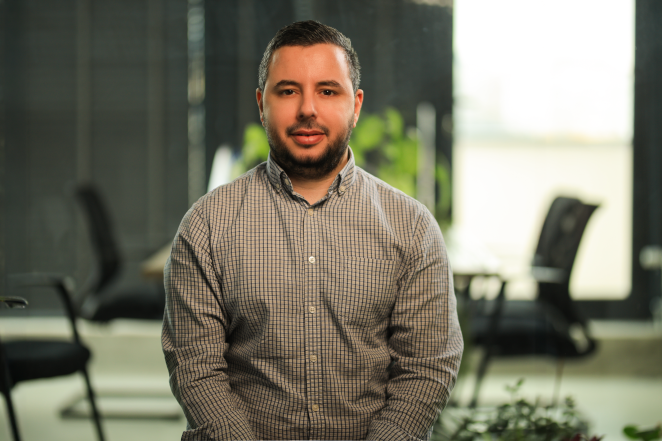
Arber Racaj, Creative Director and co-founder of a growing design agency in Pristina, Kosovo, has built a career rooted in minimalism, visual branding, and authentic creativity. With a background in Visual Brand Design from Milan’s prestigious Domus Academy, Arber’s approach blends artistic precision with a deep understanding of storytelling and human connection. His philosophy goes beyond aesthetics, focusing on simplicity, purpose, and the emotional resonance that great design creates.
In this interview, Arber shares his journey from discovering typography in early art books to shaping a unique design identity that reflects his belief in clarity and form. He discusses his creative process, sources of inspiration, and how technology and minimalism coexist in today’s fast-evolving creative industry. For aspiring designers and agencies alike, his perspective offers valuable insights into building a timeless brand voice and staying true to one’s creative roots.
How did you first get into the industry?
I was connected to the aspects of art. In my family’s large library, we had many books about art. I remember the section with Albert Dürer’s books, and from a young age I recall my first encounter with typography through Luca Pacioli’s Divina Proportione, the letter “A” built in a unique form. Since then, typography has always been part of me in building, so I started studying design and did my master’s in branding in Milan at Domus Academy.
Where are you based now and who do you work for?
I live in Pristina, Kosovo, where I work on building my own agency, which I am developing with my partner. We are building something on which we want to leave a mark on the most unique part of design.
What is your personal background and what role did it play in your career?
After studying Visual Brand Design in Milan, it was a beautiful part that helped me clarify my ideas in brand building. My development in this area played a key role in constructing a different way of communicating about design.
If you weren’t in your current industry, what would you be doing?
I think I would be connected to the field of science; it seems intriguing and very entertaining to me. It’s something I still enjoy reading about, whether it’s new discoveries on Earth or beyond.
Can you explain your creative process? What makes it unique?
The process is sometimes complex to decode, so in some cases I need to push myself deeply to create an image on which the process must work. The most beautiful part is when I start designing something I believe is right. I think the process is the most unique part I build; it is a methodology of intertwining ideas, styles, and harmony.
How would you describe your style?
Minimalism is the style I feel I am part of; complex things bother me. I need to feel that simplicity in a minimal way.
Which individuals do you gain inspiration from? Do you have any heroes in the industry?
Bruno Munari, an Italian design pioneer, has always inspired me. I would also like to mention others, such as designer Brian Collins, industrial designer Philip Starck, and designers and architects Michele De Lucchi and Piero Lissoni.
What tips would you give to aspiring creatives looking for work?
In a world with many things, time should not influence what you want to offer the market. Trends often impact the real perception of things, especially in the creative industry. We need to be in step with time while refining the creative methodology we have, based on what the market needs, without changing its content.
What tips would you give to other professionals to get more clients?
It is necessary to have a style or a way in which you sell your services. The uniqueness of getting clients lies in what you offer without losing the soul of the agency or personal brand you have built. Agencies often try to capture many clients without knowing that it might be a boomerang with no return.
Can you share a memorable experience from your career journey that shaped your approach to creativity?
Certainly, it is beautiful to look back in time and see from a different perspective of the moment. I would say the most beautiful experience was studying Visual Brand Design in Milan and working in an agency focused on retail design and service branding design. It was a very beautiful part of my career, facing a very attractive and challenging market.
What kind of tools/kit/software could you not do without?
To be honest, the pencil is a tool that helps me develop ideas and explain things, creating beautiful formats for the creative journey. From the technological side, the Adobe Suite is definitely crucial.
What’s your secret to staying inspired and motivated?
I like to visit places, read, and sometimes just stay calm in environments where I feel good. I love observing people, analyzing their behavior, seeing their influence in the industry, and perceiving the needs people have to fulfill themselves.
What’s the work achievement you’re most proud of?
Developing my agency is the most beautiful thing I have done, and I feel happy every day with what I do. It is the part I most want to showcase.
As someone with experience in the industry, what trends do you foresee shaping the future of creativity?
Talking about trends in a time when the industry has expanded so much in aspects of artificial intelligence is very deep to express. What I believe and think will be beautiful is that we will start exploring design further, and this may create a metamorphosis in the industry. I believe it will help humanity advance in design and social needs.
What do you think sets apart truly exceptional creatives from the rest of the pack?
I think people are built from storytelling, from the way they present ideas, see the world, and how they want it to appear. Essentially, creative people communicate from the inside of their ideas or the spirit they put into what they build.
How do you think technology has influenced the creative industries and how have you adapted to these changes?
Technology is crucial. Regarding design today, it helps us explore forms, techniques, methods, and approaches, so it is necessary in design. We need to stay close to technology to help people see its beauty through utilization.
What is the one thing that you would change about the industry?
I don’t think I would change it, but I would make a greater impact in preserving the old techniques of the print industry or in advancing it.
Any websites, books or resources you would recommend?
"It's Not How Good You Are, It's How Good You Want to Be" – the world’s best-selling book by Paul Arden.