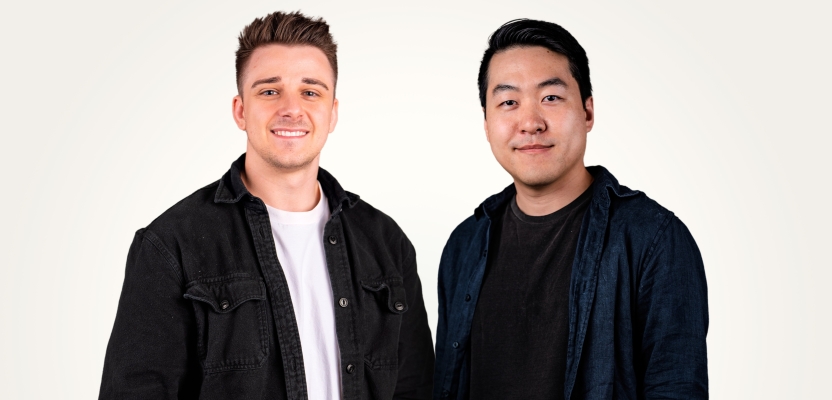

Andrew Bao and Charlie Dejean didn’t just break into the advertising world—they kicked the door open with creativity, grit, and a dash of panic. Graduating from AWARD School with top-ranking portfolios, they landed at VML before they even had time to script their “how-we-made-it” story.
Now, the Sydney-based duo is known for work that doesn’t just win awards—it challenges norms and leaves a mark. In this spotlight, they open up about the chaos of the creative process, what drives their ideas, and the unconventional path that turned two rookies into a powerhouse creative team.
How did you first get into the industry?
Feels like only a few years ago we were both graduates of AWARD (Australian Writers and Art Directors) School. But that's probably because it was.
Both armed with portfolios that ranked amongst the top 10 in the state, we decided to tackle the scary job market together. Enter VML’s CCO Paul Nagy, who, as it turns out, was keeping a keen eye on us and sent our books over to Jake Barrow, then ECD of VML Sydney/Melbourne (and now CCO of VML Prague).
We were just cracking into our first brief, the one of getting an ECD’s attention, with a sense of excitement, opportunity and a mild sense of panic when Jake beat us to it—offering us a job before we even had a chance to come up with a cool ‘how we got in’ story. Thanks, Jake.
Where are you based now and who do you work for?
We work at VML, that place that keeps changing acronyms, and works in parallel to other acronyms, all under the same umbrella of a holding company that is another acronym. While we’re based in Sydney, our office spans across states to Melbourne too, meaning that we work just as much in Victoria as we do in New South Wales.
What is your personal background and what role did it play in your career?
Andrew: I have a double degree in Marketing & Psychology which you can probably guess helped a little bit in my advertising career. I have always wanted to be in advertising. But before I became a creative, I was actually a suit at a small media agency. Which I learned a lot from. That account executive role gave me a front-row seat into agency life, understanding client needs, problem-solving and even writing. But I don’t think my heart was ever in it.
What it did do was push me in the complete opposite direction. Sometimes when nothing goes right, go left. It was around this time that I had become the Bob Ross of Photoshop, experimented with tech, and made my own mock ads just for fun, before finding my place at AWARD School and then landing a role as a proper creative.
Charlie: I come from a filmmaking background, where I worked as a writer, director, cinematographer and producer (it’s only when you have to do them all at the same time that you truly appreciate the value of teamwork). My background has helped me uncover a deeper understanding and appreciation for storytelling and craft, in all of its forms, which has helped me even when cameras aren’t involved.
If you weren’t in your current industry, what would you be doing?
Andrew: Besides the obvious design-related industries for an Art Director, I had some coding skills before becoming a creative, even going so far as to code up a functioning app after spending about 100 days learning Apple’s new programming language SwiftUI. So probably something super nerdy in the tech world.
Charlie: My first instinct is to say a Director, but I’m sensing you’ve probably heard that about a billion times. So I’d be trying to win the lottery, and failing.
Can you explain your creative process? What makes it unique?
The more briefs you get, the more you realise the process is the same. And the more you get comfortable with how incredibly uncomfortable it is.
Get brief. Panic. Epiphany. Realise that epiphany has been had before by someone across the world. Chaos. Sleep on it. Tackling the brief again with a fresh mind. Chaos again. Beat the best idea. And again. And again. Survive the creative review. Present to client. And repeat, but in no particular order (yep, sometimes you get the brief in the middle).
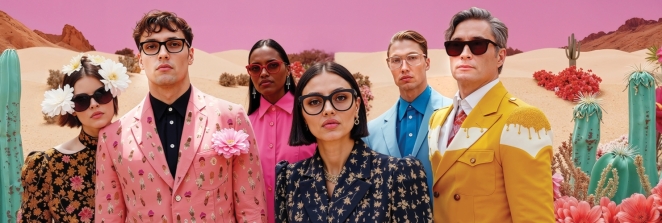
What perhaps makes us unique is our openness for an idea to come from any stage in the process. Some follow the traditional route of starting as an insight. But some start as a line, an innovation, or a cool piece of artwork.
There’s no hard and fast way to an idea, and the better you understand that, the better creative you’ll become. You can’t come up with a unique idea by thinking the same way that everyone else thinks. Otherwise, we’d all come up with the same ideas. Embrace the pure chaos, and ride that wave.
How would you describe your style?
Andrew: I’m a pretty non-serious guy who’s serious about making ads. Probably a little bit obsessed at times but love to have a bit of fun along the way. I enjoy thinking non-traditionally and making mind-bending ideas that play with psychology and human behaviour. I also like wearing my pair of Navy Blue Vans Era… but not Vans Authentic… Shoe choice says a lot about you.
Charlie: I definitely gravitate towards ideas that do more than entertain, but make a difference in people’s lives. Like innovations that test people’s eyesight out in the street, activations that help Aussies donate to veterans the true-blue Aussie way, or experiences that answer the age-old question: “Would your younger self be proud of you?”. But then again, it’s fun to be funny sometimes.
Which individuals do you gain inspiration from? Do you have any heroes in the industry?
There is no lack of inspirational figures in this industry. Even within our office walls, there are so many inspiring people. But if we had to pick some (that aren’t in the office today), Goodby & Silverstein have got to be up there. But also Juan Cabral. His work on Cadbury’s Gorilla and Sony Bravia’s Balls are some of the most beautiful and memorable advertising the world has ever seen, which always leaves you feeling inspired after every watch.
What tips would you give to aspiring creatives looking for work?
Let’s get the obvious out of the way; attending a ‘portfolio school’ has become the industry standard (particularly in Australia). But that’s only the start.
It’s never been harder to land a creative role in the advertising industry. But it’s also never been easier to make stuff yourself. So give yourself briefs, solve them, mock them up, and put the best 5% up on your website. They don’t have to be real ads, but should show your creativity, the range of mediums/channels you can work on, and a splash of personality. Great ideas are still the most important thing.
Beyond that, creative competitions will help get your name out there. And finding clever ways to sell yourself to ECDs/CCOs, whether that’s a job-seeking stunt or making the news with a PR idea.
What tips would you give to other professionals to get more clients?
Here’s our perspective of selling ideas to clients. To get more clients to buy your ideas, it’s ultimately a numbers game. You’ll have a lot of ideas that aren’t great, but if you come up with 50 ideas, you’ll very likely at least have 1 winning idea in there. Behind that, you try to do the obvious things, like have a deep understanding of their business, their problems, dissect the brief, and so on. On a more personal level, building a trusting relationship with the client is one of the most important things.
Listen more than you talk. Always leave the client feeling eager to see you again. Negative feelings breeds distrust and distrust breeds bad working relationships no matter how great your idea is. So much work gets turned from a 10/10 into a 4/10 because of the relationship. Sometimes, that’s genuinely the fault of the clients but ultimately it should be the responsibility of our agency and of ourselves to make sure the client trusts us enough to make something great.
Can you share a memorable experience from your career journey that shaped your approach to creativity?
One of our first briefs was for the Australian Navy, a rigid, no-nonsense government client. As little juniors, we broke formality, process and tone and sold in an MTV Cribs-style tour of a Navy ship and submarine (with Snoop Dogg as key reference). It was scary because it was such a big leap from anything they’ve ever done before. But they loved it.
Although the experience of sailing across Australia on a Navy ship for 6 whole days was memorable, the real lesson behind it all is to steer clear from the expected. Good ideas should scare you because that means you’re challenging the status quo. And that’s how you make an impact.
What kind of tools/kit/software could you not do without?
Andrew: On the Art Direction side – The Adobe Suite (Photoshop, Illustrator, InDesign etc.), my Notes app for jotting random ideas down, Google Slides (way more reliable than Keynote), and the classic paper/pen/pencils.
Charlie: It’s gotta be notes…
What’s your secret to staying inspired and motivated?
I don’t know if it’s that much of a secret, but going through award show winners is incredibly inspiring. It proves that any brief can solve real world problems, push craft into entirely new places, and entertain people on a massive scale. If you’re ever lacking inspiration, or need to light that fire in your belly again, flick through LoveTheWork.com. Or dandad.org. Or Creativepool, Clios, Spikes Asia, and so on…
What’s the work achievement you’re most proud of?
The achievement we’re most proud of also happens to be the one that was the hardest to bring to life (no relation, we definitely prefer when things are easy): Legacy Lager.
The idea behind Legacy Lager was simple: to create donation taps that let Aussies thank fallen veterans like they do their own mates, with beer.
The campaign died at least a dozen times. But considering how many Aussie troops died for our very way of life, the campaign felt much bigger than a simple ‘no’. So with grit, perseverance, and the right amount of blissful ignorance, it eventually made it out there. And the rest is history.
As someone with experience in the industry, what trends do you foresee shaping the future of creativity?
There is a lot of talk about AI and its ever-increasing role in our lives. Like any innovation, it’s something we’re all going to need to embrace in order to keep up. The positives are that it will help us make the work quicker, cheaper and in more innovative ways.
An interesting take on AI is that it actually helps us be more human. AI is a fantastic assistant for the menial tasks that make us feel like a ‘robot’ in a ‘system’. The benefit of that? Well, we’ve got more time to be more human. Speaking as advertising creatives, that’s where the best ideas come. More and more, we’re trying to let AI do the grunt work, so you can do the good work.
The one watch-out is that we don’t become lazy. Use that ‘extra’ time to craft, read, learn, and experience things that help us grow. The worst thing we can do is to get lazy.
What do you think sets apart truly exceptional creatives from the rest of the pack?
Comparison is the thief of joy. But a bit of competition with yourself can be healthy. For every piece of work that makes it out into the world, we make it our mission to beat it with the next one.
It keeps us hungry, while also making each jump seem a whole lot more attainable than aiming for a multiple Cannes grand prix-winning idea right off the bat. And so far, even if sometimes it’s only a matter of baby steps, we’ve put something new at the top of our books each year. Consistency as a creative sets you apart for sure.
What is the one thing that you would change about the industry?
Advertising has always been a club with very narrow doors. I was just reading an iconic job post from 1967 the other day that was literally asking for ‘two account men’. And while it’s not that overt these days, there is still a certain lack of diversity in advertising.
Beyond being good, it also makes business sense too. Advertising should be able to talk to anyone at the drop of a hat. And to get proper, lived insights, agencies should have representation across all demographics.
The industry is evolving, and it’s gotten a lot better, but there’s still a lot of work to be done.
Any websites, books or resources you would recommend?
As far as advertising books go, here are the least dusty ones on my bookshelf:
· The Advertising Concept book, Pete Barry
· Hey Whipple Squeeze this, Luke Sullivan
· The Copy Book, D&AD
· Ogilvy on Advertising, David Ogilvy
For websites/resources:
· And any award show websites, big or small