
If you’re trying to make sense of creative salaries by UK city in 2026, the old shortcuts aren’t much use anymore. A national average won’t tell you what a brand designer should earn in Shoreditch, what a UX lead can command in Manchester, or whether a remote-first role is genuinely paying London money or just borrowing London language.
The latest salary benchmark UK data shows a market that’s still paying a premium for scarce digital and design skills, but it’s also a market where geography, housing costs, hybrid policy and freelance leverage all shape what “good money” really means. In other words: if you’re searching graphic designer salary UK, digital designer salary UK or simply trying to understand where the smart creative money now sits, city context matters more than ever.
What’s changed is that salary has become less of a headline number and more of a package equation.
Creative Salaries by UK City: The 2026 picture

Tor Ewen
The big mistake employers still make is assuming that creative pay works like a neat ladder. It doesn’t. It’s a patchwork. London still holds the highest wage ceiling, but it also carries the heaviest costs. Manchester has tightened the gap by offering a much stronger value proposition for midweight and senior talent. Birmingham remains less fetishised in industry chatter than it should be, but that’s precisely why it’s become interesting. And remote? Remote now behaves less like a place and more like a leverage mechanism for people whose portfolios travel well.
That’s not just mood music. Starting salaries vary by market the point isn’t simply that London pays more. It’s that salary benchmarking has become local again, even while work itself has become more distributed. Employers are expected to know what a role is worth in their city, not just in their category.
At the same time, flexibility has become part of the wage conversation in a very direct way. 76% of professionals would consider returning to the office full-time for a higher salary, and almost half said a 5% to 10% increase would do it. In marketing and creative specifically, 77% would consider full-time office work for higher pay.
That tells you something useful straight away: “hybrid” is no longer a perk tacked on at the end of a job ad. It’s often a substitute for cash, or at least part of the trade-off.
That’s why any serious look at a salary benchmark UK for the creative industries has to go past job title alone. A specific number for a graphic designer salary in the UK is useful as a starting point but it’s not much use as a decision-making tool. At least until you ask where the role sits, what kind of business is hiring, whether the job is agency or in-house, how many office days are expected, and whether the person being hired is actually selling execution, leadership, or commercial calm under pressure.
London
Paulo Pampolin
It still pays the most, but the premium is getting harder to keep
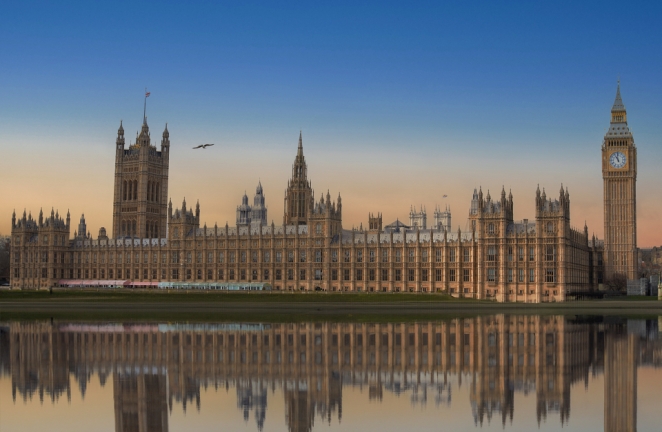
London still wins on raw salary. The average annual wage in London is around £49,692, comfortably ahead of the UK median.
In 2026:-
- A midweight designer salary is set at £35,000 on average.
- A senior designer at £45,000.
- A midweight digital designer at £40,000.
- A senior digital designer at £50,000.
- A senior strategist at £70,000.
- A strategy or planning director at £120,000
- At the leadership end, creative directors average £90,000, with higher-end packages stretching to £120,000.
That’s the prestige tax in plain sight. London pays more because it still concentrates the most global clients, the biggest budgets, the highest density of specialist agencies and the deepest pool of top-tier talent. If you’re a creative director, design lead, UX head or strategy director, the capital still offers the widest ceiling. It’s also where specialist skills attract the fastest premium.
But only looking at salary is how people end up flattering themselves into a worse deal. London is also still the least affordable part of the market. ONS affordability figures reported found median earners in London were spending 41.6% of income on average private rents in 2024, with average monthly rent at £1,957.
Meanwhile, Rightmove’s early-2026 snapshot put advertised London rents for new listings at £2,736 a month. You can earn the best salary in the country and still feel skint faster than you would almost anywhere else in Britain.
There’s also a subtler shift happening: London is not losing relevance, but it is losing its monopoly on inevitability. ONS house-price data for January 2026 showed London as the only English region with negative annual house-price growth, down 1.7%, while the North West led with 3.1% growth. That doesn’t prove an exodus, but it does point to a rebalancing of where people and businesses see long-term value.
As our regular contributor (and SomeOne founder) Simon Manchipp puts it: “London still pays the prestige tax, with salaries 20% higher than the rest of the UK to cover the eye-watering cost of a pint and a flat. But Remote is the great equalizer of 2026. A Manchester-based designer or a Birmingham-based strategist can command London rates if their portfolio is world-class. The City Premium is under threat as companies realise talent is location-agnostic. The Talent Premium is the only thing that matters now. If your work is undeniable, your postcode is irrelevant. But make sure you can get to those critical F2F meetings when you need to, because if you can’t, you can be damn sure others can.”
He’s right to focus on the premium being under pressure rather than disappearing. London still pays best in cash terms. The question in 2026 is whether it pays best once life is factored in. For plenty of midweight and senior creatives, especially those who don’t need a five-day office week to do their best work, the answer is increasingly “not always”.
Manchester
Cristina Clementel
The sharpest creative value play
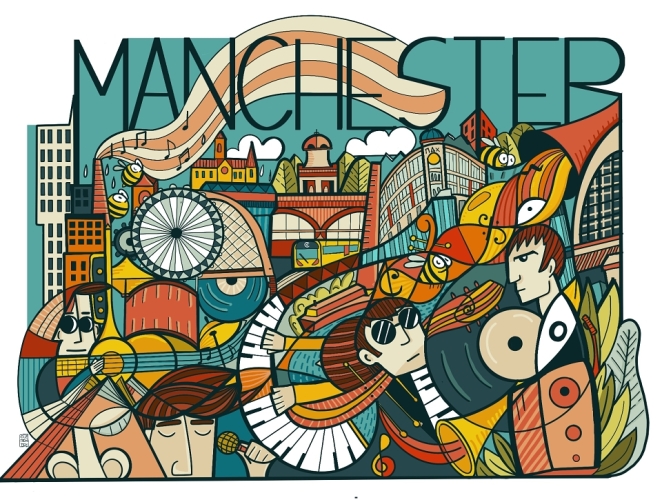
Manchester is where the salary conversation gets genuinely interesting. A city that was once cast as the sensible second choice now looks increasingly like the smarter one for a lot of creative professionals.
In a 2025 comparison, the median salary of a Manchester resident was £32,704 versus £49,455 in London, but the average house price was about £277,750 versus £682,190 in London, and the average two-bed rent was £1,394 versus £2,118 in London. That doesn’t mean Manchester beats London on pay. It means the money tends to travel further, and sometimes a lot further.
That gap matters most in the mid-career band where creatives actually make life decisions. If you’re a midweight designer, UX specialist, copywriter, social creative or strategist, you’re often not comparing the absolute top-end London package with a local Manchester one. You’re comparing what your month looks like after rent, bills, travel and the odd attempt to have a life. On that measure, Manchester is brutally competitive. It is easier to absorb a slightly lower salary when the housing delta is so steep.
The city’s broader economic trajectory backs that up. ONS data for January 2026 showed the North West posting the strongest house-price inflation in England at 3.1%, while London stayed negative. Again, it’s not a clean read-through to creative salaries, but it is a clue: businesses, workers and investors still see strong momentum in regional cities, and Manchester sits right at the heart of that shift.
What Manchester now offers creatives is a blend London struggles to match: enough scale to support serious digital, product and brand work, but still enough breathing room for salaries to feel useful rather than ceremonial. The city also shows up clearly in live hiring patterns.
At the time of writing, Creativepool’s jobs board included a UX Designer role in Manchester and another design-adjacent role in Altrincham, alongside the usual run of London listings. That doesn’t make Manchester bigger than London. It does underline that the city is now firmly part of the live national creative hiring map, not a fringe alternative.
The best way to think about Manchester in 2026 is not as a discount London. That framing sells it short. It is better understood as a market where good creative talent can still build a career without instantly sacrificing every other financial goal in the process. For employers, that means access to excellent talent who may be less drawn to capital-city theatre and more interested in sustainable progression. For talent, it means you can often take slightly less cash to keep a lot more of your life.
And that’s before remote leverage enters the picture. The minute a Manchester-based designer is working into national or international accounts on a hybrid or distributed model, the city becomes even stronger. You’re no longer just using Manchester’s lower cost base. You’re using it while competing for work that may have been priced in London first. That’s probably the clearest reason the city now feels so important in any meaningful creative salary survey conversation.
Birmingham

Pretesh Mistry
The city people keep underrating
Birmingham’s problem isn’t a lack of opportunity. It’s a lack of mythology. It’s rarely discussed with the same reverence as London or the same cultural romance as Manchester, which is exactly why it’s easy to miss how practical a creative career there can be.
The hard economics are compelling. Lloyds put Birmingham’s average first-time buyer price at £208,000 and average monthly rent at £1,068. That’s a very different starting point from London, and still notably more forgiving than many would assume for a city of Birmingham’s size and business weight. Public labour-market summaries also place Birmingham’s full-time median salary in the low-to-mid £30,000s, which means the city sits in a quite different affordability bracket to the capital even before you get into hybrid or freelance upside.
I’d be careful about pretending Birmingham is secretly paying London rates across the board. It isn’t. But it doesn’t need to. What makes Birmingham interesting is the space between cost and ceiling. Robert Half’s 2026 guide now benchmarks Birmingham as a distinct city market, which is a useful reminder that it can’t just be lumped into a generic “rest of UK” bucket. Employers hiring there need city-specific expectations. Candidates negotiating there should treat it the same way.
There’s another reason Birmingham deserves more attention in this debate: it often suits the kinds of creatives who want responsibility earlier. In overheated markets, titles inflate fast but actual ownership can stay frustratingly narrow.
In cities with slightly more room in the system, people often move into broader remits sooner. That’s not a law. It’s a pattern, and it’s one many creatives quietly value once they stop chasing postcodes and start thinking about what they want to run. The result is that Birmingham can be especially attractive for designers and strategists who want progression, hybrid flexibility and a lower monthly burn rate rather than pure headline salary.
Live hiring patterns reflect that regional spread as well. Creativepool’s jobs board currently shows design roles not only in London and Manchester but also in the wider West Midlands orbit, including Dudley. That matters because regional work isn’t disappearing; it’s becoming more visible, more specific and, in many cases, less apologetic about being outside the M25.
So no, Birmingham may not dominate the industry imagination. But from a salary-versus-life perspective, that may be exactly the point. If London is the prestige market and Manchester is the value darling, Birmingham is the city with more headroom than hype. For a lot of people, that’s a better deal than it sounds.
Remote

Ted Hammond
Changing the map, but not in the way everyone expected
A few years ago, remote work sounded like the end of geography. In 2026, it looks more like a rewiring of bargaining power. The UK remains unusually remote- and hybrid-friendly by European standards. 40% of UK job adverts were hybrid and about 10% were fully remote, while 42% of applications went to hybrid roles and 17.4% to fully remote ones.
ONS figures meanwhile showed hybrid had become the standard pattern for 28% of working adults in Great Britain by early 2025, with workers on £50,000 or more far more likely to hybrid-work than those on lower incomes.
That last bit is the key. Remote and hybrid work are not evenly distributed rewards. They cluster around higher-paid knowledge roles, exactly the sort of roles where much of the creative industries sit. Which means remote hasn’t flattened salary differences so much as given better-positioned workers more ways to exploit them. If you can do London-grade work from Manchester or Birmingham and still show up for the right in-person moments, you’re in a stronger negotiating position than someone tethered to one local employer.
But there’s a catch, and it’s a serious one: remote roles are magnets. They attract far more attention than their share of supply. That’s why “remote” shouldn’t be read as shorthand for easy access to top salaries. It’s better understood as a premium market that is both scarcer and more competitive. Employers know it. Applicants definitely know it. And Robert Half’s 2026 numbers suggest many businesses now treat office attendance as something that can be bought back with money. In other words, remote has a price.
For creatives, remote also increasingly blurs the line between salaried employment and freelance economics. The average creative freelancer day rate currently sits at around £400, with the top 10% averaging £712 a day. Creative directors were the highest-paid core creative role on the platform at £447 a day.
The UK freelance workforce is expected to exceed 2 million in 2025, with 82% working across technology, creative and marketing. Put simply, one of the most meaningful salary stories in the creative industries is that a growing number of people are no longer benchmarking themselves only against permanent city salaries at all. They’re benchmarking against project, day-rate and portfolio value.
This is why Manchipp’s “talent premium” point rings true. Remote hasn’t made every postcode irrelevant. It has made location less decisive for people with hard-to-ignore work. If you’re a generic hire, remote can become a brutal lottery. If you’re a distinctive one, it can turn your city into an advantage. Lower living costs at regional-city level plus higher-value clients elsewhere is a powerful combination.
The smartest reading of remote in 2026, then, is this: it isn’t a city replacement. It’s a career multiplier for people who already have credibility, clarity and some leverage. For everyone else, it’s still worth pursuing, but it’s no longer enough to just want it. You have to earn it with your work.
How to Use Creativepool to Find Creative Talent in Your City

Lemki Theochari
If you’re hiring rather than job-hunting, this is where Creativepool becomes more than a media brand and starts behaving like a practical recruitment tool. The platform’s jobs area is built around a pretty direct promise: “Find your dream job. Hire your perfect candidate.” From there, employers can search for talent, advertise your job, advertise your gig, or post a brief through Studio. It also supports location filtering, browsing by job title and company, and setting up job or brief alerts. At the time of writing, the jobs board was displaying 428 live roles.
That’s useful because the biggest hiring mistake in creative recruitment is usually vagueness dressed up as range. If you want talent in London, Manchester, Birmingham or a remote radius around them, say so. If the role is hybrid, be explicit about the expected rhythm. If you’re open to city-based talent but expect occasional travel, say that too. Creativepool’s location filters and talent search only become genuinely powerful when the brief itself is honest about geography, flexibility and the actual shape of the work.
The second thing to do is stop burying the compensation logic. Employers are becoming less likely to disclose salaries in job postings, with the share of job ads including pay dropping to 55% from 65% a year earlier.
That may suit cautious employers in the short term, but it’s not a great way to attract the most in-demand creatives, especially not when local salary expectations now vary so sharply by city and working pattern. If you want Birmingham candidates to trust the opportunity, or Manchester candidates to weigh your job against London alternatives, you need to make the trade-offs legible.
There’s also a strong case for treating Creativepool differently depending on the type of role. Permanent jobs belong in the jobs board. Shorter, specialist or exploratory needs may be better framed as gigs or briefs, especially if you want to reach freelancers or multi-hyphenate talent who won’t necessarily respond to a conventional full-time post.
That matters more now because the freelance market is so substantial. With more than 2 million freelancers expected in the UK and the majority clustered across tech, creative and marketing, the best person for the work may not want your org chart, but they may well want your project.
And finally, use the city itself as part of your proposition. London hires can still sell scale and profile. Manchester hires can sell balance and momentum. Birmingham hires can sell headroom and lower-friction living. Remote hires can sell optionality, but only if the team genuinely works that way. About the worst thing you can do in 2026 is advertise “remote” and then spring a London default culture on day one. Creative talent has become too good at spotting that trick.
The real salary benchmark in 2026

Leyla Gurr
So where does that leave the market? London still pays the most. Manchester is still the most convincing value story. Birmingham is stronger than its reputation suggests. Remote is the joker in the pack, but only for people whose work can hold its own in a market full of choice.
If I were reducing the whole creative salaries by UK city discussion to one useful line, it would be this: in 2026, the smartest salary benchmark UK is no longer a national number or even a job-title average. It’s the point where pay, place, flexibility and real career momentum meet. That’s why the answer to graphic designer salary UK or digital designer salary UK can now shift so dramatically between London, Manchester, Birmingham and remote. Same industry. Same broad skill family. Completely different lifestyle maths.
And maybe that’s the healthiest thing about the current market. The creative world has spent years pretending there was one obvious centre of gravity. There isn’t now. There’s a premium market, a value market, an underrated market and a distributed market. For employers, that means lazy benchmarking is finished. For talent, it means there are more viable routes to a good career than there used to be. And for anyone running a genuine creative salary survey in 2026, the conclusion is pretty clear: the postcode still shapes pay, but it no longer gets the final word. Your leverage does.