
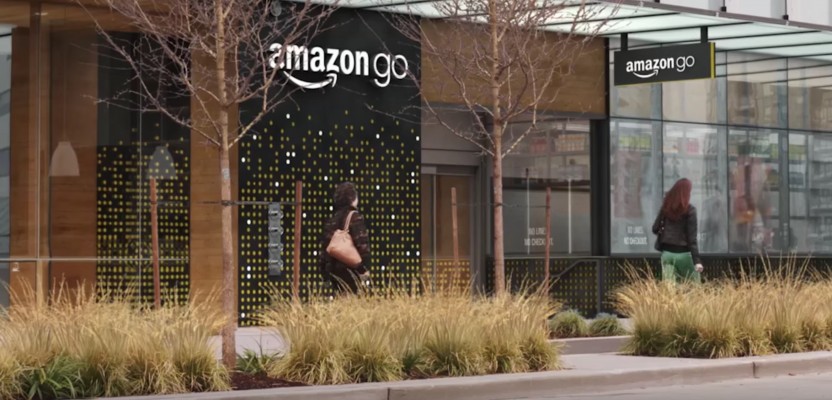

Amazon Go store allows you to literally pick up things and leave with them
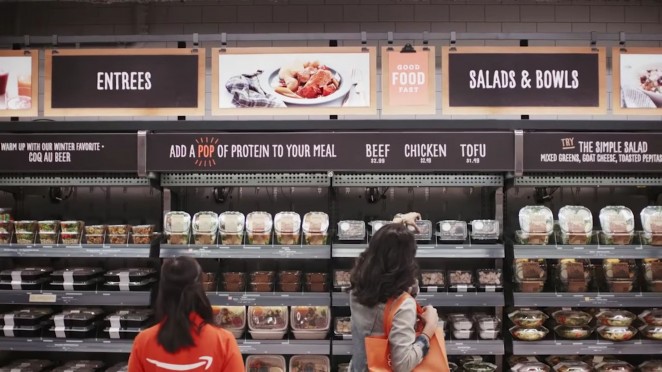
Amazon has launched a physical shop where people can literally just pick up things up and leave with them. Amazon Go uses a range of technologies to watch over people and see what they take from the shop and when they leave, they’ll be charged through their Amazon account for everything that they’ve picked up. All shoppers need to do is sign in at the door with the Amazon app in a similar manner to scanning your Oyster card on the tube. This signs them in, then everything is done automatically. The company started the project four years ago, with the aim of creating a checkout-free shopping experience. In that sense it is similar to the Amazon Dash button which allows people to order things from Amazon just by pressing a bespoke button in their homes. The first of the Go stores will be opening next year in Seattle. At the moment it is reportedly only open to Amazon employees.
“Our Just Walk Out technology automatically detects when products are taken from or returned to the shelves and keeps track of them in a virtual cart”
AKQA uses Oculus VR to develop Nissan car design system
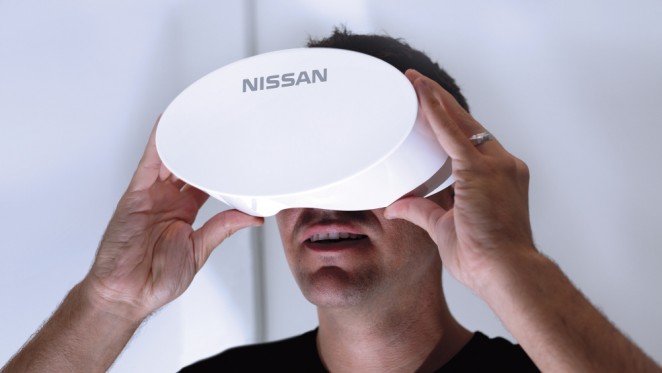
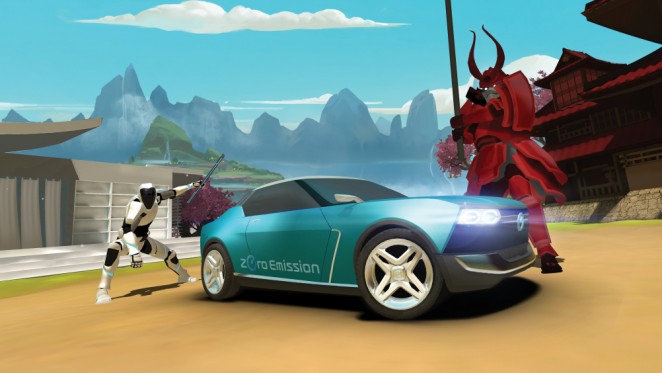
AKQA has partnered with Nissan to develop an immersive virtual world, which allows the public to create their own car designs. It was unveiled at the Tokyo Motor Show in Japan, where an experience design powered by the Oculus VR platform allowed visitors to design their visionary concept cars. Users were given a headset, which allowed them to manipulate a base chassis of a “Nissan IDx” concept car. A bespoke version of The Oculus VR hardware was designed and programmed by AKQA, which created an experience for visitors who were taken through a series of questions to establish what their individual needs and desires as drivers were. There were around 100 concept designs completed at the motor show, which were voted for by the public via social media; the most popular being an extreme sports styled interpretation of the IDx Nismo. A re-imagining of the IDx Freeflow, a coupe interpretation, came a very close second. The outcomes of the designs are reportedly helping Nissan understand more about their customers as the Nissan IDx project starts to add more voices to the community and evolve the project in years to come.
Emarsys Launches AI Capabilities to revolutionise the role of B2C Marketers

Emarsys, a leading global B2C marketing cloud company, has announced the launch of the Emarsys AI Marketing (AIM) platform, which it states will revolutionise the role of marketers, and increase revenue and return on investment (ROI) for global brands. The new, disruptive capabilities of AIM will alleviate the marketer’s burden, not by adding more disparate tools, but by simply and effectively bridging the gap between complex data science and executing truly personal omnichannel campaigns at scale. AIM also provides progressive marketers with a powerful, but hype-free and tangible AI solution with previously unexperienced capabilities, such as personalised incentive recommendations with just a flip of a switch, and significant business value with potential revenue uplift of more than 28%. Marketers will interact with AIM through a unique and intuitive user experience portal that embeds enhanced features into the Emarsys B2C Marketing Cloud. AIM automates the timing, content and communication channel by using intelligence developed through analysis of over two billion Emarsys unified customer profiles. Emarsys retail and e-commerce clients already using AIM, such as Evolution Slimming and Japan Centre, have voiced support and are already experiencing significantly increased value.
“The capabilities developed in-house, from the ground up, and built into Emarsys AIM allow progressive marketers to re-imagine their role in businesses of all sizes”
Apple reveals it could be developing a self-driving car
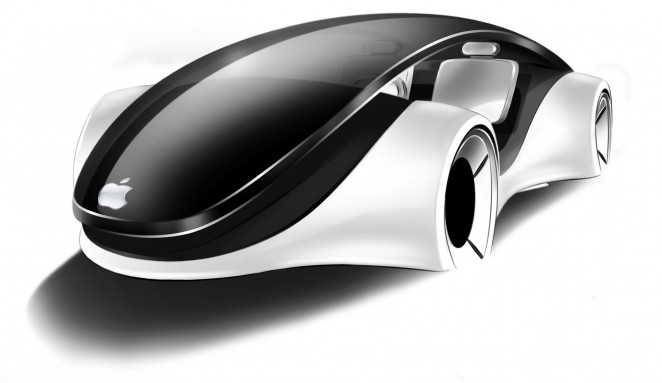
Apple has confirmed its plans to develop a self-driving car in a letter sent to the National Highway Traffic Safety Administration (NHTSA). Written by Apple’s director of product integrity Steve Kenner, the letter reportedly highlights the “potential of automated systems in many areas, including transportation” and their “significant societal benefits.” Kenner also urges the transport regular to promote fair competition when it comes to testing self-driving cars, saying “established manufacturers and new entrants should be treated equally.” Despite numerous rumours about developing a self-driving car, Apple had never publicly admitted its plans, but commenting on the letter to the NHTSA, an Apple spokesperson says it is “investing heavily in machine learning and autonomous systems.” In January, Apple also registered various car-related internet domains, including apple.auto and apple.car.
Adidas and TBWA Hong Kong create an in-store virtual reality fitting room
For the release of their new Climaheat jackets, Adidas teamed up with TBWA Hong Kong to create a virtual reality fitting room at its Hong Kong adidas Sport Performance Flagship store in Causeway Bay. While ordinarily, customers would try on apparel in a conventional fitting room, the adidas VR fitting room exposed customers to the kind of weather effects wearers of the winter sports-focused jackets might typically experience, with audio, visual and temperature controls used to simulate training in extreme cold weather. This added a degree of realism to the “snow run” that customers were challenged to complete in the VR game. Passers by on the street outside of the adidas store were also able to see inside the fitting room via a physical window and watch the chaos unfold. The VR experience ran from November 19 to November 27 and is part of the wider Climaheat campaign, which is running across outdoor, digital and social media throughout November and December. Over 800 people played the VR game during the period.
“The goal is to let customers experience the product benefits first-hand instead of just reading the product catalogue”
BBR Saatchi & Saatchi Reveals The Vertical Blind Spot for Ford
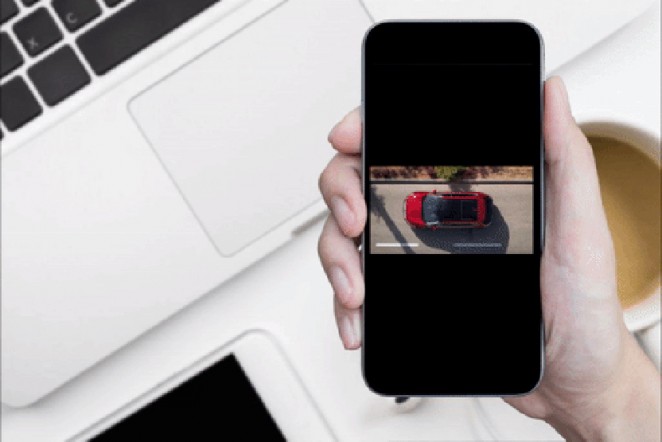
To promote the Ford Edge’s innovative Blind Spot Information System, BBR Saatchi & Saatchi Israel decided to leverage the growing popularity of the vertical video format on Facebook to launch a mobile commercial that creatively uses the two standard black bars that appear in regular horizontal ads. When playing the video, the black bars which initially cover portions of road drivers would not see unless they had BLIS, fall away to reveal how the car’s advanced system would capture them. Unsurprisingly, the Facebook post generated record high results for the brand with over 600,000 views in 4 day, 300 shares and a reach of over 1.1 million Israelis (in a country of just 8 million).