

The creative industry is in a state of flux. New technologies (well, to call AI ‘new’ at this point might be a stretch) are not only transforming how we work, but what jobs we need to get that work done.
Over the last few years, I’ve noticed titles pop up that would’ve baffled me back in the dark days of 2015 (AI what designer? Experience who?) but after a recent conversation with SomeOne founder and regular Creativepool contributor Simon Manchipp about the future of creative careers, three emerging roles stood out as particularly intriguing. These are the roles every creative should have on their radar.
AI Workflow Designer: The Architect of Human-Machine Collaboration
I’ll be honest: even as someone who writes about creative tech trends, the phrase “AI Workflow Designer” made me raise an eyebrow the first time I heard it. But it’s actually a perfect description of a role our industry desperately needs.
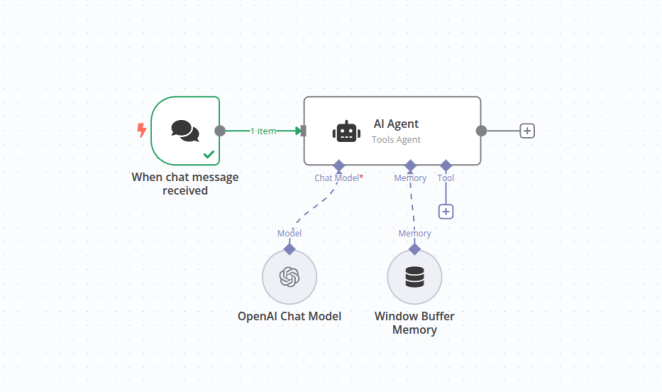
As creative teams increasingly plug AI tools into everything from brainstorming to production, who’s ensuring that the human + machine workflow runs smoothly? Enter the AI Workflow Designer – essentially, the person who designs and optimises how creatives collaborate with AI on projects.
Think of an AI Workflow Designer as a hybrid between a creative lead and a systems architect. Their job is to figure out which tasks to automate with AI (and how) and which tasks need that special human touch.
For example, they might develop a workflow where an AI generates quick concept visuals, a human refines the best ones, another AI resizes assets for various formats, and a human does final art direction and quality control. Done right, the result is a symphony of speed and creativity – with AI handling the repetitive grunt work and people focusing on the high-level creative decisions.
This isn’t just a fanciful idea. Companies are already hiring for such positions. In fact, one design blog noted that as AI becomes embedded in business processes, there’s a growing demand for specialists who can “design optimised workflows” for tasks like automated content generation or project management.
Film and VFX studios have even posted openings for “Gen AI Workflow Designers” to help artists integrate generative AI into their pipelines. The core skillset here is understanding both the capabilities of AI tools and the practical needs of creative teams – a rare combo of tech savvy and creative insight.
Why should you care about this role? Because even if you don’t become an AI Workflow Designer yourself, you’ll likely be working with one – or at least adopting the best practices they pioneer. AI is great at speeding up execution, but without thoughtful workflow design it can also speed up mess. (We’ve all seen what happens when someone runs with “let’s use AI for this” without a plan – chaos, confusion, and often subpar work.)
Having an AI workflow architect in the team means someone’s ensuring the robots truly make our lives easier, not harder. They’re the ones asking: “Does the copywriting AI feed its output directly to the design team’s template? Who checks the AI’s work for consistency? How do we avoid twenty people accidentally overwriting each other’s prompts?” In short, they help avoid AI-induced headaches.
Perhaps most importantly, AI Workflow Designers guard the creative integrity of projects amid all the automation. A good one will set up workflows such that human creatives still have control over the final output. As Simon Manchipp himself points out, the latest AI tools can handle a lot of execution, but they still need a person to “apply taste, steer the generation of key assets and manually combine and filter the results”
In other words, taste is not an algorithm and the AI Workflow Designer’s mission is to make sure the tech serves our human creative vision, not the other way around.
Creative Ethicist: Policing Taste and Truth in the Age of Fakery
Now here’s a role I never imagined we’d need – yet here we are. The “Creative Ethicist” might sound like the office party pooper, but trust me, they’re about to become heroes of the industry.
With generative AI churning out images, copy and even full videos at the click of a button, creatives today face tricky questions our predecessors didn’t. Is that image actually real, or AI-made? Are we comfortable using it in a campaign? Could that AI-written tagline be unintentionally plagiarized or biased? Who ya gonna call for questions like these? The Creative Ethicist.
I like to think of the Creative Ethicist as the conscience of a creative team. This person’s job is to ensure that in our rush to embrace new tech and edgy content, we don’t lose sight of truth, authenticity, and basic good taste. In an era of deepfakes and “fake news,” it’s alarmingly easy to produce and spread false or misleading content.
A Creative Ethicist sets guidelines to police truth: for example, they might implement verification steps for any AI-generated imagery that looks photo-real, to ensure an ad doesn’t accidentally use a fake “photograph” of a person or event that never existed. They’re also in charge of policing taste: making sure the creative work doesn’t cross ethical lines, from culturally insensitive imagery to AI outputs that might be offensive or off-brand. It’s about maintaining integrity in what we create.
If that sounds a bit abstract, consider a real scenario. Earlier this year, a very convincing AI-generated image of the Pope in a stylish puffer jacket went wildly viral – many people thought it was real at first glance. Now imagine your brand inadvertently reposted an AI-created image thinking it was news, or your agency used a deepfake of a celebrity without clearance. The fallout could be huge.
A Creative Ethicist helps prevent mistakes like that by instituting checks on content authenticity and pushing for transparency (e.g. labeling AI-generated materials) where appropriate. They’re also forward-thinking about things like copyright and consent. With AI tools trained on countless artworks and writings, there’s a big grey area around who owns what. A Creative Ethicist might advise your team on ethical use of AI outputs, ensuring you’re not unknowingly swiping another artist’s style or violating privacy norms.
This role isn’t just theoretical either – thought leaders have been predicting its rise. In discussions about AI’s impact on creative jobs, the “creative ethicist” is often highlighted as the “guarantor of the authenticity and integrity of AI-enhanced works”.
In other words, someone dedicated to keeping our work honest and human, even as machines get involved. Interestingly, people stepping into these roles often come from diverse backgrounds: some are ex-creatives with a strong moral compass, others might have legal or philosophy chops. (One part ethics officer, one part creative director.)
As regulations around AI and content tighten – and trust me, governments are catching up fast – having an in-house ethicist could save your studio from reputational disasters or even legal trouble.
From my perspective, a Creative Ethicist also helps answer the “should we?” question that too often gets ignored in the excitement of “we can.” Just because AI can generate 100 fake product reviews or a flawless likeness of a famous actor doesn’t mean your brand should use them. It’s incredibly valuable to have a respected voice in the room who can say, “Hold on – is this the right thing to do? Does this align with our values and audience trust?”
Far from being a wet blanket, a good Creative Ethicist protects the long-term credibility of creative work. In the age of fakery, that’s worth its weight in gold.
Experience Synthesist: Bridging Physical, Digital and Social Realities
The third role on Simon’s list of must-watch jobs is something called an “Experience Synthesist.” When I first heard this term, I half-jokingly thought: is this a person or a futuristic gadget? But the more I considered it, the more it clicked.
This role speaks to a major shift in our industry – the breaking down of walls between physical experiences, digital experiences, and social engagement. An Experience Synthesist is the creative professional who blends all those elements together into one coherent, impactful experience.
Here’s the context: Not long ago, you might design a campaign’s print ads, and separately its website, and maybe throw in an event, each handled by different teams. Today, that approach doesn’t cut it. Audiences flit effortlessly between online and offline worlds – they might discover a brand on Instagram, experience it in person at a pop-up, then amplify it on TikTok.
Brands have caught on that the best campaigns orchestrate all those touchpoints in harmony. That’s essentially the job of an Experience Synthesist. They’re part strategist, part creative director, tasked with making sure the story a brand or project is telling feels seamless whether you encounter it on your phone, in a store, at an event, or in the metaverse (why not!).
In practical terms, imagine you’re launching a new product. An Experience Synthesist would devise how a customer’s journey unfolds across platforms: maybe a teaser ARG (alternate reality game) online that leads people to a real-world event, where an AR (augmented reality) installation lets attendees unlock exclusive digital content to share on social media. It’s one experience, synthesized from many channels.
This isn’t science fiction – it’s happening now. A famous example a few years back was the Travis Scott concert inside Fortnite, a digital event attended by millions that still had the feeling of a live concert experience. Or think of how many retail brands use “phygital” strategies: you go in-store and interact with digital screens or AR demos, then continue the experience on the brand’s app at home.
As one agency leader put it, “Phygital experiences allow brands to maintain a human connection with consumers while at the same time leveraging technology to enhance the experience beyond the physical world.” The Experience Synthesist is the person making those phygital dreams a reality.
Frankly, this role excites me the most, because it’s where creativity gets to run wild across mediums. As someone who remembers when “online” and “offline” campaigns were totally separate budgets (and mindsets!), I love that we now think in terms of holistic experiences. But doing it well requires a specific kind of creative brain – one that can see the big picture and nerd out on the details of multiple mediums.
Not everyone can jump from designing an immersive VR sequence to planning a live event and also consider the social media buzz strategy to connect them. The Experience Synthesist can. They are, in essence, experience architects for our hybrid reality.
From a career perspective, if you’re a creative who’s equally comfortable in digital design, physical space design, and social/content strategy, you might already be an Experience Synthesist in the making (even if that’s not what it says on your business card yet). This role is also a response to audience expectations: today’s consumers expect a brand experience to flow between their devices and real life.
They don’t think in silos (“now I am having an online experience, now an offline one…”); it’s all just one journey to them. Organizations that don’t connect the dots are going to feel disjointed to these consumers. That’s why I predict more and more agencies and brands will designate people as cross-experience leads – whether they use the title Synthesist or something like “Integrated Experience Director.” Whatever the label, the skill is in synthesizing multiple realities into one engaging narrative.
Embrace the New Frontier
Kateryna Manko
Surveying these three emerging roles (AI Workflow Designer, Creative Ethicist, and Experience Synthesist) I feel a mix of excitement and reassurance. Excitement because it shows our industry evolving in real time, creating opportunities that didn’t exist a few years back. Reassurance because, despite all the doomsday talk about “AI taking our jobs,” what I see here are jobs that elevate what humans do best.
Each of these roles is fundamentally about maximizing human creativity (whether by leveraging AI efficiently, upholding ethical standards, or connecting humans across realms). They’re a reminder that even in a tech-saturated world, the most valuable currency in the creative field is human insight – the ability to apply taste, judgment, and imagination in ways machines cannot.
If you’re reading this as a creative professional, you might be wondering: Do I need to become one of these specialists to stay relevant? Not necessarily. But you’d do well to learn from them.
Maybe take a course on prompt engineering or automation to better collaborate with an AI Workflow Designer on your team. Read up on ethics and deepfakes so you can contribute to (or even lead) conversations about truth in marketing. And definitely stretch your creative muscles beyond your primary channel – volunteer to help with that experiential project and get a taste of synthesizing an online and offline campaign. Even if you never carry the title “Experience Synthesist,” having that integrated mindset will set you apart.
One thing I know from years of reporting on creative careers: those who adapt thrive. The fact that Simon (a veteran branding expert) is pointing to roles like these tells me they’re not gimmicks; they’re indicators of where our industry is headed. In a way, it’s a good thing that the roles on the creative radar now are these forward-looking, human-centric ones. It means we’re focusing less on rote production and more on what really matters: strategy, storytelling, ethics, and experience.
So, whether you aspire to be one of these emerging specialists or simply collaborate with them, keep them on your radar. The creative world is expanding, and new roles are popping up on the map. Personally, I’m thrilled to see where it goes and I’ve got my eye on all the fascinating job titles yet to be invented. After all, as creatives we’ve never been ones to shy away from reinvention.
This year’s “AI workflow designer” might just be tomorrow’s creative director… and today’s curious copywriter might be next year’s “experience synthesist” crafting a world-beating campaign. In this industry, you never quite know – and that’s what makes it fun. Here’s to the new roles making creativity richer (and weirder) than ever. Stay tuned, and stay creative!