
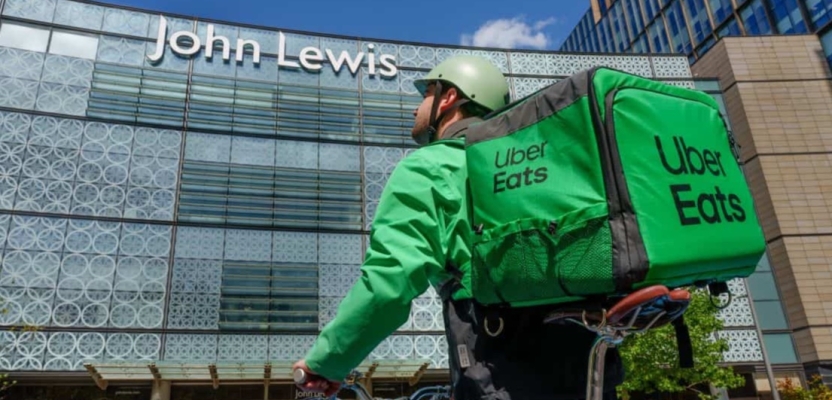

Out of sheer personal interest, the news that John Lewis is partnering with Uber Eats to deliver what they’re calling ‘essential items’ caught my eye. The personal interest is that I live in a John Lewis-free zone; in the catchment area of one of the stores they closed in 2021. (And to be honest, if York of all places can’t sustain a John Lewis, I despair of everywhere else. But I digress.) So I’m assuming that I won’t be able to benefit from the new brand hook-up.
For over 150 years, John Lewis has been synonymous with quality, service and, for a long time, being “never knowingly undersold”. It also has the distinction of being a partnership; an employee-owned business. So as customers, we knew that the person ringing up our smalls had a direct interest in giving the best service and encouraging a positive engagement with the brand. Which is exactly the advantage that the partnership with Uber Eats gives away. As an experience strategist, that worries me.
It's a trope, but it’s also reality when we say to clients “you’re only as good as your last experience”, but at the other end of that scale, what qualifies as a good experience is increasingly being set for almost every business by a small subset of brands.
Consumers increasingly expect Netflix and Spotify levels of intelligent personalisation; Apple levels of simplicity and integration; Amazon levels of convenience, from businesses across the spectrum. It’s that last, of course that this new partnership is a response to.
By leveraging Uber Eats’ network, John Lewis can reach new audiences and respond to “need it now” moments, closing the gap with digital-first competitors like Amazon and putting fulfilment even more firmly in its role as a part of the brand promise than before.
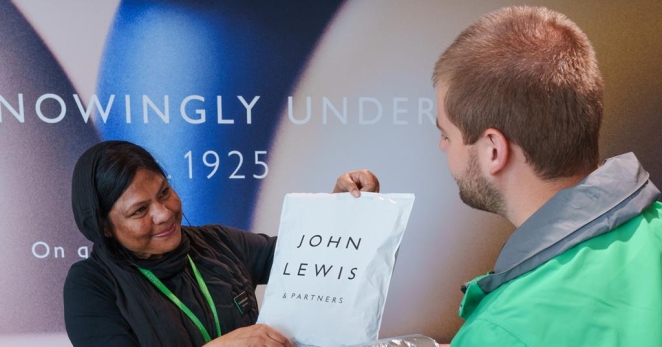
It’s a bold step to take: John Lewis is betting that speed and convenience can outweigh the risks of inconsistent delivery experiences. I’m not judging the quality of Uber Eats’ service there; just noting that many factors might impact how customers receive that service.
Which will matter: The sixth edition of Salesforce’s “State of the Connected Customer” report says that 80% of customers say experience matters as much as products, yet far lower numbers feel brands deliver consistent experiences across touchpoints. Similar data points litter the customer experience landscape. Outsourcing the last touchpoint; the one that customers are most likely to remember, is a brave call.
My hope, not that they’ve asked for my opinion, is that the John Lewis data and analytics teams will be all over post-delivery satisfaction so the business can build service recovery workflows for if they’re needed. When I talk about this kind of thing with clients it’s part of a wider shift of CRM from a programme of contacts and a customer record to the nerve centre of every touchpoint, whether it’s core or outsourced.
Map the journey and understand where brand control is the weakest to plan mitigations before they’re needed, including SLAs and KPIs that can be matched to customer feedback as close to real-time as possible so that responses as equally close to in-the-moment.
John Lewis certainly will now recognise that every delivery driver, no matter how casual their contract, is now a frontline ambassador for its brand. If (I’m not saying when) remedial action is needed, they need to make sure they have the mechanisms in place to make it fast.
Meanwhile, I’ll be over here trying to work out how far away I can Uber Eat a John Lewis shop from.

By Jon Pollard, Head of Strategy at RAPP UK