
In an AI-saturated market, the question is no longer whether creatives should use AI. Most already do, or soon will. The more interesting question is what still makes great work feel unmistakably human when the tools of speed, polish and production have been widely distributed.
Current research from Stamford suggests that generative AI is excellent at raising the baseline. It helps people write faster, iterate quicker and produce stronger average outputs on many routine tasks. But the same body of research also suggests a creative catch: as AI improves individual output, it can reduce collective originality, flatten stylistic range and pull people toward the centre of the bell curve. That makes creative problem solving, creative decision making and the ability to develop non-obvious ideas more valuable, not less.
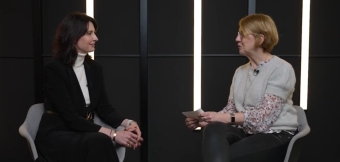
Charlotte Bunyan, Head of Innovation at We Are Collider, argues that the most important creative skill in an AI-saturated market isn’t simply knowing how to use the tools better than everyone else. It’s knowing how to escape the obvious.
As she puts it: “The skill that separates distinctive creative work in an AI-saturated market isn't prompting ability or tools fluency, it's both simpler and harder than that: it’s avoiding the obvious.”
“Speed or productivity is no longer the most valuable creative skill: it’s curiosity and knowing where not to look”
That distinction matters because so much of the current AI conversation is still trapped in the language of efficiency. Faster drafts. Cheaper production. More versions. Shorter timelines. All useful, of course, but none of it guarantees distinctiveness. In fact, when everyone has access to the same tools, trained on broadly similar cultural material, speed can just get more people to the same place more quickly.
For Bunyan, the real creative advantage lies in “the human capacity for weirdness or divergent thinking,” which allows creatives to “reach for unexpected combinations and make leftfield leaps.” That could mean, in her words, “the science paper that cracks open a fashion brief, the obscure fictional world that reframes a financial product, or the art movement nobody in the room has heard of that makes the whole thing suddenly feel alive.”
This is where creative problem solving begins to separate itself from simple content generation. AI can be an extraordinary accelerator, but it is still often strongest when asked to optimise, remix or extend what already exists. The distinctive creative professional brings in references the machine wasn’t prompted to consider, asks the awkward question no one had put into the brief, and makes connections that don’t look logical until, suddenly, they do.
AI Has Raised the Baseline for Creative Work
Kirill Karnovich-Valua
The first thing to accept is that AI has genuinely changed the baseline. In practical terms, that means faster ideation, faster mock-ups, faster decks, faster copy variants, faster visual routes and faster production support across the creative workflow. The old advantage of being the quickest person in the room is already under pressure.
The productivity evidence is hard to ignore. In the Science paper by Shakked Noy and Whitney Zhang, ChatGPT users completed professional writing tasks 40% faster and at higher quality. In the HBS and BCG field experiment, consultants using AI on tasks inside the model’s capability frontier completed more tasks, faster, and with better solutions than those working without it.
If you are writing a contact strategy, developing route territories, generating naming options, drafting a case study, structuring a treatment or mapping early presentation logic, AI can now give you competent material at speed. That is exactly why so many agencies and in-house teams have absorbed it into daily workflow.
But “competent at speed” is not the same thing as distinctive. In fact, one reason so much AI-generated creative work looks the same is that the models are designed to predict plausible next steps from patterns that already exist.
A Science Advances study found that AI assistance improved individual stories yet reduced diversity across the group. Research on text-to-image creativity in PNAS Nexus found that while AI-assisted artists became more productive and more favourably received, average novelty in content declined and visual novelty fell too, indicating a drift toward sameness even as a few creators pushed the frontier outward.
The old advantage of being the quickest person in the room is already under pressure
That is the paradox in one sentence: AI is very good at helping more people reach “good”, but that very strength can make it harder to reach strange, singular, memorable work unless a human actively resists the pull of the average.
Bunyan’s sharpest warning is that “AI will always return the median of human creativity.” The antidote, she says, is “the stuff that lives at the edges: cross-disciplinary, counterintuitive, and impossible to generate from a prompt because nobody thought to ask for it yet.”
Whether or not one wants to treat that as an absolute rule, the research clearly points in that direction as a risk. When lots of people lean on the same systems, trained on overlapping corpora, rewarded for plausibility and often steered by similar prompt habits, the result is a lot of work that feels impressively finished but emotionally pre-seen. It may be polished. It may even be effective.
But it often lacks the jump-cut logic, the unexpected cultural reference, the lateral collision or the slightly perverse twist that makes an idea feel alive rather than merely assembled.
So yes, AI has raised the baseline for creative work. That is real. It means drafts are easier, execution is quicker, and average outputs are often better than they were two years ago. But that also means “above average” is a less useful ambition. When the floor rises, the question stops being “Can you make it?” and becomes “Can you make anyone care?” That is a much harder brief.
What Makes Creative Work Distinctive When Everyone Has Access to AI
Lukasz Sobiech
What makes creative work distinctive now is not merely originality as decoration. It is originality in service of a better answer. That means work that reframes the problem, connects unfamiliar references, creates a sharper emotional truth, or finds a strategic route that would not have emerged from the most likely pattern match.
In psychology, divergent thinking is often used as a marker of creativity because it involves generating many possible solutions rather than settling immediately on the first plausible one. This usually depends on bringing existing knowledge into new relationships, not producing novelty in a vacuum.
That distinction matters because a lot of bad AI usage mistakes ideation for selection. A team asks the model for routes, gets ten serviceable answers, and mistakes breadth for imagination. But ten routes that all live inside the same cultural weather system are not ten ideas in any meaningful creative sense. They are ten permutations of what the system has already learned is likely.
Distinctiveness appears when someone notices what is missing. The science paper that unexpectedly unlocks a fashion proposition. The children’s cartoon logic that makes a B2B product suddenly legible. The obscure art movement that gives a healthcare campaign a visual grammar nobody else in the category is using. This is what Bunyan is getting at when she talks about “the human capacity for weirdness or divergent thinking” and the leftfield leap. It is not weirdness for its own sake. It is weirdness as a search strategy.
Distinctiveness appears when someone notices what is missing
This also helps answer a useful question from the brief: what do creative agencies look for that AI cannot consistently deliver? The answer is not “soul”, however tempting that shorthand may be. It is more practical than that. Agencies still need people who can define the real problem, judge what is strategically right, understand the client’s politics, read the cultural moment, balance novelty against brand coherence, and make calls when the evidence is incomplete.
Prompting matters, of course. So does tool fluency. But as basic competencies they are rapidly becoming table stakes. Knowing how to get a model to generate options is increasingly similar to knowing how to use presentation software or a retouching suite: useful, expected, but not in itself evidence of creative distinction. Distinctive work comes from the person who knows which option to kill, which route to protect, which cultural cue is too obvious, which reference is overfamiliar, and which unexpected leap is both risky and exactly right.
This is also why so much of the conversation around AI and creativity feels strangely incomplete when it stays fixated on output alone. Creative work does not begin when pixels or paragraphs appear. It begins earlier, with taste, framing, research, tension, instinct and point of view.
If those inputs are generic, the outputs will usually be generic too, no matter how technically impressive the final asset may look. In an AI-saturated market, distinctiveness therefore starts before prompting. It starts with what you feed your own head.
The Creative Skills That Make the Biggest Difference
Kimberly Carpenter
If that is the terrain, which skills actually matter most?
The first is creative problem solving in the fullest sense, not as a vague phrase but as a disciplined ability to redefine a brief.
Real-world creative problem solving often relies on reorganising existing knowledge into new functional relationships. That sounds academic, but in practice it is what the best creatives do every day. They do not merely answer the brief in front of them. They alter the frame, find the hidden contradiction, spot the unspoken audience truth or ask a better question than the client asked. AI can produce answers quickly. It is still far less reliable at deciding whether the question was wrong to begin with.
The second is creative idea development beyond the first draft.
This sounds obvious, yet it is probably where the biggest quality gap now opens up. A great many AI-assisted workflows stop too early because the first output feels plausible. The HBS research on human-AI creative problem solving is useful here: human-AI solutions outperformed human-only solutions on overall quality measures such as strategic viability and value, but the human-only solutions were rated as more novel. The lesson is not to avoid AI. It is to refuse the convenience of the first pass. Distinctive creatives use AI to begin divergence, not to end it.
The third is creative direction skills. In a market full of generated options, direction becomes more valuable because abundance creates a new burden of selection.
Someone has to decide the system, the visual world, the narrative tempo, the tonal edge, the degree of polish, the right amount of friction, the line between “premium” and “sterile”, the point where consistency becomes repetition. These are not just executional questions. They are questions of judgement. The artists who benefit most are not simply the ones who adopt the tools, but the ones who explore more novel ideas and filter outputs for coherence. In other words, taste is not disappearing. It is becoming operationally central.
The fourth is creative decision making under uncertainty.
The HBS “jagged frontier” work is so important because it punctures the fantasy that AI capability is smooth and universal. Some tasks fall squarely inside the model’s strength. Others fall outside it, even when that is not obvious at first glance. That means the ability to decide when to trust the tool, when to interrogate it, when to use it for expansion, and when to ignore it entirely becomes a core professional advantage. This is not glamorous, but it may be one of the defining creative direction skills of the next few years: not just generating possibilities, but diagnosing where AI is useful and where it is quietly making the work blander, riskier or simply wrong.
The fifth is curiosity with range.
Bunyan’s phrase “the antidote is the stuff that lives at the edges” is persuasive because it identifies where plenty of creative advantage still comes from: eccentric inputs, not just efficient outputs. The WEF ranks curiosity and lifelong learning among the top core skills, and interdisciplinary research has been linked to improvements in innovation, creativity and research impact. That does not mean every creative needs a stack of unread theory books on the desk to be effective. It means the people who stand out are usually the ones with wider mental source material. They have references from outside the category, outside advertising, sometimes outside business altogether. They have read things the model would not necessarily surface as the most likely answer. They know where not to look because they have already looked almost everywhere else.
The sixth is filtering.
This may be the least celebrated and most underrated skill in an AI-heavy workflow. Filtering is not merely editing. It is the ability to recognise live possibility inside a mass of polished mediocrity. It is what stops teams drowning in option overload. It is what lets a creative director say, “These six routes are competent, but only one contains an actual tension,” or, “This line sounds good but it belongs to the category rather than the brand.” AI expands the pile. Humans still decide what deserves to survive. And if everyone has access to an enormous pile, then filtering becomes a form of authorship.
How Creative Professionals Can Stay Distinctive as AI Continues to Evolve
Anastasia Beltyukova
So, what will make creative professionals stand out as AI evolves?
First, prompt literacy should be treated as a baseline competence, not a destination.
Of course, there is a need for both prompt-writing skills and broader GenAI literacy, but the creative thinking, curiosity, empathy and human-centered capabilities still remain critical. The winners are not the people who blindly trust the model, but the ones who understand its boundaries. Learn the tools, absolutely. Just do not confuse operational fluency with creative identity.
Second, use AI for expansion and compression, but keep humans in charge of reframing and final judgement.
Expansion means generating options, stimulus, structures, routes, analogies and rapid variations. Compression means saving time on synthesis, formatting, transcription, roughing-out and repetitive production labour. Those are real gains and there is no virtue in pretending otherwise. But the parts of the process that should remain unmistakably human are problem definition, taste, narrative point of view, ethical judgement, cultural reading and what Bunyan calls the refusal of the obvious. That division of labour is not anti-AI. It is simply a smarter map of where the value now sits.
Third, build a wider reference diet than the model’s default path.
If your research process begins and ends inside the same few polished tools, your work will probably inherit their centre of gravity. The antidote is deliberate asymmetry: domain-hopping, physical browsing, specialist communities, niche publications, long-form reading, visual archives, field interviews, weird hobbies, side obsessions, expert conversations. Interdisciplinary collaboration has been linked to stronger innovation and creativity because it exposes people to different assumptions and knowledge systems. In creative practice, that often translates into one simple advantage: you can combine things other people would never think to combine.
Fourth, train the muscles AI is least likely to commoditise quickly.
That includes creative problem solving, creative direction skills, creative decision making, persuasion, facilitation, story sense, interviewing, framing, editing and critique. It also includes the ability to hold an argument under pressure: to explain why one route matters, to defend a difficult choice to a nervous client, to sense when an audience will misread a piece of work, and to know when strategic discipline matters more than novelty theatre. These are social, contextual and often political capabilities as much as they are aesthetic ones. They are also the capabilities that tend to compound with experience rather than disappear with automation.
Finally, protect curiosity as if it were infrastructure.
Bunyan’s closing line may be the most useful sentence in the whole quote: “Speed or productivity is no longer the most valuable creative skill: it’s curiosity and knowing where not to look.”
The evidence doesn’t suggest speed is worthless. Clearly it is valuable. AI has made it even more valuable in certain parts of the workflow. But speed is increasingly purchasable. Curiosity is still personal. It shapes what you notice, what you combine, what you reject and what you become known for. In an AI-saturated market, that may be the real moat. Not the ability to make more things. The ability to find the thing that nobody else, and no model, would have found first.
That is the through-line for creative work now. The future probably does belong to people who can work fluently with AI. But it will belong even more to the people who can push beyond AI’s first answer.
The creatives who stand out will be the ones who can develop ideas past the median, apply sharper judgement inside abundance, and make leftfield leaps that transform a competent draft into a distinctive outcome. In other words, the winners in an AI-saturated market will not be the people who generate the most. They will be the people who can still surprise us.