

A job advert is supposed to tell you about a vacancy. In practice, it can tell you quite a lot more than that. It can tell you about the organisation that wrote it, the manager who approved it, the problem they're desperately hoping somebody will solve and, occasionally, the internal argument that clearly hadn't finished before somebody decided to hit “publish”.
That's what makes reading a job ad a more complicated skill than it first appears. The literal information obviously matters. You need to know the title, salary, location, contract, responsibilities and qualifications. But some of the most useful information sits in the relationship between those things. A “junior” title followed by responsibility for setting strategy is information. A supposedly flexible role that quietly reveals five paragraphs later that you'll be expected in the studio every day is information. A breathless opening about creative freedom followed by a reporting structure that appears to involve 19 layers of approval is practically a flare being fired into the sky.
The trick is not to become so cynical that every adjective starts looking like evidence for the prosecution. “Fast-paced” doesn't automatically mean “we abandoned project management in 2019”, just as “passionate” doesn't necessarily mean “we'd prefer enthusiasm to a competitive salary”. Sometimes a nice word really is just a nice word. Still, a job ad is an employer's first work sample, and it's perfectly reasonable to judge it as such.
After all, the advert shows you how clearly the organisation thinks, what it chooses to make explicit, what it assumes candidates will tolerate and how much care it's taken over a decision that could fundamentally change somebody's working life. If you've arrived here searching for the job description meaning of a particular phrase, there probably isn't a neat universal translation waiting for you. Context changes everything. What you can learn, however, is how to weigh the title against the duties, the promises against the practical details and the things mentioned once against the things repeated so often they might as well be flashing in neon.
That's why searching for job description meaning can produce such unsatisfying answers. Individual words only tell you so much. What matters is the relationship between scope, authority, expectations, support and conditions. Think of this, then, less as a cynical dictionary of corporate euphemisms and more as a field guide to intent, because the important question isn't simply whether you could get the job. It's what the job probably is, whether the employer actually understands what it's asking for and whether you'll still want it once the varnish has dried.
What Is the Job Description Really Telling You About the Role?
Victoria Grinevich
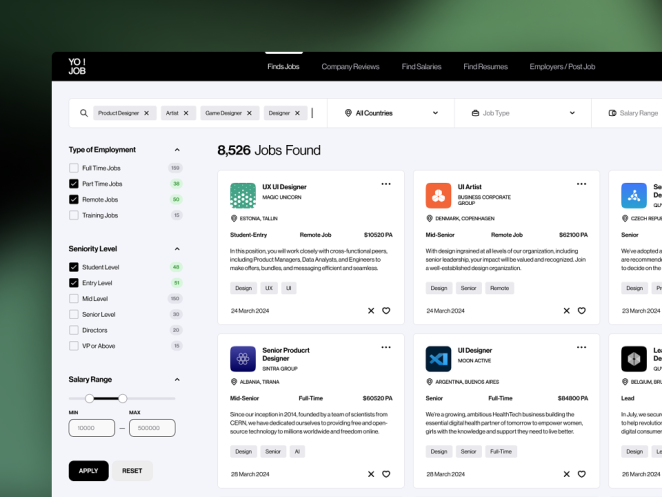
Every advert contains at least two jobs. There's the job as advertised, polished into a coherent and exciting opportunity with an inspiring opening paragraph and perhaps a photograph of some suspiciously happy people standing around a whiteboard. Then there's the job as it'll actually exist on a wet Tuesday morning when three deadlines collide, a client changes the brief, somebody's off sick and the software licence apparently expired in 2024.
Reading between the lines means trying to construct a reasonable picture of the second from the first without convincing yourself you've somehow developed psychic powers. A good place to start is with the simplest possible question: why does this role exist? A newly created position might mean you'll have genuine freedom to shape something from the ground up, but it could also mean there are no processes, no precedents and three senior stakeholders with completely different ideas about what you're there to do. A replacement role might be better established, though it's reasonable to wonder why the previous person left. A fixed-term position tied to a launch, pitch win or transformation programme can be exciting and wonderfully focused, provided somebody can actually explain what they expect you to achieve before your contract disappears beneath you.
Then look for the central problem. The better adverts normally reveal it, even if they don't use that language. Perhaps the company needs to establish a brand function, improve its social output, fix a product journey, win new clients or bring work in-house. Those are useful reasons to hire somebody because they're problems you can understand and, crucially, problems you can respond to in an application.
The weaker adverts often describe a mythical person rather than an actual purpose. They want somebody “dynamic”, “exceptional”, “entrepreneurial” and “obsessed with excellence”, but remain strangely vague about what this human thunderbolt will actually be responsible for changing once they've joined. That can be a sign the organisation has written a person specification before fully deciding what the person is for.
Creativepool's guide to defining a creative role before writing the job description advises employers to establish the purpose, core responsibilities, seniority, reporting line and distinction between essential and desirable skills before advertising. As a candidate, you can use exactly the same criteria in reverse. If you've read an advert twice and still can't explain what the role fundamentally exists to accomplish, there's at least a possibility the employer can't either.
Find the role's centre of gravity
Most creative jobs involve some combination of thinking, making, managing and communicating. The important thing is working out which of those activities will swallow most of your week, because the glossy summary at the top isn't always the best guide.
A design role might open with grand language about shaping the future of the brand, then devote most of its responsibilities to resizing campaign assets, preparing artwork and processing internal requests. That doesn't necessarily make it a bad job. It simply makes it a production-heavy design role with a rather more ambitious introduction. Conversely, an apparently straightforward copywriting role might involve defining tone of voice, briefing agencies, presenting work to senior leadership and coaching junior writers. In that case, the title says “copywriter” while the duties are quietly screaming “senior editorial lead”.
The verbs are often particularly revealing. “Create”, “write”, “design” and “produce” point towards execution, while “define”, “shape”, “establish” and “set” suggest more strategic or foundational work. “Lead”, “mentor”, “approve” and “influence” imply authority, or at least the expectation that you'll somehow manufacture it. Meanwhile, “coordinate”, “liaise”, “support” and “manage stakeholders” can indicate that much of the working day will involve making other people's work possible.
None of those ways of working is inherently superior. Plenty of brilliant creatives enjoy production-heavy roles, while others would happily spend all day untangling strategy if somebody would just keep Photoshop away from them. The problem comes when the title, salary and decision-making power belong to one level while the accountability very obviously belongs to another.
Notice whether the job has edges
A well-designed job has boundaries. You can tell what matters most, what belongs elsewhere and which other people make the system function. An unbounded role, on the other hand, tends to expand every time somebody remembers another useful skill.
The copywriter also handles organic social. The social manager also shoots and edits video. The designer looks after the website. The developer handles analytics, internal IT support and, apparently, the office printer, which has once again chosen violence. Before long, what began as a reasonably coherent vacancy starts to resemble an entire department wearing a trench coat.
That doesn't mean hybrid creative roles are inherently a problem. They can be fantastic, particularly in smaller teams where breadth is genuinely valued and properly supported. Brand design plus motion makes perfect sense. Copywriting plus content strategy is hardly outrageous. UX, front-end development, photography, paid media, CRM, events management and “a keen interest in sales”, however, is starting to feel less like a role and more like a cry for help.
Which Parts of the Job Ad Matter Most?

Deorwine Infotech
Not every part of a job advert will have been written with equal care. The opening might have come from employer branding, the responsibilities from the hiring manager, the requirements from an older vacancy and the benefits from a template nobody's touched since the office still had a ping-pong table and a neon sign insisting everyone “HUSTLE”.
Your job is to separate the load-bearing information from the decorative wallpaper. If you're trying to decode the job ad meaning quickly, start with hierarchy. Look at what appears early, what gets repeated and what has a measurable outcome attached to it. Those details are generally much more revealing than a paragraph promising a “vibrant culture of innovation”.
The title, reporting line and first responsibilities
Job titles aren't everything, but they're not nothing either. They influence how the role is understood internally, how future employers interpret your experience and how the position sits within the organisation's hierarchy. If the duties sound dramatically more senior than the title, it's worth considering whether the authority, salary and progression opportunities are equally out of step.
The reporting line can be just as revealing. A brand designer reporting to a design director is likely to experience a very different job from one reporting directly to a sales director. A content specialist sitting within product will probably work differently from one sitting inside communications. Neither arrangement is automatically right or wrong, but it tells you something about who'll set priorities, who understands your discipline and who ultimately decides whether you're doing a good job.
Pay particular attention to the first few responsibilities too. They're normally where the real hiring problem lives. If the same task appears in the opening summary, the responsibilities and the requirements, assume it's important. Repetition is one of the clearest forms of emphasis available in a document that's probably been edited by six people in three departments.
Look for outcomes, not atmospheric weather
The strongest adverts tell you what you're actually expected to change. “Build a new visual identity system”, “improve the onboarding journey”, “lead three integrated campaigns” or “increase qualified leads” all give you something tangible to work with. You can imagine those things happening, discuss them in an interview and select portfolio examples that demonstrate you've solved similar problems before.
Compare that with “bring energy”, “push boundaries” or “make an impact”. All very agreeable sentiments, but slightly more difficult to visualise on a calendar. Clear outcomes make it much easier to tailor an application because they tell you what kind of evidence the employer needs. If they're trying to establish systems, show where you've built something repeatable. If they're focused on growth, connect your work to commercial results. If they're wrestling with collaboration across multiple markets, show a case study that demonstrates genuine complexity rather than simply attaching the prettiest campaign you've ever worked on.
This is also where job description key words become genuinely useful. Not as magic incantations to scatter across your CV until it reads like somebody dropped an SEO spreadsheet down the stairs, but as clues to how the employer has framed the problem. Repeated nouns, verbs, tools, audiences and outcomes reveal the language a recruiter is likely to be looking for.
That's particularly relevant now that recruitment increasingly happens through systems as well as people. As Creativepool explored in our piece on AI in recruitment and creative careers, technology can influence which applicants are surfaced long before a human being takes a proper look. So yes, use the employer's vocabulary where it genuinely describes your experience, but make sure there's still enough real evidence behind those words to convince an actual person when the CV finally reaches one.
Don't skim the boring bits
Salary, contract type, location, working pattern, hours, travel and the application process aren't bits of administrative clutter surrounding the exciting creative opportunity. They're part of the opportunity, because they're the conditions under which that opportunity will occupy a substantial chunk of your waking life.
Read them together rather than in isolation. A role described as remote might quietly require weekly attendance in London. A generous-looking salary range could span several completely different levels of seniority. “Flexible hours” could mean genuine autonomy, or it could mean the organisation is impressively flexible about which portion of your evening you continue working through.
The more a practical condition would affect your decision, the less comfortable you should be relying on implication. A job advert doesn't have to answer every conceivable question, and you'd probably worry if it did, but it should give you enough information to decide whether completing the application is a sensible use of your time.
What Does the Language in a Job Ad Really Mean?
Malena De Luca
The internet loves translating job-ad clichés. “Rockstar” means impossible expectations. “We're like a family” means weak boundaries. “Competitive salary” means nobody is willing to write down a number. They're funny because, occasionally, they're painfully accurate.
The trouble begins when we start treating them as immutable laws. Language is a clue, not a conviction, and the important question is whether the rest of the advert supports or contradicts it. One enthusiastic adjective tells you very little. A whole collection of phrases all pointing in the same direction is considerably more interesting.
What does “fast-paced environment” mean in a job description?
A fast-paced environment isn't automatically a bad thing. Some businesses genuinely move quickly because the work demands it. Live events, reactive campaigns, newsrooms, product launches and busy agency environments can all involve rapid decisions and short turnarounds, and there are plenty of creatives who thrive on exactly that rhythm. Some would probably lose their minds spending six months discussing the emotional implications of one shade of beige.
But “fast-paced” can also be an elegant way of describing chronic understaffing, late briefs and a culture that's mistaken urgency for importance. That's why you need to look for the machinery underneath the speed. How are priorities set? Is there a producer or project manager? Does the advert tell you anything about the number of projects or accounts you'll handle? Is there any mention of planning, resourcing, handovers or protected focus time?
Speed with systems is a working model. Speed without systems is panic with a brand identity. When phrases such as “must thrive under pressure”, “always on”, “whatever it takes” and “comfortable with constant change” start appearing together, that's when the language becomes more revealing. One phrase might be harmless. A whole paragraph of endurance language suggests the company may view pressure as a personality test rather than something management should occasionally try to reduce.
“Ownership” and “autonomy”
Ownership and autonomy can both be excellent signals. A trusted employee who can shape their work, make decisions and see projects through properly has enormous room to grow. The important distinction is between genuine ownership and simply being left holding the bag.
If you're expected to “own” an outcome, can you influence the budget, timing, brief and resources required to achieve it? If you'll be expected to “run with projects independently”, what happens when two senior stakeholders want completely different things by Friday? Ownership without authority is really just accountability wearing a nicer jacket.
Proper autonomy means having clear goals, access to the information you need and enough authority to make meaningful decisions. False autonomy tends to mean being abandoned with an impossible task and later asked why you didn't escalate it sooner. The words might be the same in the advert, but the supporting detail usually tells you which version you're dealing with.
“Entrepreneurial”, “self-starter” and “build from scratch”
These phrases can signal an exciting early-stage opportunity. Perhaps the function is new, the company is moving into unfamiliar territory or you're genuinely being given the freedom to shape something from the ground up. For the right person, that can be enormously rewarding.
It can also mean you'll open the shared drive on your first morning and discover one empty folder, no research, no budget history and three members of the leadership team who all have different definitions of “brand”. The question to ask is whether the company genuinely understands what building from scratch involves.
Building anything properly takes discovery, experimentation and persuasion. If the employer simultaneously expects immediate delivery at scale, you may effectively be being hired to complete phase one and phase four at the same time. Likewise, “self-starter” should mean somebody capable of moving forward without minute-by-minute supervision. It shouldn't be an excuse for absent onboarding, unclear management or an organisational allergy to making decisions.
“Collaborative”, “low ego” and “stakeholder management”
Healthy creative work is collaborative. Ideas generally improve when people can explain, listen, challenge and adapt without treating every piece of feedback as the fall of Rome. But it's worth examining what “collaboration” actually appears to mean in this particular workplace.
Does the role partner with clearly named functions, or does “stakeholder management” seem to mean collecting 14 contradictory comments from anybody who happens to have editing access? Is “low ego” a value applied across the business, or mainly to the creative expected to accept every bit of feedback delivered from three pay grades above?
The strongest adverts give you at least some indication of how decisions get made. They name partners, reporting lines and areas of responsibility. The weakest celebrate collaboration while leaving ownership so beautifully vague that every meeting risks becoming a constitutional crisis.
“Flexible”, “hybrid” and “remote”
These words become far more useful when somebody attaches numbers to them. How many days? Where? Chosen by whom? With what exceptions? Can you genuinely work remotely from anywhere in the UK, or do you need to live close enough to reach the office whenever somebody decides Tuesday would be “better for collaboration”?
Ambiguity might simply mean the employer is genuinely flexible and wants to discuss arrangements with the right candidate. It might also mean there's a policy somewhere that becomes considerably less attractive once somebody states it plainly. Creativepool's look at creative salaries across UK cities and remote roles touches on the same fundamental point: geography, flexibility and compensation are all part of the same trade-off, so candidates need enough information to understand what they're actually being offered.
“Passionate”, “fun” and “we're like a family”
There's nothing inherently suspicious about passion. Creative organisations should care about what they make, and colleagues can absolutely enjoy working together. An office doesn't need to resemble a Victorian workhouse to prove everybody is serious about their craft.
The problem comes when emotional language starts replacing material information. Passion isn't a workload policy. Fun isn't career progression. And while a workplace can genuinely feel close-knit, most healthy families don't ask you to produce three speculative campaign concepts over the weekend.
Look instead for evidence of culture in behaviour. Learning budgets, parental leave, management support, feedback practices, inclusion, staff retention and working patterns are far more revealing than a paragraph insisting everybody loves one another. Values become much more interesting once somebody has attached money, time, processes or consequences to them.
What Do the Requirements Tell You About the Employer's Expectations?
Terence Bolsh
The requirements section isn't simply a list of hoops for you to jump through. It can tell you a great deal about how confidently the employer understands its own needs.
A focused list suggests somebody has made the effort to separate what a candidate genuinely needs on day one from what can reasonably be learned. A 24-point wishlist suggests everybody was invited to contribute and nobody was given permission to delete anything.
The CIPD's inclusive recruitment guidance recommends making requirements clear, specific and behaviour-based, keeping the list as short as possible and ensuring each criterion is genuinely necessary. That's sensible advice for employers, but it's also a useful standard for candidates to judge them against.
What does “preferred qualifications” mean in a job description?
Generally speaking, preferred qualifications means advantageous rather than essential. The employer believes that particular experience could help, but should theoretically be prepared to consider somebody capable of doing the central job without it. A well-written advert will usually distinguish “essential”, “required” or “must have” criteria from “preferred”, “desirable”, “nice to have” or “bonus” skills.
Indeed's explanation of job requirements makes much the same distinction. Unfortunately, employers don't always use those labels consistently. Something tucked into the “preferred” section may still matter enormously to a particular hiring manager, while an “essential” software package might actually be shorthand for a broader skill that transfers perfectly well from another platform.
The job description meaning of “preferred”, then, is best understood as “this probably isn't an automatic deal-breaker” rather than “this definitely doesn't matter”. Look at the relationship between the requirement and the work. If you're expected to sign off regulated financial copy, relevant compliance knowledge may be fundamental. If an advert demands five years using one particular design application but the role itself is really about typography, systems thinking and art direction, equivalent experience may matter far more than the logo on the software splash screen.
Years of experience are often a proxy
“Five years' experience” can mean all sorts of things. It might mean maturity, independence, confidence with clients, exposure to complexity or simply having accumulated enough scars to recognise when a suspiciously simple brief isn't suspiciously simple at all.
Years are easy to count, so employers often use them as shorthand for qualities that are much harder to express in a bullet point. That doesn't make the number meaningless, but it does mean you can ask what it's actually trying to protect. Somebody with three unusually relevant years may be a much stronger candidate than somebody who's spent eight years repeating roughly the same narrow task.
A portfolio, case study and conversation can reveal depth far more effectively than a calendar. There are obvious exceptions, particularly where experience connects directly to professional risk, specialist judgement, regulation or formal eligibility. There's a difference between challenging a lazy proxy and deciding expertise can simply be manifested through confidence.
Requirements reveal how the employer understands seniority
Compare responsibility, authority and support. A genuinely junior role should include learning, guidance and bounded execution. A midweight role should show increasing ownership, while a senior role should involve meaningful influence over decisions rather than simply providing a much longer list of things to produce before 5.30.
If an employer wants leadership, strategy, mentoring, client presentations and hands-on delivery but offers no team, no real decision-making authority and an entry-level salary, the interesting question isn't whether you're talented enough. It's whether the company has priced and designed the role honestly.
It's also worth watching what the advert treats as a personality trait. “Resilient” might simply acknowledge that the work occasionally gets pressured, but it can also transfer responsibility for poor conditions from the organisation onto the employee. “Detail-obsessed” may be an enthusiastic way of saying the company values craft, although nobody should require an actual obsession to proofread a brochure. Healthier requirements describe observable behaviours and relevant standards rather than asking candidates to undergo a complete personality renovation.
What Does the Job Ad Tell You About the Workplace?

Parag Sankhe
Culture rarely reveals itself in the paragraph labelled Culture. That's usually where organisations describe what they hope the culture is. The rest of the advert is where you start seeing what the company appears to reward.
Look at whose needs dominate. Does the employer explain what you'll learn, receive and be supported with, or is the entire advert a heroic list of everything you're expected to arrive carrying? Does it feel like a mutual opportunity, or more like an audition for the privilege of being useful?
The balance between individual and collective language can be revealing too. If one person is apparently being hired to single-handedly transform the organisation's fortunes, there's always a risk the same person will receive equally individualised blame when reality turns out to be rather more complicated. A role embedded within a clearly described team, with named partners and shared goals, at least suggests the company understands that creative outcomes are rarely produced by lone geniuses emerging dramatically from a darkened room.
Specificity itself can be cultural evidence. Clear salary, reporting line, scope, location and process all suggest a willingness to make commitments. Endless ambiguity may simply reflect an awkward corporate template, but it can also indicate internal uncertainty or a belief that candidates should invest their time before they're allowed to know exactly what they're investing it in.
None of this is infallible, of course. A perfectly decent organisation can publish a dreadful job advert, just as a chaotic company can employ a very talented copywriter capable of making dysfunction sound positively inspirational. Treat the advert as evidence, not prophecy.
Read the benefits for assumptions, not just perks
Benefits sections are revealing because they tell you what the employer believes candidates should value. A pension, meaningful leave, health support, a learning budget and transparent flexible working all tell you something about the employment relationship itself. Office snacks, free drinks and monthly socials tell you about things happening somewhere in the general vicinity of the employment relationship.
There's nothing wrong with perks. Who doesn't appreciate the occasional free biscuit? They become considerably less charming when they're being used to distract from missing fundamentals. A neon sign isn't a management practice, and a summer party doesn't compensate for routinely cancelled weekends.
It's also worth noticing statutory entitlements presented as extraordinary acts of generosity. “Paid holiday” isn't exactly corporate philanthropy. Equally, don't dismiss a long benefits list entirely, because something genuinely valuable may be hiding among the beanbags and branded water bottles. The point is simply to distinguish the substantial from the decorative.
Read the application process as your first interaction
The application process tells you what an employer values before you've spoken to anybody. A portfolio request makes obvious sense for many creative jobs. A request to explain a case study suggests the employer wants to understand how you think and what you actually contributed. A short, relevant question can give candidates an opportunity to demonstrate qualities that aren't obvious from a CV.
Then there are the other processes: several rounds of unpaid tasks, speculative creative work that could conceivably be used commercially or an open-ended invitation to “show us what you'd do with our brand”. Those deserve more scrutiny. Ask how long the task should take, whether it's hypothetical, who'll see it and what happens to the work afterwards.
The assessment should be proportionate to the decision. Yes, the candidate is being evaluated, but the employer is also showing you how it briefs people, communicates expectations and values their time. Recruitment is one of the first pieces of actual work you do together, even if only one side is currently being paid.
What Are the Red Flags in a Job Description?

Lewis-Jon Somerscales
The most useful red flags aren't individual words. They're patterns. One spelling mistake doesn't prove organisational collapse, whereas a contradictory salary, location and contract might tell you rather more.
“Fast-paced” by itself isn't enough to condemn a workplace. “Fast-paced”, “always on”, “thick-skinned”, “no job too small” and “must be available outside normal hours” all appearing in close proximity is different. At that point you're beginning to see a recognisable weather system rather than one slightly unfortunate adjective.
Scope, title and pay don't belong to the same job
This is the classic role-inflation problem: modest title, modest salary, strategic leadership, people management, hands-on production and commercial accountability, perhaps with an implied expectation that you'll fix the Wi-Fi while you're there.
Sometimes organisations genuinely don't understand the market. Sometimes they understand it perfectly well and are simply hoping candidates don't. Compare the position with similar vacancies and with the seniority of the people you'll apparently be influencing. If you're expected to lead global campaigns and advise the board, an “executive” title might not mean what the company thinks it means.
Everything is urgent and nothing is prioritised
Long responsibility lists aren't automatically bad. Agency roles in particular can be brilliantly varied, and plenty of people enjoy having a week that refuses to behave itself. The issue is whether there's any hierarchy.
If every channel, deliverable, audience, stakeholder and objective is described as business-critical, the person taking the job will eventually be forced to make prioritisation decisions the organisation itself has declined to make. Ask what the first three priorities are, how work enters the team and who decides what gives when two deadlines collide.
Creativepool's guide to questions candidates should ask at interview offers plenty of similarly direct ways to test vague scope and unclear decision-making. There's a meaningful difference between an excitingly busy environment and chaos that's simply been given an exciting adjective.
The advert glorifies sacrifice
Language around grit, relentless standards, doing whatever it takes and leaving your ego at the door can occasionally describe genuinely demanding but rewarding work. It can also be doing quite a lot of heavy lifting.
Good employers should be able to describe challenge without romanticising harm. They can explain what support exists, how workloads are managed and which resources make difficult periods sustainable. If the only apparent solution to pressure is finding somebody with sufficiently heroic powers of resilience, there's a fair chance you're looking at a management problem that's been rewritten as a candidate requirement.
The requirements are exclusionary without explanation
Some jobs genuinely require particular qualifications, availability or physical capabilities, and there's nothing inherently wrong with saying so when those requirements are relevant to the work. What deserves more attention is unnecessary age-coded language, unexplained physical demands, rigid experience routes and personal criteria that don't appear to have much connection to performance.
Acas reminds employers that recruitment, including advertising, must comply with discrimination law, and its guidance on advertising a job fairly recommends clear descriptions, relevant person specifications and non-discriminatory language.
Candidates don't need to launch an amateur legal investigation into every badly phrased sentence. They can, however, notice when an organisation appears to have spent very little time considering who its language welcomes and who it might quietly push away.
The opportunity might not be genuine at all
Most bad job adverts are simply bad job adverts. There's another category of warning sign altogether, however, and that's recruitment fraud.
Be extremely cautious if a supposed employer offers you a job without a credible interview, asks for money, demands sensitive identity or banking information unusually early, uses suspicious contact details or promises implausibly high pay for very little work. Government guidance on the signs of job scams similarly recommends checking that both the organisation and the contact details are legitimate.
Don't let manufactured urgency stop you verifying things. Find the company's official website independently, check the vacancy exists through a credible channel and contact the organisation through published details if something doesn't feel right. A genuine employer can survive a sensible question. A scam generally depends on preventing you from asking one.
Pay Attention to What the Job Ad Doesn't Tell You

Derek Bacon
Absence isn't automatically evidence of something sinister. Sometimes an omission is simply a question that's been transferred to the next stage. That said, what isn't mentioned can still help you work out which questions are worth asking.
Salary is the obvious example. “Competitive” tells you remarkably little without a number attached, largely because every organisation appears to believe it's competing in a completely different sporting event. Perhaps there's a company policy against publishing ranges, perhaps the level is negotiable or perhaps the employer simply doesn't want to say. Whatever the explanation, you're still entitled to decide how much unpaid application time you're willing to invest before discovering whether your definition of “competitive” occupies roughly the same postcode as theirs.
Team size and reporting lines matter for similar reasons. “Join our growing creative team” could mean 25 specialists, or it could mean one exhausted designer who's absolutely thrilled somebody else is finally coming. If the advert talks endlessly about collaboration but never mentions who you'll actually collaborate with, that's a perfectly reasonable thing to ask.
The reason for hiring can be revealing too. Growth, replacement, restructuring and temporary cover create quite different opportunities. A new role might offer freedom but require considerable internal persuasion, while a replacement role may come with clearer systems but also inherited expectations. Neither is inherently worrying. You simply want to know which situation you're walking into.
Also look for missing information around working pattern, contract length, probation, travel, management responsibility, budget ownership, client exposure and recruitment timeline. The more important something is to your decision, the earlier it's worth clarifying. And then there's perhaps the biggest omission of all: what does success actually look like?
If nobody can explain what they hope will be different after six or twelve months, there's a danger your performance will eventually be judged through taste, visibility or whatever happened to become urgent that week. One of the most useful interview questions you can ask is, “What would make you delighted you'd hired this person six months from now?” It's surprisingly difficult to answer with corporate mist and forces the role out of generic language and into an observable future.
Should You Apply if You Don't Meet Every Requirement?

Elif Cenal
Usually, yes, provided you can genuinely perform the core job and the gaps are peripheral, learnable or based on an unnecessarily narrow proxy. If what you're missing is legally required, safety-critical or fundamental to the work, that's a different story.
That answer is less exciting than the endlessly repeated claim that men apply for jobs when they meet 60% of the criteria while women wait until they meet 100%, but it's rather more useful. A 2024 study published in the European Journal of Social Psychology tested that familiar 60/100 claim and didn't find robust gender differences in application intentions purely according to qualification fit, although it did identify higher psychological hurdles and a stronger desire for preparedness among women.
The practical lesson isn't to replace one arbitrary percentage with another. It's to recognise that requirements don't all carry equal weight. Missing one fundamental capability can matter considerably more than ticking six decorative preferences.
Go back to the role's centre of gravity. Can you show that you've solved a comparable problem, produced work at the required standard and operated with a similar level of responsibility? If the answer is yes, a different sector, software package or exact number of years may well be bridgeable.
Then examine the gap properly. Could you realistically learn it during onboarding? Does adjacent experience transfer? Can you explain the connection without performing verbal origami? A strong application doesn't pretend the gap isn't there. It shows that the underlying capability is already present and that the missing surface detail is manageable.
It's equally important not to apply simply because you could technically force yourself through every duty on the list. Fit includes motivation, conditions and direction as well as raw capability. Being able to survive a job isn't the same thing as wanting the life attached to it.
Tailor without turning into a different person
Use the employer's language where it's accurate. If the advert repeatedly refers to “integrated campaigns” and you've genuinely delivered integrated campaigns, use the phrase. If it talks about “stakeholder management”, don't simply parrot the words. Show who you influenced, where the disagreement was and what changed because of your involvement.
The most useful job description key words are the ones you can prove. Relevance can help an application get found, but evidence is what helps it survive being read. Creative recruiters aren't really buying nouns such as “strategy”, “leadership” and “innovation”. They're interested in what those words mean when attached to decisions, outcomes and actual work.
Creativepool's advice on what talent professionals notice in applications reinforces the value of relevance, clarity, evidence and self-awareness. Tailoring should make the connection between you and the opportunity easier to see. It shouldn't require repainting your entire career in the employer's preferred shade of jargon.
How Do You Know if a Job Is Right for You From the Job Description?

Sheldon Drake
The frustrating answer is that you don't, at least not completely. A job advert can't tell you whether you'll like your manager, trust the leadership, enjoy the culture or spend every Sunday evening staring into the middle distance. What it can tell you is whether there's enough alignment to make finding out worthwhile.
I'd read the advert in three different ways. First, read for capability. Can you do the central work, or reach it with a realistic amount of learning? Does your portfolio contain evidence the employer is likely to recognise? There's little point becoming fixated on every tiny requirement before you've established whether you're fundamentally capable of solving the problem they're hiring for.
Then read for appetite. Do you actually want to spend your time doing the activities that keep being repeated? Candidates often become so focused on whether they can win a job that they postpone the rather important question of whether they'd enjoy doing it roughly 220 days a year. Being excellent at something doesn't necessarily mean you want to spend the next three years doing more of it.
Finally, read for conditions. Does the salary, location, working pattern, security, pace and level of responsibility fit the life you actually have? A fascinating role with completely incompatible conditions is still incompatible, however attractively the employer has described the work itself.
Once you've done that, identify what's still unanswered. What does a normal week look like? Why is the role open? What are the first priorities? Who sets the brief? Who signs off the work? How is performance measured? What happened the last time the team became overloaded? You aren't trying to catch the employer out. You're trying to replace assumptions with information.
Use the interview to test the advert against reality. If three interviewers describe three completely different sets of priorities, that's useful evidence. If the manager can speak candidly about the difficult parts of the role and the wider team tells a consistent story about support, that's useful too. Most importantly, pay attention to whether the answers become more specific as the process continues. A job advert will inevitably simplify reality, but a good recruitment process should gradually reveal more of it.
So, What Is the Job Ad Really Telling You?
Sergio Sanchez
A job advert tells you what an organisation needs, what it considers important enough to mention and how clearly it currently understands the relationship between those two things. Its title gives you an idea of how the role will be positioned, its verbs hint at how you'll spend your days, its repeated phrases reveal its priorities and its requirements show what the employer appears to regard as trainable or non-negotiable.
Its omissions create questions, while its contradictions point towards areas where the role itself might still be contested. That's the distinction that matters when people search for job ad meaning. An isolated phrase is a hint. Alignment across the whole advert is evidence.
The real job ad meaning isn't hiding inside one sinister use of the word “dynamic”. It emerges when you put everything together. Do the title, responsibilities, authority, salary, support and working conditions describe roughly the same job? Do the sweeping promises survive contact with the practical detail? Does the organisation ask for qualities it's actually prepared to support once somebody joins?
Remember too that an advert isn't prophecy. Perfectly good organisations sometimes publish mediocre recruitment copy, while difficult workplaces are perfectly capable of producing beautiful manifestos about trust and empowerment. Research the business, look at its work, see how existing employees describe their contribution and use every stage of recruitment to gather a little more evidence.
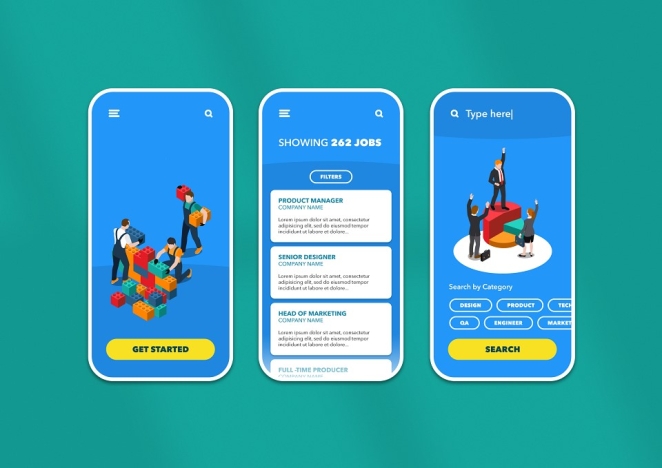
Creativepool's jobs board is useful for exactly that kind of comparison because reading several current adverts for roughly the same role quickly gives you a sense of how differently organisations define seniority, responsibility and reward. One company's “senior designer” can look suspiciously like another company's “head of design”, while the salaries might suggest a third interpretation altogether.
Ultimately, the healthiest way to read a job ad isn't with blind optimism, but neither is it to indulge in the sort of theatrical cynicism that assumes every mention of “passion” conceals a dungeon beneath the office. It's about attentive curiosity: reading what the company has written, noticing what it hasn't and asking the questions its vaguer language appears to be postponing.
Because an application is a two-way decision, even if the language of recruitment doesn't always make it feel that way.
The final question shouldn't simply be whether you can convince the employer that you deserve the job. It should be whether the job, once you've read between the lines, deserves your application in the first place.