

Hiring a graphic designer can feel deceptively simple. You look at a few portfolios, decide whose work you like, check they can use the right software, ask whether they can start next week and hope the whole thing doesn’t become one of those slow-motion hiring decisions everyone politely regrets.
But a good designer is not just someone who can make things look better. That’s the entry point, not the destination. The right graphic designer can help your business become clearer, more recognisable and more persuasive. They can turn muddled messages into visual order. They can make a brand feel more confident. They can make complicated information easier to understand. They can spot when a layout is saying the opposite of what the copy thinks it’s saying. They can save you from your own fondness for “just one more font.”
The wrong designer, meanwhile, can make everything look expensively confused.
That’s why hiring graphic designers properly means looking beyond surface polish. A beautiful graphic designer portfolio matters, of course. It’s often the first thing that gets someone into the conversation. But a portfolio only tells part of the story. The real question is what sits underneath the work. Was the designer solving a problem or simply styling a page? Did they understand the audience? Could they work within a brand system? Did they make something that performed, communicated or changed how people felt? Or did they just produce a very attractive rectangle?
The formal graphic designer requirements vary from role to role, sector to sector and business to business. The US Bureau of Labor Statistics describes graphic designers as “people who create visual concepts by hand or with software to communicate ideas,” and notes that candidates are “typically expected to have a portfolio demonstrating creativity and originality.” It also lists analytical skills, communication skills, creativity, software ability and time management among the important qualities for the role.
That’s a useful starting point. But in the real world, especially in modern marketing teams, the skills of a graphic designer go much further. The best designers are visual thinkers, problem-solvers, collaborators, brand guardians and occasional miracle workers. They know how to make things look good, yes, but more importantly, they know why they should look that way in the first place.
So, whether you’re building an in-house team, hiring a freelancer, working with a graphic design company or looking for specialist support on a campaign, these are the ten skills to look for when you’re hiring a graphic designer.
Why Hiring the Right Graphic Designer Matters
Yingbo Qiao
Design is often treated as the final layer of communication. The thing that happens once the strategy, copy and message have already been decided. The polish. The packaging. The “make it look nice” bit.
This is a mistake, and not even an interesting one.
Graphic design is not just decoration. It is how a message becomes visible, legible, desirable and memorable. It determines what people notice first, what they understand next and whether they feel enough confidence to keep paying attention. It shapes hierarchy, emotion, recognition and trust. It can make a small brand look serious, a complex idea feel accessible or a tired campaign feel alive again.
That’s why hiring graphic designer talent is not a box-ticking exercise. You are not simply buying output. You are buying judgement.
The right designer can help a business avoid inconsistency, visual clutter and category cliché. They can stretch a brand identity without breaking it. They can make a campaign work across social, print, digital, packaging, presentation decks, email, outdoor, internal comms and the thousand odd little touchpoints where brands either become recognisable or quietly disintegrate.
The wrong designer may still produce attractive work. That’s the tricky bit. Bad hiring decisions in design rarely announce themselves with something obviously dreadful. More often, the work looks fine. Polished, even. But it doesn’t solve the problem. It doesn’t hold together across channels. It doesn’t feel like the brand. It doesn’t move the audience. It just sits there, looking pleased with itself.
And “fine” is a surprisingly expensive place to end up.
10 Essential Skills to Look for When Hiring a Graphic Designer
1. Visual problem-solving

Joel Derksen
The most important skill to look for is not software ability. It’s visual problem-solving.
A strong graphic designer doesn’t begin by asking, “What style do you want?” They begin by asking what the work needs to do. Who is it for? What needs to be understood? What should the audience feel? What action should the design support? What is confusing, missing, overcomplicated or underpowered in the current material?
This is the difference between a designer and a decorator.
A decorator can make a thing look more attractive. A designer can work out why it isn’t communicating properly. Maybe the hierarchy is wrong. Maybe the call to action is buried. Maybe the audience needs reassurance before excitement. Maybe the visual language is too corporate for a challenger brand, too playful for a financial product or too generic for a business that needs distinctiveness.
When reviewing a portfolio, look for evidence of thinking. Has the designer explained the problem behind the work? Can they talk about choices, trade-offs and constraints? Do they show before-and-after examples? Can they explain why a layout, identity, packaging system or campaign route worked?
A good graphic design portfolio should make you feel that the designer didn’t just make something beautiful. They made something make sense.
2. Typography and layout judgement

Timothy Ames
Typography is where a lot of design confidence either appears or collapses.
Anyone can choose a font. Fewer people can use type well. The difference is enormous. Strong typography creates hierarchy, rhythm, personality and clarity. Weak typography makes even good ideas feel uncertain. It creates friction where there should be flow. It shouts when it should guide. It whispers when it should sell.
When hiring graphic designer talent, typography and layout judgement should be non-negotiable. This doesn’t mean every designer needs to be a type obsessive who can identify a grotesque at fifty paces, although those people are often fun at exactly one kind of party. It means they should understand spacing, scale, alignment, readability, contrast and how type behaves across different formats.
Look at their work carefully. Does the eye know where to go first? Is the copy easy to read? Are headlines and body copy working together? Do layouts feel considered rather than filled? Can the designer handle information-heavy pieces without turning them into a municipal noticeboard? Can they make a presentation, report or brochure feel designed rather than merely assembled?
This skill matters because most businesses don’t only need beautiful brand moments. They need everyday communication to work harder. Sales decks. Social templates. Event graphics. Case studies. Reports. Email headers. Product sheets. Recruitment ads. Internal comms. The unglamorous stuff, basically, which is where brand discipline often goes to die.
A good designer brings order to all of it.
3. Brand sensitivity
Tanya Be
A designer’s job is not always to reinvent the wheel. Quite often, it’s to make sure the wheel still looks like it belongs to the same vehicle.
Brand sensitivity is the ability to understand, interpret and protect a brand’s visual language. It means knowing which elements can flex and which must remain consistent. It means respecting existing assets without becoming trapped by them. It means recognising when a piece of work needs to feel fresh, and when it needs to feel reassuringly familiar.
This is especially important if you’re hiring a designer into an established brand. You don’t just need creativity. You need creative discipline.
Some designers are brilliant originators but poor guardians. Others are excellent within systems but less confident inventing from scratch. Neither is automatically better. The question is what your business needs. If you’re launching a new brand, you may need someone with strong identity thinking and visual world-building skills. If you’re managing an established brand across multiple channels, you may need someone who can bring consistency, craft and fresh thinking without pulling the whole thing apart every three months.
Look for portfolios that show range without chaos. Has the designer worked within brand guidelines? Have they created systems as well as one-off pieces? Can they explain how they kept work recognisable across formats? Have they handled campaigns, packaging, digital, print or motion in a way that still feels coherent?
A designer who understands brand is not simply asking, “Does this look good?” They’re asking, “Does this look like us, doing this job, for this audience, in this moment?”
That is a much more useful question.
4. Conceptual thinking
Vadym Aseiev
The best graphic designers don’t only execute ideas. They have them.
Conceptual thinking is the ability to turn a message, brief or business challenge into a visual idea with a point. It’s what separates work that simply looks neat from work that sticks. A designer with conceptual strength can find the metaphor, tension, structure or visual hook that makes a piece of communication feel memorable rather than merely competent.
This skill is particularly valuable in campaign work, editorial design, branding, packaging and social content, where the audience is rarely sitting around waiting to be lovingly informed by your asset library. People need a reason to notice. A concept gives them one.
When reviewing a portfolio, ask yourself whether the work has an idea at its core. Is there a visual logic? Does the design do more than arrange existing elements? Does it bring something fresh to the brief? Could you describe the concept in a sentence? If the designer removed the mock-up polish, would the idea still be there?
You can also ask candidates how they develop ideas. What do they do when the first route feels too obvious? How do they move from research to concept? How do they decide which ideas are worth pursuing? What happens when a client or stakeholder doesn’t immediately understand the direction?
This is where you begin to see the difference between a production designer, a brand designer, a campaign designer and a genuinely strategic visual thinker. Again, there’s no universal hierarchy. Sometimes you need fast, reliable production. Sometimes you need a conceptually strong designer who can help shape the work upstream. The mistake is not knowing which you need.
5. Commercial understanding
Cosmo Jameson
Graphic design does not live in a gallery. Not usually, anyway. It lives in markets, organisations, campaigns, budgets, deadlines and audience behaviour. That means commercial understanding is one of the most underrated skills of graphic designer hiring.
A commercially aware designer understands that design has a job. It may need to sell, persuade, explain, reassure, convert, differentiate, launch, inform or build trust. Sometimes it needs to do several of those things at once, which is rude, but common.
This doesn’t mean the designer should reduce every creative decision to a conversion metric. That way lies very ugly landing pages. It means they should understand the business context well enough to make better creative decisions.
For example, a designer working on luxury packaging needs to understand cues of value, restraint and materiality. A designer working on a charity campaign needs to balance urgency, dignity and clarity. A designer working in B2B needs to make complexity feel manageable without draining the life out of it. A designer working in retail needs to understand how quickly people make decisions in busy environments.
Ask candidates how they think about success. Not in a spreadsheet-interrogation way, unless you particularly enjoy making people leave interviews through the window. But ask what the work needed to achieve. Ask what changed because of it. Ask how they handled competing priorities: brand consistency versus performance, clarity versus distinctiveness, speed versus craft.
The strongest designers can talk about impact without pretending design is magic. They understand that good work can be beautiful and useful. In fact, that’s usually the point.
6. Collaboration and communication

Philip Appleton
Graphic designers work with people. This is unfortunate for those who went into design because they loved sitting quietly with kerning, but it remains true.
A designer may need to collaborate with marketers, copywriters, art directors, developers, photographers, printers, producers, account managers, founders, product teams, sales teams, clients and senior stakeholders who “just have a thought.” Strong collaboration and communication skills are therefore essential.
Communication skills are among the most important qualities for graphic designers, including the ability to work with clients, customers and other designers to ensure designs convey information accurately and effectively.
In practice, this means a designer must be able to ask good questions, explain their choices, receive feedback without collapsing, push back without becoming precious and translate visual decisions for people who don’t speak fluent design.
This is particularly important when comparing two designers with similar portfolios. If the work is equally strong, the better hire may be the person who can take you through their thinking clearly. The one who can explain why they made certain choices. The one who listens properly. The one who can separate a useful client concern from a subjective wobble. The one who won’t turn every round of feedback into a small constitutional crisis.
Design is full of taste. Collaboration is how taste becomes productive rather than personal.
7. Adaptability across channels
Ben Field
A modern graphic designer rarely works in one format. Even if the job title sounds simple, the output usually isn’t.
A single campaign might need social posts, motion assets, event graphics, display ads, email templates, landing page modules, print collateral, pitch decks and internal launch materials. A brand identity might need to work across packaging, digital platforms, video, retail, merchandise and a CEO’s conference slide that somehow still uses stretched imagery from 2018.
Adaptability is the ability to think across those environments without losing the idea.
When hiring graphic designer candidates, look for evidence that they can design beyond one beautiful hero image. Can they create systems? Can they adapt an identity across touchpoints? Can they work in both print and digital? Do they understand the practical differences between a social tile, a poster, a presentation slide and a packaging front? Can they design for motion or collaborate with motion specialists? Do they understand accessibility, responsive behaviour and production constraints?
Creativepool’s own graphic designers directory reflects how wide the field has become, with searchable skills ranging from brand and logo design, typography and print design to UX/UI, motion graphics, packaging, illustration, retouching, social media and web design.
That range matters because “graphic designer” can mean very different things. A designer who is brilliant at editorial layouts may not be the right fit for an app interface. A packaging specialist may not be the right person for a high-volume paid social role. A brand identity designer may not want to spend their days resizing banner ads, and honestly, who can blame them?
The skill for employers is knowing what kind of adaptability you need. Don’t hire a generalist and secretly expect a specialist. Don’t hire a specialist and act surprised when they don’t cover every possible output. Be honest about the role.
8. Technical craft and production knowledge
Anna Mueller
Yes, software matters. It’s just not the whole story.
A graphic designer should have the technical ability required for the work you need. That might include Adobe Creative Cloud, Figma, Canva, motion tools, presentation software, print production knowledge, image editing, file preparation, layout systems, asset management or collaboration tools. The exact list will depend on the role.
But the real skill is not merely knowing the buttons. It’s understanding craft and production.
A technically strong designer knows how to prepare artwork properly. They understand resolution, colour modes, file formats, export settings, grids, templates, accessibility considerations and the difference between something that looks fine on their screen and something that will survive the printer, developer or media agency. They name files like a person who wants to remain employable. They don’t leave final-final-v6-NEW-reallyfinal.ai in a folder called “misc.”
This matters more than people think. Poor production knowledge creates delays, rework and avoidable mistakes. It can make campaigns harder to scale. It can frustrate other teams. It can turn a strong idea into a messy delivery process.
When assessing technical craft, don’t just ask which tools they use. Ask how they prepare files for handover. Ask how they manage consistency across repeated assets. Ask how they QA work. Ask how they handle print versus digital production. Ask what they do when a deadline is tight and the asset list suddenly doubles because someone remembered LinkedIn exists.
You’re not looking for a tool operator. You’re looking for someone who understands how design becomes usable.
9. Curiosity and visual literacy
Richard Hill
A good designer has taste. A great designer has taste that keeps evolving.
Curiosity and visual literacy are the skills that keep a designer from defaulting to the same solutions every time. They read widely, look closely and notice things. They understand design history, cultural signals, category codes, fashion, architecture, typography, film, gaming, retail, packaging, social behaviour and the thousand little visual shifts that shape how work is received.
This does not mean you need to hire someone who can deliver a lecture on Swiss modernism before breakfast, though that person may be excellent. It means you want a designer who has references beyond whatever was trending on Behance last Thursday.
Curiosity helps designers avoid generic work. It gives them more material to draw from. It helps them understand when a design choice is fresh, familiar, derivative, category-appropriate or wildly wrong in a way that might actually be useful. Visual literacy gives them the judgement to know the difference.
This is especially important now, as AI and templates make passable visuals easier to produce. If everyone has access to more or less the same tools, the differentiator becomes the designer’s eye: what they choose, reject, combine, refine and protect.
Ask candidates what work they admire and why. Ask what they’ve been noticing lately. Ask what brands, artists, publications, campaigns, studios or cultural references have influenced their thinking. Ask where they look when they’re stuck. The answer doesn’t need to be performatively obscure. It just needs to show a mind at work.
A designer with curiosity won’t only give you better-looking work. They’ll give you work with a wider frame of reference.
10. Reliability, ownership and time management
James Round
This final skill is not glamorous, but then neither is missing a launch deadline because the designer was “still exploring some routes.”
Reliability matters. Ownership matters. Time management matters. Time-management skills are also important for graphic designers, noting that designers often work on multiple projects with different deadlines.
In-house teams and clients need designers who can manage the creative process without constant rescue. That means understanding priorities, communicating early, flagging risks, asking for what they need and delivering work in a usable state. It means knowing when to keep exploring and when to make a decision. It means being able to handle feedback, revisions and production without turning every project into a cliffhanger.
This doesn’t mean rushing design. Good work needs time. But a professional designer knows how to manage that time honestly. They can tell you what is realistic, what will be compromised if the timeline shrinks and what can be done well within the available budget or deadline.
Reliability is especially important for freelancers and project-based hires. If you are hiring graphic designer support for a campaign, brand refresh or launch, you need someone who can integrate quickly and keep things moving. A brilliant but chaotic designer can be thrilling in theory and exhausting in practice.
Look for evidence of ownership. Did they lead the project or support it? How did they manage feedback? What happened when the brief changed? How did they keep the work consistent? What would previous clients or colleagues say about working with them?
A designer who combines craft with dependability is worth holding onto. They make the work better and the process calmer, which is an underrated form of creative luxury.
How to Assess Those Skills During the Hiring Process

Parag Sankhe
The hiring process should not be a beauty contest for portfolios. It should be a structured attempt to understand how a designer thinks, works and collaborates.
Start with the portfolio, but don’t stop there. Ask the candidate to talk through two or three projects in depth. You want to hear the brief, the problem, the constraints, the idea, the choices, the collaboration and the outcome. A strong designer should be able to explain their work without drowning you in jargon or acting as if every design decision came to them in a dream.
Ask practical questions. What was your role? What did the client or team need? What were the limitations? What changed during the project? What feedback did you receive? What would you do differently now? How did you judge whether the work was successful?
You can also use a small paid task, but be careful. Spec work can be exploitative if handled badly, and nobody wants to be that brand. If you need a task, keep it tight, realistic and paid. Make it about thinking, not free output. Ask them to critique an existing asset, suggest a design direction or explain how they would approach a brief. You’ll learn more from their reasoning than from asking them to produce a fully polished campaign in 48 hours.
For senior or strategic roles, involve the people they’ll actually work with. Designers rarely operate in isolation, so test the collaboration. Can they ask smart questions? Can they handle ambiguity? Can they explain design to non-designers? Can they challenge constructively?
The best interviews feel less like interrogation and more like working together for half an hour. That’s usually when you see the real fit.
What a Graphic Designer Portfolio Can Tell You About a Candidate
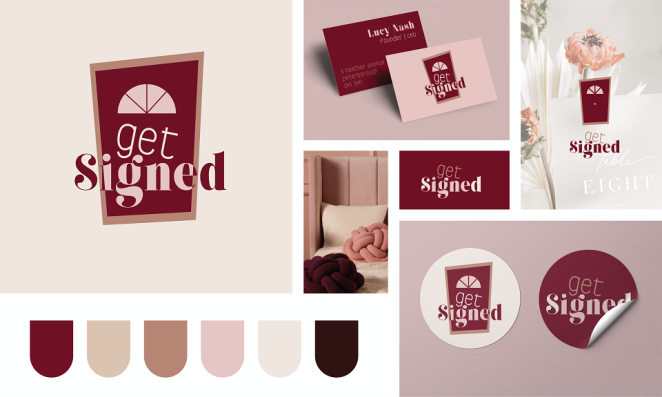
A graphic designer portfolio is not just a gallery. It’s evidence.
It can tell you what kind of work the designer wants to be known for, what they understand about craft, how they present ideas and whether they can make decisions. A strong portfolio should not try to show everything the designer has ever touched. It should be curated. The selection tells you almost as much as the work itself.
Look for variety, but don’t mistake variety for quality. A portfolio with branding, packaging, editorial, social, motion and digital work can suggest range. It can also suggest a designer who hasn’t yet decided what they’re best at. That may be fine for a junior or generalist role. For a specialist brief, you’ll want deeper proof.
Look for context. A portfolio that only shows final visuals may still be impressive, but one that explains the problem and process is usually more useful. You want to see how the designer thinks. What was the brief? What did they contribute? What were the constraints? What choices did they make?
Look for consistency of standard. Most portfolios have one or two hero projects. The real test is the rest of the work. Is the quality sustained? Does the designer still care when the project is less glamorous? Can they make everyday assets feel considered?
Look for relevance. If you’re hiring for packaging, don’t be dazzled by a purely digital portfolio. If you need someone for social-first campaigns, don’t hire solely on beautiful print work. If you need an in-house designer who’ll manage templates, presentations and brand systems, make sure the portfolio shows system thinking as well as standalone creativity.
And finally, look for authorship. Can you tell what the designer actually did? Creative work is often collaborative, which is fine. But you need clarity. Were they responsible for the concept, design, art direction, layout, production, illustration, retouching, animation or final artwork? If they can’t explain their role, be careful.
Common Hiring Mistakes That Can Cost You the Right Graphic Designer
Marcos Alexander Ramos Celis
The first mistake is hiring for software before thinking. Software changes. Taste, judgement and problem-solving travel better.
The second is assuming the most visually exciting portfolio is automatically the best fit. Sometimes it is. Sometimes it belongs to a designer whose style is completely wrong for your brand, audience or workflow. Fit matters.
The third is writing vague graphic designer requirements and then being disappointed when candidates don’t match the role in your head. Be clear about what you need. Is this a brand designer, marketing designer, digital designer, packaging designer, artworker, visual designer, presentation designer or all-round in-house creative? Those are not the same job, even if they sometimes share a job title.
The fourth is asking for too much from one person. Some designers are impressively broad. But if your job description asks for brand strategy, motion design, UX, copywriting, illustration, packaging, paid social, video editing, HTML, photography and “occasional office dog content,” you may not need a graphic designer. You may need a small agency and a lie down.
The fifth is ignoring soft skills. A designer who cannot communicate, collaborate or take feedback will struggle, however beautiful the work. The reverse is also true: a designer with strong potential, good judgement and a collaborative mindset may grow into the role faster than someone with a shinier but narrower portfolio.
The final mistake is treating hiring as a one-way evaluation. Good designers are also assessing you. They want to know whether the brief is clear, whether feedback will be sane, whether the brand has ambition and whether the role will let them do work they’re proud of. If your process is confused, slow or disrespectful, the best candidates will quietly disappear.
And they’ll be right to.
Specialist or Generalist: Which Graphic Designer Should You Hire?

Lorinda Pagano
This is one of the most useful questions to ask before you start.
A specialist graphic designer is usually the better choice when the work requires depth. Packaging, brand identity, editorial systems, UX/UI, motion graphics, information design, type-led identity work, retail design and complex campaign systems often benefit from specialist expertise. If the stakes are high or the format is demanding, don’t assume any good designer can simply pick it up.
A generalist is often the better choice when the business needs flexible day-to-day support. In-house marketing teams, startups and smaller businesses often need someone who can turn their hand to social assets, decks, print materials, email graphics, event collateral and basic brand applications. A good generalist can be invaluable because they understand how the whole visual ecosystem fits together.
The danger is pretending one is the other.
A specialist may become frustrated if the role is mostly production and adaptation. A generalist may struggle if the work demands deep expertise in a specific discipline. Neither outcome is fair on the designer or the business.
So ask yourself what the role really needs. Is the designer there to create a system, maintain a system or stretch a system? Are they expected to originate concepts or execute existing ideas? Will they work alone, with a creative director, inside a marketing team or alongside external agencies? Do you need someone for three months, three years or one very intense launch?
The clearer you are, the better the hire.
Red Flags to Watch For

Kelly Mackenzie
A weak portfolio is the obvious red flag, but not the only one.
Watch out for designers who can’t explain their choices. If every answer is “it just felt right,” you may be dealing with taste without enough judgement. Instinct matters, but professional design needs reasoning too.
Be careful with portfolios that show only mock-ups and no real-world mess. Mock-ups are useful, but actual work has constraints. Budgets. Feedback. Crops. Print issues. Brand guidelines. Legal copy. Stakeholders. The designer who can make work survive reality is usually more valuable than the one who only shows immaculate fantasy projects.
Watch for overclaiming. If a candidate presents collaborative work as entirely their own, press gently. Good designers are usually happy to explain their contribution.
Watch for poor communication in the process. Late replies, unclear answers, missing details and sloppy files may not be fatal for a junior candidate, but they are signals. Design requires care. Hiring does too.
Also watch for a lack of curiosity about your business. A designer doesn’t need to know everything before the first conversation, but they should want to understand the brand, audience and problem. If they only talk about style, they may only be thinking about style.
That might be enough for a narrow task. It probably isn’t enough for important work.
What to Ask Before Making a Final Hiring Decision

Kirill Pavlov
Before you choose, ask a few final questions.
Can this person do the work we actually need, not just the work we admire? Do they understand our brand, audience and constraints? Can they explain their thinking clearly? Can they collaborate with the people they’ll need to work with? Do they have the technical craft required for our channels? Are they likely to raise the standard, not just fill the gap?
If you’re comparing two strong candidates, look beyond the most polished project. Think about fit, process and future value. One designer may have a slightly less glamorous portfolio but be much better suited to your team, pace and brand challenge. Another may be creatively brilliant but wrong for the environment. Hiring well means understanding that distinction before you find out the hard way.
You should also decide what support the designer will have. Even a great designer needs a good brief, clear feedback and realistic timelines. If the role is under-scoped, badly managed or expected to compensate for a lack of brand strategy, the problem may not be the hire.
It may be the setup.
How to Hire a Graphic Designer on Creativepool
Anna Negrini
If you’re ready to hire, the first step is deciding what kind of graphic design support you need.
For individual talent, you can start by browsing graphic designers, where profiles can be explored by location, experience, skills, sector experience, current role, clients and awards. The directory also includes skills such as graphic design, typography, packaging design, brand and logo design, art direction, motion graphics, UX/UI, print design, visual layout, Photoshop, illustration and problem solving, which makes it easier to match the candidate to the actual brief rather than the broad job title.
If you need a wider search, creative talent can be browsed by job title or through project search, which is useful if you’re looking beyond a single discipline or trying to find someone with a particular mix of skills. Creativepool’s talent area is positioned around connecting, collaborating with and hiring creative industry professionals.
For permanent, freelance or project-based opportunities, the creative jobs section lets employers hire talent and list jobs, while candidates can browse roles by job title and company. The jobs page includes live design and creative roles, including digital designer and graphic designer listings, which makes it a useful route if the requirement is a role rather than a one-off project.
If you need a company rather than an individual, the graphic design companies directory is better suited to projects that require a team, broader capabilities or a more structured supplier relationship. This can be useful for brand identity, packaging, campaign systems, design rollouts, print, digital design or projects where strategy and execution need to sit together.
For more complex challenges, Creativepool Studio separates routes for hiring companies and hiring talent, while studio gigs and studio briefs help structure projects around the right kind of support. A studio gig can be useful when you need a certified creative professional for a specific website, branding, video, design or content project, while a studio brief is designed for projects that need a team of experts.
For brands that need help shaping the challenge, studio briefs can support the process of finding a creative company partner, with expert account managers helping from brief development through to final selection. That matters because a better brief usually leads to a better shortlist, and a better shortlist makes hiring less of a beauty parade and more of a decision.
The smartest way to use any hiring platform is to arrive with clarity. Know whether you need a junior, midweight or senior designer. Know whether the role is strategic, conceptual, production-heavy or channel-specific. Know what skills matter most. Know what kind of portfolio evidence you need to see. And, perhaps most importantly, know what success will look like once the designer is in the role.
Because hiring graphic designer talent well is not about finding the person with the prettiest work. It’s about finding the person whose skills, judgement and working style match the problem your business actually needs to solve.
Final Thoughts: Hire for Skills, Not Just Software Expertise
Software proficiency is useful. It may even be essential. But it is not the same as design skill.
The designers who make the biggest difference are the ones who can think visually, solve problems, understand brands, collaborate well and make decisions under real-world constraints. They have craft, but they also have judgement. They can make work look better, but they can also make it work better.
That’s what employers should be looking for.
A strong portfolio gets a designer noticed. The right skills make them valuable. The right fit makes them worth hiring.
And in a world where more businesses can produce more content more quickly than ever, the difference between average and effective design will not be the number of tools someone knows how to use. It will be whether they know what to do with them.



Carlos Briceno July 15th, in the evening
A great way to push us to be more integral designers, help the entire industry continue building professionalism, and communicate the importance of the humans behind the Design.