
There’s a particular kind of future-facing article that tells creative businesses they need to “embrace innovation,” “stay agile” and “prepare for disruption,” then quietly leaves the room before anyone can ask what that actually means.
Production agencies don’t have that luxury.
For them, the future arrives the second a file won’t conform, a client asks for 84 regional versions by Thursday, a missing shot can apparently now be “fixed with AI,” or a global campaign must look at once cinematic on television, legible on a phone and legally defensible everywhere in between.
The work is getting faster, broader and more technically complicated at precisely the moment clients expect production to become cheaper and simpler. Which is quite the trick.
By 2027, production skills won’t be defined by whether a team knows the latest software. Software changes too quickly for that. The genuinely valuable skills will be the ones that help agencies connect tools, people, creative judgement and commercial reality into a dependable system.
That means understanding AI without treating it as a magic wand. It means building a post production workflow that can operate across locations and platforms. It means managing provenance, permissions and data securely. It means knowing when automation can remove drudgery and when it’s about to remove the reason anyone cared about the work in the first place.
It also means confronting a less fashionable truth. The industry doesn’t only have a technology gap. It has an experience gap.
So, while the conversation tends to fixate on machines, the immediate competitive problem is still people. Not simply finding more of them, but developing professionals who can join the technical dots, manage complexity, guide clients and make decisions when a production starts behaving like a production.
That’s what future-ready production skills look like.
Why Production Skills Are Changing for Post and Production Agencies

Grey London
The UK screen sector entered 2026 with significant momentum. Film and high-end television production spending reached £6.8 billion in 2025, up 22% on the initially reported 2024 figure. The work is there, even if its shape, scale and distribution remain uneven.
At the same time, the boundary between production and post-production is becoming increasingly unhelpful.
Previsualisation influences the shoot. Virtual production brings post decisions onto the stage. Editors are involved earlier. Generative systems create or alter assets inside the timeline. Cloud tools allow colourists, sound teams, VFX artists and editors to work on the same project from different places. Delivery requirements influence creative choices long before the final export.
The old model was broadly linear. Someone developed the idea. Someone shot it. Someone handed the material to an editor. Someone sent it to colour. Then sound. Then VFX. Then the client discovered there was a legal issue involving a label visible for eleven frames.
Modern production is more circular. Decisions move backwards and forwards. Assets are generated, tested, replaced and versioned continuously. Production and post teams increasingly need to understand what happens before and after their own contribution, because a decision made in one part of the chain can create hours of pain somewhere else.
Tools are also absorbing tasks that once required specialist manual labour.
Editors can search footage using natural-language descriptions, edit interviews through transcripts, translate captions automatically and extend shots or room tone using generative systems. Current tools can already generate footage directly within an editing timeline, with multiple models available through the same interface.
That doesn’t mean the craft is disappearing. It means the craft is moving.
When footage can be searched in seconds, the editor’s value lies less in remembering which drive contains the wide shot and more in knowing whether the wide shot belongs in the story. When captions can be translated automatically, the skill shifts from transcription towards localisation, tone and cultural accuracy. When missing frames can be generated, the question is no longer only whether the gap can be filled, but whether it should be.
Technical execution will remain essential. But technical execution without judgement will become easier to replace, automate or commoditise.
That's the real shift agencies need to prepare for.
Which Video Industry Trends Will Shape Agencies in 2027?
Dazzle Ship
The most important video industry trends aren’t isolated technologies. They are changes to the operating model.
1. The normalisation of AI inside professional workflows
AI is moving out of standalone experimentation and directly into editing, asset management, localisation, masking, rotoscoping, audio repair and generative production. Around 52% of screen-sector employers expect AI to alter working practices within their departments, although many remain unsure how it will be adopted.
That uncertainty is understandable. The tools are developing quickly, but their reliability remains uneven. A 2026 benchmark based on real post-production tasks found that the best tested AI agent system completed only a little over 30% successfully, far below expert human performance.
In other words, AI is already useful enough to change workflows but not reliable enough to run them unsupervised. That awkward middle ground will define much of 2027.
2. A move towards connected, cloud-based post-production
A modern postproduction workflow no longer assumes that every specialist is sitting in the same building or waiting patiently for the previous department to finish. Collaborative platforms now allow editors, colourists, VFX artists, animators and sound teams to work on shared projects simultaneously, reducing the need for endless reconforms and manual change logs.
That changes what agencies need from their people. A technically brilliant artist who cannot document, communicate or collaborate within a shared workflow becomes a bottleneck. By contrast, someone who understands media management, permissions, handovers and dependencies can create value well beyond their immediate craft.
3. Production at scale
Clients increasingly want one idea to become a content system: the hero film, cutdowns, vertical versions, product edits, platform-specific variants, language versions, regional adaptations, internal assets and whatever new format a social platform invents during the approval process.
The challenge isn’t simply making more. It’s preserving the creative idea while making more.
4. Synthetic media and content provenance
As AI-generated and AI-altered content becomes commonplace, clients will need clearer records of how assets were created, what models were used, which materials were licensed and where human authorship sits.
This will not remain a niche technical consideration. It will become part of brand trust, legal review and production insurance.
5. A greater premium on experienced leadership
The more fragmented and automated the workflow becomes, the more important it is to have someone who can see the whole production. Someone has to understand the idea, the budget, the schedule, the risks, the client’s expectations and the consequences of every apparently tiny decision.
Technology can remove tasks.
It cannot remove accountability.
The Production Skills Every Agency Should Develop in 2027
1. Creative producing and problem definition
Yolo productions
The strongest production agencies don’t wait for a perfectly formed brief and then execute it obediently. They help clients work out what actually needs to be produced.
That distinction matters because many clients now arrive with a content requirement rather than a clear communication problem. They need “more video.” They need something “social-first.” They want to explore AI. They need a hero film and perhaps 73 smaller films that are somehow all hero films too.
Creative producing is the skill of turning those ambitions into a workable production idea.
It requires an understanding of strategy, story, formats, budgets and audience behaviour. A good creative producer can identify what should be shot, what could be generated, what can be adapted and what doesn’t need to exist at all.
This is especially valuable as production becomes easier to initiate. When every team can generate a rough concept or synthetic visual, the production agency’s role is no longer simply to demonstrate that something is possible. It is to determine whether the possibility is useful.
The best producers will become strategic translators. They will help clients understand the trade-offs between craft, scale, speed and cost. They will know when one beautifully made film will outperform forty disposable ones, and when a modular content system genuinely makes more commercial sense.
That is creative problem-solving rather than production fulfilment.
And it is likely to become one of the most valuable production skills of 2027.
2. AI-assisted production literacy
U037
Every agency will need people who understand where AI belongs in the workflow.
That doesn’t mean everyone needs to become a prompt engineer, partly because “prompt engineer” may ultimately prove to be one of those job titles we remember with the same fond confusion as “social media guru.”
It means teams need enough AI literacy to evaluate tools, understand their limitations and apply them to real production needs.
Editors should understand AI-powered footage search, transcript-based editing, captioning, masking, object removal and generative extensions. Producers should understand how AI affects previsualisation, scheduling, costing and client expectations. VFX and motion teams should understand model consistency, image-to-video workflows, synthetic asset creation and how generated media behaves when it meets a professional finishing pipeline.
Most importantly, people need to understand failure.
AI video can struggle with continuity, text, hands, product accuracy, character consistency, brand assets, physics and the small details clients inevitably inspect at 400% magnification. It can create plausible images that collapse under professional scrutiny.
Production teams need to know how to test tools against their actual work rather than their best demo reels.
The skill isn’t using AI everywhere. It’s diagnosing where it creates value.
Perhaps it can create mood films, rough animatics or missing establishing shots. Perhaps it can remove hours of manual masking. Perhaps it can help build localised versions or create synthetic backgrounds for functional content.
Perhaps it has no business anywhere near the hero asset.
The agency that knows the difference will be more valuable than the one that merely knows the software.
3. Human supervision and quality control
TRUST
Automation makes quality control more important, not less.
When production involved more manual effort, the workflow itself created opportunities for human inspection. Someone watched the footage. Someone reviewed the edit. Someone checked the grade, mixed the sound and prepared the delivery.
AI can accelerate those stages, but it can also allow mistakes to travel further before anyone notices.
Human supervision needs to become a defined production skill. Teams should know how to inspect generated frames, translated captions, synthetic voices, automated edits and model-assisted VFX. They need clear standards for technical quality, brand accuracy, cultural appropriateness and legal risk.
This goes beyond spotting obvious artefacts.
Does the generated performance feel emotionally coherent? Has the automated translation preserved the meaning? Has the image model subtly changed the product design? Has the synthetic crowd introduced inappropriate symbols, clothing or behaviour? Does the voice sound close enough to a real performer to create a consent problem?
The value of an experienced production team is not that it never uses automation. It is that it never confuses automation with approval.
Quality control also includes knowing where the audience’s standards differ. A rough internal explainer can tolerate imperfections that would damage a global television campaign. A fast-moving social asset may prioritise relevance and timing, while a luxury brand film requires a level of detail that AI-generated material may not yet sustain.
Good production is always contextual.
The future-ready agency understands what “good enough” means in each context and refuses to let efficiency quietly lower the standard where the standard matters.
4. Cloud collaboration and media management
Oh Yeah
By 2027, remote collaboration shouldn’t feel like an emergency workaround.
It should feel like an intentional post production workflow.
That means more than putting files in cloud storage and hoping nobody downloads the wrong version. Agencies need people who understand shared project structures, permissions, proxies, synchronisation, naming conventions, review systems, backups and secure access.
Media management will become increasingly important as productions combine camera footage, generated assets, reference images, multiple model outputs, sound files, VFX elements and regional versions. Without disciplined organisation, the apparent efficiency of AI and cloud tools can create a sprawling digital landfill.
Someone needs to know which asset is approved.
Someone needs to know how it was made.
Someone needs to know whether the client owns it.
Modern collaboration tools make simultaneous work possible, but simultaneous work also means teams need better communication. Editors, colourists, VFX artists and sound specialists can no longer assume their work will remain untouched until a formal handover.
They need to document changes, understand dependencies and communicate decisions clearly.
This is one reason post-production leadership roles are becoming so critical. The post-producer is no longer simply coordinating a sequence of departments. They are managing a connected system in which several departments may be active at once.
The technical skill is understanding the platform.
The business skill is preventing the platform from becoming chaos.
5. Virtual production and real-time visualisation

George P. Johnson
Virtual production has already changed the relationship between physical production and post. By 2027, a wider range of agencies will need at least a working understanding of real-time environments, LED stages, camera tracking, digital art departments and previsualisation.
Not every production company needs its own volume.
That would be rather like buying a cinema because the client requested a pre-roll.
But agencies should understand when virtual production is useful, what it requires and how it changes planning. A virtual set is not simply a background screen that removes the need for locations. It demands decisions about lenses, lighting, perspective, assets, colour, camera movement and real-time rendering before the shoot.
The phrase “we’ll sort it in post” becomes significantly less reassuring when post is already standing behind the camera.
Real-time visualisation can also benefit smaller productions. Directors and clients can test scenes, compositions and camera moves earlier. Teams can build rough environments, explore lighting and identify expensive problems before the expensive part begins.
The production skills here are hybrid. Teams need cinematography, VFX, 3D, game-engine and pipeline knowledge, but they also need people capable of translating between those disciplines.
That translator may be a virtual production supervisor, a technically fluent producer or a VFX lead who understands live-action craft.
The title matters less than the ability to stop departments speaking mutually incompatible languages while the studio clock is running.
6. Multi-format storytelling and versioning

SQUARED
A television commercial and a vertical social video are not the same film wearing different trousers.
They operate differently. They hold attention differently. They use framing, pacing, sound and text differently. They may even need different narrative structures.
Production teams need to understand those differences earlier in the process.
Too many campaigns still create the hero asset first and treat everything else as an extraction exercise. The wide cinematic composition is cropped into a vertical frame. The emotional thirty-second build is hacked into six seconds. The crucial line is placed exactly where the platform interface covers it.
Then everyone wonders why the cutdowns feel like damaged luggage.
Multi-format production means designing for the ecosystem from the start. Which shots need clean space for text? Which moments can become short-form hooks? What must be captured vertically? Which elements should be modular? How can one production create genuine platform-native work without turning into five separate shoots?
This requires planning, editing judgement and an understanding of audience behaviour across channels.
It also requires versioning discipline.
As automated tools make it easier to create multiple variants, teams will need robust systems for tracking markets, products, claims, subtitles, end frames, accessibility requirements and approvals.
Making the extra version may take minutes.
Making sure it is the correct version may still take a professional.
7. Localisation, accessibility and cultural adaptation
Taxi Studio
Automatic caption translation and synthetic dubbing are making global production more achievable for smaller teams.
They are not making cultural judgement optional.
By 2027, localisation should be treated as a creative and production discipline, not an administrative step near the bottom of the delivery list. Agencies need people who can manage subtitles, dubbing, graphics, language expansion, on-screen text and local legal requirements without compromising the work.
A literal translation may be technically correct and creatively useless.
A joke may not travel. A gesture may mean something different. A line that feels confident in one market may feel aggressive in another. Text that fits neatly in English may destroy the layout in German. Synthetic voices may create ethical, contractual or cultural concerns that aren’t visible to the software.
Accessibility belongs in this conversation too.
Captions, audio description, readable typography, contrast, pacing and clear information architecture shouldn’t be retrofitted after the main audience has received the “real” version. They should be considered during creative development and production planning.
The future production agency will understand that accessibility expands audiences and improves communication. It is not an unfortunate compliance layer.
This is where post production skills and audience awareness meet.
The tools can make adaptation faster.
People still make it appropriate.
8. Colour, finishing and technical delivery

The Operators Creative
Some technical skills become more valuable precisely because the surrounding workflow becomes easier.
Colour science is one of them.
Productions now move between cameras, phones, synthetic footage, stock, VFX, HDR, SDR and platform-specific delivery requirements. AI-generated material may arrive with inconsistent colour behaviour, limited bit depth or unclear metadata. Generated extensions can have different technical properties from the original footage.
Someone needs to understand what happens when those materials meet.
Modern tools are improving colour management and automating many transforms, but automatic does not mean aesthetically correct. Finishing still requires judgement around skin tones, product colours, contrast, dynamic range and the emotional effect of the grade.
The same applies to delivery.
Agencies need strong knowledge of codecs, frame rates, aspect ratios, audio standards, captions, metadata, quality control and platform specifications. These may not be the production skills that attract breathless conference panels, but they are the skills that stop a campaign looking wrong, sounding wrong or being rejected hours before launch.
Technical excellence becomes particularly important as agencies handle more versions and more diverse source material.
A small mistake repeated across 120 assets is no longer a small mistake.
The post-production teams that stand out in 2027 will combine automation with deep finishing knowledge. They will use technology to remove avoidable manual work while retaining enough craft to recognise when the automatic result is wrong.
9. Content provenance, rights and AI governance

UNIT9
Every production agency needs a clear answer to the question: where did this asset come from?
By 2027, “the model made it” will not be a sufficient rights-management process.
Teams need to record which tools were used, what source material was provided, whether that material was licensed, what contractual restrictions apply and where AI-generated or altered elements appear in the final work.
Content Credentials and C2PA standards are moving provenance closer to the production workflow itself, with tamper-evident metadata capable of recording aspects of a file’s creation and edit history.
Production agencies don’t need every artist to become a metadata engineer. They do need clear policies and named responsibility.
Which tools are approved for client work?
Can confidential footage be uploaded?
Is client media used to train the model?
Who owns the generated output?
Does the agency have permission to use a performer’s face or voice synthetically?
When should AI use be disclosed?
How are generated elements labelled through the workflow?
These questions should be answered before the work reaches legal review.
AI governance will increasingly become a client expectation. Brands need confidence that their production partner can use new tools without creating hidden copyright, reputational or data risks.
That makes provenance a commercial capability.
A post house able to explain its process clearly will feel safer than one whose policy is essentially “the editor has an account.”
10. Leadership, mentoring and client communication
Propeller Group
The final essential production skill is not technical at all.
It is the ability to lead.
That includes managing teams, developing people, handling pressure and communicating difficult information to clients without either panicking them or hiding the problem.
The current screen-sector skills picture makes the need clear. Leadership and management gaps are being reported across the workforce, while mid-level professionals are among the hardest people to recruit.
This matters because production knowledge is not transferred through online courses alone.
People learn by watching experienced professionals make decisions. They learn why a producer pushes back on a timeline, why an editor refuses a seemingly harmless change, why a VFX supervisor asks for a different plate or why a sound designer leaves space where a less experienced person would add more.
Those decisions contain years of tacit knowledge.
Agencies need to create room for mentoring, shadowing and genuine progression. The most highly rated responses to current skills shortages include on-the-job training, mentoring and coaching, and job shadowing.
That should shape how agencies approach AI too.
If automation removes entry-level tasks, leaders must ensure it doesn’t remove entry-level learning. Junior people still need opportunities to understand footage, craft, process and consequence. It isn’t enough to teach them how to generate an asset. They need to understand why an experienced person would reject it.
Client communication is part of the same skill.
The production leader of 2027 must be able to explain what AI can do without overselling it, defend craft without sounding nostalgic and discuss costs without reducing every decision to speed.
Clients don’t expect every production to be frictionless.
They expect their partner to know where the friction is and what to do about it.
Which Production Skills Are Becoming Less Important?

Newangle Productions
Some manual tasks will inevitably lose value.
Hours spent searching footage may be reduced by AI-powered media intelligence. Basic transcription and captioning are already heavily automated. Straightforward masking, rotoscoping, reframing, noise removal and versioning will require less repetitive human labour.
But it would be a mistake to describe the underlying skills as obsolete.
The editor may spend less time locating footage but still needs to understand performance, structure and pacing. The VFX artist may spend less time drawing masks but needs stronger compositing judgement. The producer may automate schedules and summaries but still needs to understand people, risk and budgets.
What is becoming less useful is manual repetition as a professional differentiator.
Single-tool expertise is also losing value. Knowing one application exceptionally well will remain useful, but software identity is a fragile career strategy when platforms are converging and features are changing so quickly.
The stronger skill is workflow fluency: understanding what the job requires and selecting the right combination of tools.
Linear handoff thinking is becoming less useful too. Post-production teams can no longer act as separate islands that exchange files and blame. Modern workflows require people to understand adjacent disciplines and the consequences of their choices.
And perhaps most importantly, technical mystery is losing value.
Production agencies used to benefit from clients not understanding how the work was made. That opacity is disappearing. Clients have access to tools, in-house teams and endless explanatory content.
The agency cannot defend its value by making the process sound more complicated than it is. It must demonstrate why its decisions are better.
Why Modern Post Production Workflows Matter More Than Ever
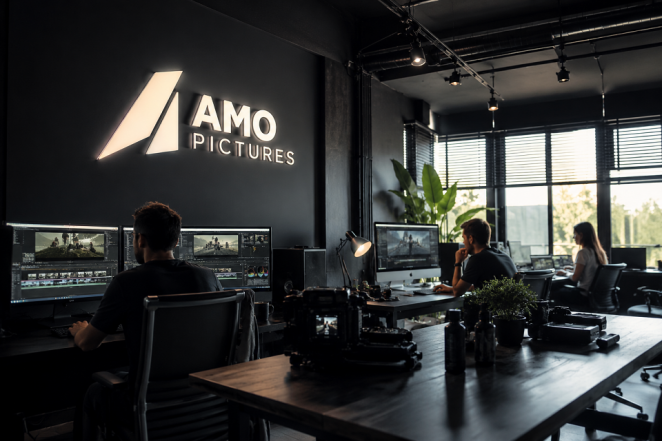
AMO Pictures
A good post production workflow is not simply efficient.
It protects the creative idea.
It ensures the right material reaches the right person. It keeps feedback visible. It maintains version control. It protects data. It records approvals and prevents technical problems from quietly becoming creative compromises.
Modern workflows need to be designed, not inherited.
Agencies should map the entire journey from brief to archive. Where does information enter? Where are decisions made? Which steps are repeated? Where do delays happen? Where can automation genuinely help? Where does the work depend too heavily on one person’s memory?
This is how agencies identify production skill gaps before they affect client projects.
Look at the points where projects regularly wobble.
If colour problems appear late, the team may need stronger colour-management knowledge earlier. If every AI-assisted job creates uncertainty around rights, governance is the gap. If editors are waiting for organised media, the problem sits upstream. If projects fall apart whenever the senior producer is unavailable, the agency has a succession and leadership issue.
Post-mortems should be used to diagnose capability rather than assign blame:-
- What knowledge was missing?
- Which decision came too late?
- Where did the process rely on improvisation?
- Which task consumed time without adding value?
- What should be automated, documented or taught before the next job?
The answers will be more useful than buying another tool because somebody saw an impressive demo.
How Agencies Can Build Future-Ready Production Teams

Design Bridge and Partners
Should agencies hire new talent or upskill existing production teams?
Usually, they need to do both.
Upskilling makes sense when the new capability is adjacent to existing expertise. Editors can learn AI-assisted search and generative timeline tools. Producers can develop virtual production literacy. VFX artists can expand into real-time engines. Post teams can learn provenance and Content Credentials.
Existing professionals already understand the agency, the work and the standards. Giving them new capabilities can be faster and more valuable than recruiting someone whose main qualification is enthusiasm for the word “future.”
Hiring becomes necessary when the agency lacks a genuinely specialist capability or experienced leadership.
A team cannot solve every gap through a webinar. Virtual production supervision, high-end colour, VFX leadership, security, AI governance and complex pipeline engineering may require deeper expertise.
The question is whether the skill needs to live permanently inside the agency.
Some capabilities should be core. Others can sit within a trusted network of freelancers, technology partners and specialist companies. Creativepool’s directories for online editors, video designers and wider creative talent can help agencies identify specialists, while Creativepool Studio provides routes for finding companies or project-based talent.
The right model depends on frequency, strategic importance and risk.
Agencies should review their production skills at least every six months, with lighter quarterly checks on tools, workflow risks and client demand. The technology may change weekly, but rebuilding the team every time somebody releases a new model would be exhausting and financially adventurous.
The aim is not to chase every development. It's to know when a development has become relevant to the work.
Training should also be practical. Screen-sector employers consistently place high value on learning through live work, mentoring and shadowing rather than theory alone.
Give people controlled opportunities to use new tools on real projects. Pair less experienced staff with specialists. Build internal case studies around what worked, what failed and what the team would do differently.
The failure stories may be the most useful.
Nobody learns much from a flawless software demonstration involving footage selected specifically because the software handles it flawlessly.
How Post and Production Agencies Can Use Creativepool
i2i Art Inc.
For post and production agencies, being excellent at the work is only part of the commercial problem. The other part is making that excellence visible to the people most likely to need it.
A beautifully graded film, technically immaculate VFX sequence or particularly elegant post production workflow can disappear almost instantly when it is reduced to a line in a showreel. Clients need context. They need to understand the problem, the craft involved and what the production partner contributed to the final result.
That starts with the company profile.
A Creativepool company account allows production businesses to showcase work, publish content, attract leads, find talent and enter the Annual. For post and production agencies, the profile should operate less like a static company biography and more like a living body of evidence. The reel matters, obviously, but individual projects give prospective clients a clearer view of the agency’s capabilities, collaborators, sector experience and creative approach.
Upload work with enough information to explain why it matters. A polished final film is useful, but a short description of the challenge, production method and agency contribution is far more persuasive. Was the team responsible for the edit, grade, sound, animation, VFX or full end-to-end production? Did the project involve virtual production, complex localisation, a compressed timeline or an unusual AI-assisted workflow? Make that visible.
Credits are equally important. Production is collaborative, and properly crediting directors, editors, colourists, VFX artists, sound designers and partner agencies connects the work to the people who made it. It also turns each project into a networked record rather than an isolated piece of content. For a prospective client, that context can demonstrate not only craft but the agency’s ability to assemble and manage the right team.
Being listed in the relevant company directory also helps clients find agencies according to the kind of support they need. Creativepool maintains dedicated directories for post production agencies, production agencies and production services companies, alongside categories for VFX, animation, sound, film and commercial production. Profiles can display work, reels, skills, rankings and location, helping a specialist agency become discoverable beyond the people who already know its name.
That makes profile accuracy more important than it might first appear. If an agency has invested in real-time environments, AI production, colour, sound design or international versioning, those capabilities need to be reflected in the visible work and company information. There is little benefit in developing a future-ready offer if the public profile still presents the business as it looked three years ago.
Creativepool can also be used more directly for new business. Through Creativepool Studio, brands can advertise briefs and search for companies, while agencies can be considered for work relevant to their capabilities. The studiobriefs process helps brands shape their challenge and sends the resulting brief to vetted agencies considered capable of delivering it.
For production companies, this creates an incentive to be specific. A generic claim to offer “end-to-end content” may be accurate, but it tells a client very little. A clearer profile might demonstrate expertise in automotive CGI, international campaign adaptation, virtual production, beauty retouching, branded documentary, sound design or high-volume social content. The better Creativepool can understand what the agency does, the more useful the potential match becomes.
The platform can support recruitment and flexible resourcing too. Production agencies rarely need exactly the same team for every job, and even established companies need specialist support when a project moves beyond their permanent capability. Creativepool provides routes to search creative talent, advertise permanent roles and post project-based gigs through Studio. Studiogigs are designed around approved freelance professionals and can be posted without commission, allowing companies to negotiate directly with applicants.
This can be particularly useful when an agency needs an editor, colourist, animator, VFX artist, motion designer, director or production specialist for a defined period. It can also help businesses build a wider bench of trusted collaborators before a client deadline turns the search into an emergency.
Recognition is another route to visibility. The Creativepool Annual includes categories for Film, Film Craft, Animation, Artificial Intelligence, Post Production, Sound Design, Branded Content and 3D, as well as awards for Production Company of the Year, Post Production Company of the Year and Sound Company of the Year.
For agencies, entering the Annual is not simply about collecting a badge for the website footer. A strong submission forces the team to articulate what made the work effective, technically impressive or creatively significant. Shortlisted and winning work is included in the Annual, while profile badges can improve visibility and ranking on the platform.
Finally, agencies should consider publishing the thinking behind the work as well as the work itself. Production companies contain an extraordinary amount of expertise that clients rarely see: the decisions that saved a shoot, the post workflow that made global versioning possible, the AI tool the team deliberately chose not to use or the production constraint that led to the best creative solution.
Sharing that expertise through the Creativepool Magazine can help an agency demonstrate strategic value before a formal client conversation begins. A thoughtful article about virtual production, sustainable shoots, AI governance, colour workflows or localisation does more than promote capability. It shows how the agency thinks.
That distinction matters. Clients can find plenty of production suppliers. What they are really looking for is a partner capable of understanding the brief, anticipating the risks and improving the outcome.
Creativepool cannot manufacture that capability. But it can help agencies make it visible, connect it to relevant briefs, support the search for specialist talent and give the industry stronger reasons to remember who produced the work.
Where Should Agencies Invest First to Stay Competitive in 2027?

salamandra.uk animation studios
Start with the workflow rather than the shopping list.
Agencies should first invest in the capabilities that affect every project: leadership, project design, media management, quality control, security and client communication.
Next, develop practical AI literacy across roles. Not everybody needs the same training. Editors need editing use cases. Producers need costing, rights and workflow implications. Creative teams need previsualisation and development skills. Leadership needs governance and commercial understanding.
Then identify the specialist areas connected to the agency’s offer.
A social-content studio may prioritise multi-format storytelling, versioning, localisation and high-volume post workflows. A high-end production company may invest in virtual production, VFX supervision and advanced finishing. A post house may focus on colour, sound, cloud collaboration, provenance and AI-assisted editing.
The investment should reinforce what the agency wants to be known for.
There is little strategic value in developing every capability badly.
Agencies should also invest in the people who connect departments. Post-producers, production leads, VFX supervisors and technically fluent creative directors often create value precisely because they understand several parts of the system.
They prevent small misunderstandings becoming expensive.
Finally, invest in culture.
Teams need permission to test new approaches without feeling that every experiment is secretly an efficiency review. They need clear policies, time to learn and leaders who can admit when they do not yet know the answer.
That may be the most future-ready skill of all.
Production Skills Will Matter More When Production Gets Easier
House of Scenes
The central contradiction of 2027 is that production will become easier while good production becomes harder to define.
More people will be able to generate moving images. More teams will be able to create passable edits, synthetic footage and endless variants. More clients will bring partial production capability in-house.
That will put pressure on agencies whose value rests mainly on access to tools or the difficulty of execution.
But it will strengthen agencies whose value rests on judgement.
The best post and production partners will know how to design a workflow, choose the right technology, protect the brand, manage rights, guide talent, solve problems and finish work to a standard the client could not reach alone.
They will use AI without allowing it to dictate the work. They will automate repetitive tasks without hollowing out the skills pipeline. They will collaborate remotely without losing accountability. They will produce more formats without turning the idea into content soup.
The future of production is not purely technical. It is hybrid.
The essential production skills for 2027 will combine craft with systems thinking, automation with human supervision, technical fluency with communication and speed with the nerve to say that something still isn’t good enough.
Because when almost anything can be made, the real competitive advantage will belong to the people who know what is worth making, how to make it properly and how to get it over the line without setting fire to the timeline.
Those are the post production skills agencies should be building now.