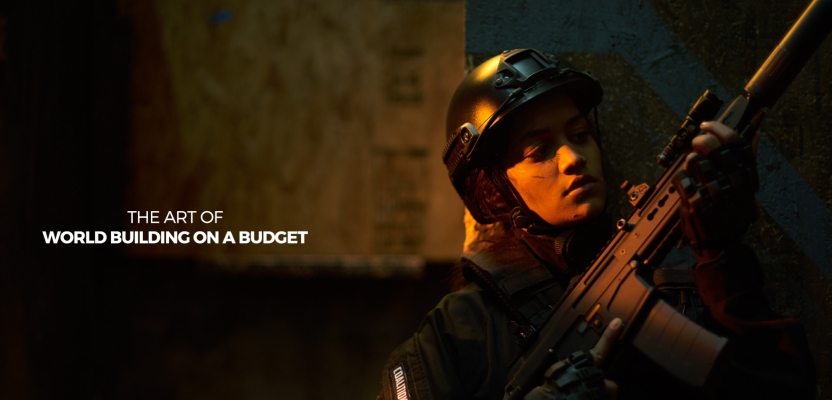

Hidden Agenda: Spread the word about this weird little story world we built because honestly, I’m proud of it and we nearly killed ourselves making it.
SCARS started as a viral Reddit post. A simple idea: In a near-future society, every time you tell a lie, a scar appears on your body. One million reads later, Executive Producer Tim Frazier and I licensed it and started building the world. Eternal thanks to the team at creative agency Guild26 for believing in our vision.
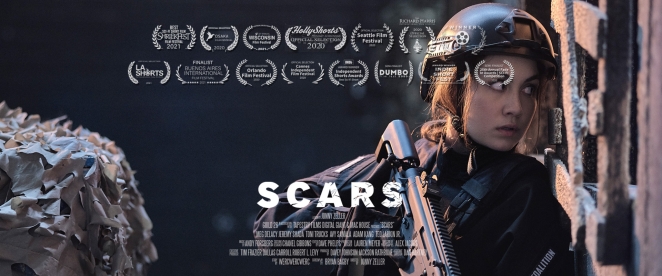
SCARS is a grounded sci-fi cinematic universe set in the near future. The world is similar to ours today, but with a twist. When a person tells a lie, a cut instantly opens on their skin and the level of pain reflects the severity of the lie. The open wound quickly scars over, leaving the liar with a permanent scar on their body.
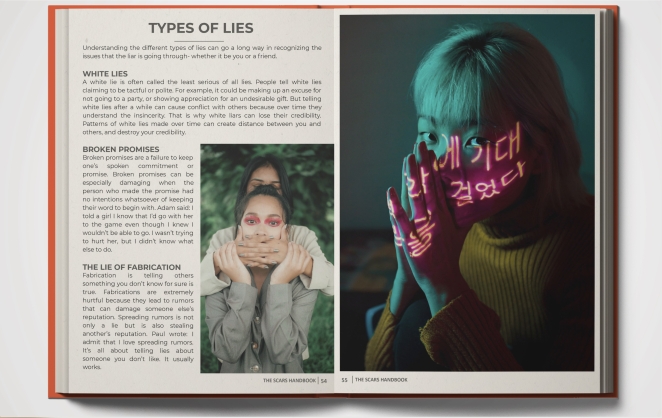 On the surface, we’re reminding people of one of the oldest rules in the book: that you can’t judge a book by its cover. On a deeper level, we’re discussing the importance of honesty in a modern society. How much does telling the truth matter? And when? Sometimes lying is OK, and most of the time it probably isn’t.
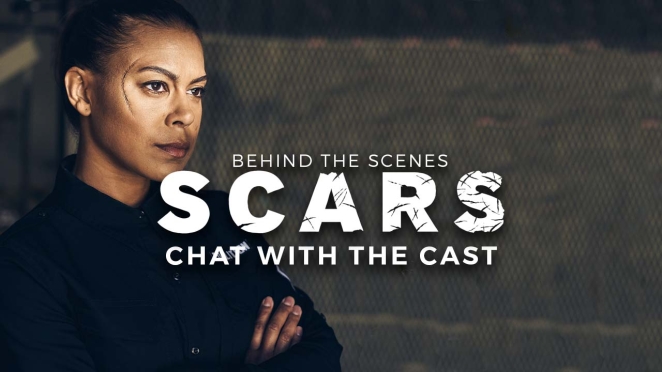
Cool idea, right? But ideas don’t mean much without a system. To make SCARS work, we needed a process for stretching this abstract concept across a dozen platforms without losing our minds.
Why Continue Reading?
People assume multi-platform storytelling needs deep pockets. Turns out it really just needs proper planning and stakeholder alignment. Traditional campaigns are giving way to serialized, multi-platform storytelling, where each piece of content is a new doorway into the same emotional universe. Brands like Nike, BMW, and Apple have already proven it: the best marketing today is looking less like advertising and more like entertainment.
And entertainment is a lot cheaper to make when you think like a storyteller instead of a marketer. When the focus is to entertain, you can create a world that pulls people in, keeps them curious, and gives them a role to play. That’s the framework we used to create SCARS.
 *SCARS In-world ad for the pharma brand that helps people cover up their scars.
The Playbook (That Any Brand Can Steal)
The beauty of multiplatform storytelling is that it can scale quickly and efficiently. You just need to define your Foundational Narrative (the emotional center of gravity) and then build around it.
*Previous article about the taxonomy of building a story world.
Here’s the simple framework I use, and I’ve found it’s best to work through it in this order:
- Goal of the campaign: What are you actually trying to achieve? Awareness, trust, sales, or maybe cultural relevance? If the goal is fuzzy, the world will be too.
- Audience: Who are you inviting in? What do they already care about, and how do they want to participate? What is the psychology of the demographics?
- Theme/Messaging: What truth sits at the heart of your world? The theme is the emotional DNA that connects every piece of content, even the weird ones.
- Resources: What tools, access, or talent do you have that others don’t? A charismatic founder, a killer location, an archive of forgotten footage, these are the hidden currencies of a good Storyverse.
- Foundational Narrative: This is the big idea everything connects back to. For SCARS, it was our 15min short film.
- Blueprint: The map of all your content nodes, showing how audiences migrate between them. It’s the connective tissue that turns deliverables into an ecosystem.
- Nodes to Activate: These are your storytelling formats: film, AR, podcast, social, live experience, print, whatever fits your world. Each one should play a distinct role but still point back to the core story.
- Tiers & Participation: How much time or money does each node demand from your audience and from your team? Not every interaction has to be massive. Some are Tinder sparks, some are campfire logs. The trick is designing participation that feels natural and rewarding.
How We Did It
Here’s where the theory met the chaos.
Once we had the blueprint figured out, the hardest part was deciding which nodes to activate. We mapped out every possibility from AR, podcasts, character blogs, to live activations. And then started cutting. Some ideas I loved didn’t make it. Either we didn’t have time, or they weren’t impactful enough to justify the effort.
That’s part of the game. When the budget is tight, you have to think like an investor: diversify your deliverables so the overall net gain is positive, even if a few individual pieces never take off.
Over four production days, we created 150+ connected pieces of content for a fraction of budget that you’d expect.


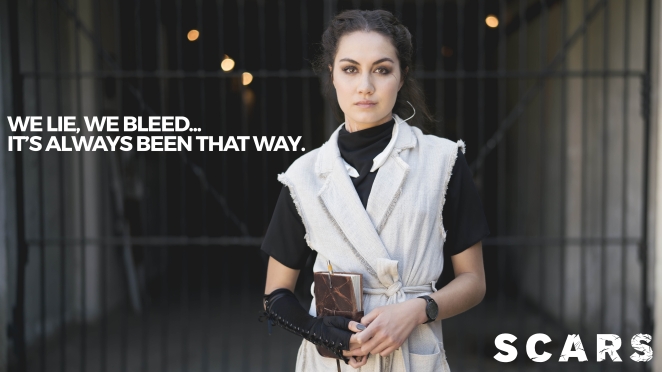
There were fake ads for an in-world biotech brand called Slick, propaganda posters, a hidden blog written by one of the characters, 360-degree video for VR headsets, geo-targeted Snapchat filters for festival screenings, and cryptic Reddit posts that lured fans deeper into the lore.
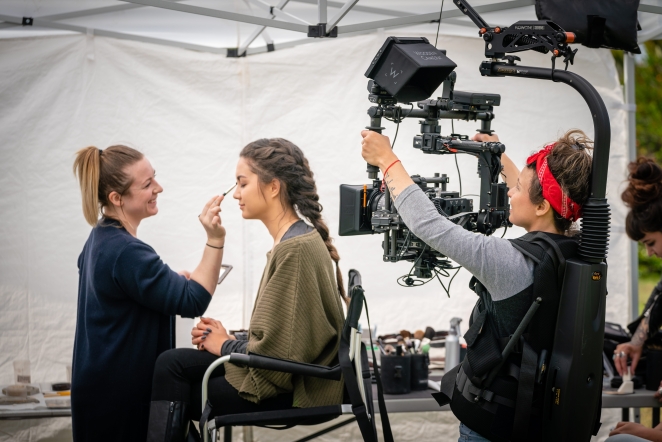
 We ran two dedicated teams in tandem: One team shooting the main film, the other creating the additional content. When your cast is already in costume and your locations are locked, this is the cheapest way to multiply value. It just requires careful logistics, constant communication, and a willingness to pivot on the fly.
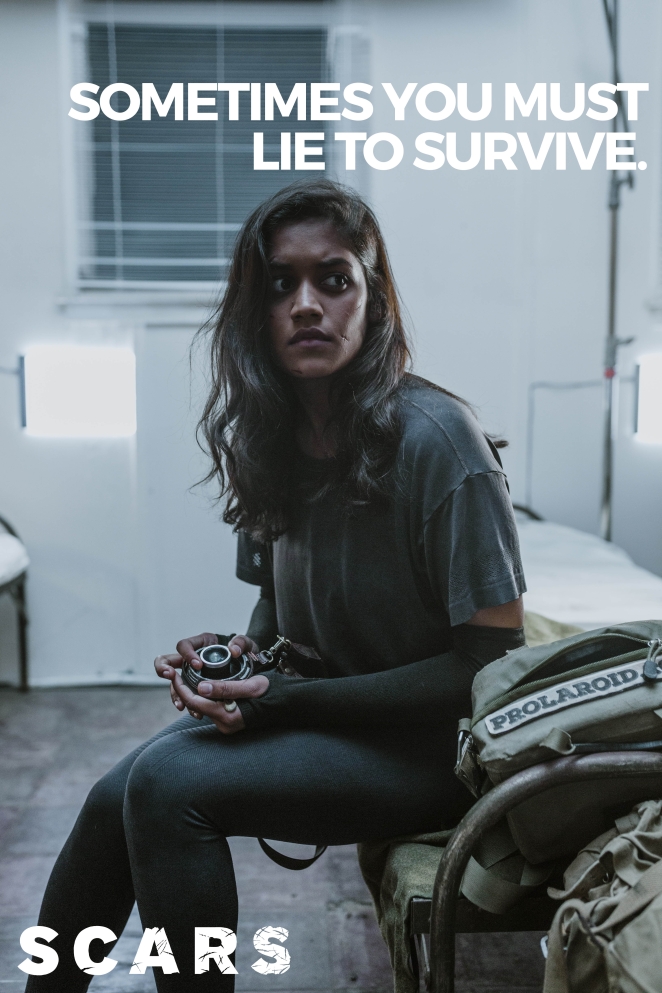 We structured the shooting schedule so that every spare minute counted. While we were shooting a main scene with Aris (played by Meg DeLacy), our second-unit team grabbed Jeremy Shada (Deets) and Adam Kang (Baker) to film motion posters, behind-the-scenes interviews, or Easter-egg vignettes. No wasted minutes.

We also prioritized content by production weight. Some pieces demanded heavier VFX but minimal on-set time, which let us balance our resources. Also, many scenes from the short film were designed to serve multiple purposes. A single dialogue exchange might later become a scavenger-hunt clue, or a cropped insert from a wide shot could turn into secret content for a hidden microsite. Building that flexibility into the shot-list meant every scene had secondary lives baked in from the start.
What We Learned
The traditional funnel is messy now and people don’t move linearly from awareness to conversion. A storyverse meets them wherever they are. Someone might find your Instagram filter first, then your short film, then your merch. Every touchpoint becomes a soft entry into the same emotional world.
In advertising terms, that means we’re evolving beyond metrics like impressions and also looking at things like participation.
 *Hint, hint...
When done right, transmedia storytelling makes your content behave like gravity: it pulls audiences toward the core message instead of pushing it at them. It builds community, curiosity, and rewatch value. It also turns your budget into a multiplier because every asset has purpose and longevity.
By involving our collaborators, inviting fans into the fiction, and creating real participation points, we proved that worldbuilding isn’t about money.
What’s Next for SCARS
The next phase of SCARS is where it really gets fun.
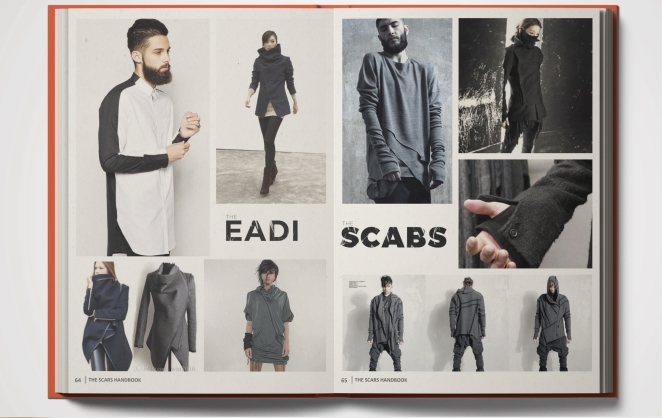
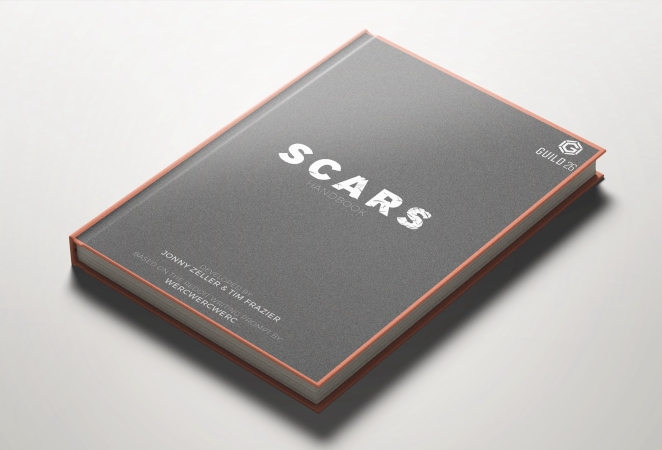
We’ve built an 80-page universe handbook that lays out everything from government systems and slang to fashion, tech, and social hierarchy. It’s basically a creative field manual for anyone who wants to play in the SCARS sandbox. By giving creators that foundation, we’re inviting them to expand the world in ways we might never have imagined.
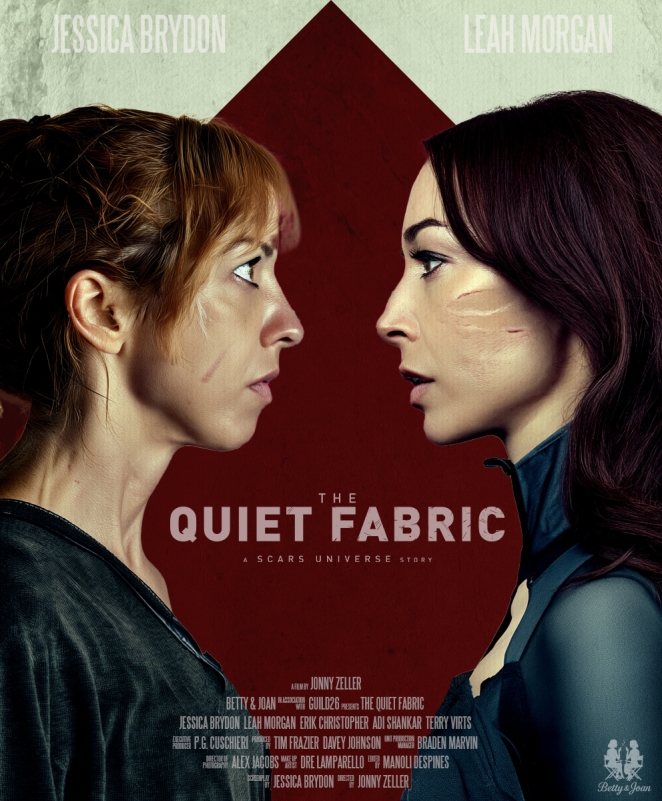
 Earlier this year, we shot a second short film called Quiet Fabric, set in the same world but focused on completely new characters (Starring Jess Ann Brydon and Leah Morgan) and themes. The goal is to turn SCARS into a living story platform: A place where other filmmakers, writers, and creators can step in, explore the rules of the universe, and build their own narratives within it.
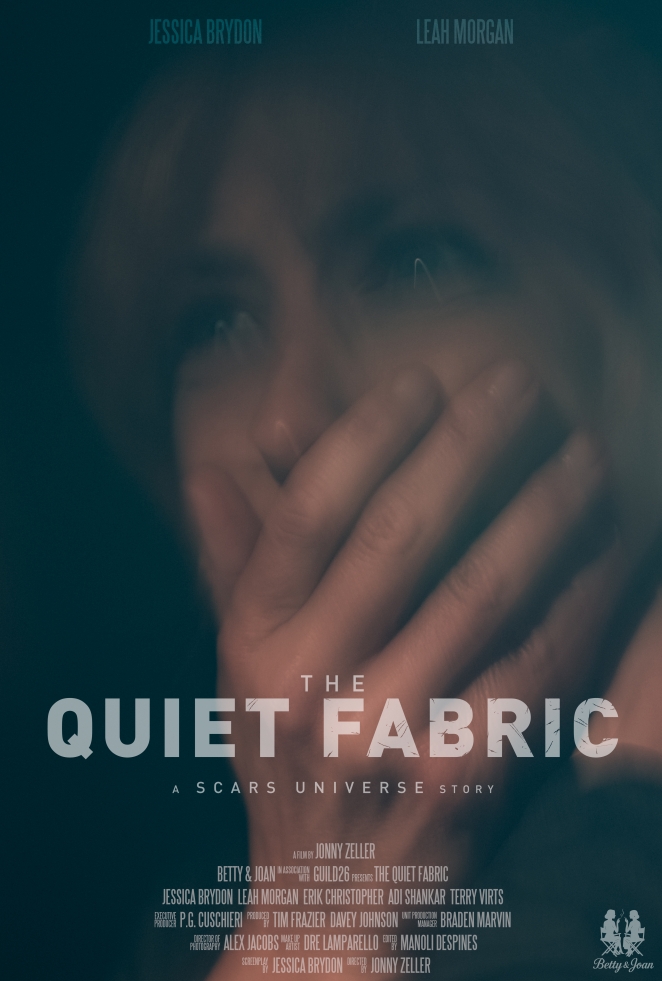 From there, we’ll see what stories the audience connects with most. That organic engagement will guide where we go next, whether that’s a feature film, a series, or something entirely new.
Final Thoughts
If there’s one thing I’ve learned from building SCARS, it’s that creativity scales better than budget ever will.
Worldbuilding doesn’t belong only to studios with endless VFX pipelines or agencies with seven-figure retainers. It belongs to anyone willing to design with intention, think across mediums, and open to trying something a bit out of the box.
Whether you’re launching a brand, a film, or a movement, the storyworld model gives you something rare in today’s doom scrolling content chaos: longevity.
So start with truth. Build around emotion. Leave space for discovery.
And if you ever want to nerd out about story architecture, I’m always happy to do that over a pint or two. Just don’t lie about who’s buying… You wouldn’t want to get a scar.